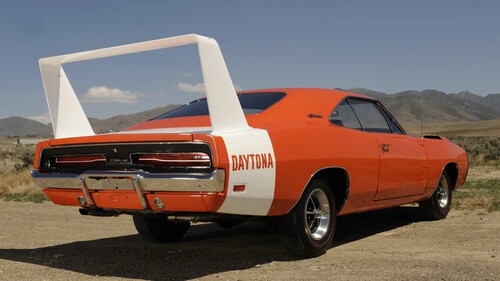
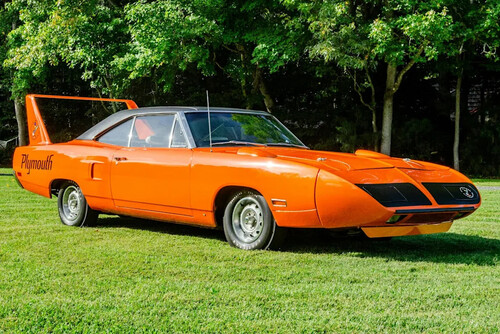
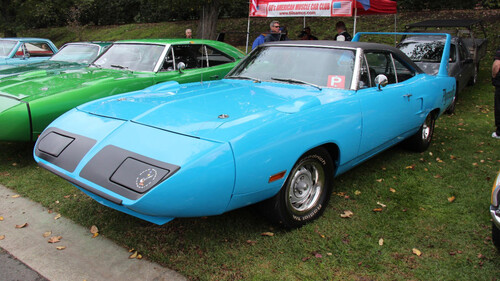
The 1970 Dodge Daytona pushed speed limits but didn’t last long in productionThe 1970 Dodge Charger Daytona was built for a single purpose: to push stock-car speed into territory that production sheetmetal had never seen before. It did that spectacularly, brushing against the 200 m barrier on the track and rewriting what a factory-backed racer could be, yet it disappeared from showrooms almost as quickly as it arrived. The car’s brief life was neither an accident nor a flop. It was the natural result of a machine engineered to win at any cost, then caught between changing racing rules, skittish buyers, and the limits of what a street car could reasonably be. The problem Dodge set out to solve After Dodge stumbled through a disappointing 1968 NASCAR season, executives wanted a weapon that would not just compete but dominate. The existing Charger was handsome and powerful, yet its bluff nose and recessed rear glass turned into a parachute at high speed. The company’s racing program needed something far more radical. Engineers were asked to take a boulevard cruiser and turn it into a car that could run near 200 miles per hour on the high banks. As one detailed account of the 1969 development effort puts it, the project started with a streetcar and a simple mandate to make it go 200 m, a target that forced the team into wind-tunnel territory that passenger cars rarely visited at the time, as seen in period-focused coverage of what happens when. The result for 1969 was the first Charger Daytona, a car that previewed the 1970 production run and set the template that would define this short-lived legend. How the “Winged Warriors” rewrote NASCAR aerodynamics The Charger Daytona did not evolve in isolation. It was part of a family of radical aero cars that stock-car fans nicknamed the Winged Warriors. These were purpose-built racing specials created to conquer NASCAR’s Grand National series, which at the time still required that race cars be based on production models. The Charger Daytona’s most striking features were its pointed nose cone and towering rear wing. The nose cut through the air that had previously battered the Charger’s upright grille, while the wing stabilized the rear of the car at speeds that ordinary muscle cars never reached. Together, they turned a bulky intermediate into a slippery missile that could thrive on high-banked superspeedways. NASCAR’s own historical material on the 200 mph Dodge describes how this approach paid off. The Charger Daytona and its close cousins did not compete for long in NASCAR’s top Grand National division, but while they were allowed, they changed expectations for what a stock car could do. That transformation is summed up cleanly in historical overviews of the Dodge Charger Daytona, which describe how the Winged Warriors arrived, took control of the speed charts, then quickly forced the sanctioning body to reconsider the balance between spectacle and safety. Buddy Baker and the 200 mph breakthrough The engineering gamble paid off in a single, thunderous moment. On March 24, 1970, Buddy Baker took a Charger Daytona to Alabama International Motor Speedway, now known as Talladega Superspeedway, for a test session meant to measure the car’s true potential. Accounts from that day explain that Buddy Baker, a future NASCAR Hall of Fame driver, became the first to officially break the 200 mph barrier in a stock car. At Alabama International Motor Speedway, which later carried the Talladega Superspeedway name, his Dodge averaged more than 200 mph over a closed-course lap, a figure that contemporary reporting ties directly to the Charger Daytona’s aerodynamic shape and immense power, as detailed in the same NASCAR historical account. That single run validated the obsessive wind-tunnel work and the “weird” mechanical tweaks that engineers had used to squeeze stability and speed out of a heavy production car. It also alarmed officials who were already uneasy about the speeds that the Winged Warriors were reaching on tracks with limited runoff and modest safety infrastructure. From race shop to showroom To qualify the Charger Daytona for Grand National competition, Dodge had to build road-going versions. Homologation rules required a minimum number of street cars that shared the same basic body and aero package as the race machines. That requirement created one of the strangest showroom offerings of the muscle-car era. The Charger Daytona that arrived in dealerships for 1970 carried the same needle nose and high rear wing that fans saw on Sunday afternoons. It was, as one video account of the project stresses, not a million-dollar prototype or exotic one-off, but a Dodge Charger with a pointed nose and what some observers likened to a park bench bolted to the trunk, a description echoed in coverage that frames the car as a Dodge Charger with. Period photographs and enthusiast histories of the Charger Daytona highlight how uncompromising that translation from race to road really was. Buyers got a car that looked like it had been driven straight out of Talladega’s infield, with minimal effort to soften the visual impact or improve everyday practicality. The awkward reality of selling a 200 mph street car On paper, a street-legal machine born from a 200 mph test session sounded like a marketer’s dream. In practice, the 1970 Charger Daytona was a hard sell to ordinary drivers. The aero nose added length and complexity to the front end, which made parking more difficult and repairs more expensive. The tall rear wing blocked rearward visibility and drew attention in an era when some buyers already worried about insurance crackdowns on high-horsepower cars. The very features that made the Daytona a threat on superspeedways also made it an acquired taste in traffic. Contemporary reflections on the car’s history, including fan discussions of the 1969 Dodge Daytona, describe how the nose and wing turned the cars into instant fan favorites at the track while simultaneously creating production headaches. Under the heading that highlights “Production Challenges Both,” enthusiasts point to the cost and complexity of building these one-year specials and the difficulty dealers had moving them off lots without heavy discounts. Insurance costs were rising across the muscle-car segment, and fuel concerns were starting to creep into the conversation. The Daytona arrived just as the market for raw performance began to cool, which compounded the problem of its polarizing styling. Why the Daytona’s NASCAR window closed so quickly The Charger Daytona’s short production life is inseparable from its equally brief competitive window. The Winged Warriors, including the Charger Daytona and its corporate cousin from Plymouth, were simply too effective at their job. Historical summaries of the Daytona’s NASCAR career explain that the Winged Warriors did not compete for long in the Grand National division. Their speed advantage, dramatized by Buddy Baker’s 200 mph breakthrough, pushed NASCAR toward rule changes that would rein in the aero cars. The sanctioning body introduced restrictions that targeted the very features that made the Daytona so fast, effectively making it impractical to continue racing the car in top-level events, a shift that later analysis describes as a response to machines that were moving too fast, as reflected in coverage of how the Dodge Daytona was. Other reporting on the era’s rule changes, including discussion of how a Plymouth counterpart was limited rather than outright banned, stresses that the new regulations did not erase the cars from existence. Instead, they altered engine displacement and body eligibility in ways that undercut the rationale for building such extreme homologation specials in the first place, a point echoed in an analysis that notes, under the heading “Contrary,” that the Plymouth was hemmed in by restrictions rather than a single sweeping ban, as discussed in coverage of how a Plymouth. Once the rules shifted, Dodge no longer had a strong incentive to keep producing a street car whose primary purpose had been to satisfy NASCAR’s old homologation requirements. The 1970 Charger Daytona in the shadow of Plymouth and Mopar siblings The Charger Daytona did not stand alone within its own corporate family. Plymouth fielded the Superbird, another wild aero car that shared the same basic philosophy of a pointed nose and high rear wing. Together, they formed a Mopar pincer attack on the stock-car grid. Enthusiast comparisons of the Plymouth Superbird and Dodge Charger Daytona describe them as two of the most iconic Mopar muscle cars ever built. In one such comparison, the host frames the pair as the ultimate expression of the brand’s racing obsession, a view captured in a video that introduces the Plymouth Superbird. The presence of the Superbird complicated the Charger Daytona’s identity in the showroom. Buyers who wanted the wildest possible aero car now had two choices within the same corporate stable. That overlap did not help sales for either model, particularly once NASCAR’s rules stripped away some of the competitive edge that had justified their existence. Later retrospectives, including a New Year comparison that pits a 1969 Dodge Charger Daytona against a 1970 Plymouth Roadrunner, frame the pair as “horsepower never dies” artifacts preserved in Retro Wolf’s Vault. That framing, captured in a video that invites viewers back to Retro Wolf’s Vault, underlines how quickly the cars moved from cutting-edge competition tools to nostalgic museum pieces. Authenticity, collecting, and the Gulf Porsche comparison Because the Charger Daytona’s production run was so limited, questions of authenticity loom large in today’s collector market. The car’s rarity and racing pedigree make it a natural target for clones and creative restorations. Discussions among enthusiasts often compare the scrutiny applied to Daytona survivors with debates around other historic racers. One such conversation, framed under the heading “Authenticity of 1969 Gulf Porsche 917K questioned,” juxtaposes the Charger Daytona’s documentation challenges with the saga of a famous Gulf Porsche chassis. That discussion, which references how the first photo shows the 1969 Gulf Porsche 917K with the number 015 and mentions Bruce Canepa’s involvement, appears in a detailed post that uses the phrase Authenticity of 1969 to illustrate how deeply fans now examine provenance. The Charger Daytona’s short production life and intense motorsport history mean that surviving cars attract the same forensic attention. Collectors chase build sheets, racing logs, and factory records to prove that a given car really is one of the original Winged Warriors and not a later tribute. From muscle car to enduring nameplate The Charger Daytona’s impact did not end when production stopped. The Daytona name itself became an enduring badge that Dodge later applied to other performance models, a lineage that modern video histories trace from the original muscle car to later sports-oriented versions. More from Fast Lane Only Unboxing the WWII Jeep in a Crate 15 rare Chevys collectors are quietly buying 10 underrated V8s still worth hunting down Police notice this before you even roll window down The post The 1970 Dodge Daytona pushed speed limits but didn’t last long in production appeared first on FAST LANE ONLY.