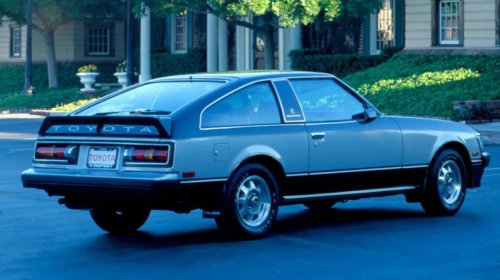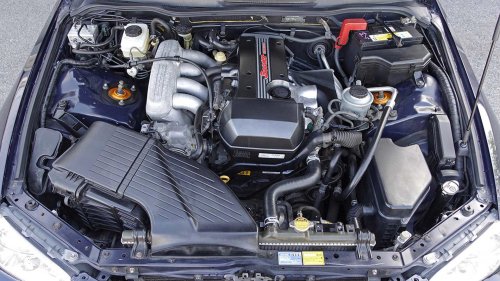
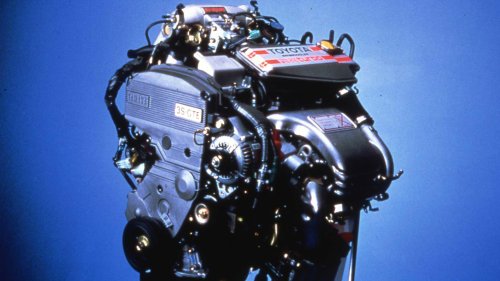
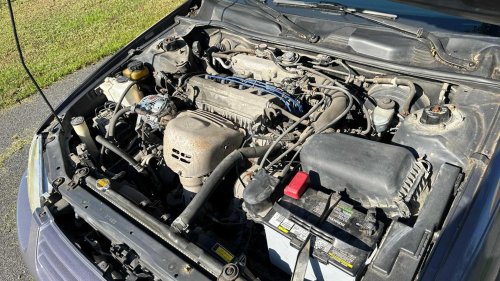
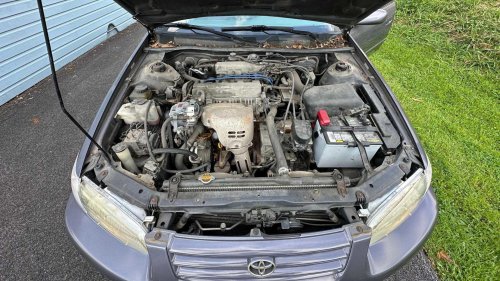
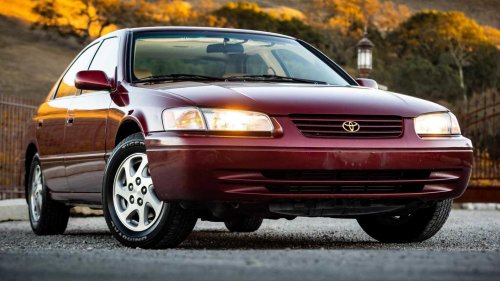
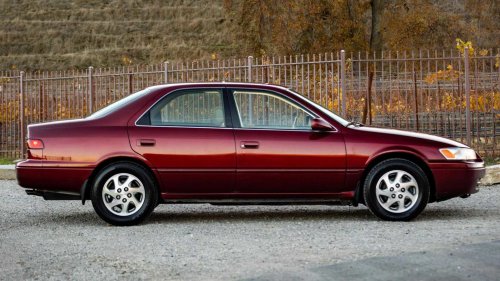
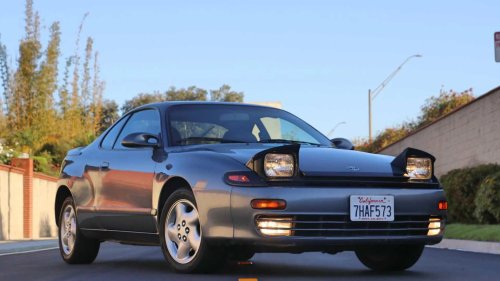
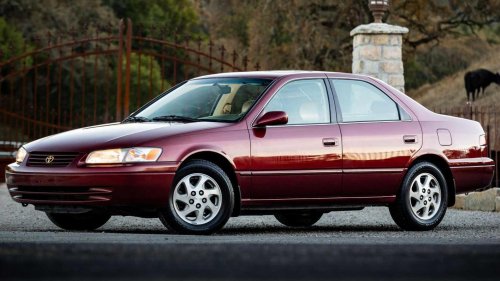



















In the grand scheme of the automotive world, there are some engines that have managed to gain quite a lot of attention for attributes like extreme reliability, smoothness of operation, or power output. On the other hand, there have been loads of examples of engines that embody those characteristics that simply didn't get any recognition, or at least not nearly enough. Much like being a person, sometimes an engine's good deeds go unnoticed.One such mill that falls into this category is Toyota's 5S inline-four. It was introduced in the early 1990s and embodied one of Toyota's most forward-thinking R&D programs at the time. It's considered near-peerless in reliability and is part of one of the Japanese automaker's many famous engine families, the S engine. The Toyota S Engine TopRankLong before the first 5S engine hit the market, Toyota launched the S series powertrain family in 1981. At the time, the American automotive market was at a turning point. Ever-tightening emissions regulations meant the old-school V8s seen throughout the 1960s and '70s had to lose considerable horsepower in pursuit of cleaner exhaust and better fuel efficiency. Coupled with the public's desire for vehicles with better fuel economy, some things needed to change.Toyota, Honda, and Nissan were spearheading the charge for smaller, lighter, and more fuel-efficient cars. Toyota's S engine was the first full-blooded attempt to create a mill that burned leaner, was lighter, yet still provided ample power. During the S engine's development, Toyota employed a host of then-revolutionary tech, such as laser holography, to create the new mill.The main directive for Toyota's engineers when developing the S engine was lightness. Virtually every component was shaped and honed with weight in mind. For example, the camshafts were hollow and sintered, meaning they were cast from powdered metal and heated to slightly below the melting point. The forged connecting rods were also sintered, making them more robust. Toyota called the high-tech process LARSE, which stood for "lightweight, advanced, super-response engine."Toyota The first member of the S engine family, the 1S, hit the road in 1981 under the hood of models such as the Toyota Celica, Carina, Corolla, and Mark II. It displaced 1.8 liters, producing 99 horsepower and 112 pound-feet of torque. A couple of years later, the 2S made its appearance with a slightly larger displacement of 2.0 liters. The 3S arrived in 1986 and eventually gave rise to the famous turbocharged 3S-GTE iteration. The 4S engine entered the fold in the late 1980s as a narrow-bore version of the 2S. Enter The 5S Cars & BidsOnce the second-gen iteration arrived in 1993, Toyota tinkered with the 5S a little bit. For starters, it now had a slightly more aggressive state of tune, bumping the power output up slightly. There was also a less aggressive camshaft, a decision made to increase the mill's smoothness of operation. It also lacked a cold-start injector, deemed unnecessary, and an engine knock sensor, omitted due to apparent redundancy.Cars & Bids The third version of the 5S launched for the 1997 model year as the final iteration of the powerplant. There were a few, such as adding a crankshaft angle sensor to replace a camshaft angle sensor. According to Toyota, this was done to further improve the engine's smoothness of operation, particularly at idle. A new direct-ignition system was also introduced, which used two ignition coils. Power increased again, but only slightly.Cars & Bids One of the hallmarks of the 5S engine's dedication to smoothness was the use of a balancing shaft. While it's not particularly rare or special, Toyota reportedly spent a good amount of time perfecting the 5S's balancing shaft. It was engineered to rotate at precisely twice the speed of the engine's crankshaft. This allowed it to effectively cancel out vibrations from the crankshaft. At idle, it's extremely hard to tell a 5S-equipped Toyota Camry is even running because the unit is so smooth and quiet. However, it's important to note that certain 5S mills lack a balance shaft, namely the 1991-1995 Toyota MR2 and the 1994-1999 Toyota Celica. Models Using The 5S Engine 1989–1993 Celica GT & GT-S 1994–1999 Celica GT 1991–1995 MR2 (N/A) 1992–1996 Camry 1997–2001 Camry 1997–2000 Harrier Common Issues Cars & BidsWhile the 5S is a stupendously reliable little mill, it does have one or two issues.Oil leaks are among the most prominent issues with the mill, particularly with its valve cover gaskets. Old rubber gaskets can dry out, leading to tiny cracks, and the pieces no longer sealing properly. Luckily, replacing a valve cover gasket on the 5S engine is relatively straightforward and requires virtually no specialized know-how or any special tools. The gasket itself can be found for under $35 at most parts stores.Another weak point of the 5S is oil consumption in general. While the engines are known for lasting a long time with regular maintenance, the powerplants tend to burn oil as they age. This is mainly due to simple age and component wear, in which the piston rings begin to lose some of their ability to seal against the cylinder walls. Unless you're going in for an engine overhaul, it's best just to keep checking your 5S engine's oil regularly and add some when needed.Bring a Trailer Some owners reported prematurely failing motor mounts, which can cause a bucking or jerking sensation, especially when starting the car, accelerating, or decelerating. Changing the mounts on a 5S-equipped Camry, for example, is another straightforward process, and the front, side, and rear mounting points are all generally easy to reach. However, you will need to use a floor jack and some craft arm angles to loosen all the bolts and tighten them back up.Lastly, the 5S is known to have problems with its Exhaust Gas Recirculation (EGR) system. Both the solenoid, which controls the actual recirculation, and the valve itself are somewhat prone to failure, though the latter is more prone to letting go. Replacing either component is, again, a rather easy DIY job for those with a moderate understanding of car repair. Sometimes, No Recognition Is A Good Thing Cars & BidsWhile it's always nice to feel appreciated and recognized for your good work, in the case of the 5S engine, it may help to not be recognized at all. Think about it: if nobody knows how effective the 5S seems to be, the models that use it will remain cheap. That means those of us in the know will be able to snatch them up at a low price and enjoy the mill's smooth, reliable, and durable nature for ourselves. A silver lining, indeed.If you're wondering just how much it would actually