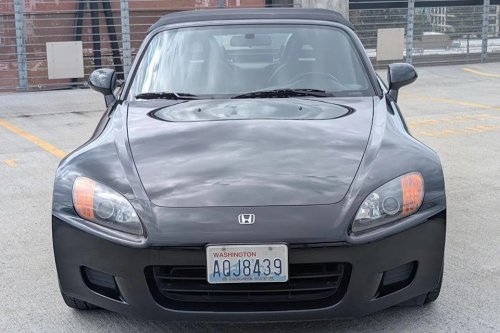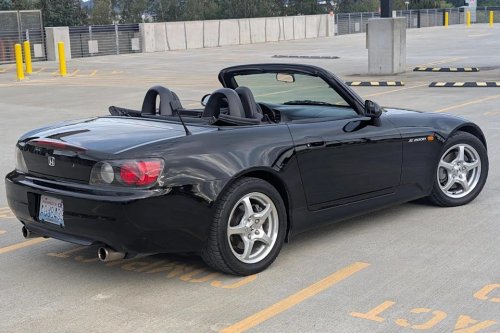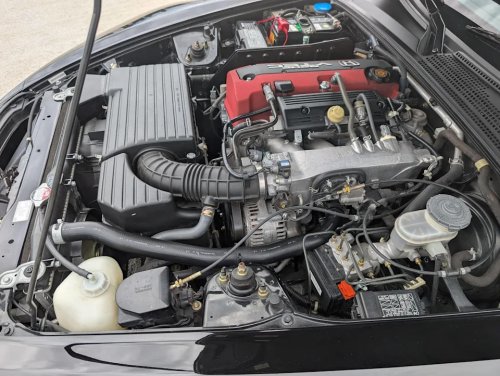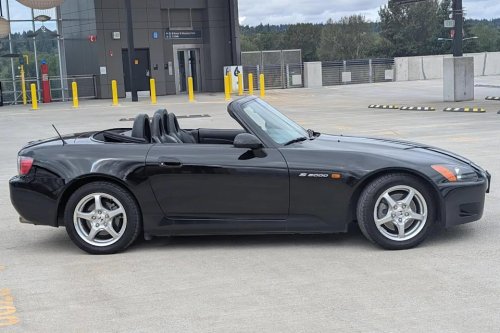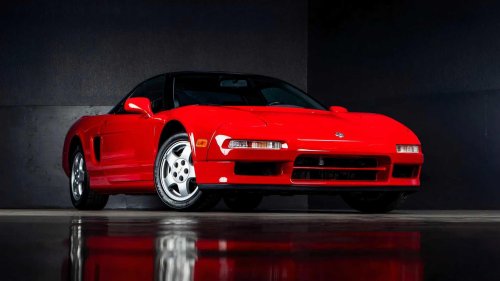
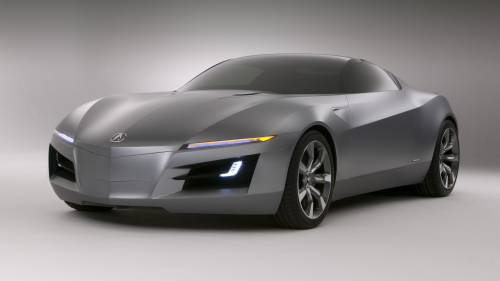
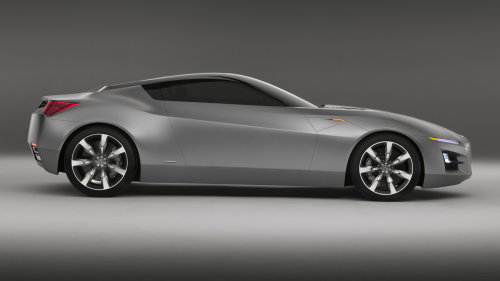
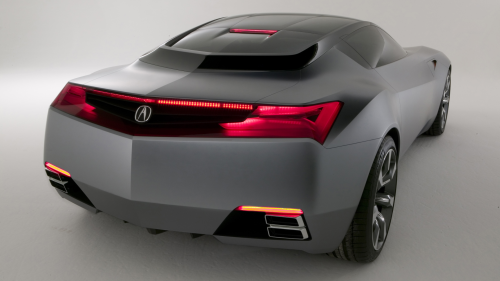
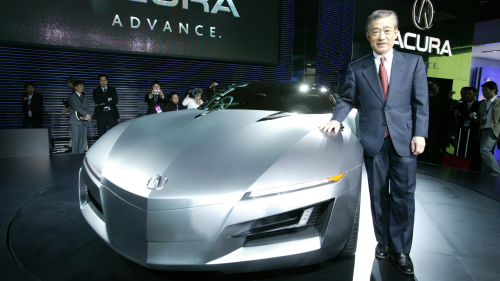
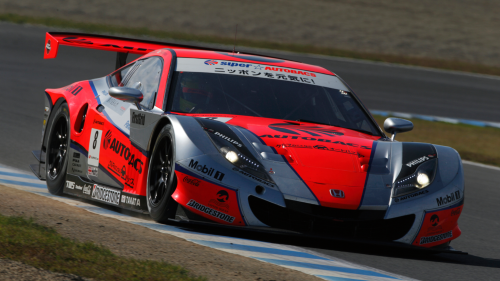
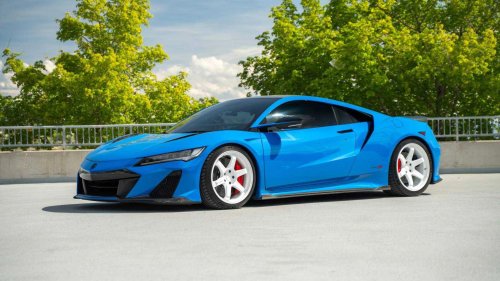














Defining the legendary status of the original Honda NSX is its mid-ship layout and high-revving V6, a combination which gave it a credible fight against some of the best European sports cars of the ‘1990s and 2000s.When production ended in 2006, it would take a decade for its successor to arrive, following years of will-they-won’t-they industry reports. That eventually came as a hybrid V6 supercar, but that wasn’t the original plan. If things had worked out as intended, it would’ve been front-engined and with a V10. Even Legends Have To Die Eventually Bring a Trailer The first Honda NSX had one of the longest production runs of any sports car in modern history. Originally introduced in 1991 (and known in the US as the Acura NSX), the sports car was a real rival for the Ferrari 356 and Porsche 911. An impressive feat from a manufacturer that had never before produced a mid-engine sports car designed to compete with the very best of the genre.It would receive an extensive facelift in 2001, although without a significant performance boost, largely owing to the Japanese Gentleman’s Agreement, which officially capped horsepower outputs in Japanese domestic cars at 276 horsepower. It would survive a few more years until 2006, but by that point, European competition had surpassed the NSX, and even domestic rivals were in the works that would decimate it. 1991 Acura NSX Specs The R35 Nissan GT-R was late in development by that stage, about to set a new performance benchmark for sports cars as a whole, while Toyota was working away on the car that would eventually become the LFA.Honda recognized the NSX replacement had to be a real step up to keep fighting on all fronts, and it almost resulted in a dramatic departure from the original formula. The Replacement Was Set To Abandon Everything We Knew Acura The first taste we had of a second-generation Honda NSX came at the 2007 Detroit Auto Show, with the reveal of the Acura Advanced Sports Car Concept (ASC). This couldn’t have been further from the NSX in looks, with a long hood pointing towards an engine in the front and the cabin stretching near enough over the rear axle.Honestly, it looked more like a Corvette of the future rather than an NSX. Perhaps not a surprise, given this concept was designed by Americans at Honda’s Los Angeles design studio.Acura There was no doubting the ASC was an early-stage concept car, with its buttery-smooth design, gigantic wheels and no access to the interior. There wasn’t any running gear underneath, either.However, that didn’t stop Honda from proclaiming it as the template for a future halo sports car. Speaking at its reveal, Honda president is quoted by UK magazine CAR as stating: “We plan to make advances in technology, design and performance with this car.”, going on to confirm it would be powered by a new V10 engine, with an all-wheel drive system too.Other details were limited, though it was touted as using an upgraded variant of the Super-Handling All-Wheel Drive seen in production on the Acura RL at the time. A Honda V10 Was The Industry's Worst-Kept Secret Acura While Honda would never again publicly acknowledge the existence of a V10 Honda NSX, spyshots and reports of its existence flooded pretty much every car magazine and internet forum in the months following.The first signs of functional prototypes came in the form of a mutilated Honda S2000 test mule spotted lapping Germany’s famous Nürburgring, regularly used as a proving ground for prototype models. As well as looking completely misshapen compared with a normal S2000, the giveaway for this test mule came from its UK registration of ‘OU07 EFX’. Running that through the country’s registration database revealed it as being powered by a 5000cc engine, backing up wider industry reports of an in-development V10 with that sort of capacity.More test mules would be spotted, dropping the S2000 bodywork and using a heavily camouflaged silhouette quite reminiscent of the ASC, albeit looking more rear-world ready. Things were looking good for its arrival in the next few years, until something out of Honda’s control brought an end to the whole project. Why It Couldn't Happen Acura2008 is best remembered for the worldwide financial crisis, which ripped through the global economy like a tornado. Pretty much every major auto manufacturer was hit in a big way, and Honda was no exception.On 17 December 2008, it announced a forecasted 81.8% drop in operating income for the 2008/09 financial year, down to around $1.1 billion from $6 billion. It had to cut spending fast, that very same day announcing it would be ending its flagship motorsport program, its Formula 1 team, with immediate effect.Those spending cuts extended to the NSX program, too, with the sports car immediately being put on hold, along with further development of the V10 engine. It’s also reported that a rear-driven V8 model was another project axed, though it’s unclear how far along the development stage that was at the time. The Stillborn NSX Had A Life In Motorsport HondaIf you wanted an idea of just how close the front-engined Honda NSX was to production, the project got a second lease of life in motorsport. That came in Japan’s Super GT touring car series in its flagship GT500 class for the 2010 season, regulations of which required all cars entered to be based on production chassis.Although the car that would be named the Honda HSV-010 GT never went into production, the manufacturer was able to successfully argue its design was production-ready, and organizers gave it the green light to enter. This was the first real, official look we had at the stillborn Honda NSX.Regulations dictated that entries in the class had to be powered by a 3.4-liter V8 engine, however, meaning the V10 didn’t get to take to the track. Worth noting it was competing against a rear-driven, V8-powered R35 Nissan GT-R. It would race for three seasons in the series before being replaced by the concept car that would eventually go on to be the second-generation Honda NSX we know today. A More Familiar NSX Eventually Made Production Bring a Trailer2016 would see the introduction of a second-generation NSX at last, albeit in a format more familiar to the original than the V10 car that had originally been planned. Arriving once again as the Acura NSX for the US market, it would be built here, too, at Honda’s Performance Manufacturing Center in Ohio. 2016 Acura NSX Specs Like the original, it used a midship V6, although this time with twin-turbocharging and a complex hybrid system. Three electric motors boosted peak power to 573 horsepower, giving the NSX performance to compete with the R35 GT-R and Porsche 911 Turbo S.Production closed in 2022 with the special-edition Type S, bringing an end to the Honda NSX once again and this time, without any official talk of a replacement model. Reports have suggested an EV NSX is in the works, but it remains to be seen if Honda’s recent dramatic U-turn on electric models will have an effect on those plans.