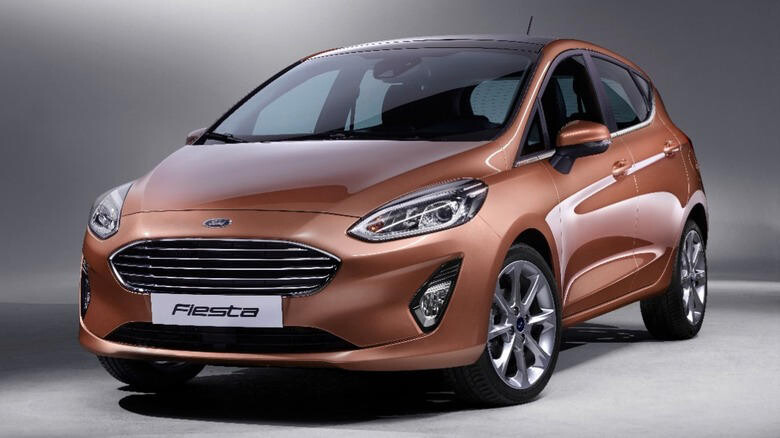
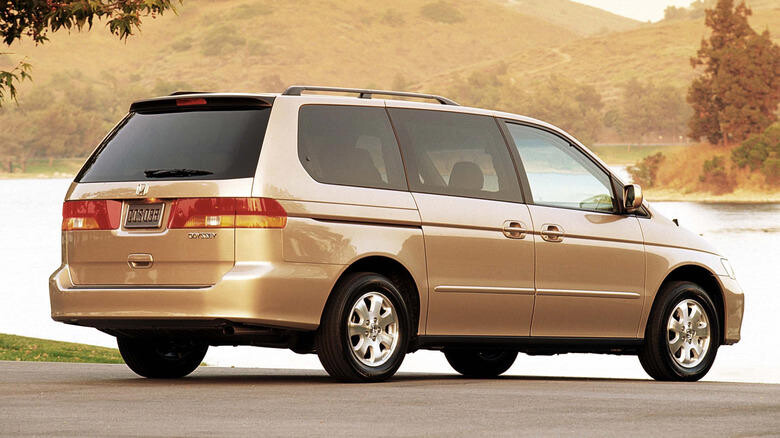
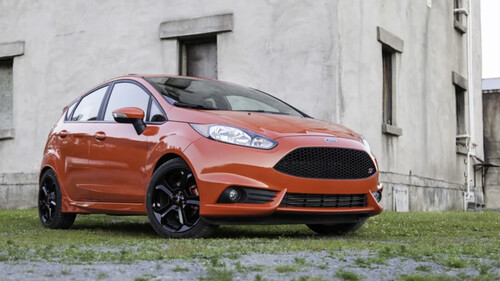
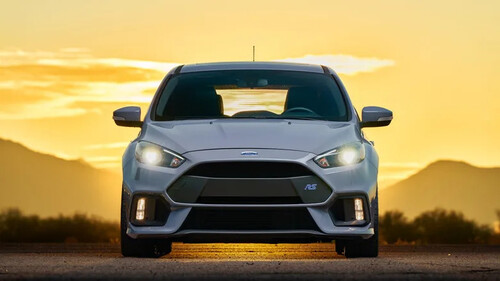
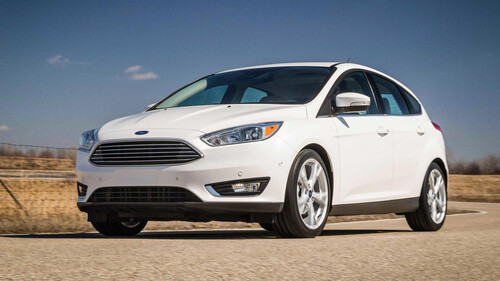
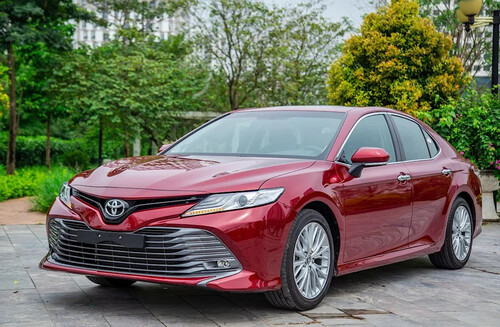
Nissan When it comes to mechanical issues, there's really no such thing as a good problem to have, except maybe when the cause of your check engine light is just a loose fuel cap. Anything else is likely going to represent a headache at best and a costly repair bill at worst, with the black box engineering of a transmission being among the most ominous and terrifying. It's rarely a DIY project and almost never inexpensive, with even seasoned mechanics occasionally stumped by the complexity of modern transmissions. And we do mean modern complexity. If you go back to 1980, three-speed autos and four-speed manuals were common. Fast forward to today and six-speed manuals are the norm, with automatics averaging more than eight. So maybe it's not your mechanic's fault that they can't fix your transmission. Anyway, we'd like to help you avoid learning any more about this the hard way. And while there certainly are some nearly indestructible transmissions out there, others are demonstrably not that. We're not here to repeat forum horror stories or vague reliability rankings. Every car on this list earned its place because there's documented evidence of transmission-related problems. We don't just mean owner frustration, but National Highway Traffic Safety Administration (NHTSA) filings, recall reports, and technical service bulletins that should have you putting your guard up if you're even thinking about taking possession of one of these cars. 2012–2016 Ford Focus Ford Ford made the Focus for decades. It started out in Europe, made its way to the United States, and helped Ford maintain a lengthy foothold in the small car market before deciding to go all in on trucks and SUVs while not selling any cars at all that aren't named Mustang. The car business is hard, and it's even harder when your transmission stinks. For the 2012-2016 Focus, that meant a DPS6 Automatic Transmission, commonly known as Ford's PowerShift transmission. Affected units were known to "slip, buck, kick, and/or jerk," behaviors that you may note are widely considered undesirable. One regular culprit was the automatic transmission control module, which could only be addressed by software flashes. To add further frustration, one dealership reflash rarely did the trick, though once you exceeded three Ford would pay you $50 a pop for your trouble as part of the resulting class action settlement. 2011–2015 Ford Fiesta Ford The Ford Fiesta is a solid little driver capable of racking up serious miles, provided the transmission doesn't betray you. Unfortunately, since 2011–2015 models share the same DPS6 transmission as the Focus we just covered, that's a real possibility. And unless you like watching cable news in a waiting room while drinking bad coffee, you probably don't want to turn those $50 transmission flash apology fees into a revenue stream. Regardless, there's a silver lining with the Fiesta, especially for enthusiasts. Because the DPS6 headaches were specifically tied to the automatic transmission control module, the issues don't affect manuals. According to WardsAuto, the Fiesta actually has a strong three-pedal take rate by modern standards — something like 25%, which tops the list among all Fords. So if anyone insisted that they row their own gears in their Fiesta and were just startled by seeing your car on this list, this is a good spot to insert your "I told you so." 2013–2017 Nissan Sentra Nissan First of all, we just need to point out that people like Jason Fenske from Engineering Explained think your CVT hate is way overblown and bordering on irrational. But if you came here for CVT-related schadenfreude, we're about to begin that portion of today's programming. This particular CVT caused grief across a handful of Nissan models of this era, and we're going to cover a couple of its implementations. It was branded as the Xtronic Continuously Variable Transmission from a marketing standpoint, but when the service bulletins went out to explain how to address the "judder," it was referred to simply under its internal code, RE0F11A. The good news for owners is that Nissan did indeed extend the transmission warranty with respect to the judder, so owners were largely able to keep their Sentras going, even though that often meant replacing the whole transmission. Now, for any Sentra nerds out there, it's worth pointing out that the Turbo models of this era actually didn't fall under this particular CVT issue or the related warranty extension. That's actually because the Turbo came with an option of a six-speed manual or a totally different CVT, which happens to have its own unique CVT problems. But hey, Nissan has since doubled down on their CVT use, and if we're being honest, the 2026 Nissan Sentra looks more appealing than ever, so maybe one good continuously variable turn deserves another? 2013–2016 Nissan Altima Nissan For Altimas of the 2013–2016 vintage, we're still on the same CVT issues as the Sentra, but this time with higher stakes, at least as far as sales volume is concerned. In that era, when the mid-sized sedan market as a whole was shrinking, Altima sales grew year after year. That means that a whole lot of transmissions were replaced at Nissan's expense. As far as the Altima was concerned, the issues were confined to the four-cylinder models. You could argue that's especially unfortunate because we're now talking about an extensive reliability problem that affects otherwise affordable models well-suited to prudent daily driving, though also notorious targets for questionable subprime financing offers. Not that there's anyone whose life really has a lot of room for unplanned transmission failures, but there's some additional insult to injury when you're talking about a high volume everyday car that people are really just trying to use to get to work. That said, it's not like the Altima has a stellar reputation for reliability aside from this, either. 2013 Nissan Pathfinder Nissan What was once a boxy body-on-frame off-roader with a bit of personality was, in 2013, making its automotive heel-turn into blobby crossover territory with a unibody construction, underwhelming styling, and — here it comes – a problematic CVT. To be clear, Pathfinders would go on to experience a variety of CVT-related problems beyond the 2013 model-year issue we're discussing here, but this particular case is the one where a poorly clamped hose can detach from the transmission oil cooler, triggering a quick warning light before the transmission craps out completely. So unlike the other issues we've talked about so far, this isn't a matter of creating bucking, clunking, vibration, or peaks and valleys in power delivery, but rather leaving you definitively on the side of the road. The good news is that the solution was a recall that delivered a simple and reliable fix – clamping the hose properly. So while you might end up having to catch a tow over to the dealership, you won't spend the rest of your vehicle ownership experience racking up $50 "we're sorry you had to have your vehicle flashed again" checks like they were handing out over at Ford. 2014–2015 Jeep Cherokee Stellantis The XJ Jeep Cherokee is one of the most important vehicles of the last 50 years. It started in the 1970s as a Wagoneer-derived SUV, then became a segment-defining lighter-duty unibody-ish XJ in 1984. From there, it evolved through the Liberty-era before Jeep revived the Cherokee name in the 2010s. Although the 2014 return of the Cherokee included some more trail-capable variations, the resurrection of the name was largely greeted as the grocery-getter crossover that it was. As part of the debut of this all-new Cherokee, Jeep touted a sophisticated nine-speed automatic — a complex design aimed at "all but imperceptible" shifts. Well, the shifts were, at least occasionally, perceptible. This was particularly true when you perceived that your Cherokee had shifted neutral without warning, leaving drivers with a sudden loss of power caused by a poorly-designed wiring harness. This is another one that can very plausibly leave you stranded, but it was addressed via recall. So if you were one of those excited new Cherokee early adopters, get your wires sorted. 2015 Chrysler 200 Stellantis The 2015 Chrysler 200's interior was inspired by a fancy Eames lounge chair, if you're into that sort of thing. Unfortunately, the transmission was inspired by the transmission from the Cherokee we just discussed, by which of course we mean that they're both Stellantis products and it's a lot of the same hardware. Once again, the issue was a wiring harness and, just like with the Cherokee, the solution is to get it in for the recall correction. It's an almost painfully simple design hiccup, with "insufficient crimps," as the NHTSA put it, in the wiring harness, leading to unexpected shifts to neutral and resulting in a complete loss of power. And yes, if you check out that recall notice we just linked, you'll find that parts sharing within the Stellantis family has all the implications you'd expect. Those insufficient crimps didn't just affect that Cherokee and this Chrysler 200, but also some 2015 Ram ProMaster City vehicles, as well as some 2015 Jeep Renegades. Three cheers for automotive synergy! 2002–2004 Honda Odyssey Honda In a roundup of vehicles plagued by mechanical failures, it's easy to start assuming patterns, especially when they reinforce any preconceived automotive biases you might have. Maybe you're naturally skeptical of CVTs after that bad experience with a rental car or have a natural suspicion of parts-sharing cousins from Stellantis. But our last entry shows that when it comes to a bad run of transmission reliability, it can happen to anybody. The 2002–2004 Honda Odyssey suffered from an issue where a buildup of heat could lead to chipped gear teeth and, eventually, complete failure resulting in an unceremonious transmission lockup at speed. The issue also affected corresponding Pilot vehicles in 2003 and 2004. The resulting recall included installing an oil jet kit or, in some cases, a complete transmission replacement. Honda might actually be entering our list here with the most extreme transmission issue of the bunch, if for no other reason than that it included the possibility of a sudden, potentially catastrophic lockup with little or no warning. Our thoughts are with you, Odyssey owners of the early oughts, but we do appreciate the plot twist for the end of our list.