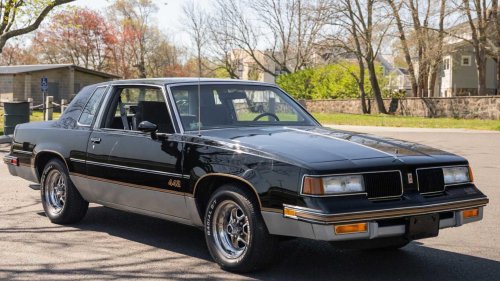
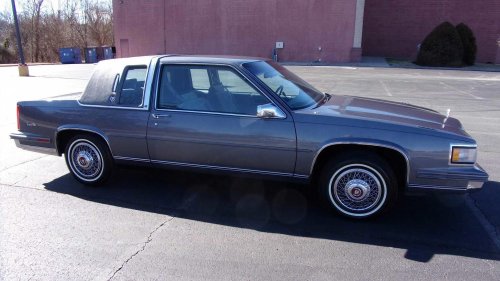
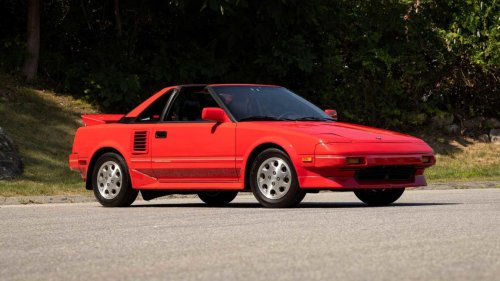
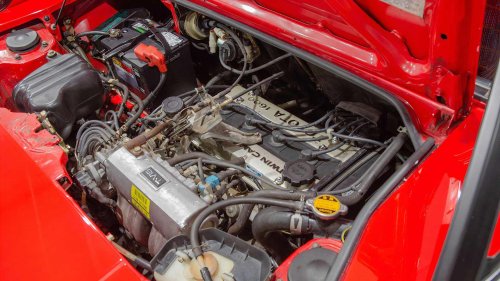
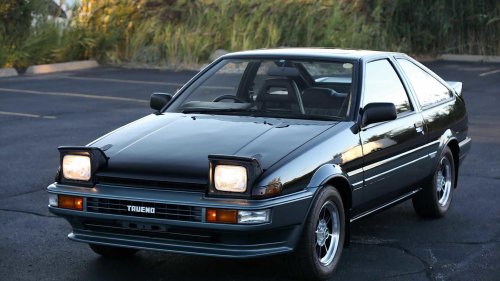
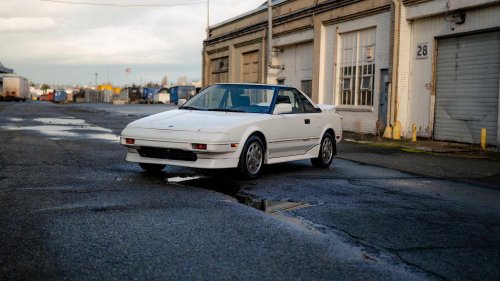
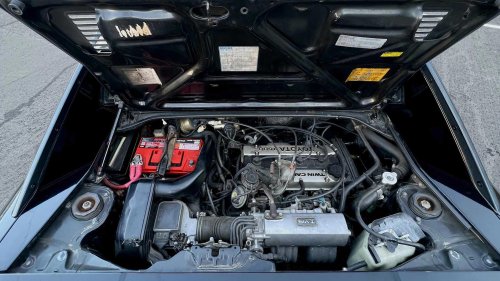
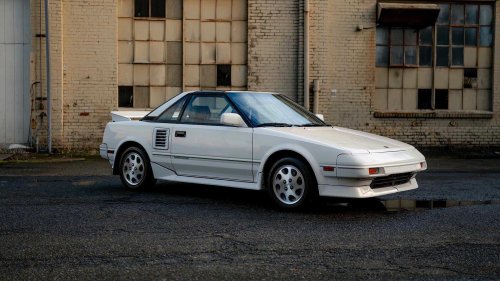
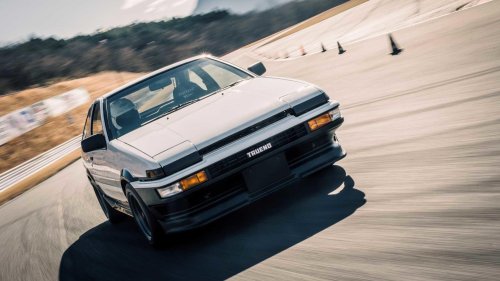



















Japan is home to numerous iconic engines that have defined various automakers. Honda, for one, is iconic for its K, B, and F series VTEC engines, while Nissan’s VQ and RB engines shaped the brand’s strong family of sports cars and daily drivers. Meanwhile, wacky Japanese brands like Mazda are primarily famous for their rotary and Skyactiv engines, while Subaru is defined by its boxer engines.Toyota also has an iconic range of engines that defined various eras, from the GR, JZ, UR, LR, and A series engines. Today, we’ll be focusing on the A series—specifically the 4A-GE, which defined Toyota’s 90s peak in four-cylinder engines. The 4A-GE set the tone for numerous high-performance, affordable Toyotas, namely the AE86 Corolla GT-S and AW11 MR2, which would make their mark in pop culture through the popular anime, Initial D.Of course, the engine better be good if it was chosen to be featured in an anime, right? And indeed, it was. We're going to explore what made the 4A-GE so legendary, and why it was an engine that was so good for its time—especially compared to the large displacement engines that this 1.6-liter four-cylinder outmuscled. America's V-8 Downfall, Japan's Four-Cylinder Peak Bring A Trailer In the 1960s, Americans never thought of fuel as being such a precious commodity. Just look at the engines that powered almost every American car at the time, and you'll realize how ubiquitous the V-8 engine was. Unfortunately, the 1973 Oil Crisis taught us that oil is a much more valuable resource, and so the need for more efficient engines became a lot more appealing. It was also in this era that American V-8 engines were at their worst, and it gave the Japanese a chance to deliver American automakers a knockout punch. Post-Oil Crisis American V-8s Were Beyond Horrible Bring A Trailer If there were only an adjective that's worse than horrible, it would perfectly describe the V-8 engines American automakers were churning out at the time. The worst V-8 engines ever made mostly came out immediately after the 1973 Oil Crisis, due to American automakers rushing to meet newly imposed stricter emissions and fuel efficiency rules. For instance, Cadillac's 4-6-8 V-8 engines introduced an early version of cylinder deactivation, which, believe me, you would want to avoid like the plague due to its unreliability. American automakers like Oldsmobile also attempted to make diesel V-8s to match what the Germans could do, but even that was beyond disastrous.Don't even get me started with the horsepower—or lack thereof—from 80s-era V-8 engines. Due to those stricter emissions, the powerful V-8s before the 1973 Oil Crisis dumbed down their power, either as a result of newly introduced fuel efficiency technologies or simply as a quick and easy way for these American V-8s to meet these targets. The worst offender in this field was Pontiac's 265 4.3-liter V-8 in 1980, which produced an embarrassing 120 horsepower. Suffice to say, avoid most (but not all) American V-8 engines from the 80s and early 90s. Japan's Four-Cylinder Mastery In Full Force Bring a Trailer When the 1973 Oil Crisis hit, Japan's small four-cylinder cars suddenly became a hot commodity. That's also when American consumers realized how extremely reliable Japanese cars were. Ironically, while American automakers were desperately trying to make V-8s efficient, Japan was making its four-cylinder engines more powerful. Japan's engines at the time were already efficient, and so all they needed to do was pour their talent and resources into making it powerful.And so they did. But in the 1980s, we now have Japanese automakers churning out four- and six-cylinder engines that easily produced a lot more than 120 horsepower. Half the displacement meant a lighter engine. Plus, with Japan's already solid reputation for reliability—especially among those who bought small displacement Japanese cars in response to the 1973 Oil Crisis—the 1980s were the time when American consumers heavily leaned toward Japanese brands. These factors also paved the way for the Japanese brands to show off that they could also create not just reliable and efficient cars, but also ones that set performance benchmarks. The 4A-GE's Birth Couldn't Come At A Better Time Bring A Trailer And so this leads us to Toyota's 4A-GE engine, which was essentially born in 1983 to replace the 2T-G four-cylinder engine. At its peak, the 2T-G engine was already producing 125 horsepower—five more than the anemic Pontiac 265 4.3-liter V-8's 120 horsepower. Though the 2T-G was Toyota's flagship engine at its time, the 4A-GE was created from the outset for performance applications. So Much Character And Power Bring A Trailer A hint of the 4A-GE's performance orientation was Toyota's use of a forged crankshaft instead of a cast version. Furthermore, one of this engine's highlights was the T-VIS (Toyota Variable Induction System), which aimed to improve torque at low RPMs. T-VIS varies the intake air through two separate intake runners that are controlled by a butterfly valve, which effectively changes the geometry of the intake manifold.At low RPMs, the airflow is restricted, which increases air velocity and thus lets the engine produce more torque. Once the engine is at higher RPMs, the second intake runner opens up, which slows down airflow but increases the airflow volume, which is what engines at higher RPMs need to improve top-end power. When T-VIS activates, it sounds like a Honda engine with VTEC kicking in. This is why the 4A-GE has a very distinct and desirable engine note, especially for a four-cylinder that was developed in the 1980s. Compact Size, Dense Power Bring A Trailer The 4A-GE is split into two distinct eras—the 16 valve and the 20 valve. The 16-valve version was produced from 1983 to 1991, and it came in three generations. The first-generation "Blue Top" produced 112 horsepower in the American market—lower than the Japanese market's 128 horsepower. Yet despite the lower figure, the American-market AE86 Corolla GT-S was just as fast as the Japanese market's AE86 Sprinter Trueno. The 4A-GE will soon evolve into the "Red and Black Top" or the second generation, which will see its power increase to 115 horsepower for the American market. The third-generation "Red Top" was its most powerful form. Thanks to a compression ratio of 10.3:1, along with other upgrades, it peaked at 130 horsepower for the American market.When the fourth-generation "Silver Top" 4A-GE debuted, its major redesign came in the form of a new cylinder head with five valves per cylinder, hence the 20 valves it has in total. Thanks to a higher compression ratio of 10.5:1, as well as Toyota's use of variable valve timing (VVT), among other upgrades, the Silver Top peaked at 158 horsepower. The final boss form came in the legendary fifth-generation "Black Top", whose compression ratio of 11:1, along with other upgrades, enabled this engine to peak at 163 horsepower—extremely dense power for a 1.6-liter four-cylinder from the 1990s. Unfortunately, the 20-valve 4A-GE was mostly kept within the confines of Japan, forbidden for the world to enjoy. Leaving A Lasting Legacy Bring A Trailer Suffice to say, the 4A-GE's arrival right after an oil crisis didn't just satisfy an American market craving for efficient but reliable four-cylinder engines from Japan. Instead, it also proved that Japan can create efficient four-cylinder engines with actual character and thrilling performance to match its sports car ambitions. Lightness Was Everything Bring A Trailer The vehicles that the 4A-GE powered were mostly lightweight Toyota sports cars, and it gave bigger, heavier American muscle cars in their lower-spec V-6 versions a run for their money. A third-generation Ford Mustang after the fuel crisis got a 4.2-liter (225) V-8 in 1980, but for an engine with twice the 4A-GE's cylinder count, it produced an asthmatic 120 horsepower. The mid-range 3.8-liter Essex V-6 of the 1983 Mustang only produced 112 horsepower—a really embarrassing figure from what should be a high-performance car with big engines. Combined with the heaviness of these American muscle cars, the Japanese also got the cornering advantage. You would look for a corner in an MR2 or AE86 solely for the heck of it, but you would prefer going in a straight line when driving muscle cars from that era. And, Toyota's Keeping This Engine Alive Toyota Firstly, the 4A-GE is a legitimately reliable engine—easily lasting more than 200,000 miles with just routine maintenance. It also helps a Toyota MR2 have a low annual running cost of $439, according to RepairPal. If you do need parts, the sheer popularity of this engine means that spare parts are widely available. But of course, the parts in circulation will eventually decline, since the engine is no longer in production.Thankfully, fans of the 4A-GE who simply wouldn't let go of this engine can rest easy because Toyota Gazoo Racing has revived spare parts production for this engine. Production of these parts will commence in May 2026, when Toyota will release more information in due time.