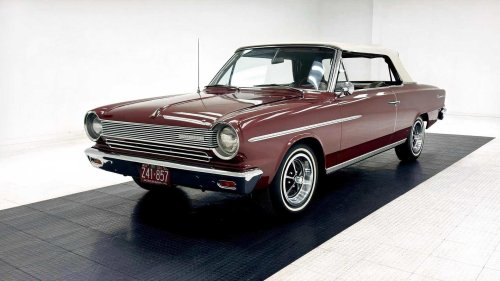
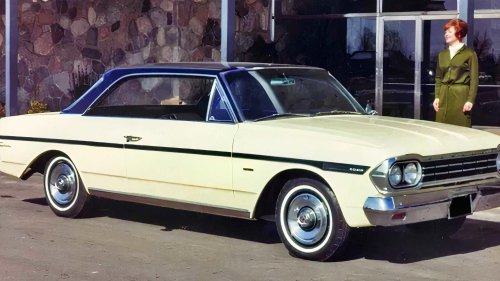
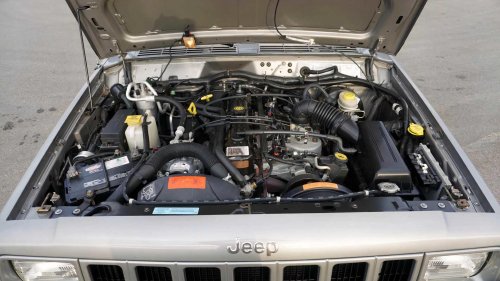
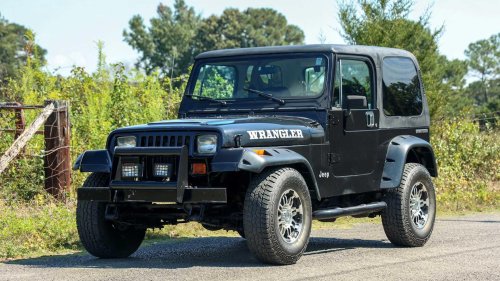
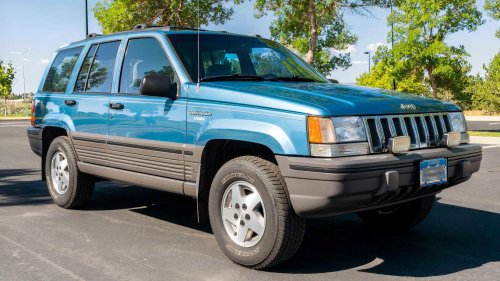



















You might’ve heard that Stellantis’ powertrain division is in a spot of bother lately. Something to do with their latest and greatest four and six-cylinder Hurricane engines barely leaving the factory floor before they start to have problems. Oil leaks, thermostat failures, even catalytic converter issues, you name it. We might believe this is just normal for Stellantis these days. But back in the day, one of their IPs really knew how to make a straight-six last. AMC: Detroit’s Fourth Big Automaker Needs a New Engine HemmingsThe best way to describe the American Motors Corporation to someone who knows nothing about them is simple. In short, they acted as disruptors in established hierarchies. Founded in 1954 from a merger between Nash-Kelvinator and the Hudson Motor Car Company, the deal nearly included Studebaker and Packard as well until that side fell through.The company spent the post-World War Two years competing withthe monolithic block of Ford, GM, and Chrysler, the Big 3,where they could. But their bread and butter came from filling roles in smaller vehicles that the Big 3 often neglected. The original Rambler Six and V8 come from these years, as does the original Rambler Rebel. Often, these AMCs were well-suited to slotting in where other OEMs neglected to fill the market. But a big issue hanging over AMC’s shoulders came in the engine department.Put simply, the current breed of flathead and primitive overhead valve motors that AMC had come to rely on simply weren’t going to cut it any longer. The emerging federal interstate highway system founded at nearly the same time as AMC demanded engines that could merge smoothly and quickly. Oftentimes, folks had to use entrance and exit ramps far shorter and less forgiving than today. What AMC needed was an engine just as strong and dependable as it was torquey and capable. The ‘60s Breeds New Innovations HemmingsIt was in 1964, just in time for AMC’s tenth anniversary, that the company’s philosophy on engine design began to change. Gone were the paper thin aluminum engine blocks of old. Lightweight and affordable as they may have been, they simply didn’t have what it takes in the durability department. In their place was something altogether different. AMC’s new straight-six was a stout little thing with a comparatively short stroke and a beefy seven-main bearing crankshaft that put the brunt of the engine’s torque down low in the rev range.Available in 199-, 232-, and 258-cubic-inch variants during the ‘60s and '70s, these new AMC straight sixes were far from horsepower junkies. Rather, their rock-solid construction, relatively low compression, and an under stressed engine block, made these motors the reliable backbone of AMC’s entry-level offerings.The 232 “Typhoon” straight-six was the flag-planter engine for the breed in 1964, debuting under the hood of that model year’s Rambler Classic 770 to much fanfare. The smaller 199 motor would take slightly longer to arrive, and even found success in IndyCar racing in the hands of Barney Navarro, who tuned them to make north of 700 horsepower. All-in-all, the AMC straight-six was already a great motor. But its ultimate form would take some time to materialize. The 4.0 Straight-Six: Toyota Reliable, With Real American Charm Bring a TrailerIt took 26 months for AMC to develop a novel 242-cubic-inch (4.0-liter) variant of its much beloved straight-six during the mid-1980s. In engine development terms, that’s almost nothing at all. But it wasn’t like AMC didn’t already have a great foundation to improve upon. Based loosely on the 258-cubic-inch motor you’d find inAMC classics like the Gremlin, Spirit, and its California Jeeps, the new 4.0 was specially designed for the rigors and stresses of 1980s motoring.Aside from strength, these motors were built to be far more refined than AMC straight-sixes of old. They were built with computerized Renix multi-port fuel injection, making equivalent throttle body systems or even carburetors look primitive by comparison. It also featured high-flow cylinder heads with larger intake and exhaust valves compared to engines prior. It helped the new 4.0 straight-six handle the rigors of highway merges day after day for years on end. It’s something relatively Spartan AMC straight-sixes of old struggled mightily with. Now? It was a downright strength.Though still sporting a relatively low compression compared to modern engines, it was bumped up to 9.2:1. A far less lazy camshaft profile than engines prior also helped claw back high-end performance figures that’d once alluded the form factor. Suddenly, AMC possessed a straight-six that could cruise comfortably at 65 mph, torque its way out of tricky off-road terrain, and almost guarantee 200 to 300,000 miles of trouble-free driving with the most basic maintenance. Giving Life and Status to the Jeep Brand Via: Cars and BidsAMC’s 4.0 straight six differed from its ancestors for more reasons than hardware. Even down to the application, it was entirely novel. It was an SUV and truck motor first, and absolutely nothing else second. Its first compact SUV application in 1987 would turn out to be its most memorable, the iconic, nearly unparalleled, classic XJ-series Jeep Cherokee. Though it launched in 1984 with a GM-sourced Chevy V6 or a 150-cubic-inch AMC four-pot, the Cherokee platform underwent a renaissance as soon as the 4.0 straight-six arrived. In its later years, 190 horsepower and 235 lb-ft of torque was easily achievable via the special "High Output" OEM tune profile.With the straight-six in tow, the Cherokee became just as beloved by rural mail truck drivers, as well as county and state police the country over, as average civilians. These mail truck models, made right-hand drive especially for the trade, formed the foundation of the Cherokee’s British, Irish, and Japanese export fleet with that very same straight-six equipped. Elsewhere, the new straight-six was also offered with the flagship Jeep Wagoneer starting in 1987, as well as the Cherokee-based Comanche pickup truck.No sooner did AMC send 4.0-equipped Jeeps to dealers than Chrysler swooped in to save the company from what looked like financial ruin. Knowing what a gem of an engine Chrysler now had on its hands, its next destination was the YJ-series Wrangler starting in 1991. The YJ would offer the 4.0 through the duration of its lifespan, as did its follow-up, the TJ, well into the 2000s. Ditto for the much-beloved ZJ and WJ Grand Cherokee, where the engine routinely lasted far longer than the notoriously rust-prone frame. It’s estimated over 5 million straight-six-equipped Jeeps were built over 20 years, or roughly 2.4 million Cherokees all by itself. So Reliable, They Still Hold Value Today Bring a TrailerEven if the trucks they were mounted to were subject to varying levels of quality, Jeeps equipped with the 4.0 straight-six are as much carriers of their powertrains as they are people. In combination with a Jeep mythos at the arguable peak of its influence, late ‘80s and ‘90s-vintage Cherokees, Wranglers, and Grand Cherokees with low mileage routinely sell for five-figure sums.In extreme cases of survivors with south of 5,000 miles on the odometer, XJs have sold for north of $40,000. For some context, a 2026 Jeep Cherokee turbo hybrid has a base MSRP of $36,995. Somehow, it’s doubtful these modern Cherokees will have quite such impressive resale value.Source: Bring a Trailer