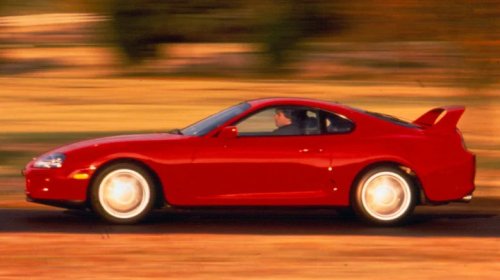
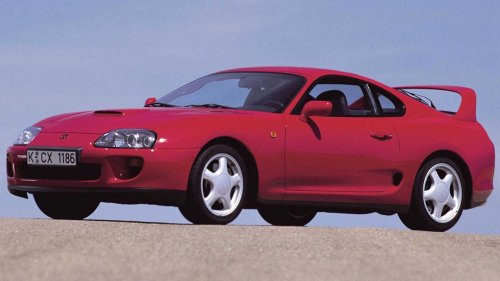
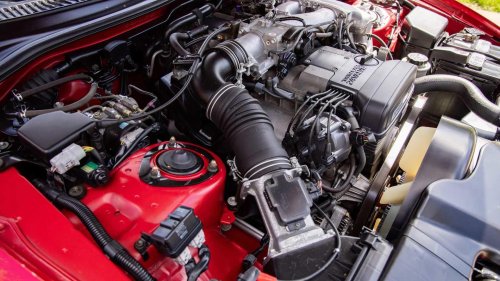
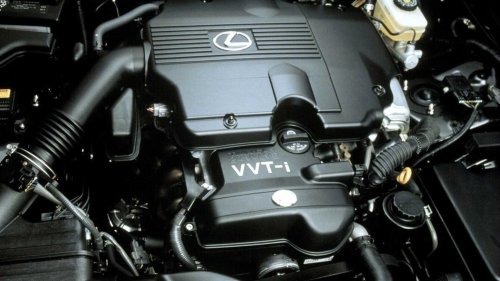
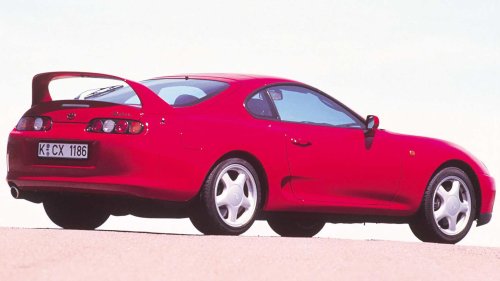
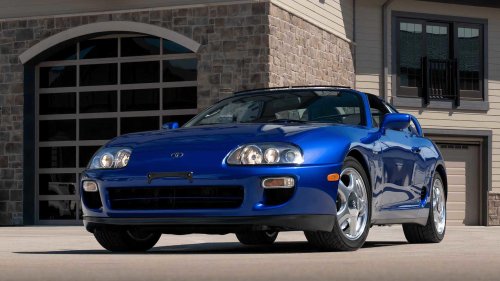
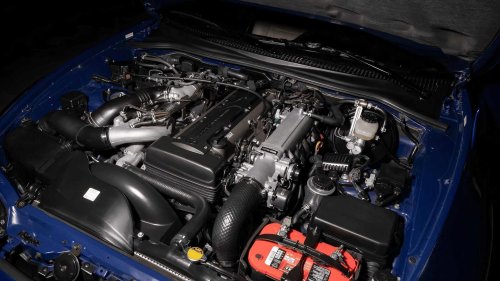
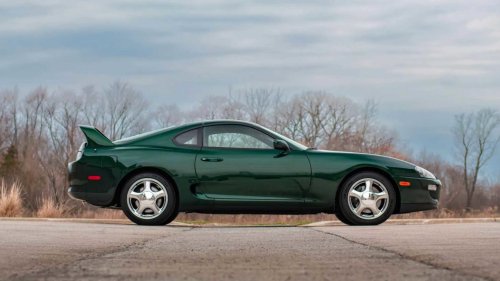
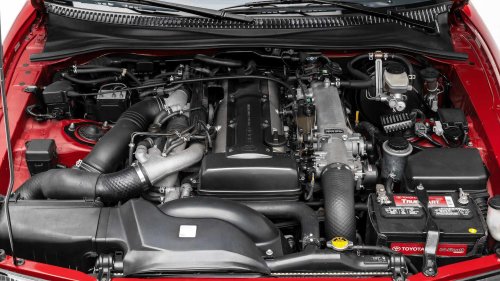
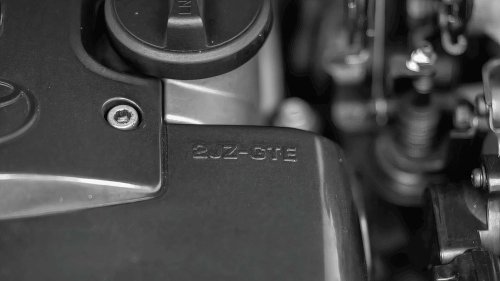
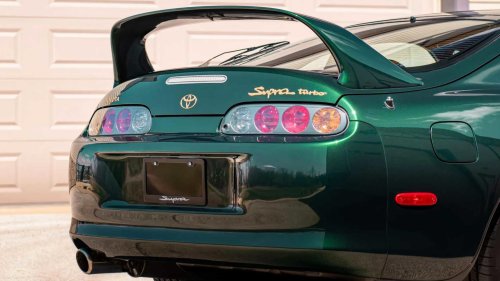
The fourth-generation Toyota Supra, available in the United States for the 1994 through 1998 model years, has almost mythical status in automotive culture. Also known as the MKIV and its internal designation A80, the Japanese grand tourer has amassed a massive tuning scene. Its 2JZ 3.0-liter inline-six powerplant has been taken apart and put back together by engine builders all over the world to extract as much power as possible. However, the MKIV Supra's huge popularity has led to the emergence of many tuning myths and so-called “facts” spreading across enthusiast forums.A lot of the confusion may be down to Toyota's strategy of selling different versions across multiple regions, pairing the engine with several different drivetrain components, and revising the motor during production. And even veteran owners can sometimes become confused and swear that one assumption is absolute fact when that's not quite the case. So, here are ten MKIV truths that help correct the conversation and that may surprise even veteran owners today. The MKIV Supra Never Used Parallel Twin Turbos ToyotaEven avid Supra fans still believe that Toyota's 2JZ-GTE had a conventional parallel twin-turbo setup. However, the reality is that Toyota equipped the MKIV Supra with a sequential turbocharging system to maintain strong high-RPM performance while reducing lag. The system worked in a very specific way, with only the first turbocharger active at low engine speeds.At around 4,000 RPM, a series of exhaust and intake control valves activated to bring the second turbo online, creating the now-famous second turbo hit that helped define this car's personality. If Toyota had installed a true parallel arrangement, both turbos would have been running constantly. However, the company chose not to, as the factory CT-series turbos could have produced notably slower spool behavior.The net result was a car that could deliver serious top-end power while still feeling very responsive at lower speeds. Tuners often convert the Supra to use a single, large turbo to achieve high dyno numbers. Still, the original sequential setup was highly successful and helped define the A80 Supra as a leader in the world of 1990s turbo cars. The JDM And USDM Engines Were Not Mechanically Identical Bring A Trailer In the early 1990s, Toyota had a gentleman's agreement with other Japanese manufacturers to limit the quoted horsepower output to 276 hp in the Japanese market. However, Toyota quoted US-spec cars at 320 hp and 315 lb-ft of torque, and they used larger 550-cc injectors compared to the 440-cc units in Japan. The US-market Supra also had different camshaft specifications, with more aggressive intake cam duration and lift, resulting in stronger high-RPM airflow.Toyota adjusted boost behavior, fueling, and ECU mapping to bring everything in line with US regulations and driving conditions. In practice, the real-world performance gap was not as large as those ratings might have suggested. Still, the engine's tuning for the American and Japanese markets was not identical. VVT-i Changed Torque Delivery More Than Horsepower Lexus For the 1997 model year, Toyota introduced "Variable Valve Timing with intelligence" (VVT-i) to its Japanese-market vehicles. The system adjusted the intake cam timing dynamically based on engine load and RPM, resulting in a flatter power band while still maintaining the Supra's overall character.According to the company, the change also improved drivability and mid-range torque delivery. While the official horsepower output still adhered to the gentleman's agreement at 276 hp, Toyota increased the torque rating from 320 lb-ft to about 333 lb-ft. The additional grunt came earlier in the rev range.Americans never got to sample the VVT-i twin-turbo MKIV, but there's a general feeling that the upgraded tech made the Japanese Supra a better road car. The V160 And V161 Are Different Transmissions Toyota Many owners believe that the V160 and V161 are interchangeable gearboxes, but the truth is that the latter featured significant changes. Following the arrival of VVT-i technology in Japan, the transmission supplier Getrag revised the ratios and internal behavior. The new Getrag V161 had slightly taller intermediate ratios and a shorter sixth gear than the earlier V160.Toyota also made several internal revisions to the latter transmission system to improve refinement and usability, including changes to synchronizer behavior and center-section architecture. These changes were Japan-market-specific and were never officially sold to American buyers, mainly because the US never offered the VVT-i twin-turbo system in the MKIV Supra. Experienced builders and knowledgeable collectors pay close attention to which variant they get with an imported car. The 2JZ-GTE Was Strong But Not Magical Bring A TrailerSome overenthusiastic Supra fans may believe that the 2JZ-GTE is somehow bulletproof and can handle virtually unlimited horsepower with completely stock internals. It is true to say that Toyota overengineered this engine, giving the unit unusually conservative margins, and there are very strong components, including a forged crankshaft, an iron block, and a tough bottom-end architecture that can take some pounding. But still, there are practical limits to take into account.When people tune these engines to their limits, they need to pay close attention to bearing wear, oil flow, ring lands, and head gaskets. Factory ceramic wheel turbos can also become very fragile at elevated boost pressures. Some tuners boast on forums about 1,000-hp stock internal builds, which may involve ethanol fuel and standalone management systems. However, these builds do not necessarily have long service lives, and the 2JZ-GTE, while being a remarkable motor, is certainly not indestructible. Factory Turbo Hardware Varied By Region Bring A Trailer Toyota specified different turbocharger details by market and production year, which is often overlooked in Supra tuning discussions. Many versions for the Japanese market had ceramic turbine wheels that could help improve spool response and rotational efficiency. But in the US, those cars would generally get steel turbine wheels, which were still the default for long-term durability.Some tuners can run into challenges if they're unaware of these differences when they begin their modifications. After all, ceramic turbos are quite vulnerable if someone tries to introduce aggressive boost, and pressures can inadvertently push ceramic wheel assemblies far beyond their intended operating range.Also, some imported drivetrains may feature mixed-up components from different regions and years. It's not unusual for an importer to have a US-spec turbo hardware setup instead of a Japanese-market assembly. This can lead to significant challenges, including compatibility of replacement parts, tuning reliability, and restoration accuracy. The Automatic Supra Was More Capable Than Its Reputation Suggested Bring A Trailer Some enthusiasts dismiss the Supra's automatic gearbox out of hand, but the reality is that it could prove remarkably durable under heavy torque loads. In fact, the A340E automatic transmission could sometimes deliver more consistent launches in a drag-racing environment because it managed the boost more efficiently from a standstill. This led some serious high-horsepower tuners to choose the automatic to achieve repeatable acceleration runs intentionally.Meanwhile, others believed that the automatic was generally a better all-around choice for the Supra anyway. It seemed to suit relaxed cruising aspirations and worked more efficiently on long highway drives, turning the vehicle into more of a refined high-speed grand-touring machine than a raw tuner special. The MKIV Supra Was Not A Lightweight Sports Car Bring A Trailer In truth, the MKIV Supra was anything but a lightweight Japanese sports car, even though modern nostalgia sometimes paints it that way. The A80 was quite heavy for its era, weighing between 3,400 and 3,500 pounds, depending on specifications and marketplace. Toyota never set out to make the Supra a stripped-out track machine anyway, so it included several luxury-oriented elements and extensive sound insulation, which contributed to the weight gain.The Supra's extra bulk made it quite composed at high speeds, unlike lighter performance cars from that period. And the weight may have helped the vehicle feel very planted, especially when dealing with those massive horsepower builds. Not Every 2JZ-GTE Casting Is The Same Bring A Trailer Over the years, Toyota remained remarkably consistent with the core engine architecture of the 2JZ. However, it would work on areas such as castings, oiling arrangements, electronics, and cylinder head details throughout production, which can be more complex than some builders realize.For example, the late VVT-i engines had revised MAF sensor layouts and different electronics integration. The cylinder head castings were also specially built to accommodate the VVT-i system and its revised intake arrangements. So, it's not unusual for intrepid builders to encounter compatibility issues or discover unexpected wiring and other problems due to changes in manufacturing.There may also be further regional complications, with some engines for export markets carrying different emissions hardware or accessory mounting arrangements. Successful builders today should be aware of such differences and not assume that every 2JZ-GTE is intrinsically “plug and play.” The Supra Became Legendary Because Of Its Engineering Depth Bring A Trailer There’s more to the MKIV Supra than huge horsepower numbers and impressive dyno charts. Arguably, Toyota’s real achievement was in creating a platform with enormous depth and versatility. Owners could use their A80 as a refined grand tourer or seek as much horsepower as possible through tuning, and all without losing any of the car’s special identity.Much of this flexibility came down to Toyota’s conservative engineering and design approach, and a strategy that's helped to push the car into magical territory. This engine clearly delivered far more performance than the factory-supplied unit, which is probably why the MKIV Supra still matters as much today as it did when it first appeared. The MKIV's legend lies in its solid engineering base, once you've stripped away all the internet folklore to understand the machine's capabilities.



















 +41 others