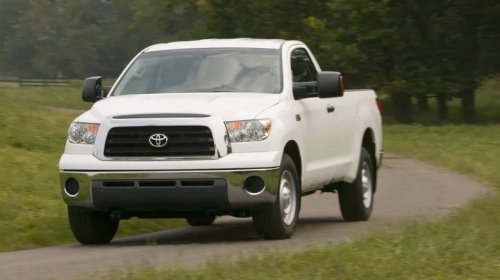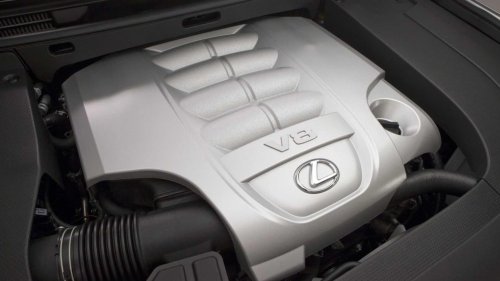
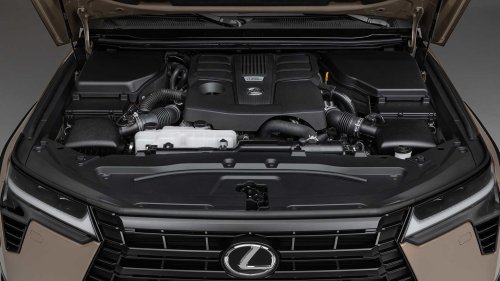
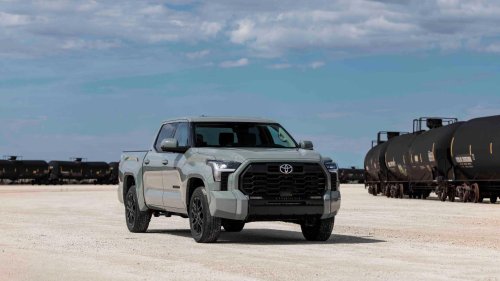
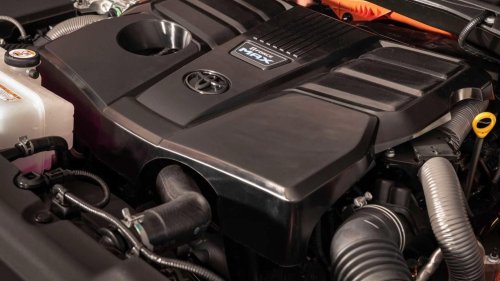
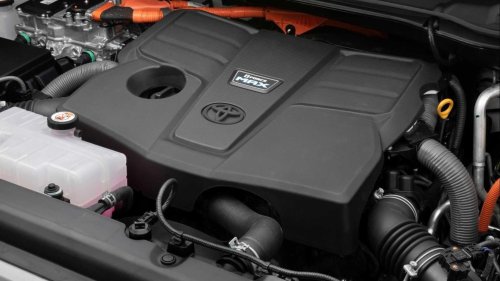
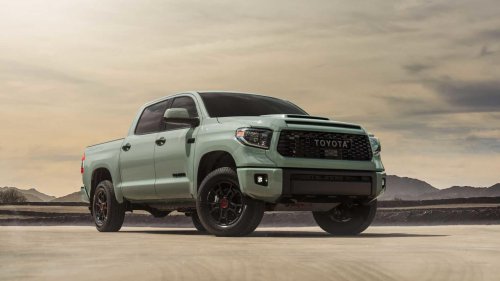



















Jump LinksIt’s very disconcerting to think of metal shavings circulating in engine oil, but the issue is an increasing concern for some Toyota owners. In certain Toyota service departments, oil drainage containers sit alongside partially disassembled Tundras waiting for replacement engines, and the repercussions may be shaking confidence in Toyota’s marketplace.For the longest time, buyers would choose a Toyota truck because of its longevity, and they’d lean heavily on Toyota’s excellent reputation. And it’s hard for buyers to understand how a truck with fewer than 30,000 miles on the clock may suddenly need a complete engine swap. There’s growing anxiety about Toyota’s V35A-FTS twin-turbo V6, centered on an original recall campaign and now exacerbated by replacement delays and mounting customer concerns. The situation may lead to bigger problems for the Japanese company over time. Toyota Replaced One Of America's Most Trusted V8 Truck Engines LexusToyota was very bullish when it launched its second-generation Tundra for the 2007 model year, and it leaned heavily on the vehicle's 5.7-liter 3UR-FE V8 engine. This engine had a strong reputation for durability and represented what buyers had come to expect from Toyota. It was relatively simple, over-engineered, and delivered strong towing performance and smooth power delivery.Owners could rack up significant annual mileage without major concern. While there were some dramatic engine failures here and there, Toyota typically had fewer than competitors. And while many challengers tried to beat the Tundra in the marketplace by offering updated technology, better interiors, or stronger fuel economy, buyers remained steadfast. They continued to view the Tundra as a very safe long-term ownership bet, even as the surrounding market started to change.LexusThe late 2010s and early 2020s saw a period of rapid transformation in the auto industry. For example, Ford leaned heavily on turbocharged truck engines through its EcoBoost range. Pickup makers had to pay close attention to fuel economy targets and developing emissions regulations. For Toyota, the situation started to make large naturally aspirated V8s like the 3UR-FE hard to justify.Toyota's answer to this new world was a 3.5-liter twin-turbo V6, known internally as the V35A-FTS. This engine was already in use within the Lexus LS and now appeared in the redesigned 2022 Tundra. In the standard i-Force form, it produced up to 389 hp and 479 lb-ft of torque. The hybridized i-Force Max made 437 hp and 583 lb-ft of torque.The engine seemed competitive and powerful, with torque arriving much earlier than it did in the old V8. Owners would get better fuel economy and better towing performance. Paired with a modern ten-speed automatic transmission, this new truck felt far more refined and quicker than the old version. The Recall Story Became Much Bigger Than Toyota Expected Toyota Clouds appeared on the Tundra's horizon in 2024, when Toyota announced a recall campaign. This potentially affected approximately 102,000 Toyota Tundra and Lexus LX vehicles with the newer engine and centered around some potentially serious issues. According to the National Highway Traffic Safety Administration, Toyota may not have removed all machining debris from the engine assembly process. There was a risk of sudden loss of power or even complete engine seizure if the material damaged the engine's bearings.Toyota characterized this as a manufacturing contamination issue limited to specific production periods, rather than a systemic issue or a broader flaw in the engine’s design. The company authorized complete engine replacement for these vehicles from the 2022 and 2023 model years, instead of even attempting any internal repairs.Despite the company's proactive approach, the problem continued to grow for Toyota, leading to an expanded recall. In late 2025, the company announced further issues affecting around 127,000 vehicles, including newer Tundras as well as Lexus GX and LX models, which have slightly different tunes of the V35A engine.Of particular concern, some of these affected engines may have been built after Toyota became aware of the original issues and implemented some manufacturing corrections. The situation caused speculation in the Toyota enthusiast community about whether the problem with these powerplants was more widespread.By May 2026, the issue had developed further with another recall campaign affecting about 44,000 Tundras. Taken together, these issues had now affected almost 270,000 vehicles through those various campaigns. And these recalls now presented a much higher level of concern for a company that had built its reputation around solid engineering consistency. The Engine Itself Is Technically Very Good Toyota The V35A-FTS may well be one of Toyota's most advanced mainstream truck powertrains ever, and this is what makes the recall situation so fundamentally frustrating for the company. After all, this isn't an engine that features any poorly thought-through engineering shortcuts or unsophisticated processes. Instead, it's a unit that features a 60-degree aluminum block architecture with dual overhead cams, twin turbos, direct and port fuel injection, and extensive thermal-efficiency optimization. On the road, it performs particularly well, with plenty of strong low-end torque for towing and hauling.The V35A-FTS is very different to the 5.7-liter V8 that it replaced, with particularly good mid-range acceleration under load. Buyers also praise the newer ten-speed automatic transmission that helps the engine deliver its power within a strong, usable band and far more effectively than the outgoing six-speed arrangement.Toyota had big plans for the V35A architecture and wanted it to become a key part of its broader premium and truck strategy. It introduced the engine into the Sequoia, Lexus LX 600, Lexus LS 500, and several overseas Land Cruiser models, in addition to the Tundra. Given the scale of the recall campaign and the V35A's central role in Toyota's future with combustion engines. People want to know whether the sheer complexity of these new drivetrains could be starting to compromise reliability, which has always been one of Toyota's historic strengths. Toyota's Reputation Is Taking A Rare Hit ToyotaToyota has often been able to justify higher prices for its truck offerings because the automaker built such a reputation in the marketplace, presenting these vehicles as lower-risk long-term ownership propositions. Consumers would also accept some conservative engineering or slightly dated cabin design from Toyota because reliability was most important to them, especially beyond the warranty period.With this backdrop, the recall situation may cut unusually deep for Toyota. In the worst-case scenario, it could affect Toyota's truck resale values should buyers question the latest powertrains. Certainly, the older V8 engines in the earlier Tundras are well proven, and their naturally aspirated simplicity has developed an almost cult-like following among buyers.But the newer twin-turbo trucks may be starting to complicate the picture. When buyers start shopping for used trucks in the $45,000 to $70,000 range, they need to do their due diligence and ask questions about post-warranty ownership costs. They should research recall histories and consider long-term reliability. Historically, that conversation has been slightly easier in the Toyota world.Some truck buyers don't just focus on horsepower or towing capacity. They want to know whether their vehicle can still function properly years down the road. In the Toyota world of old, the answers to these concerns often came from the brand's reputation in the marketplace and word of mouth. Now, Toyota may now worry that newly weakened levels of confidence could take a very long time to rebuild. The Used Market May Ultimately Decide The Engine's Reputation Toyota Toyota Tundra values appear relatively upbeat currently, and the company's brand strength remains extremely strong. Toyota certainly moved decisively during those recall campaigns and has shown its willingness to replace engines outright where needed. However, the newest Tundras may not have the same automatic assumption of bulletproof durability as older Toyota trucks, which could create an unusual dynamic within the Toyota truck market.Some buyers may now be searching for clean late-model V8 Tundras instead of opting for newer twin-turbo trucks, presenting an irony that’s difficult to ignore. After all, Toyota decided to modernize its Tundra offering with this new engine to remain competitive against domestic rivals that had long since adopted turbocharging. In doing so, the company certainly developed a machine that's faster, smoother, more efficient, and more technologically sophisticated than its predecessor. But that modernization push now appears to have introduced another problem.For Toyota, there’s a new level of uncertainty around long-term durability, and the repercussions are still developing. And it may therefore take time for Toyota to earn the same level of trust with its most advanced modern truck engine as it did with its older, naturally aspirated V8.