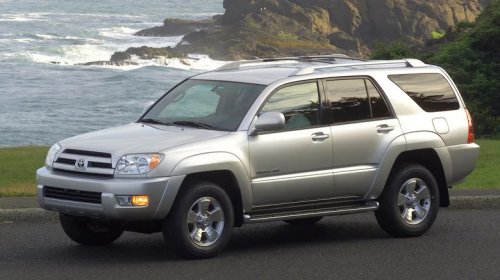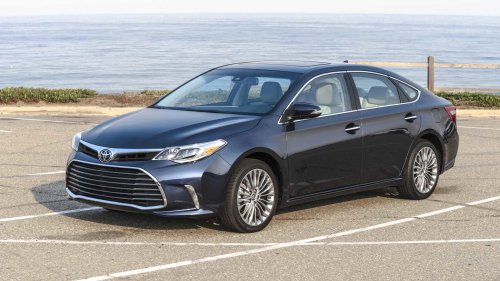
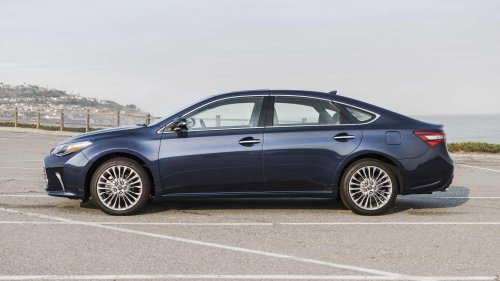
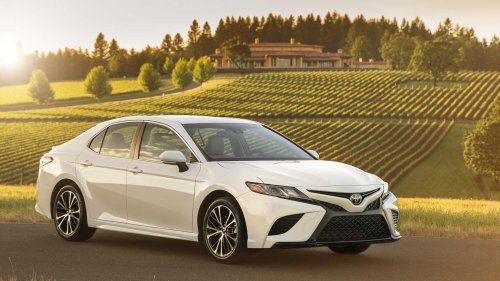
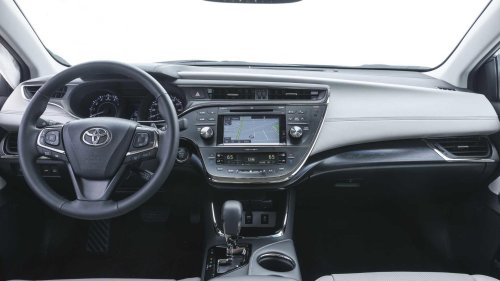
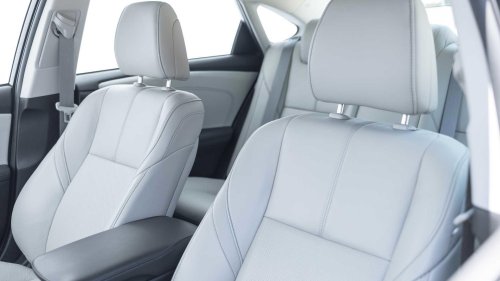
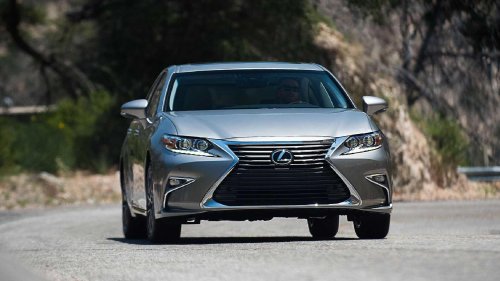
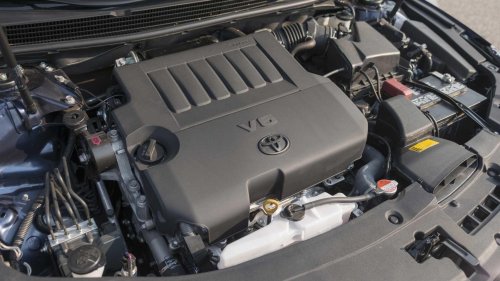
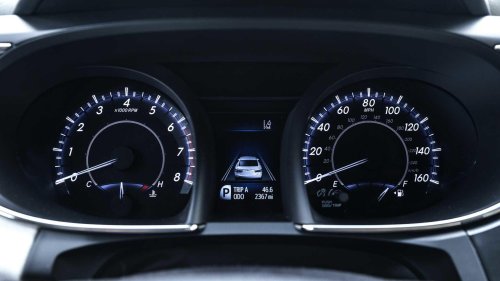
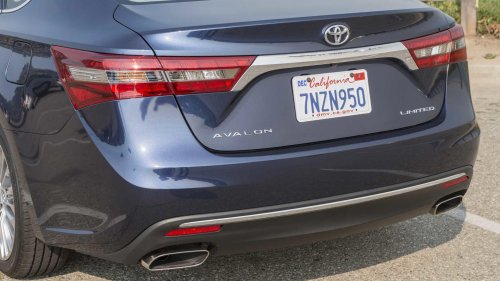



















We're always on the hunt for affordable cars that don't cost much to maintain, and aren't too boring. There may not be too many vehicles that meet all of those criteria, but it's not impossible. Every segment has a model or two that get away with being affordable and fun. For example, the 3rd-generation Toyota 4Runner is a relatively cheap SUV that's easy to maintain and can be fun off-road.On the sports car side of things, buyers have the Mazda Miata, or Infiniti G37. There are even some luxury cars that won't break the bank as much as others, like the W124 Mercedes-Benz E-Class. When it comes to sedans, though, buyers are less concerned about "fun," and more concerned about comfort.The Toyota Avalon checks all the right boxes. Used models can be fairly affordable today, plus they're reliable, cheap to fix if things do break, and they nearly reach Lexus levels of luxury with plenty of comfort features in higher trim levels. Toyota's top-tier sedan first went on sale for the 1995 model year, then went through five generations until it was discontinued after the 2022 model year. We focus on the fourth generation to explain why they should be more desirable on the used market as luxury sedan alternatives.Used car values fluctuate depending on a variety of factors, including location, mileage, mechanical and cosmetic conditions, the status of its title (whether it's clean or branded), the number of owners on record, and more. The prices explained here today may not exactly reflect what you can expect to pay for a used Toyota Avalon, or what yours is worth on the market. How Well Does the Toyota Avalon Hold Value? ToyotaTry as buyers might, there's little to be done about avoiding depreciation. All cars, even the most luxurious, most powerful models you can think of, will lose value eventually. However, they all fall at their own rates that vary due to desirability, reliability, and more. In the Toyota Avalon's case, CarEdge explains how owners can expect the car to lose about 35% of its value after the first five years on the road.That's better than average, since most cars lose about half of their new value after the same timeframe. Different trim levels could depreciate at different rates, too, since more luxurious versions may be more desirable. The Avalon's Limited trim fits that description. What the 4th-Generation Avalon is Worth Today ToyotaThe fourth-generation Toyota Avalon was on sale for the 2013–2018 model years with a single facelift for the 2016 model year. Only cosmetic changes occurred in 2016, leaving the gas and hybrid powertrains alone for the entire 4th generation (or XX40, as the generation is known internally). That said, most of the XX40 Avalon has held onto its value relatively well. According to CarBuzz' own Price Trends data, the 2013 Limited trim is worth about $14,245, which means it lost about 65% of its value over the last 13 years based on an original MSRP of $39,650 for gas models.The 2016 model year, being the beginning of the XX40's facelift, is worth a bit more. Our price data shows listings average out to $18,145 for the Limited trim level, while the final model year, the 2018 Avalon Limited, is worth about $21,820. Other Non-Luxury Sedans Fare Similarly ToyotaA lot can be said about how simplicity leads to better reliability and ultimately more desirability. Buyers on the used car market tend to look for models that will last, sometimes putting luxury or sportiness aside for longevity. That said, the Toyota Camry and Honda Accord tend to hold value fairly well, too.They aren't nearly as nice inside as the Avalon – which holds value even better – but buyers on smaller budgets can get away with only losing around 36% of a Camry's value in five years on the road, and the same goes for the Accord. Both models outperform or match their respective brand's overall average depreciation, too – Honda models depreciate an average of 40% after five years, and Toyotas depreciate by about 35% on average. Buyers Can Compare the Avalon to a Lexus ToyotaThe Avalon competes on higher ground than the Camry or Accord, since it's a larger, nicer sedan. More direct rivals include the Nissan Maxima (discontinued after the 2023 model year) and Volkswagen Arteon (also discontinued after 2023). Nevertheless, the Toyota Avalon shares the TNGA-K platform with the Lexus ES, making it a perfect starting ground for comparison. The "Toyota New Global Architecture" K-platform means parts are plentiful to maintain or repair either vehicle, leading to shorter wait times and more efficient, cheaper shop bills.The Lexus ES is also still more expensive than the Avalon on average, with prices fluctuating between the $20k–23k range, while the Avalon tends to stay near or under $20k. Toyota Avalon Limited Versus Lexus ES 350 Features ToyotaBoth the Avalon and the ES have similar interior dimensions — that's expected. Real differences are found in the features. In fact, the Avalon's Limited trim level can be even more luxurious than an ES 350 without options. Here are some of the Avalon Limited's standard features: Perforated leather-trimmed seats A 10-way power-adjustable driver’s seat with power lumbar support and power cushion extension An eight-way power front passenger seat Heated and ventilated front seats Heated rear seats Three-zone climate control Powered rear window shade that automatically raises and lowers when shifting into drive or reverse The Lexus ES' features are also nice, but features like real leather upholstery and heated seats are not standard. Here are some of its standard highlights from the 2018 model year: 10-way adjustable power front seats Automatic climate control NuLuxe perforated upholstery with Piano Black ornamentation A power tilt-and-slide moonroof Remote-linked power window and moonroof opening Avalon Versus ES 350 Engine Specs and More LexusSince both the Avalon and ES share a platform, they both have access to the same two engines. The 2GR-FE is a 3.5-liter V6 that was tuned for 268 hp in both models for these model years. The Avalon could be equipped with a hybrid system for the first time since the sedan was introduced, and the Lexus ES 300h could have the same.That said, the ES 350s name was derived from the 3.5-liter V6. Both models were limited to front-wheel drive systems, while each models' later generation could be equipped with all-wheel drive. The V6 these two sedans touted remains a popular and reliable choice in the used market. Used Toyota Avalon Reliability ToyotaWhile we wouldn't say any Avalon is particularly unreliable, they're definitely not all the same. Focusing on the XX40 generation, we see far more complaints from owners to the NHTSA and Car Complaints about the 2013 and 2014 model years than later years. Some commonly reported issues with the earlier models include unintended acceleration, the rear window shade getting stuck in the up position, and some owners reported the front seat backs falling off."I was attempting to park my car by backing into the parking space. As I was going forward to position the car before backing up into the space, my car suddenly accelerated and I had to quickly step on the brakes before it slammed into a tree. Even normal everyday driving I have noticed that there is a surge forward while applying the accelerator. I am really concerned because I do a lot of highway driving." – 2013 Toyota Avalon Owner, 82,300 miles, 18 July 2018That said, the post-facelift model years are some of its most reliable. Aside from a recall that affected 2,891,976 Toyota and Lexus models pertaining to the airbags and seat belt pre-tensioners, there are few concerns. The 2017 and 2018 Avalon years lack any major problems, and issues that have been reported are in such low volume that we wouldn't consider them common. Real-World Avalon Ownership Costs ToyotaThe Avalon's V6 engine is notoriously reliable, so there shouldn't be many necessary repairs as long as it's taken care of. Keeping that in mind, it still costs money to maintain with regular oil and filter changes, tires, brake pads and rotors, and other necessary upkeep. According to RepairPal, Avalon owners can expect to spend an average of $463 per year on maintenance and repair costs.Other costs include insurance, which, according to TheZebra, costs an average of $963 for a six-month policy. Insurance rates vary from person to person depending on your driving record, and the Avalon itself is fairly luxurious, causing its rates to be slightly higher than other common sedans like the Camry. The Avalon Should be Higher on Your List Toyota Luxury sedan buyers often overlook the Toyota Avalon simply because it lacks a Lexus badge, but the truth remains that its Limited trim is just as nice – if not more luxurious – as a Lexus ES 350. The 4th-generation (XX40) Avalon is only worth about $21k these days, which is less than the ES 350 from the same era. They're both reliable, since they share a platform and powertrain, so why not choose the Avalon for the same luxurious driving experience?