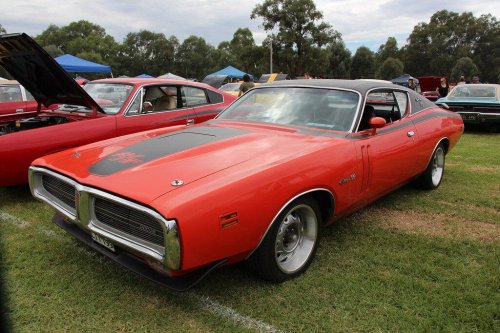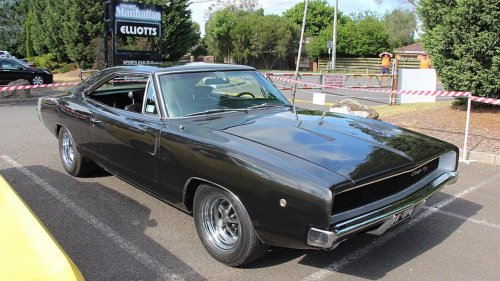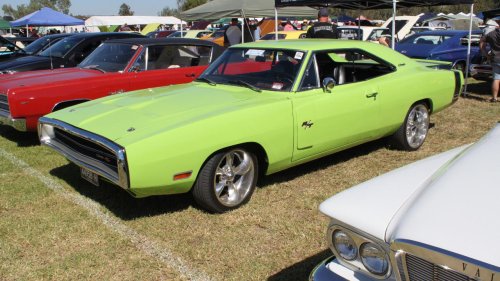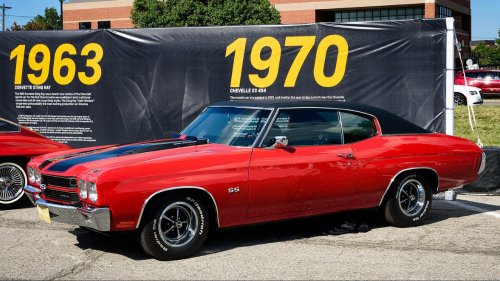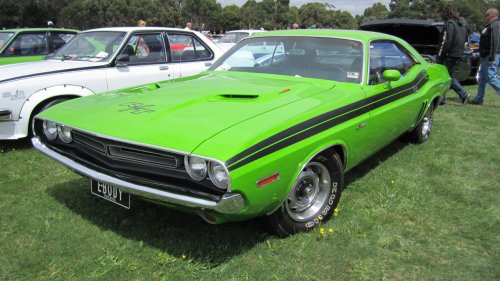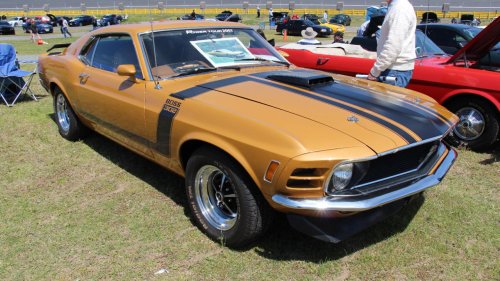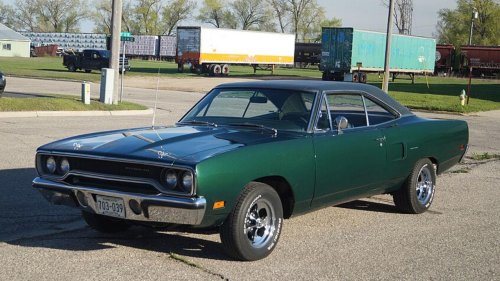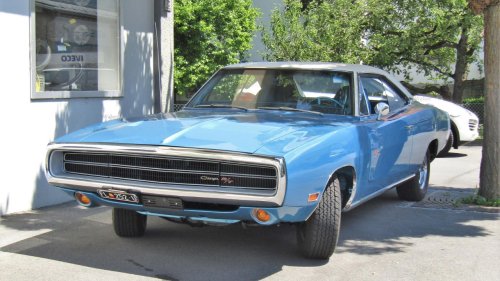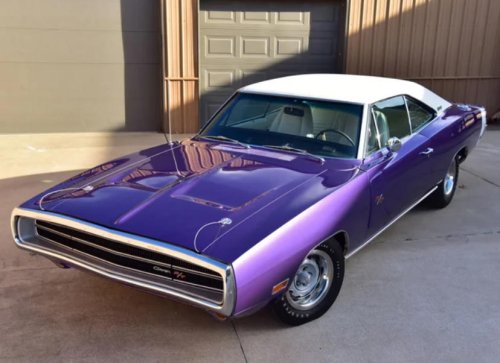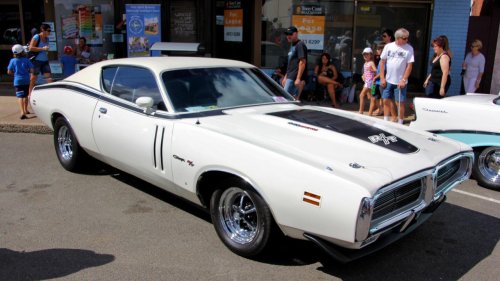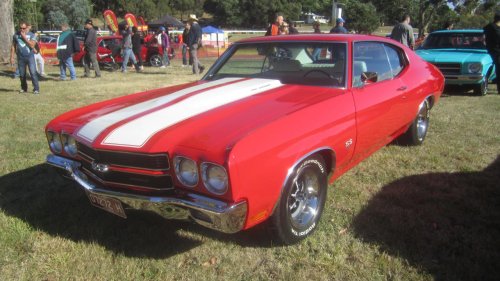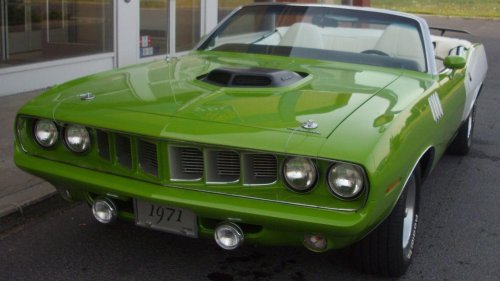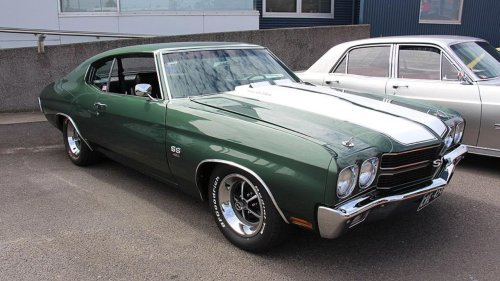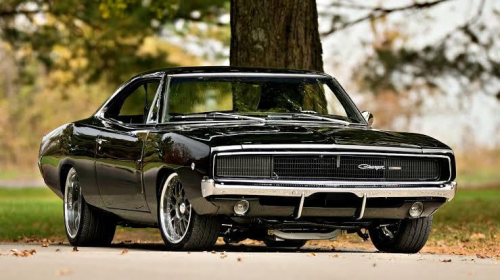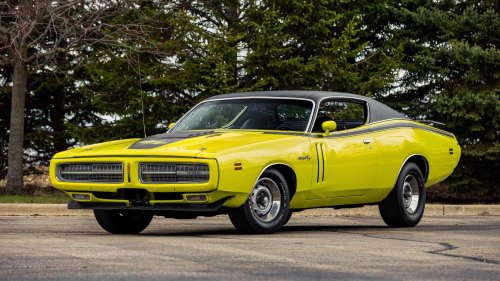
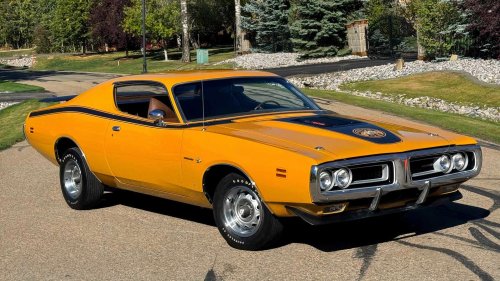
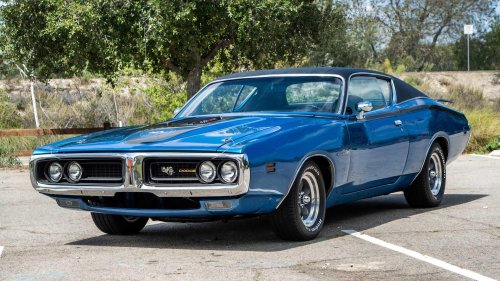
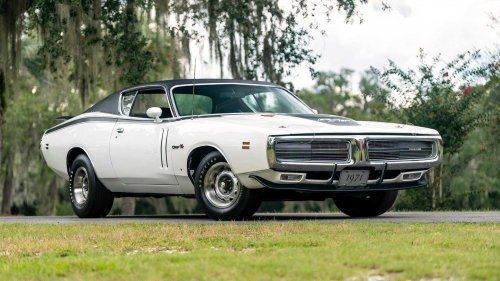
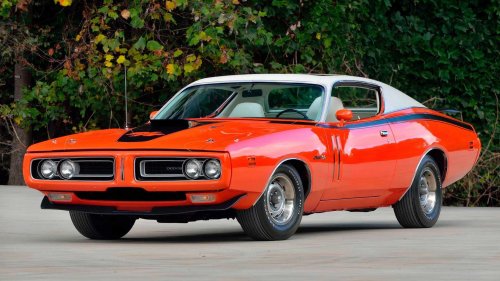
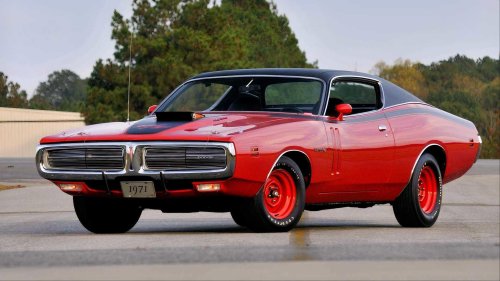
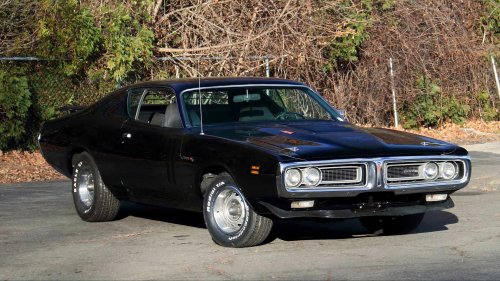
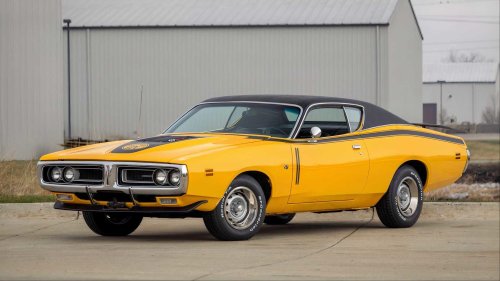
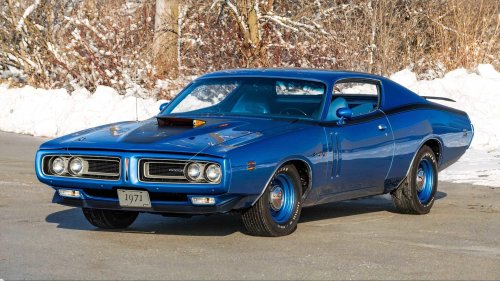




















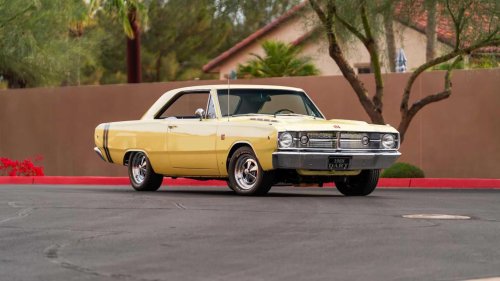
Thanks to government emissions mandates and consumer demands for better fuel economy, 1971 was effectively the last year of the Golden Age of American Muscle. Many of the killer nameplates that defined the classic era would continue on, but with severely detuned engines that robbed them of their once-mighty glory. In '71, Chevy already started the drawdown with the Chevelle SS 454, losing 95 horsepower from its iconic '70 LS6 street brawler. Mopar, on the other hand, was still going strong, with all of its legendary big-block V8s nearly as potent as ever, but this would be the last year for the 426 Street Hemis and 440 Six-Packs that made Dodge such a dominant force.Mopar muscle cars are among the most collectible of the classic era, and the '71s are some of the most expensive rides to ever sell at auction. '71 Plymouth Hemi 'Cudas can sell in the millions, and even a 6BBL 'Cuda convertible recently almost joined the Million Dollar Muscle Car Club. There are no budget '71 Challenger R/Ts either, as they too can stretch from the six-digits to the seven-digits with the right engine. All hope is not lost, though, because there is a 1971 Mopar that offers some genuine bargain big-block muscle with the affordable 383 and 440 V8s. For under $50k, it's possible to get a great condition, numbers-matching classic big-block Mopar masterpiece. 1971 Dodge Charger Is A Bargain Hunter’s Dream Mopar Mecum For the 1971 model year, the Chrysler B-Bodies got a complete overhaul, which moved the Charger into its third generation with a radical fuselage body style. It took the Coke bottle design of the second-gen and stretched it out for a sleek, aerodynamic look. This is not every Mopar fan's favorite design, simply because it's different from the gorgeous '68-'70 Charger, but the more you look at it, the more awesome it becomes.It was Richard Petty's favorite car, and he won the NASCAR Cup Series Championship behind the wheel of one in 1973 and 1974. For the longest time, the third-gen Charger wasn't even considered collectible, including Hemis and Six-Packs, but that has definitely changed. As for the 383 and base 440, those cars are still insanely affordable, representing the best cost-to-badass ratio for a classic Mopar. Curtain Call For The Charger R/T Mecum The 426ci Hemi V8 was originally intended to be a race engine only, mostly to power Richard Petty's Plymouth Belvedere on the NASCAR circuit, but Ford pulled a super-Karen and complained that it was too fast, getting it banned until it could be homologated. Unleashed in 1966, the 426 Street Hemi was initially available to all intermediate Dodge and Plymouth models, but in 1968 Chrysler limited it to designated Mopar Muscle cars.For the Dodge Chargers and Coronets, this meant the R/T trim, which signified the top performance versions with the kick-ass engine options. 1971 would be the last year for the Charger R/T, but it still held as the top-of-the-line, with a base 440 Magnum and 440 Six-Pack as well as 426 Hemi options. Again, the big dog big-blocks are pricey collectibles, but the entry-level R/T is a doable classic on a budget. Charger Super Bee Still Stings Mecum The Super Bee, introduced in 1968, was Dodge's version of the no-frills speed machine Plymouth Road Runner, based on the Coronet. In 1971, the Dodge B-Body cars were merged, with four-door sedans being Coronets and two-door coupes being Chargers. The Super Bee nameplate became a trim level on the third-gen Charger, but held onto the idea that it was affordable street mayhem.Coming standard with the capable 383ci V8, all the other crushing Chrysler big-blocks were optional. The base also saved buyers money with things like a bench front seat, manual steering, and manual brakes, because again, this was about going fast for the least amount of money. The side stripes and bumblebee hood decal make it seem like the Super Bee was a scorching top trim, but it really was a beginner car that's still a bargain today. ’71 Charger Prices And Values Bring a TrailerJ.D. Power, which bases its prices on real-world sales, tells us that a 1971 Charger R/T with a 383 has an average retail price of $26,700 and a 440 Magnum goes on average for $35,400, with Super Bees selling for about the same. Hagerty, whose prices are more theoretical, puts the good condition value of a '71 R/T 440 at $42,100, which still ain't bad for such a magnificent classic Mopar big-block.To settle this discrepancy, we need to head to Bring a Trailer and look at some actual auction sales. That blue '71 Super Bee 440 Magnum pictured above sold for $35,000 a couple of years ago, and the actual movie car 440 Six-Pack from Vampire in Brooklyn went for just $44,000 in 2021. BaT has also sold some 383 cars quite cheaply, including a perfect condition Super Bee for $30,000, so this really is the Mopar big-block budget ride. Six-Pack Auction Attack Mecum To truly appreciate what a deal the 383 or 440 '71Charger is, it's important to see what the top big-blocks are going for. J.D. Power sets the average retail price for a 440 Six-Pack at $50,000, but that's not a realistic number for a cherry ride. That fully-restored, numbers-matching white R/T above sold at Mecum Kissimmee 2026 for $154,000, which is almost Hemi money.Hagerty's value on a fair condition '71 R/T Six-Pack starts at $64,700 and goes up to a Concours condition at $123,000. BaT did sell a Six-Pack for a sub-$50k price, but they've also moved a few closer to the six-digits. It's possible to get a '71 Charger Six-Pack for a reasonable price, but chances are it won't have matching numbers or will be in less-than-desirable condition. Hemis Into The Hemisphere Mecum 426 Street Hemis are the superstars for all classic Mopars from any year, but they were a lot rarer in 1971, making them the priciest of the bunch. Hagerty sets the value for '71 Charger Hemi R/T project car at $130,000 with a 100-point showpiece at $291,000. As it turns out, that's still undervalued as that Hemi Orange beauty pictured above sold at Mecum Kissimmee 2023 for a staggering $550,000.It is the most heavily optioned '71 Hemi known to exist, including an ultra-rare sunroof, so it's not typical, but another less-equipped '71 Hemi R/T sold at a different Mecum auction for $425,000, so this is a half-million-dollar ride. Interestingly enough, the most expensive second-gen Hemi Charger, which was a '70 R/T, sold at auction for $352,000, so the once-non-collectible third-gen cars are now the Kings of Mopar. Third-Gen Charger Big-Block Options MecumAs was mentioned, 1971 was the final year for the 426ci Hemi V8, but the legendary wondermill that literally defined the Golden Age didn't skip a beat. Still rated (underrated?) at 425 horsepower and 490 pound-feet of torque, the Street Hemi guaranteed a 13-second car in anything it was equipped in. With a 5.8-second 0-60 time and 13.7-second quarter-mile ET, a '71 Charger Hemi R/T was the last great Mopar street assassin of the classic era.There were only 85 Chargers ordered with a 426 Street Hemi in 1971, with 63 going under the hoods of R/Ts and just 22 gracing the Super Bees. With this sparse distribution of the Hemi, it's easy to see why '71 Chargers command such a premium at auction. Last Dance For The High-Compression 440 MecumThe 440 you thought you knew ceased to exist after 1971. Much like the Hemi, the 440 Six-Pack was discontinued for 1972, though a very small number did slip through. Also, the Six-Pack did suffer a five-horsepower downgrade in '71, but that could be made up for with a better air filter. The 440 Magnum, too, got a little less lethal in '71, dropping to 370 horsepower from the '70's 375, but the torque remained the same at 380 pound-feet.There were only 3,118 Charger 440 cars built in 1971, with 2,504 Magnums and 178 Six-Packs. In the weirdest M. Night Shyamalan twist, the '71 Super Bee received 99 of the 440 Six-Packs, but just 26 Magnums, making the lesser version the unicorn car. Given the rarity of 440 Magnums, it's astonishing how affordable the '71 big-blocks are. Underappreciated 383 Magnum MecumThe 383ci Magnum V8 hasn't got the attention like the other Mopar big blocks, but it really was one of the better engines of the classic era. Rated at 335-horsepower and 425 pound-feet of torque, which was close to the Chevy 396 and Pontiac 400, as well as being equal to the Ford 428 Cobra Jet in street capabilities.Sadly, the 383 was downgraded to 300 horsepower in 1971, but it was still a solid big-block. This editor spent almost 30 years behind the wheel of a 1971 Charger Super Bee 383 four-speed and can attest to the vigorous acceleration of the car. Back in the day, you wanted a ride that could smoke all the chumps, but now, a car with some quirks is perfect, and a '71 Charger 383 delivers that for a bargain price. Mopar Muscle’s Last Stand Mecum There's a romantic notion that the Golden Age of American Muscle was an epic era that spanned a generation, but in reality, it was a blip in time. Kicking off in 1964 with the Pontiac GTO, it was over in 1972 with the encroaching malaise of the Dead Horsepower Era, so there wasn't even a decade of muscle madness. The importance of 1971 cannot be overstated as it really was the last great year for Mopar muscle cars, which defined the classic era.The last of anything is going to be collectible, proven by the insane prices of Six-Pack and Hemi-equipped Dodge and Plymouth vehicles, but this last stand has also yielded some incredible bargains for enthusiasts. The '71 Charger gives fans of average means access to a killer name-brand muscle car with an equally awesome big-block V8, and there aren't many other classics that can make the same claim.Sources: Bring a Trailer, Hagerty, J.D. Power, Mecum