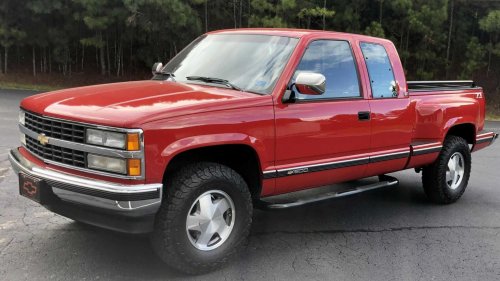
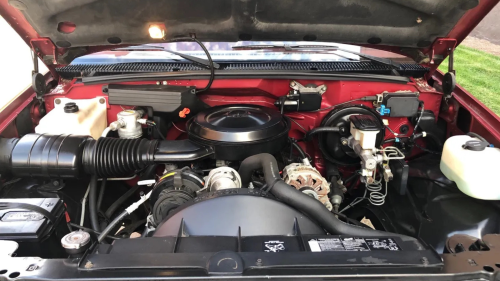
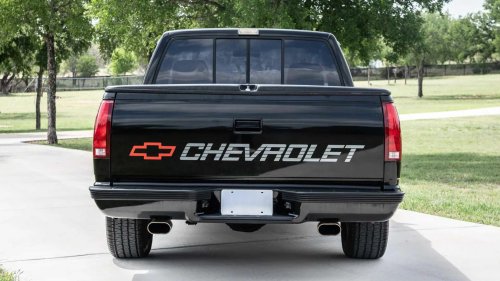
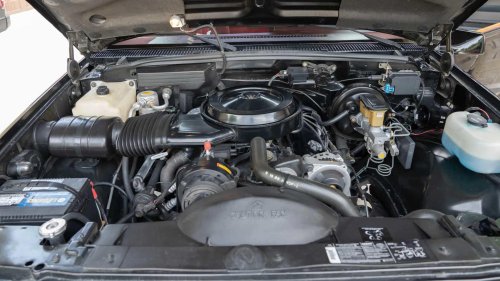
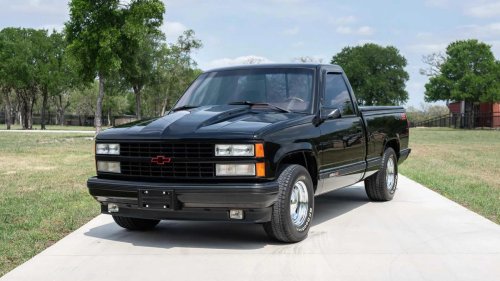
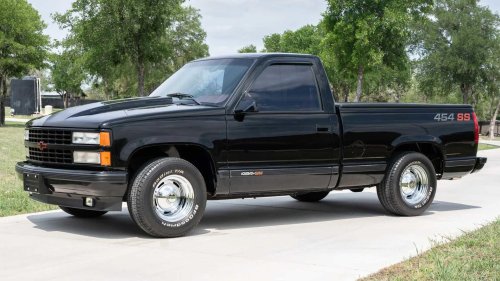
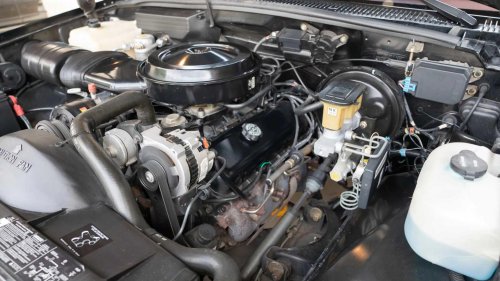
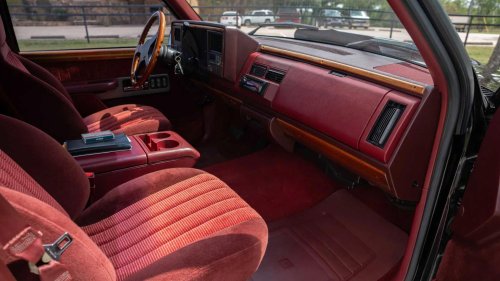
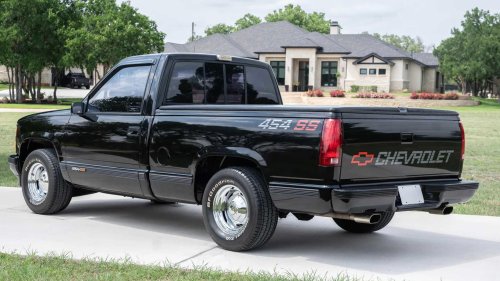
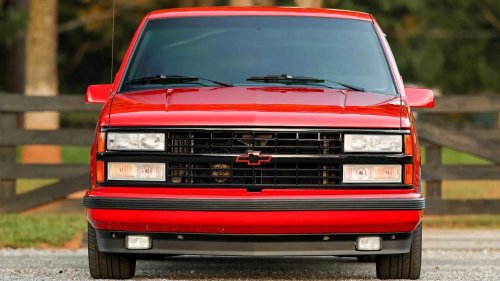
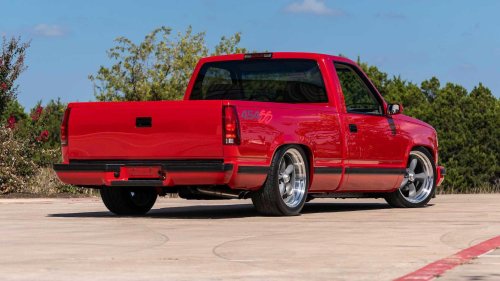
The 1990s loved a strange performance experiment (and that’s why we love the 1990s). Detroit tried turbo all-wheel-drive pickups, neon-colored compacts, luxury sedans with police-car bones, and engines that seemed to fall into the wrong engine bay after lunch. Yet one of the era’s wildest ideas did not come from a sports-car skunkworks or a racing program. It came from a pickup truck, the kind of machine most buyers still judged by bed space, axle strength, and whether it could drag a boat without crying.That is brilliant, but also a problem. A fast truck made little business sense when pickups still lived closer to job sites than to valet lanes. But one half-ton pickup turned a simple old hot-rod trick into a factory-built statement. Before Performance Trucks Were Normal, This Idea Sounded Absurd Cars & Bids By the late 1980s, pickups had started to loosen their collars. Buyers still wanted hard-working rigs, but more of them also wanted nicer seats, cleaner dashboards, better stereos, power windows, air conditioning that did not feel like a weak sneeze, and paint that looked good outside a restaurant. The truck was moving from being a pure tool into something more personal. Still, the modern luxury pickup had not arrived yet. A top-trim half-ton could feel plush for its day, but it did not pretend to be a leather-lined lounge with a bed.The old sales pitch still ruled the segment, though. A half-ton pickup needed to tow, haul, survive bad roads, and cost less than a family sedan with a big trunk. Dealers sold durability first and value second. They sold chrome, comfort, and image only after the buyer believed the truck could take abuse. Speed sat somewhere near “cupholder design” on the priority list, which means it existed, but no one built a board meeting around it.Bring a Trailer Detroit had played with quick trucks before, but factory performance pickups still felt like oddballs. A few wild names had already shown that a pickup could have personality, yet most buyers did not walk into showrooms asking for quarter-mile times. They asked about axle ratios, bed length, payload, rebates, and whether the thing would start after a cold night. The idea of selling a fast pickup from the factory still sounded slightly backward, like ordering a tuxedo with steel-toe boots. Funny? Yes. Useful? Maybe. Obvious? Not even close.That's what made the idea so funny, and so smart at the same time. A truck already had rear-wheel drive and had space for a big engine. It already had a strong frame, big brakes by car standards, and the blunt shape of a brick that had taken up weightlifting. The trouble was making the package feel special enough that buyers would pay for attitude. The Recipe Was Too Simple To Be Sensible Bring a Trailer The formula was simple and needed a regular cab, a short bed, rear-wheel drive, dark paint, fat tires, and a stance that looked like it had just heard an insult. That was the entire approach. In a decade that loved graphic decals and big claims, the smartest move was almost primitive. Make the smallest full-size body look tough, then make the engine bay do the explaining.The key move involved weight and image. A regular-cab short-bed half-ton was the smallest, cleanest version of the full-size pickup. It had less visual bulk than a long bed, no second-row cab to soften the profile, and just enough bed to remind everyone it still came from the truck aisle. It looked tougher than a coupe and less formal than a sedan. It also carried its empty bed behind the rear axle, which meant traction could vanish fast if the driver treated the throttle like a light switch.Bring a Trailer Then came the engine. Instead of a peaky performance motor that needed high rpm and perfect breathing, the truck used a huge, low-speed V8 approach. It promised shove more than finesse. The power band pulled up a chair, put its boots on the table, and arrived at low rpm with a grin. That kind of torque feels different from horsepower.That balance, or lack of balance, explains the truck’s charm. It was not a sports machine with a bed by any means. It was more of a factory hot rod wearing work clothes, focusing on stoplight drama rather than road-course grace. It had the emotional logic of dropping a bowling ball into a lunchbox, then pretending the lunchbox had always needed a bowling ball. The Chevrolet 454 SS Was The Big-Block Truck That Defined The Moment Bring a TrailerThe truck was the Chevrolet 454 SS, and Chevrolet introduced it for 1990 as a high-performance version of the fourth-generation C1500. The shape already had a clean, modern look compared with older square-body trucks, so Chevy did not need to redesign the pickup. It picked a two-wheel-drive half-ton with a regular cab and short box, then sold it under the Super Sport banner.The story began under the hood. The 454 SS used a 454-cubic-inch, 7.4-liter big-block V8, which gave the truck its badge and its whole personality. Chevy pulled from the same broad truck-engine world that fed heavier-duty work rigs, which helps explain the engine’s character. In 1990, that V8 made 230 horsepower and 385 lb-ft of torque. Those numbers look tame beside a modern turbo V6, but the torque arrived early and with the kind of lazy confidence that suits a big-block.Bring a Trailer The first-year model used a three-speed automatic and a 3.73:1 rear gear, a simple setup that fit the truck's old-school nature. Later trucks gained a 4L80E four-speed automatic, more power, more torque, and shorter 4.10:1 gearing. By 1991, output rose to 255 hp and 400 lb-ft, which helped the big-block truck feel stronger where owners actually used it—leaving a light, merging hard, and making rear tires question their career path.The 454 SS was capable of accelerating from 0 to 60 mph in 7.1 seconds and could clear the quarter-mile in 15.7. That did not make it a supercar slayer, but for a full-size pickup in 1990, it made plenty of people sit up straight. The changes also gave later trucks a little more drivability, even if nobody confused them with grand tourers. Peak 1990s Excess, Even If It Wasn’t Perfect Bring a Trailer The 454 SS matters because it captured a very specific mood. Chevrolet wanted it to look mean, sound serious, and make the owner feel like the biggest thing in the lane. The company did add useful hardware, including quicker steering, Bilstein shocks, a stiffer front bar, and serious tires for the period, so the truck had more going on than decals and bravado. Period testers noticed that split personality. The truck had a firm ride, a big-engine soundtrack, and a cabin that still felt like a work-truck office with nicer chairs. In other words, it had confidence before it gained polish. So 1990s.That mix makes the truck more interesting now, not less. The 454 SS had flaws big enough to park in. It was heavy and drank fuel with the manners of a raccoon in a trash can. Edmunds lists the 1993 model at 9 mpg city and 12 mpg highway, which sounds less like fuel economy and more like a dare. It also had longer stopping distances typical of heavy trucks, so the brake pedal had to manage a lot of mass and a lot of hope. The big-block also made less power than its size suggested, because this was a truck engine tuned for work, low-end pull, and durability, not a high-strung race piece.Bring a Trailer Still, the point was never perfection. The point was presence. The early black trucks with red interiors looked like they came from a factory that had briefly been run by a guy named Big Tony. The first-year trucks did not even get a tachometer, which feels perfect for a machine built around torque instead of revolutions. Later model years added more power, more colors, and a few useful upgrades, including Summit White and Victory Red paint choices for buyers who wanted the same swagger in a brighter shirt. What A Chevrolet 454 SS Costs Today Bring a Trailer The used market now treats the 454 SS as more than an old pickup with loud decals. Good examples no longer sit in the cheap old-truck bin, especially as interest in OBS Chevy trucks keeps growing. Classic.com currently shows a market benchmark of $41,639 for the 1990 to 1993 454 SS, with an average sale price a little above $40,000 and a highest recorded sale of $110,000.Active listings can still vary widely, because mileage, originality, paint quality, and tasteful modifications pull prices in different directions. Clean paint, correct trim, the right red interior on early trucks, stock wheels, original badging, and believable mileage all matter. So does the model year. The first-year black trucks have the classic look, but the later trucks bring a stronger drivetrain and lower production numbers. That gives buyers two flavors of temptation, which is how garages get crowded. The 454 SS Worked Because It Never Tried To Be Reasonable Bring a Trailer The Chevrolet 454 SS earned its place because it refused to act clever. It took the biggest engine name in Chevrolet’s truck bin and put it in the smallest, meanest-looking half-ton shell available. Then it added the stance, the decals, the dark trim, the fog lights, and the Super Sport badge. The result never made real sense to regular buyers, and that’s the best part.But a certain group of truck buyers had an appetite for image and speed, not just towing and bed length. Chevrolet built approximately 16,953 examples across the four-year run, and the most common tally gives 1990 a huge share at 13,748 units. The later 1991 to 1993 trucks appear in far smaller numbers, and that matters today because they can feel like the more complete versions with the stronger rating, the four-speed automatic, and the deeper gearing.Mecum The trucks’ legacy also reaches beyond itself. It helped clear room for the Ford SVT Lightning, the later Silverado SS, the Dodge Ram SRT-10, and the modern idea that a pickup can chase speed without apologizing for having a bed. Sure, it didn’t invent every part of that story, and the GMC Syclone took a far more technical route around the same time, but the big-block Chevy made the story louder and simpler. That counts in truck culture, where loud often beats subtle by two counties and at least one gas station.That is why the Chevrolet 454 SS still feels like peak 1990s excess. It never focused on balance, but simply asked the most wonderfully dumb enthusiast question possible: what happens when the smallest full-size Chevy pickup gets the biggest V8 and a bad attitude?Source: Chevrolet, Classic.com, Edmunds, Fastest Laps