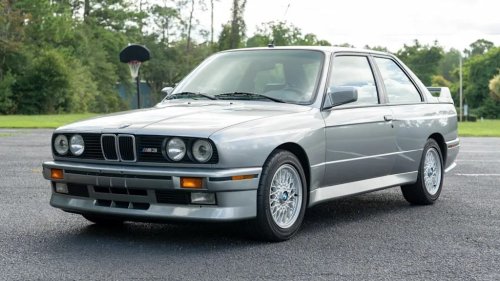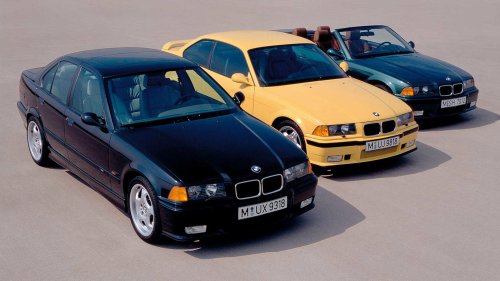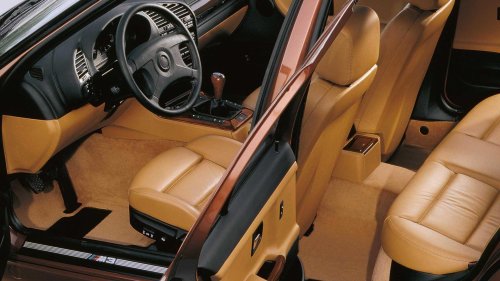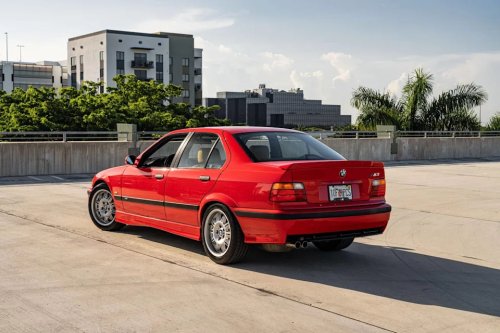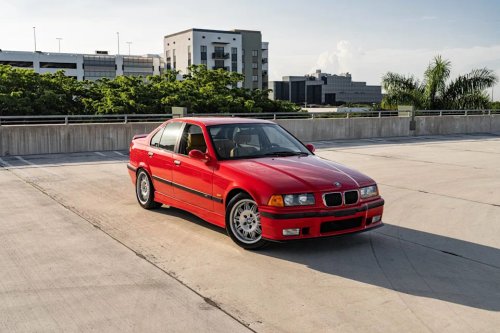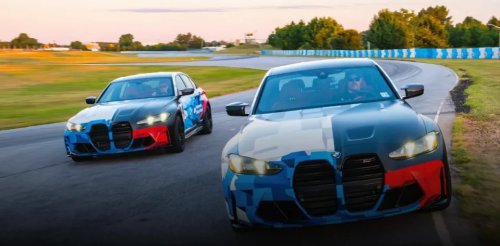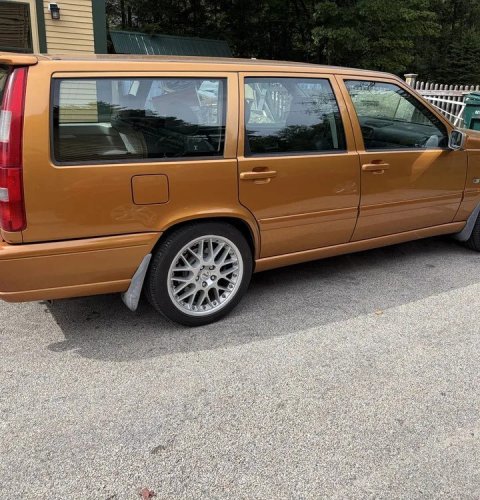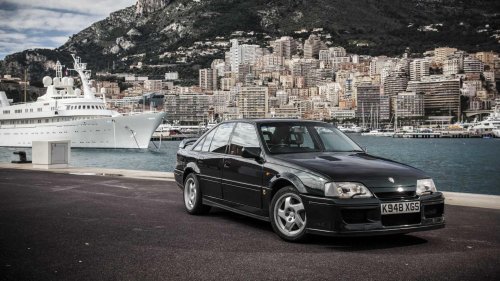
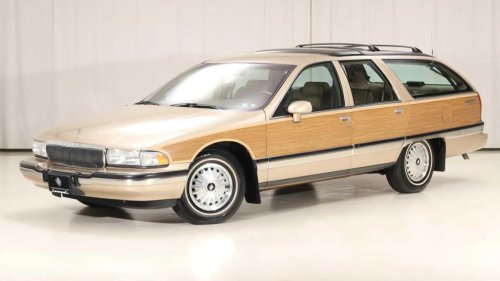
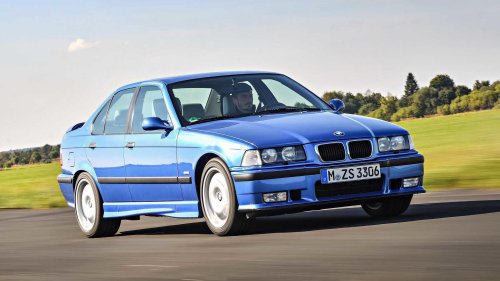
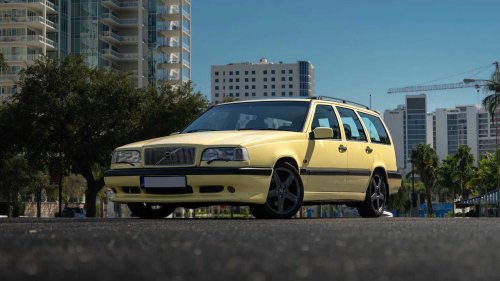
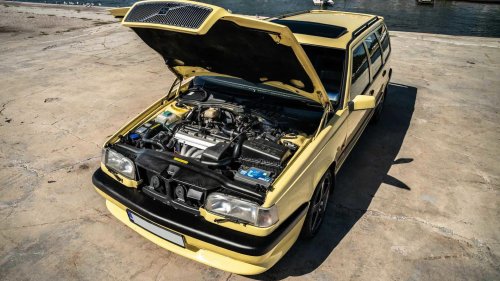
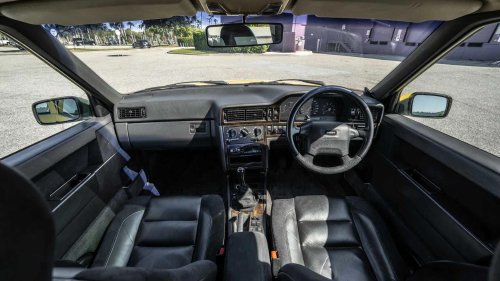
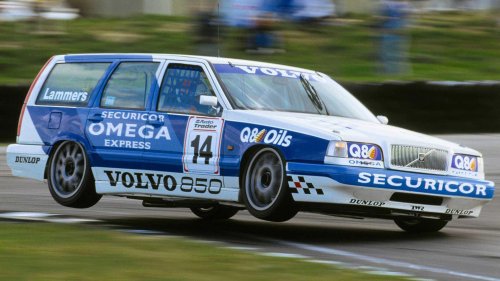
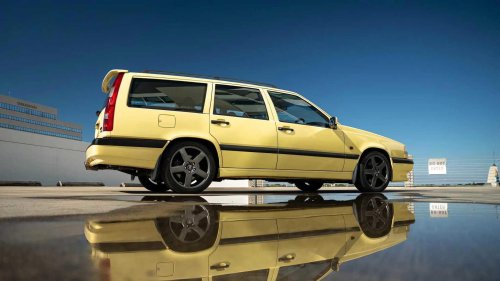



















The BMW M3 is one of the definitive performance cars. A benchmark for the automotive industry, it’s just as happy taking the kids to school in the morning as it is blasting around a track in the afternoon. Manufacturers spend millions trying to emulate its power and popularity and still come up short.However, for all of its intensity and brutish power, there was a car in the mid-1990s that beat it. It wasn’t a supercar, nor was it a sports car. It was a wagon that was affectionately nicknamed “The Flying Brick." The Era Of Sleepers StellantisSleeper cars — those that have overwhelming power in unassuming bodies — were nothing new by the 1990s.But the ‘90s were a wonderful time for sleepers. You had cars like the Lotus Carlton, which was a Lotus-engineered version of the much more sedate Vauxhall Carlton/Opel Omega. The Vauxhall version pushed out 177 horsepower from a 3.0-liter engine, while the Lotus version, which wore essentially the same skin, held a 3.6-liter engine making 377 horsepower. So fast was the Lotus variant that British police officers tried (unsuccessfully) to have the car banned in the UK.One of Germany’s most exciting sleeper offerings was the 1990 Mercedes-Benz 500 E. Though it looked like a comfortable daily sedan, it hid a naturally aspirated V8 capable of hitting 0–60 mph in 5.8 seconds and running the quarter mile in 14 seconds.Bring a TrailerEven wagons were at it in the 1990s, like the 1994-96 Buick Roadmaster Estate Wagon. Don’t let the drab beige paint, the massive 17.5-foot body, and the fake wood paneling fool you; the Roadmaster Estate wasn’t your dad’s family ferry. Buick slapped a detuned Corvette 5.7-liter LT1 V8 making 260 horsepower under the hood, for reasons of platform standardization and towing capacity. This meant that it could make the run to 60 mph in around seven seconds, for a car that had fake wood paneling.For all the Roadmaster Estate Wagon’s power, though, there was one wagon that could take on most competitors and still emerge victorious. And it could even beat BMW’s M3. Beating a 1990s M3 Was No Easy Task BMWBy the mid 1990s, the BMW M3 was on its second generation in the E36. The hugely popular first version, the E30, had proved that there was a market for a race-designed machine that was made suitable for the road, being a homologation special.The E36 didn't have that raw motorsport feel like the E30 did, instead favoring a more balanced ride over all-out power, but it still made 240 horsepower and would hit 60 mph in around six seconds en route to a top speed of 137 mph in US spec.Though exciting, this was considerably down on the European version, which made 286 horsepower, would hit 60 mph in 5.5 seconds, and continued on to 155 mph. This drop in performance for the US model was due to the emissions requirements in the US at the time, making it more sedate and easier to beat — even a wagon made by a traditionally safe, steady manufacturer. The Volvo 850 T-5R: The Car Faster Than An M3 Bring A TrailerThough Volvo had success with beautiful, gorgeously-curved cars like the Amazon and the PV444, Volvo had been committed to its boxy, safety-conscious design choice for nearly three decades when the 850 came out in 1992.The 850 model name actually refers to two cars, as both the sedan and the estate shared it. Both also shared multiple firsts for Volvo, including becoming the first production car with the Side-Impact Protection System (SIPS) and being Volvo’s first front-wheel-drive cars on the US market. While both of these were innovations, they did both push Volvo further into “safe but boring” territory.This was fine, but not exactly where Volvo wanted to go. It wanted a halo car that would show that it was also capable of performance, and it took inspiration from its motorsport endeavors to achieve it having competed in the British Touring Car Championship (BTCC) the year prior.Bring A TrailerWhat it created was the 1995 Volvo 850 T-5R. Made in conjunction with Porsche, who co-developed the engine tuning and transmission, it was originally released in cream yellow. Not exactly the most inconspicuous color for a sleeper, but it (quite literally) painted this car as the one to have, given that it was exclusive to the T-5R.The color wasn’t the only thing exclusive to the T-5R; the engine was specific to it, too. The 2.3-liter turbocharged inline-five, which had that Porsche touch, had a special ECU to help improve both performance and exhaust noise. It also had an “overboost” feature that increased boost by 2 psi for up to 30 seconds, helping it to hit peak power.Suspension was also stiffened up compared to the other 850s in Volvo's stable, with tires shod with Pirelli P-Zeros. The car was a missile in a straight line, utilising the torque of the engine to run to 60 mph in around 6.7 seconds. It could also go faster than the US M3, with the Volvo’s limiter not kicking in until 152 mph compared to the M3’s 137 mph.Bring A TrailerThe car was an instant success. Volvo had initially wanted to make 2,500 cars, keeping it as a limited-edition semi-homologation-special vehicle that only a lucky few could have, but this quickly fell by the wayside. Just short of 7,000 850 T-5Rs were made in all, with that number split between the sedan and estate versions. It Wasn’t Just On The Road That It Beat Others Via: VolvoWhile the 850 only competed in the BTCC for one season in 1994, it’s still remembered amongst the most iconic cars of the series over 30 years later.Known as “The Flying Brick” at the time for its speed and shape, the car was driven by former F1 driver Jan Lammers and teammate Rickard Rydell. It achieved modest success, with a best finish of fifth at Brands Hatch, but didn’t exactly set the timing screens alight (that year’s title went to the dominant and beautiful Alfa Romeo 155 TS).Most cars become icons for what they achieve on track, their legacy living through their results, but the Volvo didn’t need to win to become a favorite. Simply competing as an estate was enough to secure its place in BTCC history, results be damned. Mixing it among the sedans and being the inspiration for arguably Volvo’s biggest sleeper only add to that, pushing that legacy further. The Lasting Legacy Of The 850 Bring A TrailerVolvo 850 T-5Rs are somewhat of a rarity today. With less than 5,000 estate examples made, and a reported 155 of those being sold in the US, it’s difficult enough just to find one.Sales are more common in the car’s native Sweden but, if you want to buy one on this side of the Atlantic, you’re realistically looking around $17,000 for an automatic. Manuals are a different story as there are no recorded sales in the US for the last few years, though just over $26,000 will get you one from the Scandinavian country. Sedans are slightly more common (and slightly more expensive at around $20,000).Regardless of whether you can find one, though, the car just oozes cool. There’s something incredibly understated about it; a quiet confidence that some people will overlook, but those who know will recognize. Underestimate it at your peril — especially if you’re in a 1995 E36 M3.Sources:Fastest Laps,Volvo850t-5r.com,Classic.com