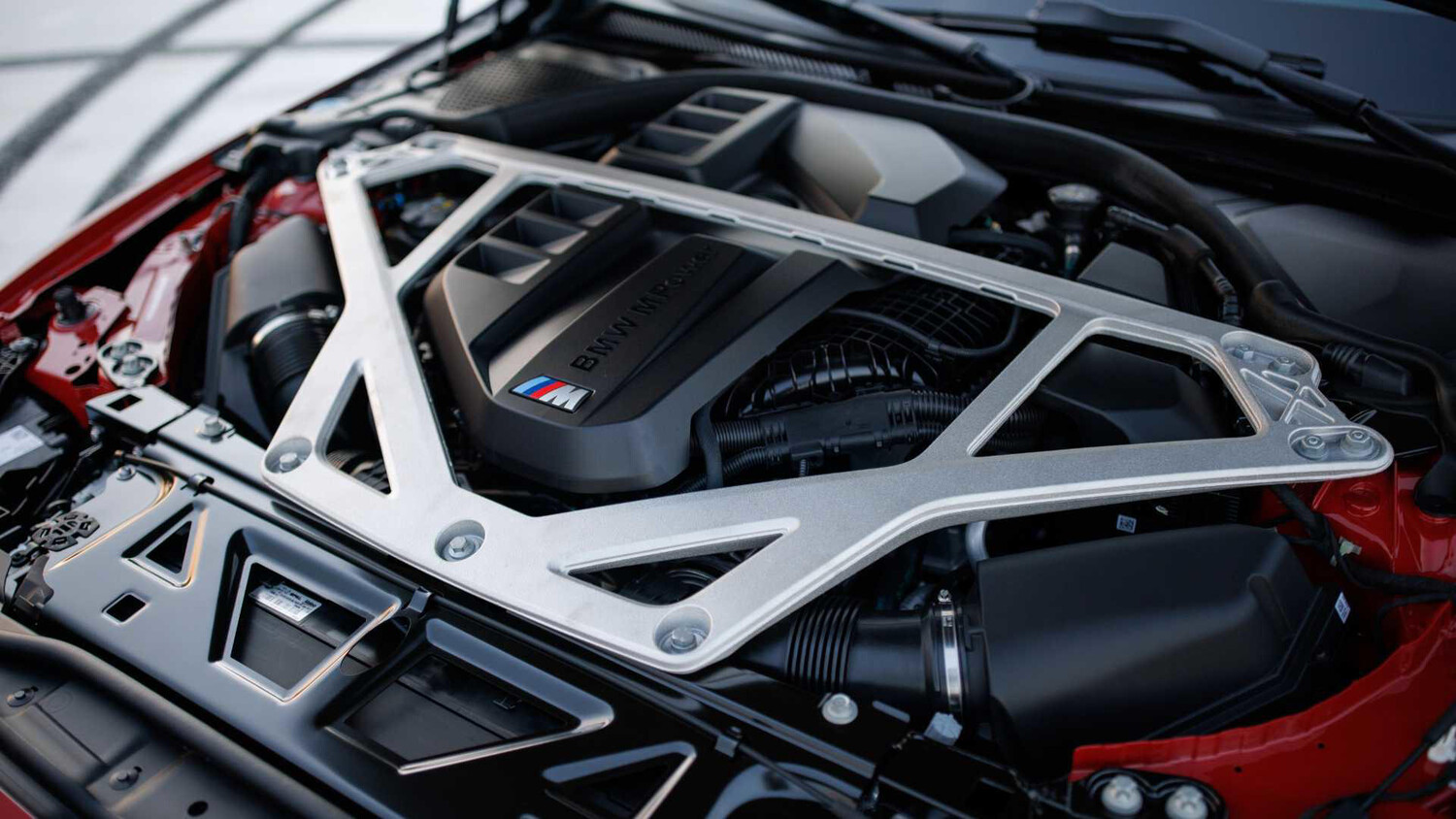
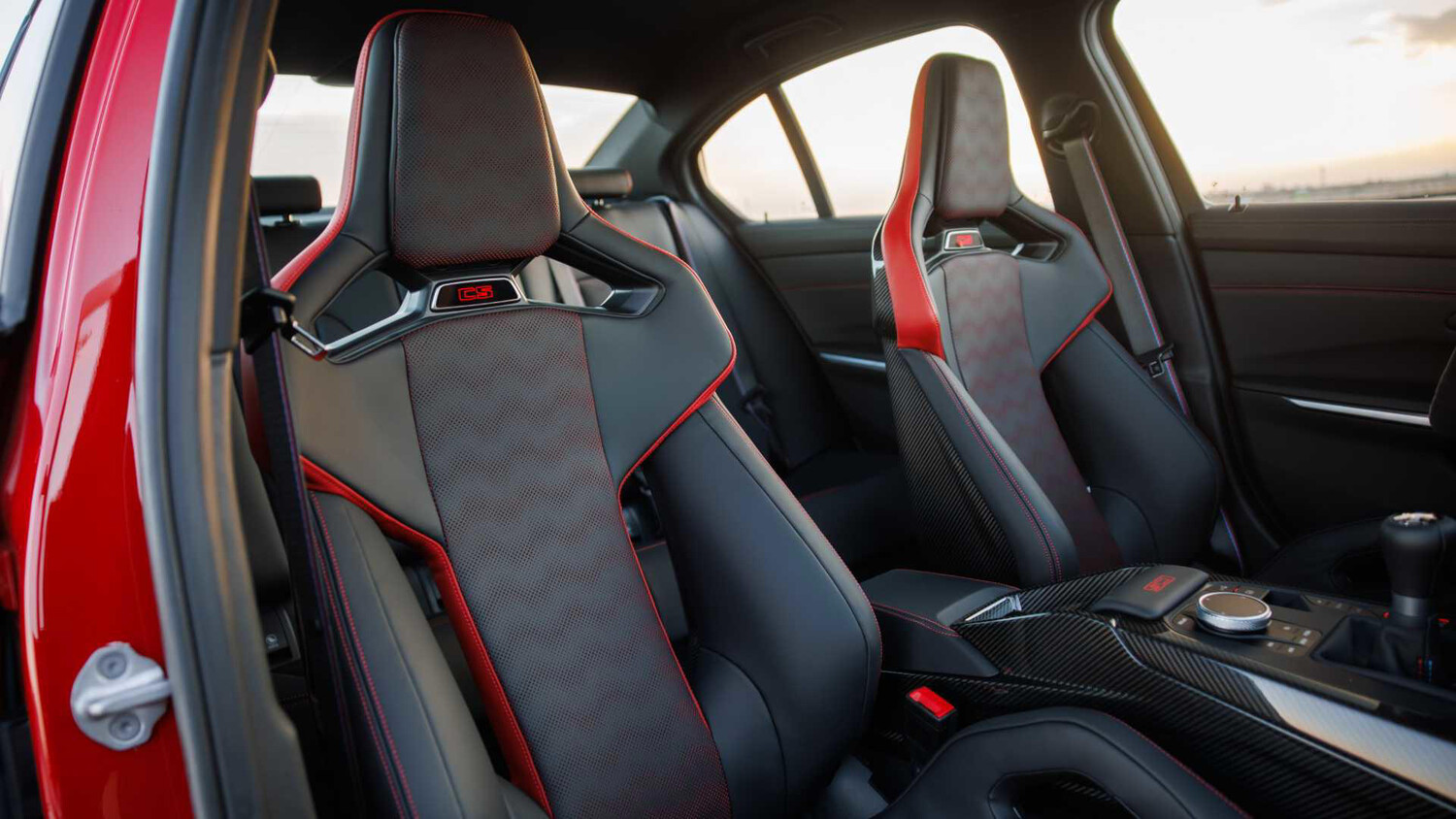
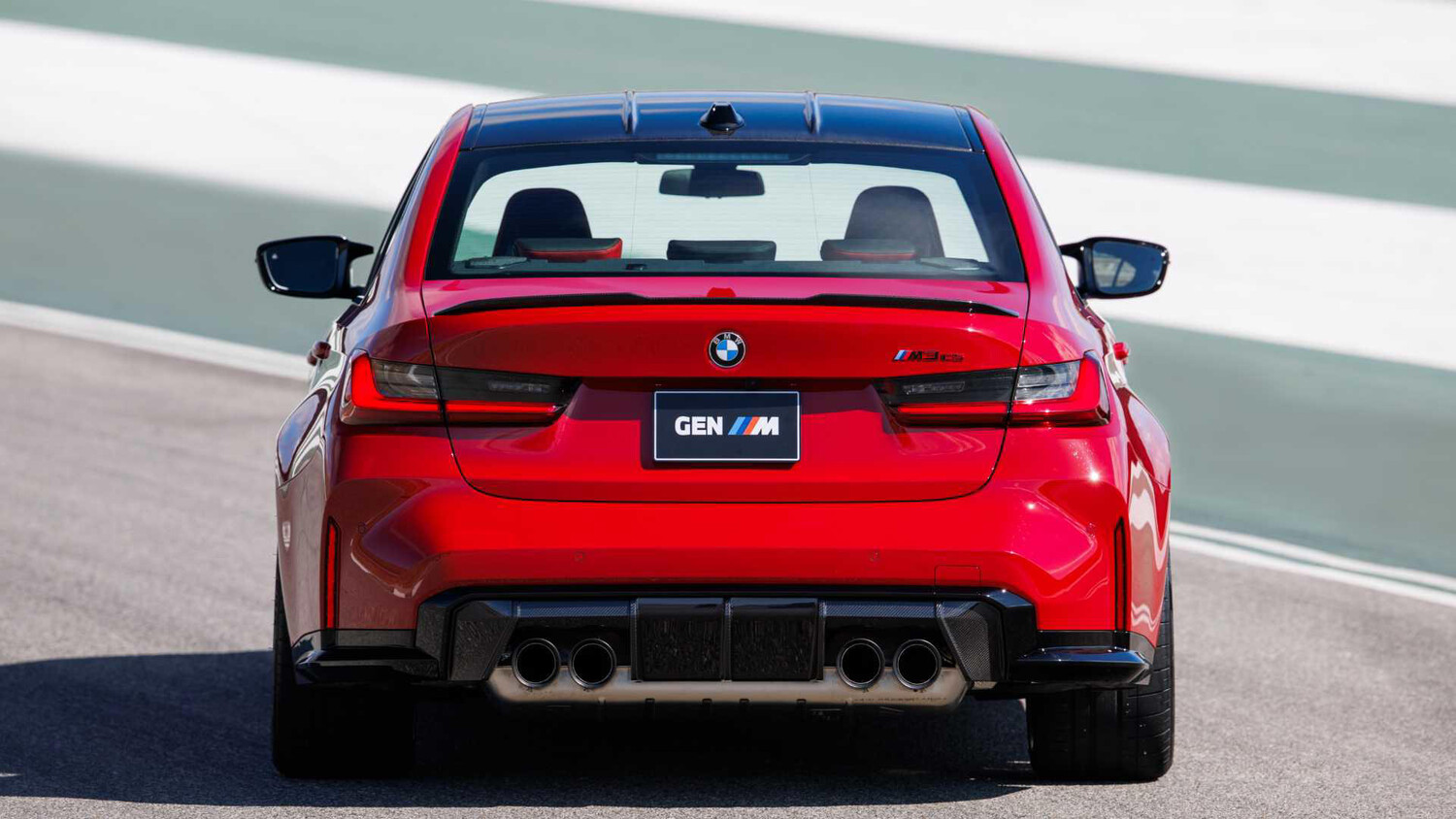
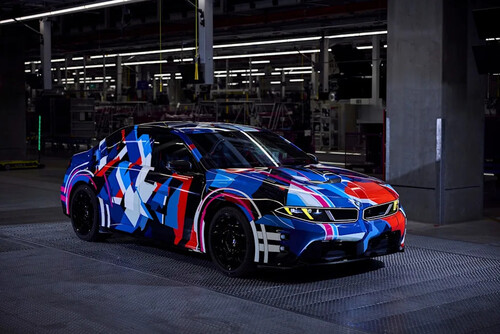
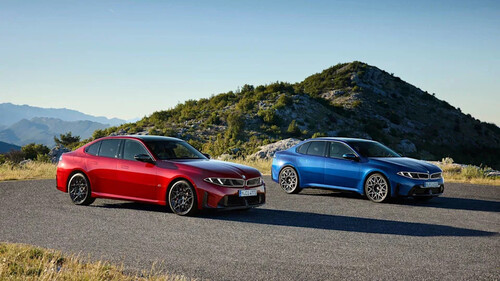
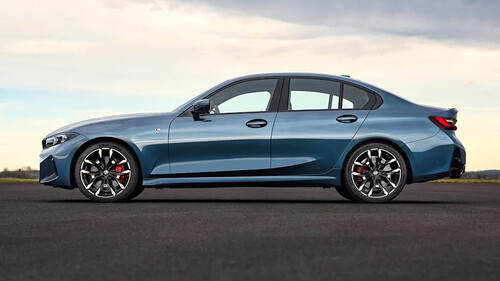
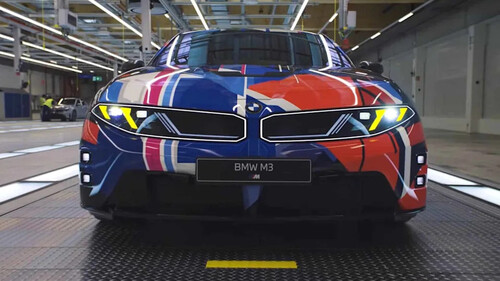
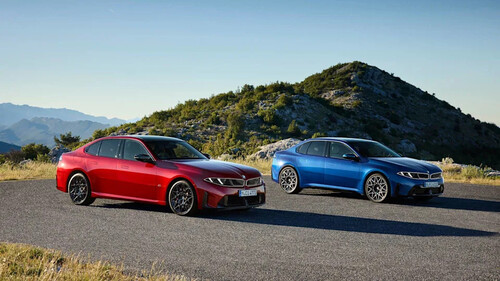
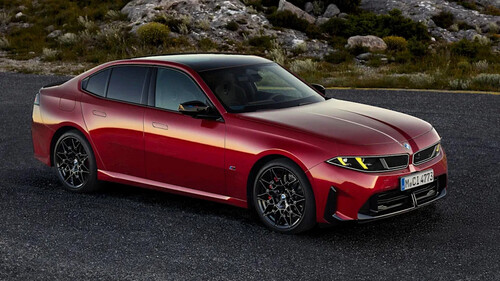
When was the last time a manufacturer of finely-tuned performance cars encouraged you to indulge in its vehicles every day of the week? We can think of a long list of cars that fit the bill. However, most of them are dialed up to the extremes and shed the creature comforts of plush leather chairs and sound deadening in exchange for a few more seconds on the track. Quick lap times offer bragging rights, but you don’t get a few seconds back on your commute when you shoot over to the office in your race-bred sports sedan.BMW prides itself on finding the middle ground between its comfortable road cruisers and hopped-up track monsters. It wants to keep as much of the right stuff as possible in the latest M3 CS Handschalter to be taken seriously, while offering a tolerable driving experience that gets buyers their money’s worth on the road. Could this be BMW's ultimate daily driver? Let's find out. The M3 CS Handschalter is as Classic as BMW Gets BMW The hallmark of the latest M3 CS Handschalter is its six-speed manual gearbox, because the regular M3 CS from a few years ago packed an eight-speed automatic. This transmission change harkens back to what BMW fanatics say is the genesis of the CS nameplate, the 3.0 CSi.If we hold the 3.0 CSi from the early seventies responsible for popularizing this two-letter moniker, then we can make a case for the latest flavor of M3. The CSi came with either a four-speed manual or three-speed automatic transmission, so really, the Handschalter is just returning the CS nameplate to its roots.BMW ClassicDaily driving a homologated race car sounds a bit uncomfortable. Still, most owners might find themselves encouraged to do so with some nudging from BMW via the Daily Driver package, something that's never been offered before on an M car, let alone a CS. Granted, the package only adds a heads-up display and a powered trunk lid, two things most enthusiasts won’t care too much about. But we thought this was enough to ask ourselves if this was the best CS-branded model to drive every day.Traditionally, the M3 has been just comfortable enough for long journeys while being capable of some weekend antics. To any enthusiast, it’s a “steak too juicy, lobster too buttery” situation. Move up a notch to the Competition model, and you lose some connectivity to the car by trading the manual gearbox for an eight-speed torque-converter automatic. Still, you can't complain too loudly before others cry crocodile tears.In the new CS Handschalter, the chassis and suspension have been tweaked for better tracking, and it’s 75 pounds lighter than the standard M3. With more race-inspired pieces bolted on and some control relinquished back to the driver, the qualms you develop might not seem so bad to others. Despite it sounding a bit less usable than the M3 or even the old CS, BMW has its sights set on providing a thrilling car you can experience every day. This CS Will Also Stand for “Commuter Special” BMWWhile that's not entirely true, let's explore how easy it would be to live with on a day-to-day basis. The M3 has been a strong bridge between an engaging sports car and a four-door family sedan for the model's last several generations – early iterations were solely available as a two-door.For 2027, BMW is offering the M3 CS Handschalter with a 473-horsepower twin-turbo 3.0-liter inline-six mated to a six-speed manual. On its own, that’s spectacular. But keen readers will already notice that it’s the same specs boasted by the M3, so what does the CS trim get you?BMW In short, much less, for much, much more. The CS Handschalter trim starts at $107,100, and that’s before the $1,350 destination fee. For the price, you get less weight, less power over the 2024 CS, and fewer gear ratios – though that last one isn’t such a problem for us. While still expensive, the automatic-equipped 2024 M3 CS was even more, starting at $118,700 in the US, before destination and options.BMW has thrown in the M Driver’s Package as standard, normally a $2,500 option on the M3, which adds a one-day high-performance driving class and, as a reward for being studious, raises the top speed from 155 to 180 MPH. Inside, the standard M carbon bucket seats are a welcome surprise as they're a $4,500 option on the normal M3. The rest of the difference is composed of tweaks to the chassis and suspension bits – which were grafted off the M4 CSL – as well as thousands of dollars’ worth of carbon fiber, which can also be added to the standard M3 via the $15,300 Carbon Package.Bang for your buck is important in a vehicle driven every day, something BMW has taken some notice of. Despite the baked-in features with already expensive price tags, you can keep the cost within your budget if further weight savings or track-focused performance bits are of no interest to you. Skipping the optional $1,100 front strut brace and $8,500 M carbon ceramic brakes, as well as the $600 set of track tires (275/35ZR19 at the front, 285/30ZR20 at the rear), is already over $10,000 in savings, granted, some of that will have to fund however much the Daily Driver package costs. Could This be the Most Livable CS to Date? BMW While we won't know how the CS Handschalter stacks up until we test one, we can use other M3 trim levels as a starting point. The EPA rates both the 2026 M3 Sedan and M3 Competition at 16 miles per gallon city, 23 mpg highway, and 19 mpg combined, while the 2024 M3 CS received a combined rating of 18 mpg, putting the CS Handschalter in good standing to receive similar ratings with less weight and less power.Inside the cabin, the 3 Series as a whole feels more cramped than the Audi A5, which has a useful lift-back design, and is roughly the same as the Mercedes-Benz C-Class. On paper, all three are quite close in measurements, leading to interesting perceptions of space in each, but the BMW stands out as a bit more spacious after the rulers are broken out.BMW makes the most of its packaging, with 55 cubic feet of front driver/passenger room and 43 cubic feet in the back seats, which is surprisingly more room than a Toyota Camry up front. The trunk space is rated at 13 cubic feet, down slightly compared to the kings of commuting, and we suspect some controversy over those chunky carbon chairs being the only seat options, but they look so cool!BMWOther points of contention for the uninitiated include the lowered ride height, which is 0.24 inches (6 millimeters) lower than a regular M3. Unfortunately, the reduction would increase your chances of scraping over speed bumps and driveways. Not to mention the stiffer suspension and the lightweight construction, which would translate into slightly more noticeable noise, vibration, and harshness bleeding into the cabin from the drivetrain. Still, it has four doors and a stick shift, something other CS models have never had in recent history. So, if you're up for it, BMW really has built the best daily driver for hardcore fans. All Because Of One Daily Driver Package BMWAs before, the M3 and all its zany variants are the strongest connection between what owners need their cars to do and the kind of performance BMW requires of its sedans to be a tour de force on the track. Four doors, three pedals, two-wheel drive, and one of many ways to use your BMW sedan. High-speed highway cruising? Check. Rambling around twisty roads? Check. School runs? No issue there.The CS Handschalter puts engagement above all-out power, a claim which we have empirical evidence to support, and is deserving of worshiping every day and twice on Sundays. And, thanks to a motorized trunk and some projection on the windscreen, there’s no good reason we can think of not to drive the swan song of this iteration of M3 as often as possible.Sources: BMW