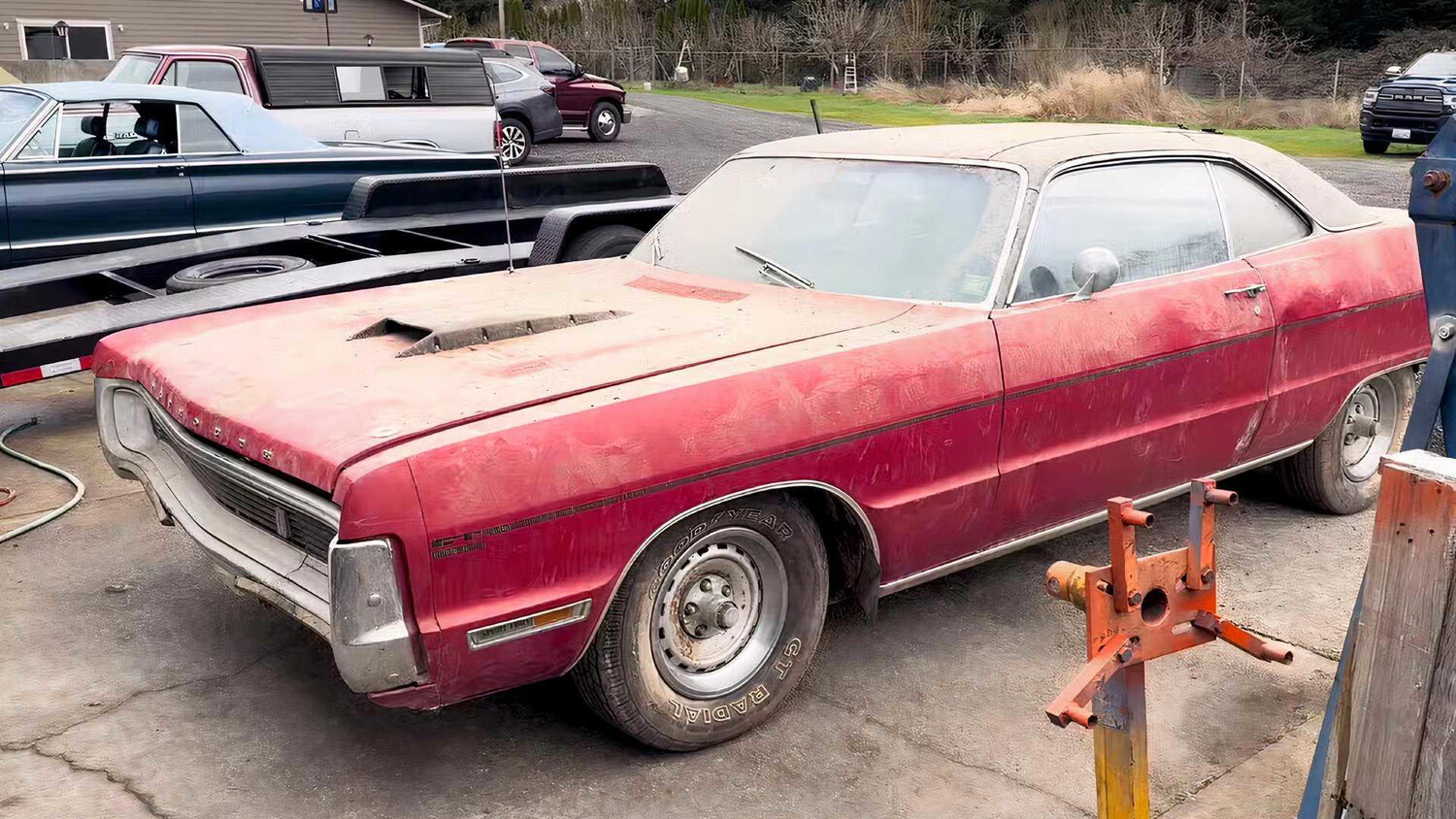
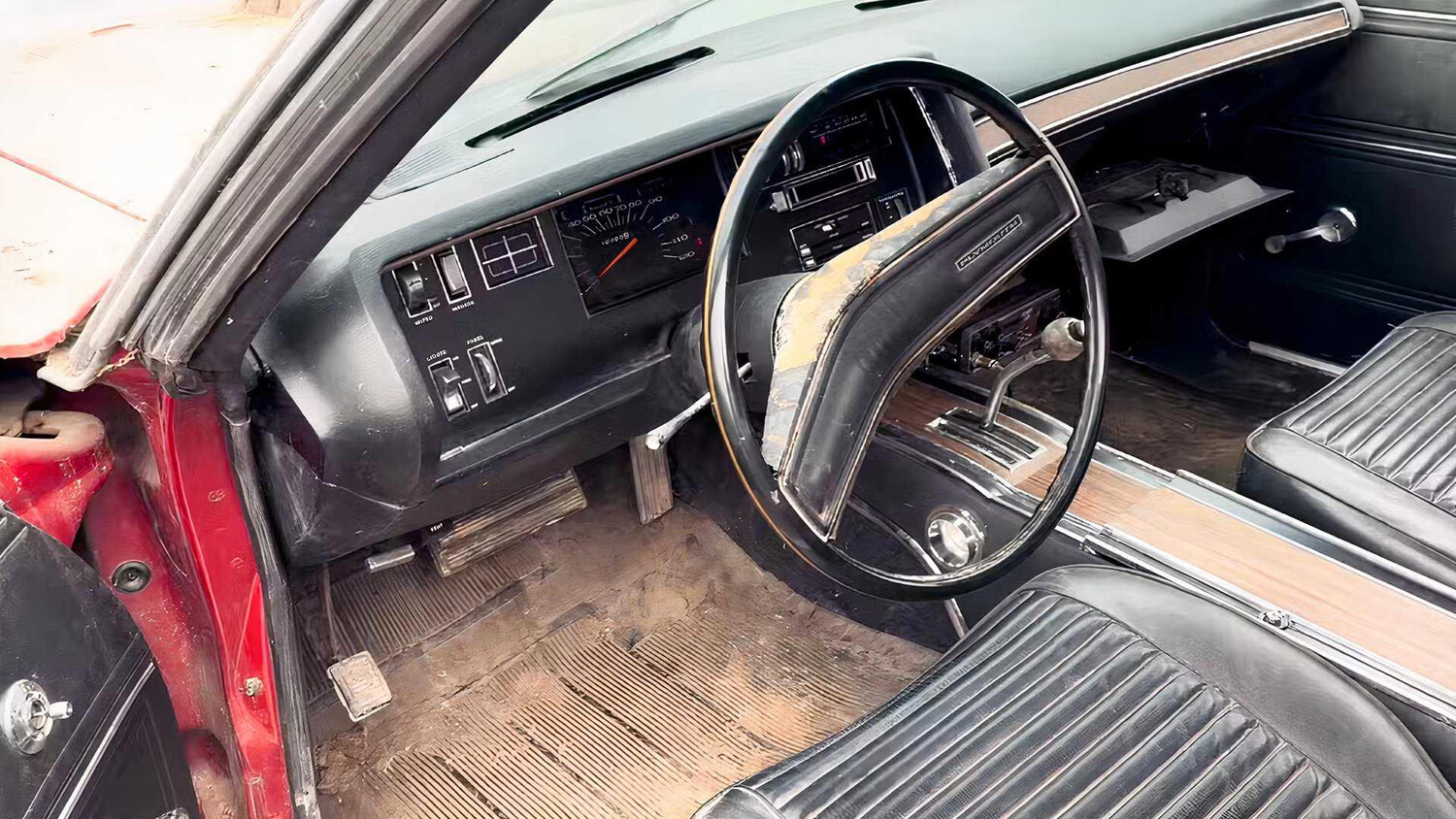
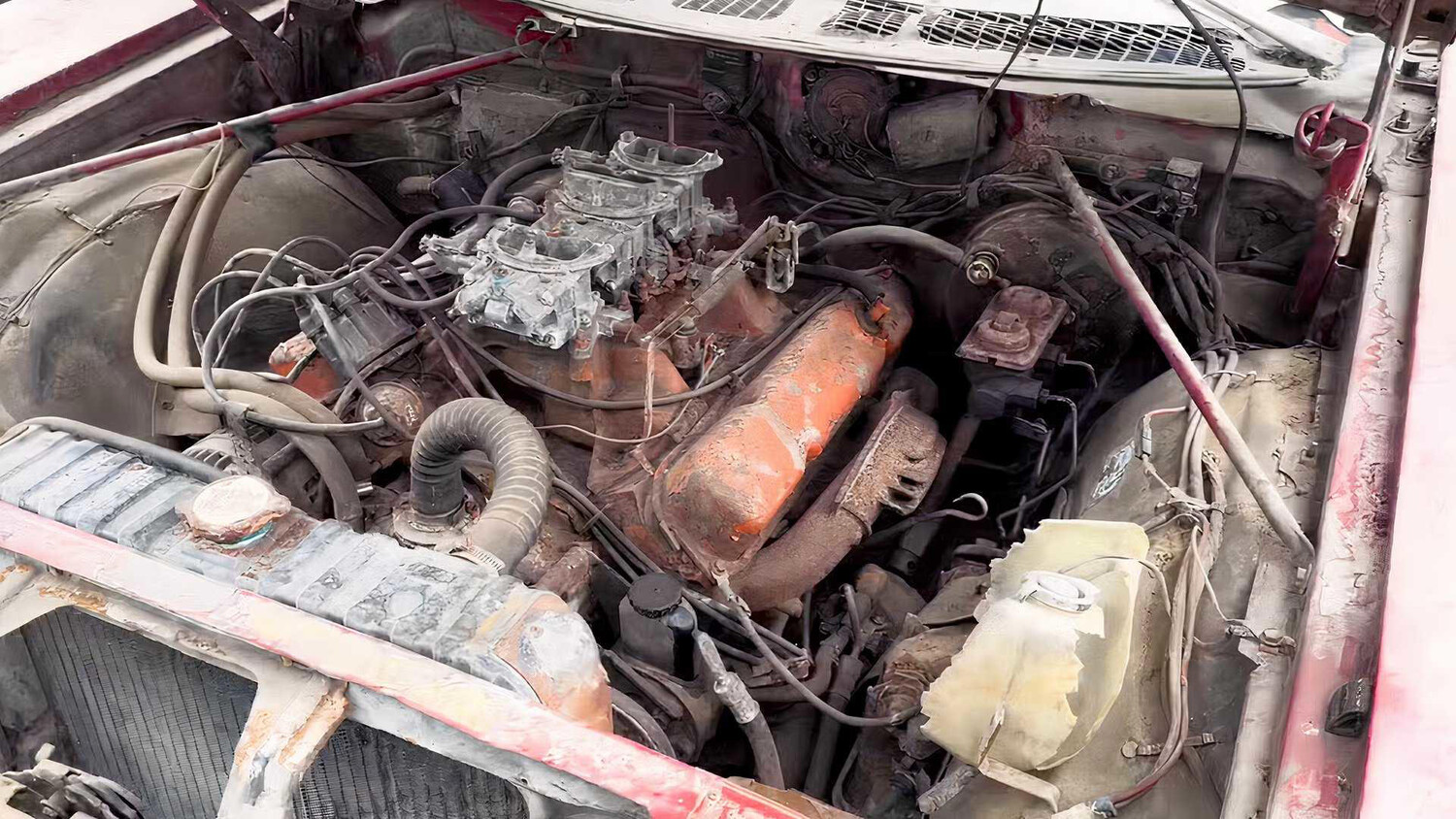
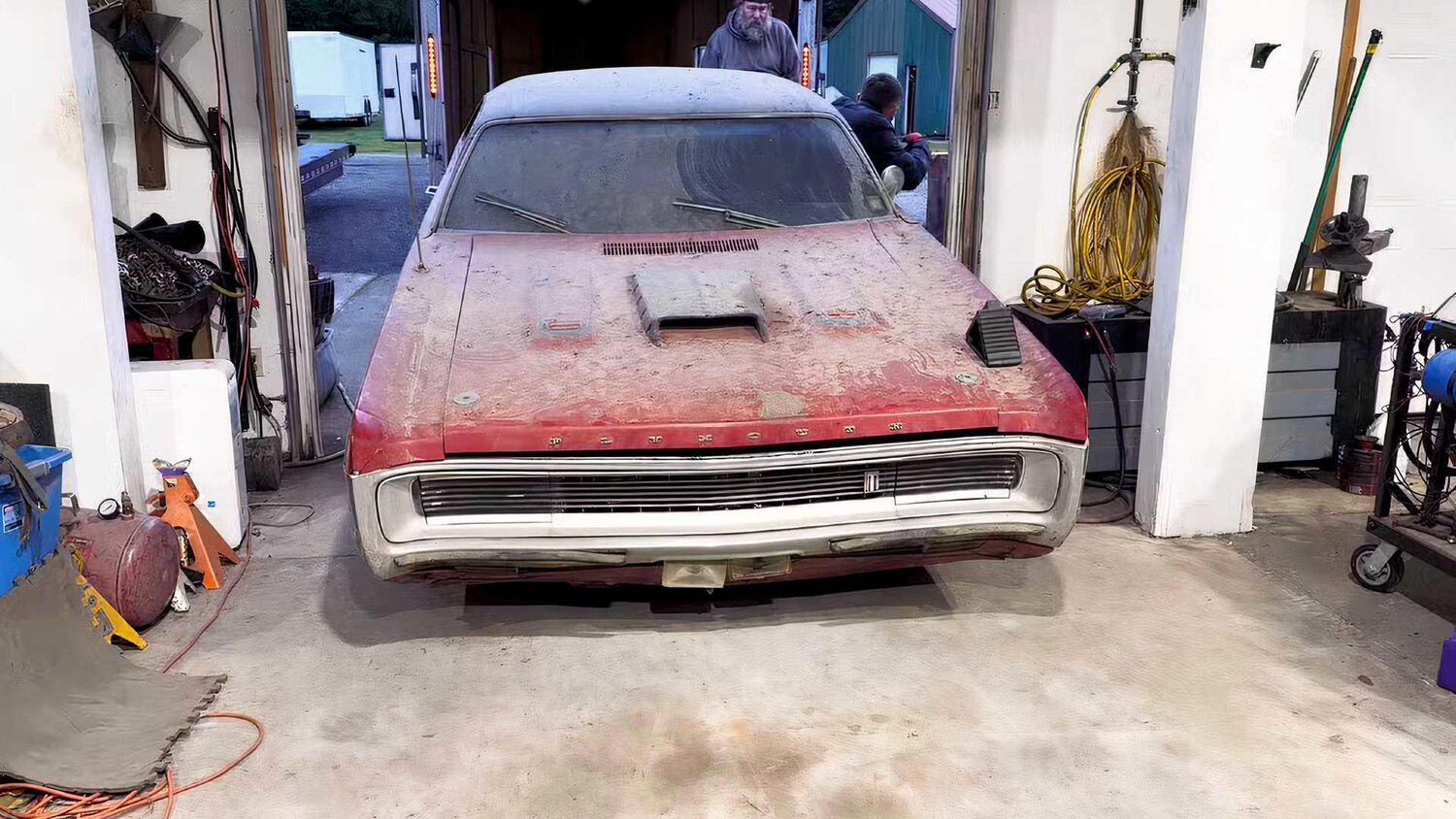
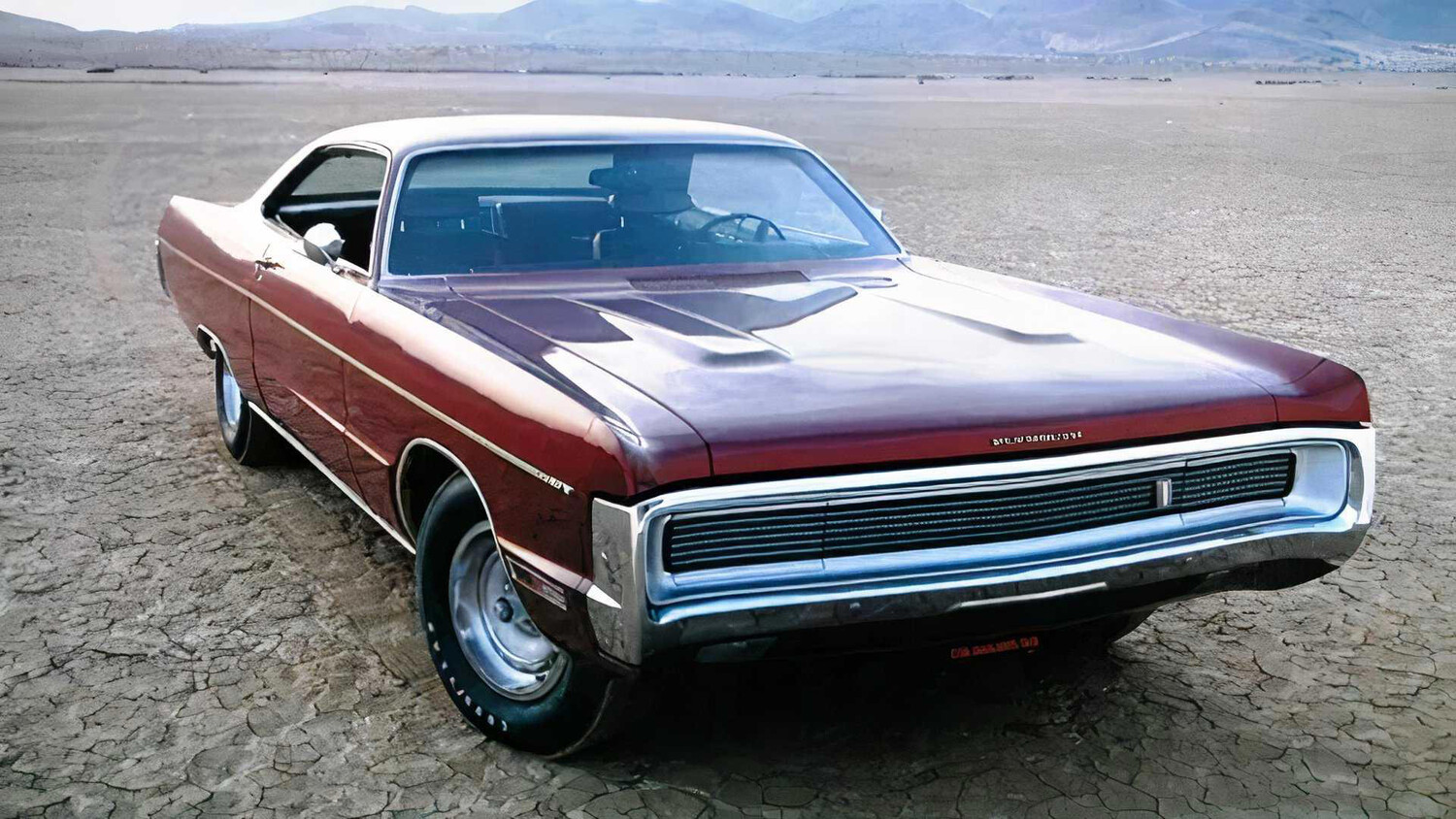
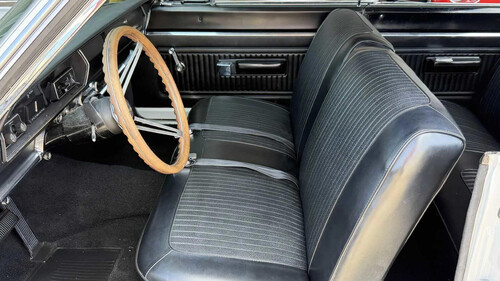
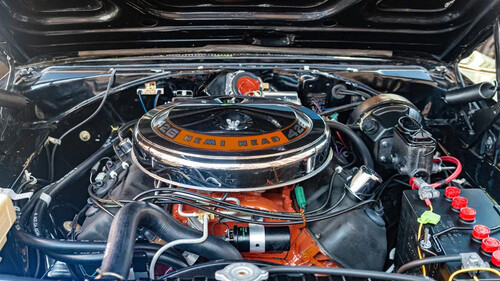
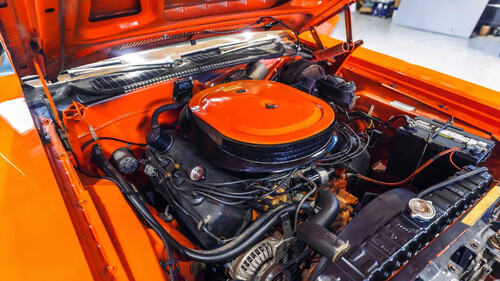
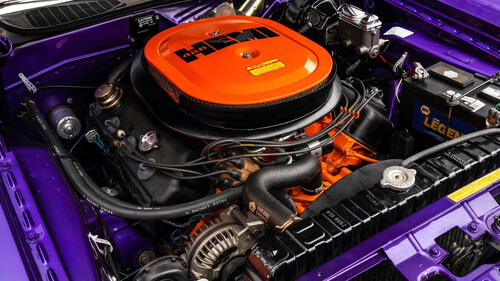
Barn finds are easily some of the most exciting stories we read about cars. They're like time capsules of automotive history, preserving rare machines exactly as they were when the world moved on. For enthusiasts, uncovering one isn’t just about restoration but also traveling back in time and reviving a forgotten story.A recent barn find that would have easily made Tom Cotter’s show, The Barn Find Hunter, revealed an extremely rare muscle car from the 1970s that should make any enthusiast excited. This car, like many other cars found in barns after decades, wasn’t in perfect condition, but it's arguably the rarest muscle car ever uncovered in a barn, with only four of these cars still known to be intact. A Big Block Plymouth Has Been Sitting In A Barn Since 1981 Rocket Restorations 45 Years Of Dust And Dirt The original owner, named Dan, from West Virginia left this incredible car sitting in a barn since 1981. The car in question is a 1970 Plymouth Sport Fury GT V-Code 440-6. This rare car is considered only one of four still intact with the rare 440-6 engine setup. The 440 cu-in engine with a six-barrel carburetor system was a legitimate upgrade for the Fury, which was a C-body car from Plymouth. Fed by three Holley two-barrel carburetors, the engine was rated at 390 horsepower.Rocket Restorations Dan passed the car to his son, Brent. Once Brent got hold of the car, he contacted Tom Hegert from Rocket Restorations in Olympia, Washington, to begin the restoration. Hegert and his team have restored many old Mopar cars, and that makes them the perfect fit for restoring this rare classic.The 440 engine was initially introduced in the middle of 1969. It was part of the A12 package for the Road Runner and Super Bee, and both cars had hingeless fiberglass hoods. In 1970, the engine was given general release for most Mopar muscle cars, which meant it could find its way under the hood of any car. The 1970 offering came with conventional Mopar hoods and equipment. Most Fury GT Models Didn’t Get The 440-6 Setup Rocket Restorations A Limited Car With A Limited Engine The 1970 Plymouth Sport Fury GT V-Code 440-6 was produced in extremely low numbers. Only 66 cars were produced wearing this name for the United States, and three more were assembled in Canada. Of these rare muscle cars, only eleven models are known to still exist, but only four of them still have the 440-6 motor setup. Most Fury Models Weren’t Real Muscle Cars The 1970 Plymouth Fury came with a 318 cu-in V8 engine in its base model. This engine produced a respectable 230 horsepower and 340 lb-ft of torque, but only allowed the Fury to finish a quarter mile in 16.8 seconds, which wasn’t too exciting in 1970.Using the 440-6 setup, the Fury GT has 390 horsepower and 490 lb-ft of torque. For the barn-found car, the original transmission is missing, but a Hemi-spec TorqueFlite three-speed automatic is in its place, which adds plenty of value to this car. This setup allows the Fury GT to reach 60 MPH in 6.6 seconds and finish the quarter-mile sprint in 14.7 seconds at 95 MPH; a much better time than with the standard V8 engine. 1970 Plymouth Sport Fury – Rapid Transit System Roots Rocket Restorations What Is The Plymouth Rapid Transit System? The Plymouth Rapid Transit System (RTS) was an evolution of what Dodge had done the year before. By creating Scat Pack marketing, Dodge found a way to increase the excitement around its muscle cars without doing much more than simple marketing. Plymouth took this blueprint a little further.The RTS was the same as the Dodge Scat Pack creation, with a twist. It promoted the idea that Plymouth muscle cars were part of a “System” which included the cars competing in NASCAR, NHRA, and Trans Am racing efforts. This meant a free-flow of parts and information from professional racers to Plymouth owners who wanted to get more power and speed from their muscle cars. The Engine Brings The Fury Into The System Thanks to the 440-6 setup, this 1970 Plymouth Sport Fury GT is part of the RTS marketing, which makes it tied to some of the fastest cars of the era. This added quality makes the Fury even more interesting than simply being one of the rarest cars in the world today.Interestingly, this special Fury also has a factory broadcast sheet hidden in the seats, which confirms all of its original features, making it a little easier for Hegert and his team to identify the original items from those that were added later, like the transmission. The Restoration Will Be Well-Documented After sitting in a barn for 45 years, some parts are surprisingly well-kept and still intact, but the engine is completely seized up. This means it will need to be torn down and rebuilt as much as possible. Tom’s goal is to preserve as much of the original car as he can. Some items are too far gone for that, but that’s expected of a car that is 55 years old.It appears the car was damaged in an off-road mishap, which might be why it ended up in the barn in the first place. This accident bent the frame slightly and cracked a quarter panel. Other items have rust or are broken, but nothing is surprising, considering how long the car sat. Thankfully, Rocket Restorations on YouTube will document every step of the restoration process.“This is pretty much my dream car. I don’t want to ruin any of the history of the car or any of the original paint.”- Tom Hegert Plymouth Sport Fury GT Is A Muscle Car Like No Other Mac's Motor City Garage Muscle Car In A Full-Size Body While most muscle cars of the era were mid-size coupes like the Road Runner, GTO, or Chevelle SS, the Sport Fury GT stood out by offering similar performance in a large, luxury-style package. At over 4,000 pounds, it was heavier than typical muscle cars but still capable of strong acceleration.The Sport Fury GT featured a unique grille, hidden headlights, and a sportier appearance compared to other Fury models. It also came with a heavy-duty suspension, performance tires, and optional rear deck stripes, giving it a more aggressive road presence. Standard 440 V8 Power While the regular Fury came with a smaller V8, the GT came standard with Chrysler’s big 440 cubic-inch Super Commando V8, rated at 350 hp and 480 lb-ft of torque. The special part of the Fury GT V-Code 440-6 is the six-barrel carburetor setup.