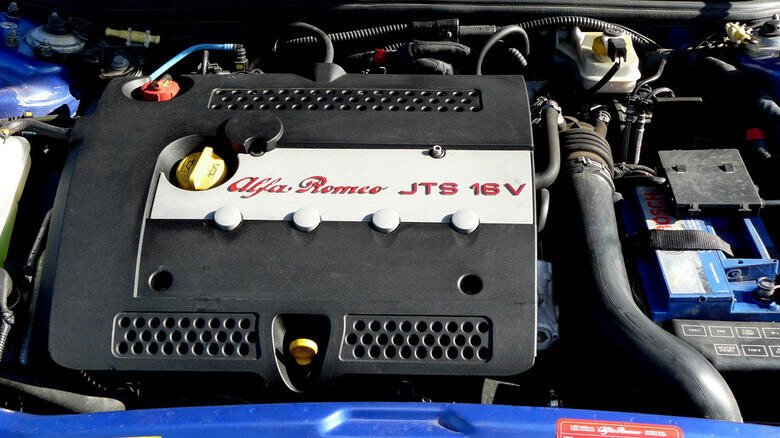
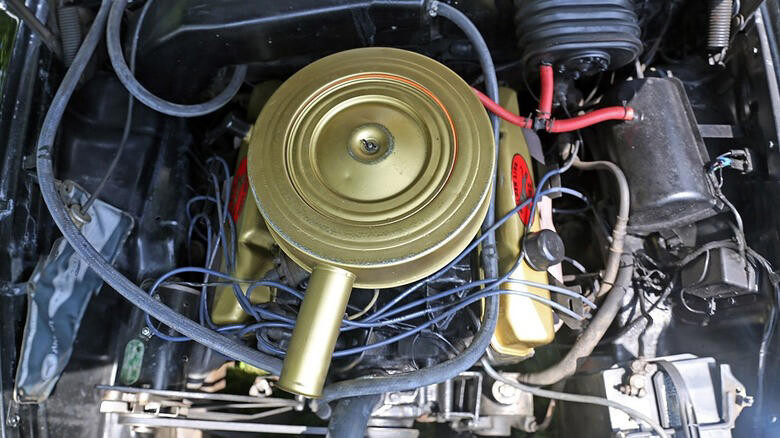
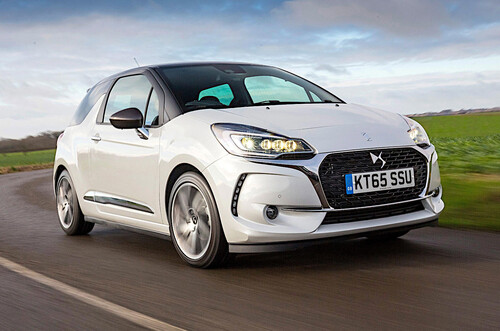
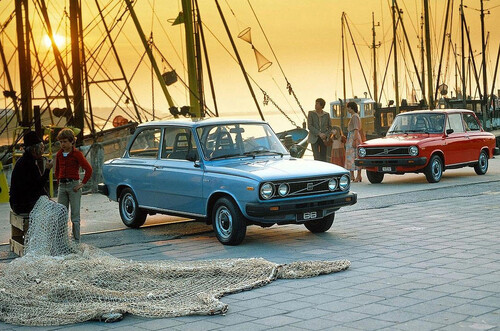
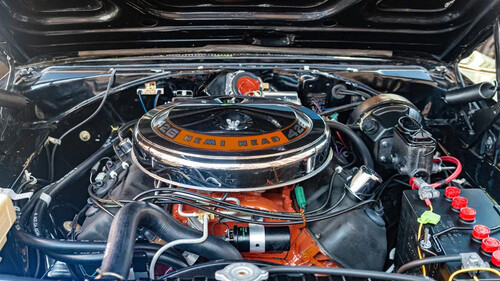
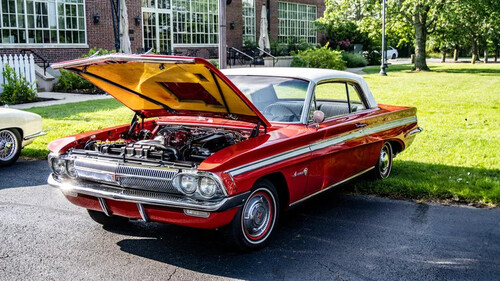
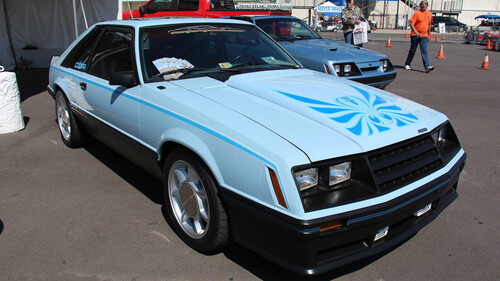
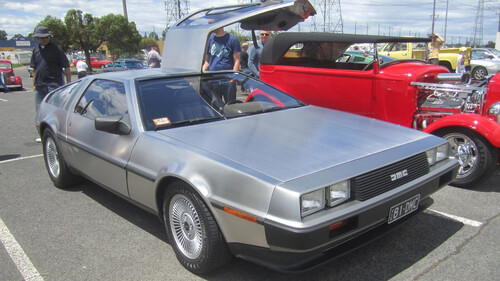
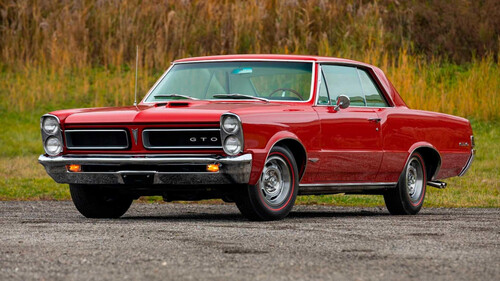
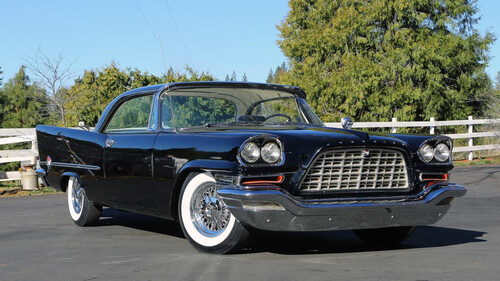
Ford 7.3-liter Godzilla V8Godzilla is an epic name all by itself, conjuring images of a massive nuclear-breathing dinosaur beasty — or the Nissan Skyline. But in the car engine world, this internal codename is used by Ford to describe a V8 that could be considered a monstrous beast of its own. Debuting in 2019 for the then-new Super Duty line of trucks, the Godzilla is a naturally aspirated 7.3-liter V8 making 430 hp at 5,500 rpm and 475 lb-ft of torque at 4,000 rpm.That those numbers were already best-in-class, but Ford's Godzilla was perhaps even more noteworthy for its pushrod configuration. That's because starting in 1996, Ford's gasoline V8s featured an overhead-cam design, including the 6.8-liter Triton V10, the torquey diesel alternative in the Blue Oval's lineup going back to 1997. By fitting Godzilla with a cam-in-block pushrod-activated valvetrain, Ford was able to engineer a relatively compact new V8 that was still an absolute monster.Highlights include a fully skirted iron block, a forged steel crankshaft supported by cross-bolted main caps, and EcoBoost-derived pistons with oil cooling jets. The Godzilla also sports a composite manifold with intake ports designed by the same person responsible for Ford's 5.2-liter flat-plane crank V8 from the GT350. It all adds up to a remarkably high-tech old-school gas-powered V8. Though Ford never marketed the big 7.3-liter V8 under the Godzilla name, this internal codename is easily one of the most epic engine names of all time.Chrysler 3.0-liter Hurricane High Output Straight-Six TurboWillys may have cornered the market for high-wind engine names like the Hurricane, Super Hurricane, and Tornado back in the 1950s, but this modern Chrysler variant is arguably more impressive — if nameplate character count is an important metric. On the Ram 1500 Tungsten, the 3.0-liter Hurricane High Output Straight-Six Turbo is distilled to a polished hood badge reading simply 1500 SST HO, which definitely piques the enthusiast interest. However, this modern Hurricane is even cooler when you dig into the details.Part of Chrysler's push away from V8s, the twin-turbocharged 3.0-liter inline-six Hurricane in High Output (HO) guise is said to offer better fuel economy, reduced emissions, and more power than typical naturally aspirated V8s and boosted six-pots in the light-duty truck segment. Impressive, considering it makes 540 hp and 521 lb-ft of torque. To get there, the HO features a deep-skirt cast aluminum block with a forged and twisted steel crankshaft. The block is deck-plate honed and pairs with an aluminum alloy head running forged aluminum pistons with a plasma transfer wire arc (PTWA) coating on the bores. Chrysler says it's the strongest Ram engine in history. The Hurricane also boasts ion-sense coils, an interesting technology that aims to read the color of the spark plugs in real time for gauging combustion quality. Other notable features include the dual low-inertia turbos, each feeding three cylinders, and a water-to-air intercooler on the intake side, ensuring a short path for the intake charge. There's a reason it won a Ward's 10 Best Engine Award in 2024.Alfa Romeo Jet Thrust StoichiometricJet Thrust Stoichiometric is not a phrase I would instantly identify as belonging to a car engine, but it sure is epic and does indeed come from the automotive world. JTS for short, this mouthful of an engine name was devised by Italian automaker Alfa Romeo in the early 2000s. Featuring the same 2.0-liter displacement as its prior Twin Spark inline-four, the 2.0 JTS found a home in vehicles like the 156 and GT sports coupe.For those unfamiliar, stoichiometric refers to the stoichiometric ratio, the exact blend of air and fuel at which complete combustion takes place. In the Alfa, that point was the conventional air-fuel ratio of 14.7:1, which didn't kick in on the 2.0 JTS until engine speed moved past about 1,500 rpm. Below that level, it operated as a lean burn system, all of which was an innovative take on direct injection (DI) at the time. It was the first Alfa Romeo gas engine where the fuel injectors operated directly within the combustion chamber and was the most powerful DI gas-powered engine in production at the time.Making 165 hp at 6,400 rpm and 152 lb-ft of torque at 3,250 rpm, the 2.0 JTS was impressively potent for its size. It could run a stratified charge lean burn system at low speed for efficiency before running the "stoich" ratio above that for maximum performance. The Jet Thrust part of the JTS moniker seemingly had nothing to do with how this engine worked, but it certainly elevated the JTS into the realm of car engines with epic names.Chrysler Golden Lion V8There is no shortage of epic engine names featuring animals, but Golden Lion is easily one of the best. Only sold briefly with 1959 and 1960 Chryslers, the Golden Lion was a V8 in 383 or 413 cubic inch spec. From the RB engine family, this wedge-head V8 was advertised as the smoothest, quietest, most rugged V8 in Chrysler history. The Golden Lion was a 90-degree lateral overhead-valve design with a 4.14-inch bore and 3.75-inch stroke on the big 413 that ran a 10.1:0 compression ratio.In the 1959 New Yorker model, the Golden Lion 413 featured a 4-barrel carburetor and was rated for 350 hp. These gloriously finned chrome cruisers could be ordered in a range of body styles from a 2- or 4-door hardtop to a convertible and station wagon. Lesser versions, like the Windsor, came with the 383 mill making 305 hp. Design cues included a leaping lion on the front fenders, a gold-finished air cleaner cover, and Golden Lion 413 graphics on the valve covers.An instant hit with the performance crowd, the torquey Golden Lion 413 saw use by racers including the Pettys. It was also adopted by Chrysler for its 1959 300E, where a pair of four-barrel carbs, high-output camshaft, and heavy duty valve springs helped push power up to 380 hp at 5,000 rpm and 450 lb-ft of torque at 3,600 rpm.