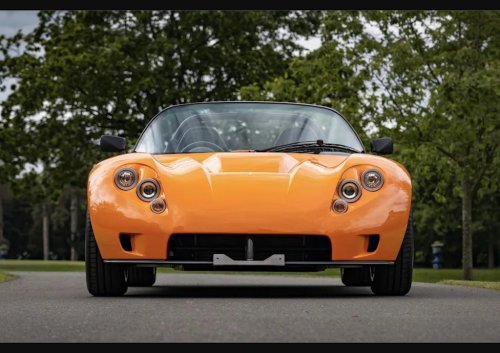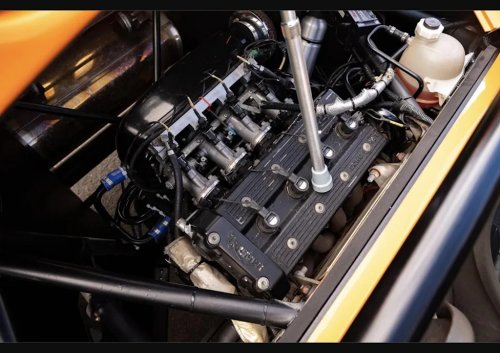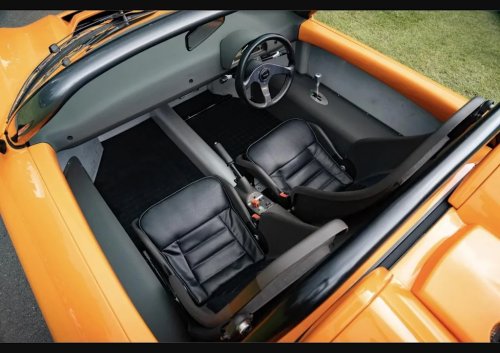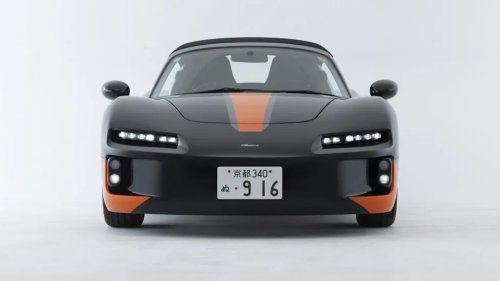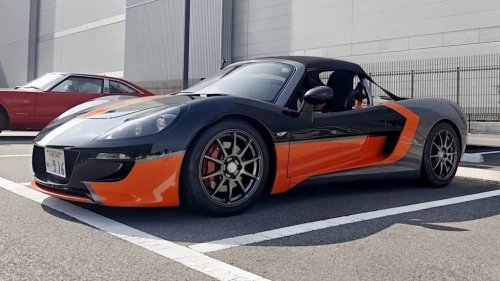


















As one of the greatest JDM roadsters to ever grace our roads and garages, the Mazda MX-5 Miata is the lightweight, affordable, fun, and obtainable sports car that has turned millions of us on to the fun you can have for a relatively small amount of money. Boasting a 50:50 weight distribution, a very light weight, rear-wheel drive, a low ride height, connected steering, and a rock-solid set of reliable engines, there aren't too many bad things to say about them.That is apart from their power output; at stock level, they are not the quickest. The early iterations are available with a naturally aspirated 1.6-liter or 1.8-liter inline-four, while newer models are available with a 2.0-liter SkyActiv-G inline-four, which is good for 197-horsepower, so not bad for their lightweight, but it could certainly be better.You may think that adding more power to such a legendary roadster is sacrilege or negates the point of having a sports car that anyone can step into and have fun in, but back in the late '90s and 2000s, an Australian company redesigned the MX-5 and created a V-8-factory-fitted model, and it became the most powerful factory MX-5 ever created. It is, unfortunately, sorely forgotten, but we have brought you everything you should know about it.In order to give you the most up-to-date and accurate information possible, the data used to compile this article was sourced from Mazda and other authoritative sources, including Classic.com, Shannons Club, Car Sales.au, MX-5 Club Australia, and Bullet Cars. The Most Powerful Factory MX-5 Ever, But It Didn't Hang Around Bullet V8 Roadster models in orange and silver parkedThere is no doubt some modder out there with a massive V-engine wedged into the tiny hood of their Miata somewhere in the U.S.A., but as a factory option, it is a very seldom-seen configuration. We think that you'd be hard-pressed to see one of these factory V-8 Mazda MX-5 in the U.S.A., namely, because they weren't built by Mazda, and were only produced in Australia by Bullet Cars. That doesn't mean what they did with the humble Japanese roadster deserved to be overlooked or forgotten about; quite the opposite.In the mid-1990s, using the Miata NA as a base, Bullet started by changing the hood to a forward-opening carbon fiber hood and utilizing the legendary 13B rotary engine, and in doing so, created a 300-horsepower weapon that could handle just as well as the smaller-displacement models that set the affordable roadster market on fire. This is where the sparks started flying, and Bullet wanted to go further and create a modified and beefed-up Miata that was both road-legal and saleable.And they did; and called it the Bullet Roadster. Bullet decided on fitting the MX-5 NA with a V-8, first from a TVR crate engine that a customer wanted them to fit, and later, because they were easier to get hold of, a 4.6-liter Rover V-8. Bullet Roadster Performance Specifications Though the original heaviest weight of the Mazda MX-5 NA (2,293-pounds) would have increased due to the heavier mill (unfortunately, there are no weight specs available for the Bullet Roadster), wedging in the Rover V-8 seemed to have done the job, and resulted in sprint times that far trump the NA's meager nearly-10-second dashes. The Beating V-Heart Of The Bullet MX-5 The Rover V-8 under the hood of the original Roadster is a 90-degree OHC mill that boasts a mostly-aluminum build, iron-lined cylinders, a tough but simple forged crankshaft, and strong rods and pistons. It is strong, reliable, and does the job, but once word got out that this could be done, despite the overall low production figures of these custom roadsters, they became very sought-after on the Australian market.Bullet had to change tactics when there was a shortage of the Rover mill between 2000 and 2002, but they had another very strong choice up their sleeve; the Toyota 1UZ-FE V-8 (borrowed from the Lexus SC 400 and the Toyota Crown). This legendary V-8 boasts a displacement of 4.0-liters, a 32-valve DOHC setup, and an all-aluminum block.Renowned for its smooth and responsive nature, the Toyota V-8 also boasts an oversquare design (87.5mm bore x 82.5mm stroke), which allows you to rev highly, and can kick out around 300 horsepower as well. How The MX-5 Had To Be Changed To Fit The V-8 If you have ever done an engine swap of any kind, you will know that it is not as simple as just dropping one in and driving off with more power.When it comes to dropping a new engine into the narrow engine bay and build of an MX-5, even more work had to be done, but Bullet Cars had a very determined and skillful team and overcame the challenges of wedging in a V-8, and by doing so, produced a more affordable supercar that was road-legal and pretty legendary among those in the know. The Build, Suspension, And Chassis Setup At first glance, the Roadster may look like an MX-5, but beneath the much-loved silhouette lies a nearly completely re-engineered beast. Bullet produced a bespoke square-tube space-frame chassis to deal with the higher torque of the utilized V-8s, while the chassis was re-designed with double the rigidity to ensure both strength and Australian Design Rules (ADR, to make the Roadster road-legal).The V-8s that Bullet utilized are also bigger in dimensions than the inline-fours that were originally intended for the MX-5, so the vehicle's wheelbase and track had to be widened and lengthened to accommodate them. With the extra weight, the much-coveted handling guts of the MX-5 could have been easily ruined, but Bullet thought of this and utilized custom-built MacPherson struts with Prosport adjustable coil-overs and a sway bar up front. Outback, the Roadster boasts double wishbones, taken from the MX-5 itself, and is paired with adjustable coil-overs and a sway bar - so, you still have the power of a V-8 and the handling of a nimble roadster.The bodywork also got a transformation, with Bullet producing new panels from fiberglass and carbon composites, resulting in a wide-body design, a one-piece tilt nose, and an integrated hood scoop, that kept only the original doors and trunk lid of the MX-5. This not only helped to save some weight, but also gave the Bullet an aggressive and even sportier look that became a tell-tale sign of this rare roadster. But, they didn't just stop there. It Only Got Better With The Bullet Roadster SS Bring a TrailerThe Bullet Roadster was in full swing on Australian roads from the late '90s to the early 2000s, but in 2003, and using the MX-5 NB as a foundation, Bullet took a step further into JDM customization legend by bolting on a supercharger to the rock-hard Toyota 1UZ V-8. What looked like impressive numbers from the Bullet Roadster started to look like child's play compared to their new creation, the Bullet Roadster SS.Bullet added a custom Sprintex M90 supercharger and dual-stage throttle bodies, which deliver a substantial boost to the already impressive Roadster setup, while forged pistons gave the already reliable Japanese engine an even sturdier feel and build. To keep the Roadster SS road legal, Bullet stiffened the chassis even more and added Brembo brakes (330mm ventilated discs with four-piston calipers at the front and 276mm at the rear); so stopping power is a lot more effective than the MX-5's and Roadster's, while handling is still kept in check by a limited-slip differential and the nearly-MX-5 setup.Early flavors of the MX-5 aren't exactly renowned for their plush interiors, and though the Roadster and Roadster SS' interiors aren't particularly either, the SS did receive a sort of glow-up with the addition of a decent leather upholstery, a custom Bullet instrument cluster, which boasts a speedo that goes all the way up to 300 KMH (190 MPH), and an Alpine sound system, so you get a lot more all-around compared to your standard iterations. Bullet Roadster SS Performance Specifications Again, weight specs aren't available from any reliable sources, but the V-8 will undoubtedly have added some weight, but again, Bullet rolled out the stops with the Roadster SS and pegged 0-60 MPH times of 4.7 seconds. Now, that may not seem like hugely impressive times, but in fact, it beats some sports car and sports sedan stalwarts in the sprint. Not to mention top speeds of 180 MPH... in what is effectively a beefed-up second-gen MX-5.2017 Chevrolet Camaro (V-6/Manual). 0-60 MPH: 5.0 Seconds. 2009 Jaguar XF Supercharged. 0-60 MPH: 4.9 Seconds. 2001 Aston Martin DB7 Vantage. 0-60 MPH: 4.8 Seconds. 2006 BMW Z4 M Coupe. 0-60 MPH: 4.8 Seconds. 2005 Chevrolet Corvette Convertible. 0-60 MPH: 4.8 Seconds. 2001 Acura NSX. 0-60 MPH: 4.7 Seconds. 2015 Caterham Seven 360R. 0-60 MPH: 4.7 Seconds. 2004 Porsche 911 Carrera. 0-60 MPH: 4.7 Seconds. Limited Numbers And High Prices Make It A Rare Beast Between 1999 and 2009, there were fewer than 1,000 of both the Bullet Roadster and Bullet Roadster SS produced, so finding one today, especially here in the U.S.A. is a heck of a task. The other thing about the Roadster and the Roadster SS was that, when it was released, it was not priced like the wallet-friendly MX-5, but we can see why. How Bullet Made Their Roadster A Legend Back in 2000, the Roadster would have set you back approximately $75,000 (or, just under $140,000 today) and around $120,000 for the Roadster SS (or, around $223,000 today). It is a lot of money, but to put that into perspective, the legendary BMW Z8 would have cost you around $128,000 in the same year and can sprint to 60 MPH in the same time as the Roadster SS. So, cheaper, but just as capable.And this is how the Roadster and its supercharged cousin have become legends to those of us who either remember it or know about it; it embodies the spirit of the Mazda MX-5: cheap(ish), fun, and great to look at, but crucially, it can take on the might of the more luxurious sports car brands. Though it was more expensive than the stock MX-5s of the time, today, it should be remembered as a step in the right direction for the MX-5, which we unfortunately didn't get here in the U.S.A., but it came to show what could be done to this legendary Japanese roadster with some inspiration.From the rotary-engine-wielding MX-5 to the subsequent V-8-equipped beast, Bullet's models not only showed that the MX-5 was built to be a standout roadster in its own right, but would have no doubt inspired many a gas monkey to crank up their own stock Miatas. Plus, thanks to its low numbers and impressive performance, it is rarer and more potent than the Mazdaspeed Mx-5, which can churn out 178 horsepower and hit 60 MPH in as little as 6.7 seconds. Owning A Bullet Roadster Or Roadster SS Today According to Shannons Club, there are seldom Roadsters and Roadster SS' for sale in Australia currently (as of June 2025). The price for the only available Roadster model currently starts at AU$49,000 (around $32,000 here in the U.S.A.), and for that, you get a 2000 model boasting the Rover V-8, while, according to Car Sales, there is only one Roadster SS for sale.Up for sale is a 2002 Bullet Roadster SS boasting the 4.0-liter supercharged Toyota mill with a starting price tag of just under AU$75,000 ($48,450). So, if they were for sale here in the U.S.A., they'd make for a good deal compared to something like the BMW Z8, which currently has an average auction price of $211,404. You'd be forgiven for not hearing of the V-8 MX-5, considering it was produced in Australia, but it is certainly a roadster that shouldn't be forgotten.