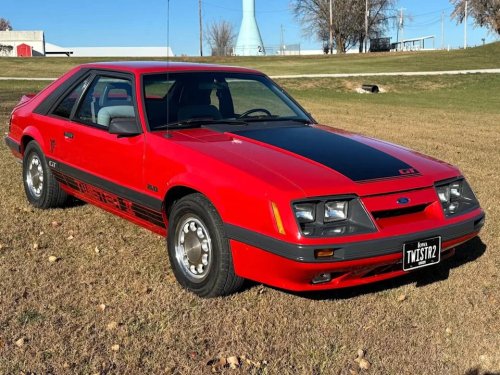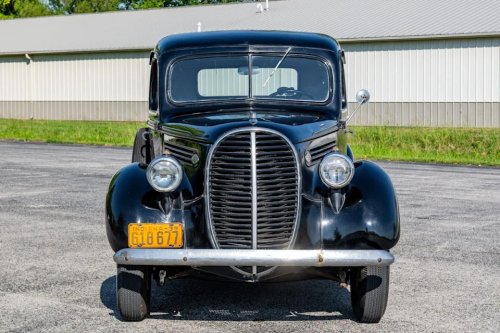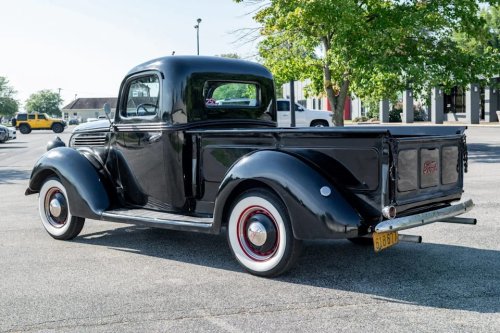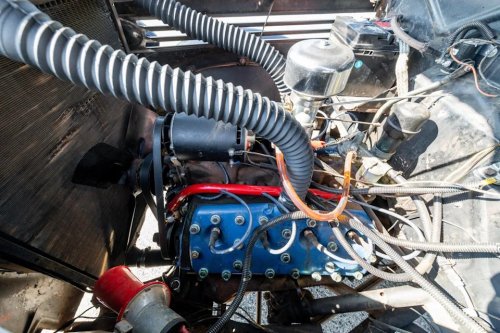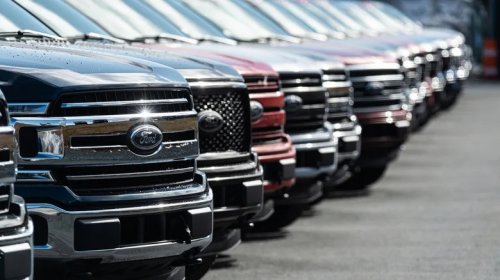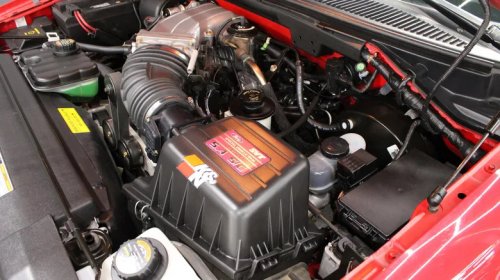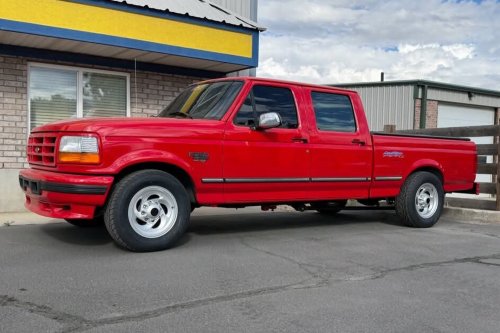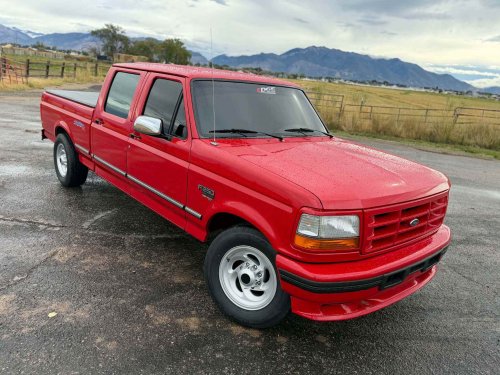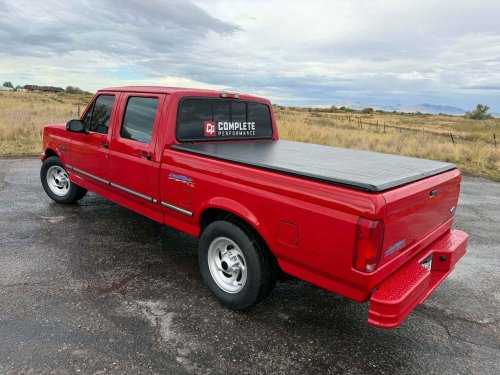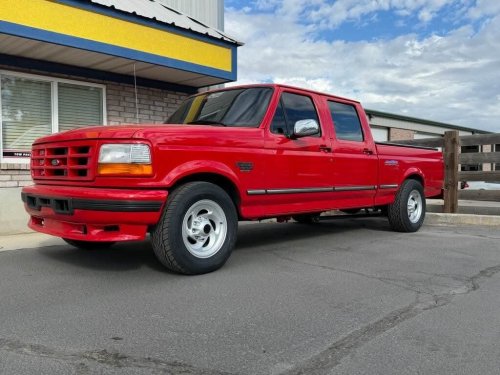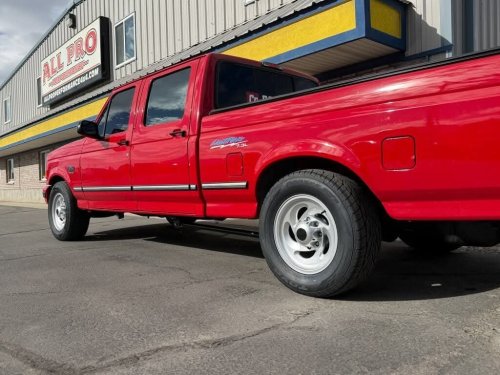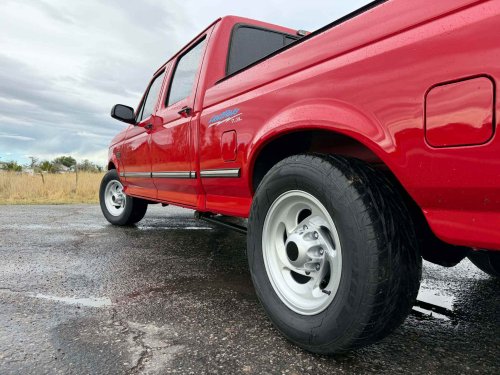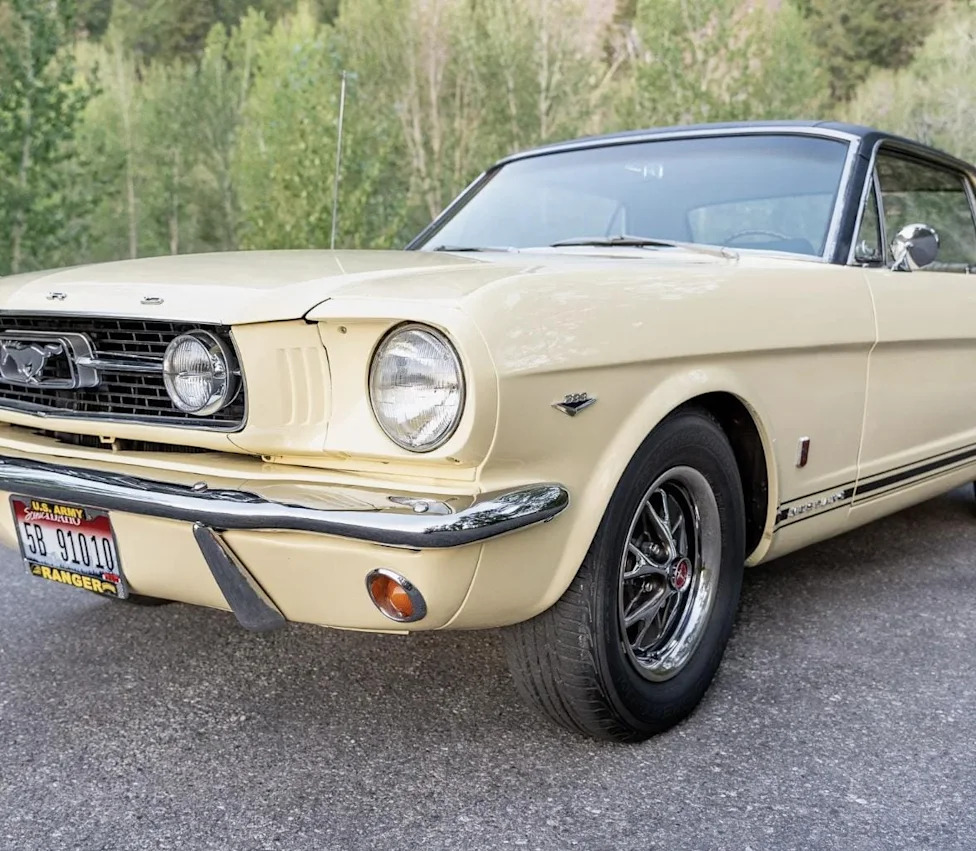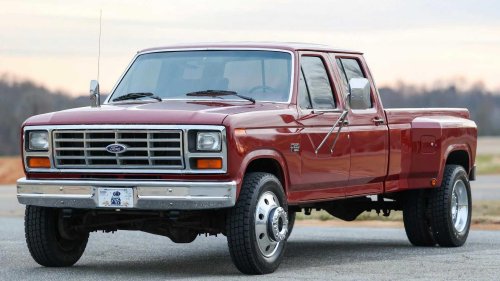
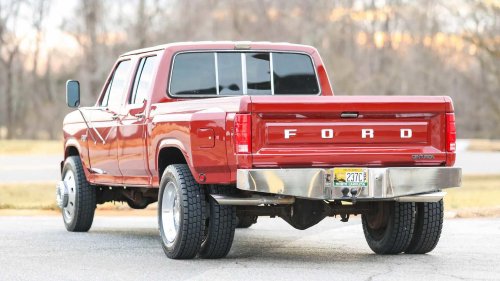
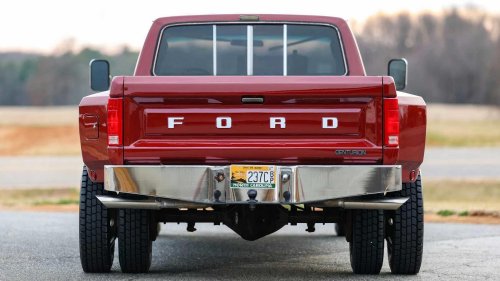
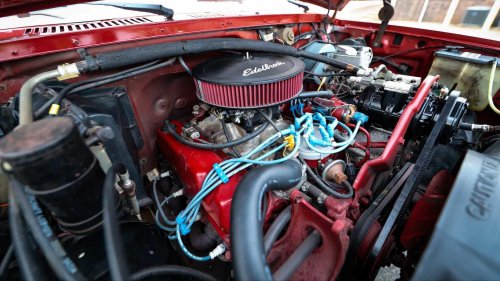
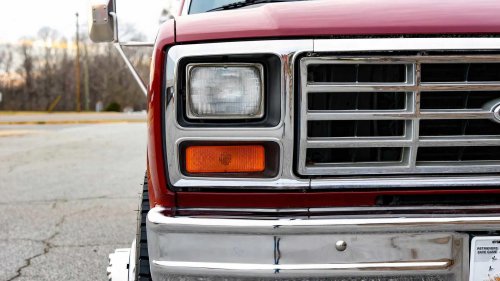
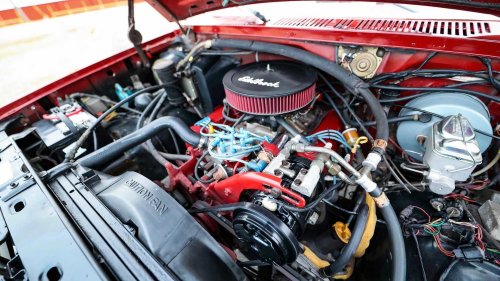
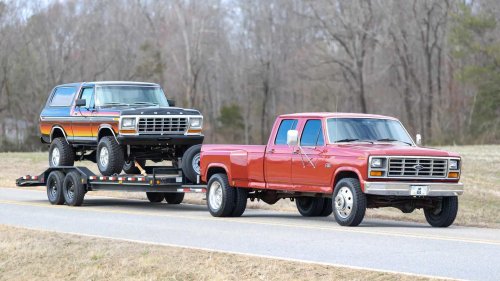
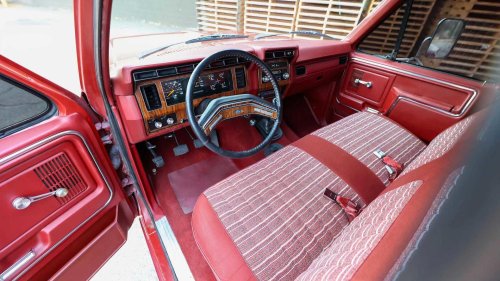



















Many would associate America’s most powerful vehicles of the 1980s with burly muscle and sports cars like Corvettes, Trans Ams, and turbocharged imports that were beginning to invigorate the performance scene. Don't get us wrong, the ‘80s were not exactly a golden era for horsepower, particularly by today's standards. Due to emissions regulations strangling many of the country’s most iconic muscle cars, America's most powerful model of the decade was hidden in plain sight. It didn't feature unibody construction or low-profile tires, but instead a truck bed at the back and a monster 460ci big block V8 up front.Of course, this looks specifically at American-produced vehicles from the decade, particularly examples that were put into mass production. Sure, there were Shelbys and bespoke muscle cars that were tinkered in clandestine operations to churn out significant power, but this is centered around one of the most surprisingly powerful iterations that dwarfed many so-called performance icons. The F-250 and F-350 Packed Ford's 460ci V8 That Few Noticed Bring A Trailer When Ford offered its heavy-duty F-250 and F-350 pickups with the legendary 460-cubic-inch (7.5-liter) V8, few outside of the truck community paid much attention. On paper, the engine didn’t belong in a conversation about performance cars. After all, these were utilitarian workhorses built for hauling massive loads and towing trailers across America. But the sheer displacement and output of the 460 made these pickups stand out in a decade where most cars struggled to surpass 200 horsepower.Bring A Trailer By the early ‘80s, horsepower figures across Detroit had plummeted. The once-mighty Mustang and Camaro were shadows of their former selves, while Corvettes struggled under restrictive emissions. Meanwhile, Ford’s big-block V8 quietly sat under the hoods of F-250 and F-350 trucks, producing more grunt than anything else you could buy from an American showroom, despite these trucks weren’t marketed as performance machines.Bring A Trailer Still, the numbers don't lie, and the early '80s 460s produced around 245 horsepower and more than 370 lb-ft of torque. By the mid-to-late ’80s, tightening emissions regulations saw output drop slightly on paper to around 225 horsepower and 380 lb-ft, but the trucks still delivered unmatched pulling strength.Bring A TrailerWhat made the 460 such a standout was its torque curve because it was designed for towing, and it delivered massive low-end punch that few sports cars of the era could match. Backed by either manual or automatic transmissions built for heavy-duty operations, the F-250 and F-350 used their torque-rich big block to haul well over 10,000 pounds. While they didn't carve up a niche in the performance sphere, for obvious reasons, they certainly cemented their reputation as endearing and dependable workhorses that quietly overshadowed America’s so-called performance cars of the decade. The result for the 460ci-equipped F-250 and F-350 was the technical title as the most powerful production vehicles in America through much of the decade. A Pickup Truck With More Power Than America’s Flashiest Sports Cars Bring A Trailer The 1980s were a strange time for performance. On one end, manufacturers like Ferrari, Lamborghini, and Porsche were experimenting with turbocharging and aerodynamics to squeeze as much speed as possible out of their machines. On the other hand, American automakers were playing catch-up, shackled by new fuel economy rules and emissions controls. Sports cars that once boasted big horsepower were suddenly barely pushing 150 to 200 horsepower.To put things in perspective, the 1982 Chevrolet Corvette produced just 200 horsepower from its 5.7-liter V8. The 5.0-liter-powered Ford Mustang GT of 1983, celebrated for bringing back some performance credibility, made around 175 horsepower. Meanwhile, the Ford F-250 and F-350’s 460 V8 was producing horsepower and torque figures that left those cars far behind.Bring A Trailer Of course, no one was lining up to drag race an F-250 against a Corvette. These were purpose-built, heavy-duty products with suspension setups designed specifically for payloads, not corner carving or straight line speed. But if raw power was the metric, Ford’s pickups wore the crown. It’s a reminder that sometimes performance doesn’t always come packaged in a sleek coupe or flashy convertible, but sometimes it lives under the hood of a work truck.At this point, it is also worth mentioning how Ford was able to put such a sizable motor in its truck, while all of its sports and commuter cars suffered a very different fate. Heavy-duty pickups like the F-250 and F-350 were classified differently from passenger cars under U.S. emissions and fuel economy standards. Since they were intended for commercial and work use, they weren’t held to the same strict Corporate Average Fuel Economy (CAFE) targets or catalytic converter limitations that passenger cars had to meet. This regulatory “loophole” allowed Ford to keep offering large-displacement engines like the 460, tuned more for torque and durability than efficiency. This essentially meant that Ford’s heavy-duty trucks could still pack a massive big-block power because they were exempt from many of the restrictions that applied to consumer cars, which choked Mustangs and Corvettes to under 200 horsepower. How The 460ci Big Block Made These Fords Muscle Trucks In Disguise Bring A TrailerThe Ford 460 big block had a long and storied history before it became the secret powerhouse of the 1980s. Originally introduced in the late 1960s, the 460 had already built a reputation for brute strength in full-size sedans and Lincolns before becoming a truck-exclusive motor. By the time it became the flagship engine option for the F-250 and F-350, it had effectively replaced the earlier 400 V8 as Ford’s go-to choice for maximum power. By the time ‘80s pop and fashion were in full swing, the 460 had been refined for reliability and sheer pulling power, which made it perfect for heavy-duty applications like the seventh-generation Ford F-Series (1980–1986) and later the eighth-generation models (1987–1991).To match the overwhelming need for pulling power, Ford needed an engine that could deliver dependable low-end torque for heavy towing, which is why the proven 460-cubic-inch (7.5-liter) big-block V8 was chosen as the range-topping powerplant. Eventually, the 460ci would be phased out in the mid-1990s, giving way to Ford’s new generation of V10 and Power Stroke diesel engines, which carried the torch of heavy-duty strength into the modern truck era.What remains fascinating nearly 50 years later is how this engine blurred the lines between work vehicle and muscle machine. With displacement that rivaled or exceeded the big-block monsters of the ‘60s and ‘70s muscle era, the 460 kept alive the spirit of American excess in a time when passenger cars had largely abandoned it.Drivers who got behind the wheel of a 460-equipped F-250 or F-350 discovered a truck that pulled like a freight train and accelerated with surprising authority given its size. While it wasn’t meant for quarter-mile bragging rights, the sensation of that much torque was intoxicating. In many ways, these pickups could be argued as muscle cars in disguise, hidden beneath utilitarian sheet metal and marketed for entirely different reasons. The result in 2025 is a truck that is looked back on in awe and admiarion. Why the F-250 and F-350 Remained Hidden Powerhouses of the ’80s Bring A Trailer So why didn’t these trucks get the recognition they deserved at the time? Part of the answer lies in marketing. Ford (correctly) never positioned the F-250 or F-350 as performance icons. They were advertised as tools. They were vehicles for farmers, contractors, and families who needed to tow boats or campers. The idea of bragging about horsepower in a pickup was simply revolutionary and still years away; it wasn’t until the 1990s and 2000s, with trucks like the Ford SVT Lightning and Ram SRT-10, that the concept of a “performance truck” really entered the mainstream. Back then, trucks were purely about utility.Leather interiors, air conditioning, and creature comforts were seldom fitted in trucks back then, in comparison to now. Additionally, the 1980s car culture emphasized sleek design, handling, and the promise of fuel efficiency. Trucks were considered rough, utilitarian, and purely functional. As a result, the fact that the F-250 and F-350 quietly boasted the most powerful engines in America went largely unnoticed outside of the trucking world.Today, with the benefit of hindsight, we can see how unique this situation was. While enthusiasts were lamenting the decline of muscle cars, the spirit of brute-force American power lived through a technical loophole in Ford’s heavy-duty pickups. They weren’t in the slightest way glamorous, but they embodied everything that summarized Detroit engineering with oversized engines and burly muscle.The 1980s may not have been a golden decade for sports cars, but Ford’s F-250 and F-350 with the 460ci V8 proved that raw power was still alive and well in America. While they never wore the badge of a performance icon, the 460-equipped Ford trucks were quietly the most powerful vehicles you could buy in the U.S, but towards the end of the decade, the tides had begun to turn and regulations had been amended to allow for more power. Nearly forgotten and banished to the annals of history, these trucks are a true reminder that power can come in all shapes and forms.Sources: Classic.com, Bring a Trailer.