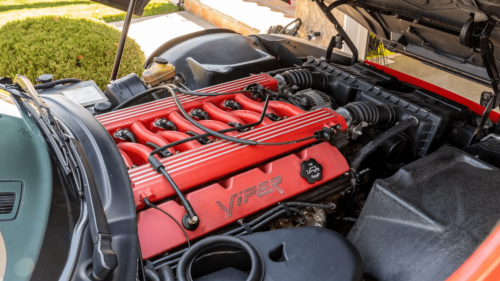
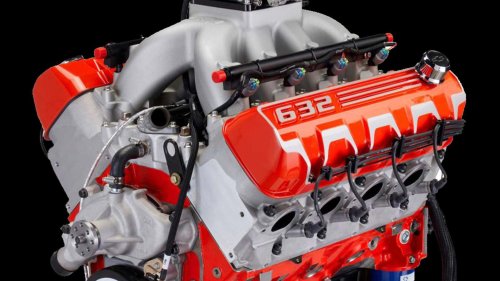
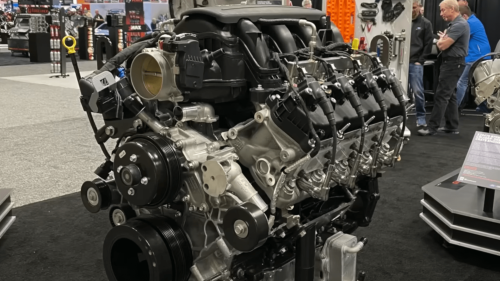
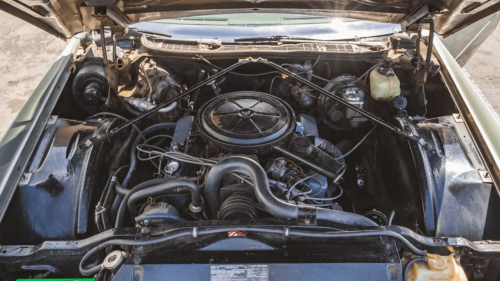
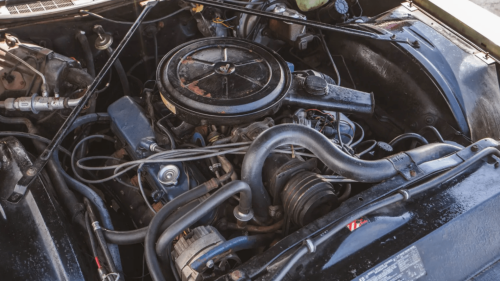
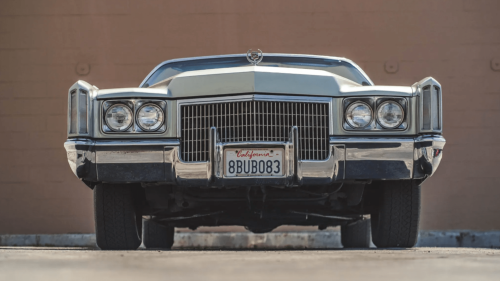
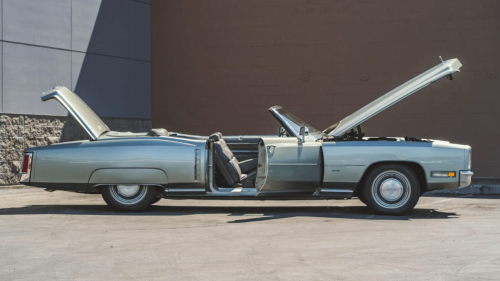
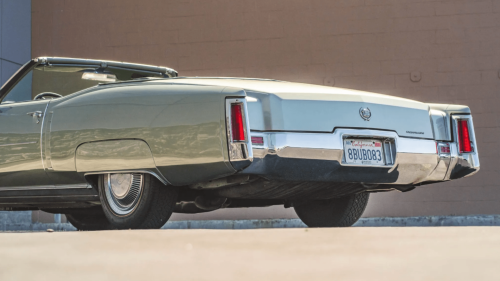
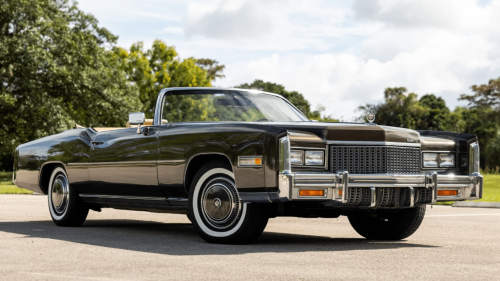
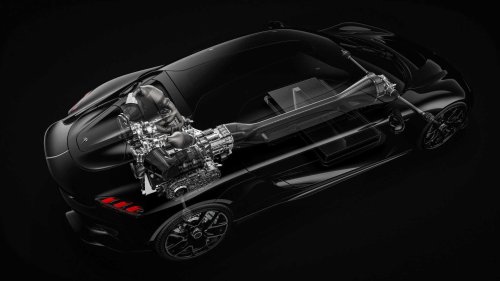
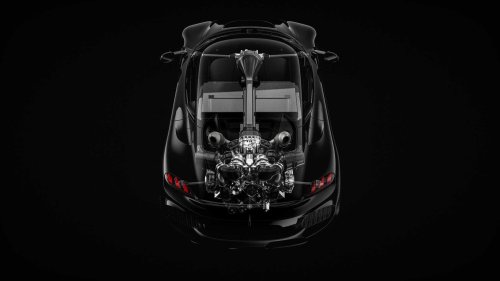
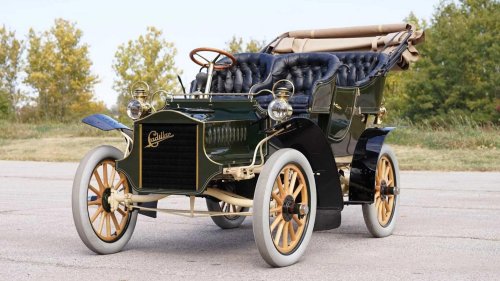
Every gearhead has heard the age-old phrase, 'there's no replacement for displacement'. Now, that's not strictly true, as engine builders have proved time and time again, especially in recent years, that forced induction is a way more effective and efficient way of creating power than just building the largest engine possible. Take the Ford EcoBoost V6, for example: when lumped beneath the skin of their flagship GT supercar, it creates a specific power output of over 180 horsepower (that's hp per liter).Still, regardless of what's most efficient or kinder to the environment, there is still little else on the road that's cooler than a muscle car with a huge capacity V-8 under the hood. That got us thinking: what's the largest displacement V8 engine ever fitted to a production car? The answer might not be what you first expected. American Automakers Lead The Way In Large-Capacity Engine Production These Three Engines All Boast Monstrous Displacements Dodge Viper 8.0-liter V10 2008 Dodge Viper: 8.4-liter V10 2023 Ford Megazilla: 7.3-liter V8 crate engine 2022 Chevrolet ZZ632/1000: 10.35-liter crate engine American automakers have always had a special talent for building engines that defy logic and reason. It's not just about power – it's about creating something so absurd that other manufacturers wouldn't even consider it. The Dodge Viper perfectly captures this philosophy. When the car debuted with an 8.0-liter V10, most companies would have called it a day. But Dodge engineers had other plans. They expanded it to 8.3 liters in 2003, then pushed even further to 8.4 liters by 2008. That final iteration delivered 600 horsepower and 560 lb-ft of torque straight from the factory, creating a machine that demanded respect from even experienced drivers.Chevrolet The V8 engine wars between Ford and Chevrolet have reached equally ridiculous heights in recent years. Ford's entry carries a name that tells you everything: the Megazilla. This 7.3-liter naturally aspirated beast generates 615 horsepower and 638 lb-ft of torque without any forced induction. Ford's engineers designed it specifically for the aftermarket crowd, meaning those already impressive numbers represent just the starting point for builders looking to push boundaries.Youtube - REvan Evan Chevrolet's response makes Ford's monster look almost reasonable by comparison. The ZZ632/1000 stretches displacement to an almost comical 10.35 liters – that's 632 cubic inches for those keeping score at home. Output reaches Bugatti Veyron territory at 1,004 horsepower, a number that would have seemed impossible for a pushrod V8 just a decade ago. Both the Megazilla and ZZ632 could claim the crown for largest production V8, but since they're sold exclusively as crate engines rather than in factory vehicles, that particular title remains up for grabs. The Largest Displacement Production V8 Ever Hails From Cadillac This Mighty V8 Packs A 500-Cubic-Inch Punch Bring A Trailer General Motors holds a unique record in the world of production V8 engines, though not for the reasons you might expect. The company's 500 V8 – named for its 500-cubic-inch displacement – measures out to 8.2 liters, making it the largest V8 ever installed in a regular production car. That puts it just below the Dodge Viper's massive V10 in terms of sheer size, but ahead of every other factory V8 that came before or after.Bring A Trailer This enormous powerplant found its home primarily in the Cadillac Fleetwood Eldorado during the mid-1970s. Most buyers opted for the convertible version, though Cadillac did produce a limited number of coupes for those who preferred a fixed roof. The engine choice might seem strange today – why put such a massive motor in a luxury cruiser instead of a fire-breathing muscle car? But that was exactly the point. During an era when bigger meant better, this engine served as a rolling declaration of American excess and prosperity. It wasn't about quarter-mile times or track performance. It was about making a statement that only Cadillac could make. GM 500ci V8 Specs GM's 500ci V8 Lacks Any Serious Performance Pedigree The 1970 Cadillac Fleetwood Eldorado Tops Out At 140 MPHBring A Trailer Although 400 horsepower and 550 lb-ft of torque is hardly an output to be mocked, the 8.2-liter V8 from GM was never destined to be a high-performance muscle car. This was especially true in later years, as, due to ever-stricter emissions regulations, the output of this 500ci V8 grew ever smaller.Bring A Trailer After just a couple of years of production, the V8's horsepower dwindled to a lackluster 235 horsepower, before finally being further strangled in its final years, resulting in just 190 horsepower. At this point, it is no surprise that Cadillac decided to retire the monstrous V8 and focus on slightly more efficient and modern powertrains.Bring A Trailer At its peak, the GM 500ci V8 would power the 18.4-foot-long Fleetwood Eldorado from 0 to 60 mph in a respectable 7.7 seconds, before running out of puff at an equally impressive 140 mph. Needless to say, the later, lesser-powered cars could not touch such figures; the 1976 Cadillac Eldorado could barely muster 110 mph, yet still hardly managed to return upwards of 10 MPG. 1970 Cadillac Fleetwood Eldorado Performance Specs Here's How The Biggest Displacement Production V8 Compares To Other Period Rivals 1976 Cadillac Fleetwood Eldorado Convertible Large Displacement American V8 Comparison Chevrolet's Chevelle SS 454 V8 Kicked Out An Impressive 450 Horsepower Despite clearly not being a performance-focused engine, the GM 500ci V8 used its huge displacement to bring the fight to other manufacturers, such as Dodge, Ford, and Chevrolet. One of the most powerful engines from the era was the 454ci V8, which featured under the hood of Chevrolet's Chevelle SS, and kicked out 50 horsepower more than the larger Cadillac unit.Although these other engines from the era all featured in more performance-focused models, none could match the huge 550 lb-ft of torque that GM managed to eke out of their 500ci behemoth.