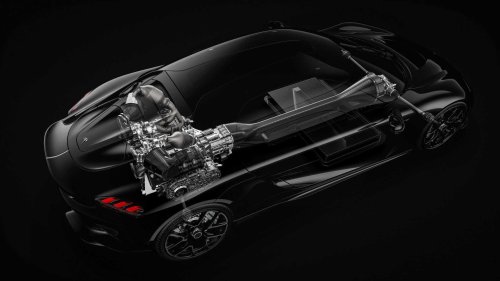
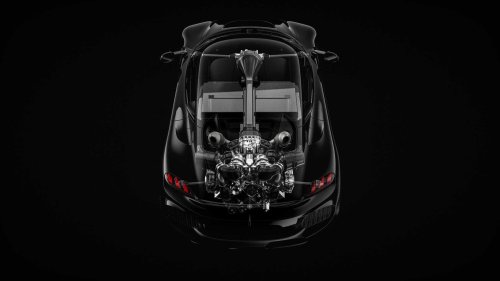
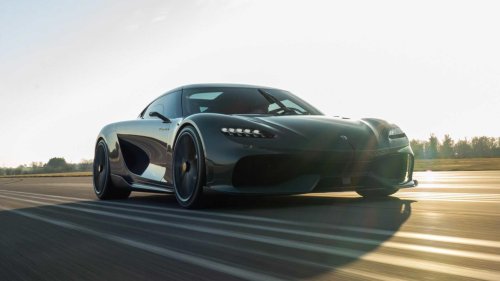
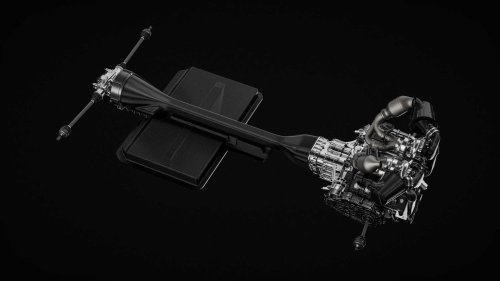
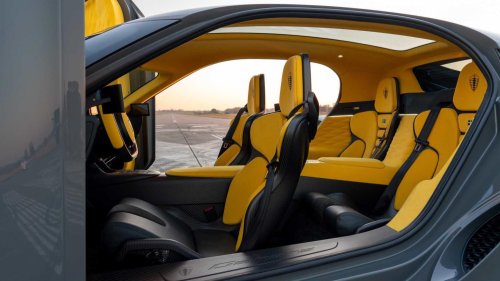
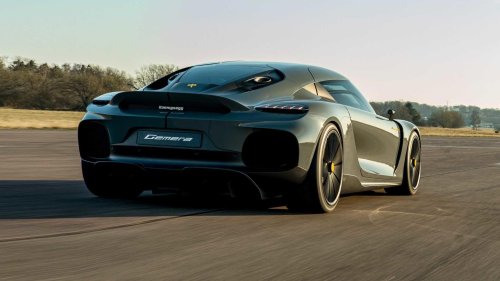
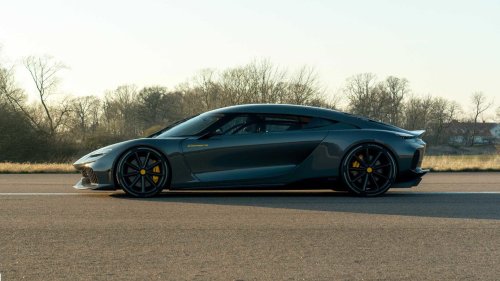
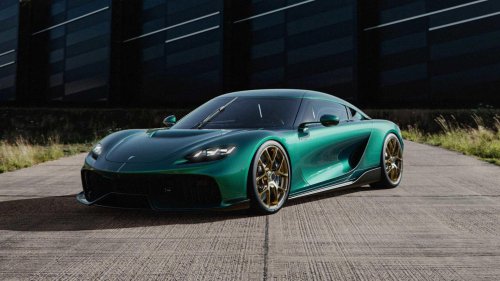
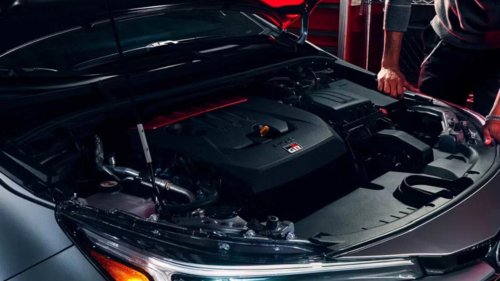
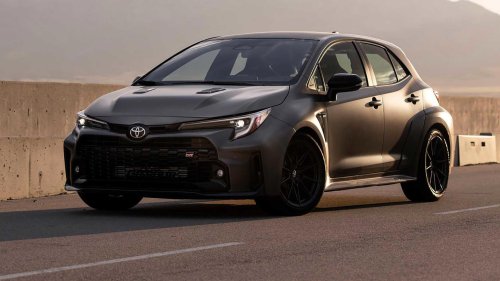
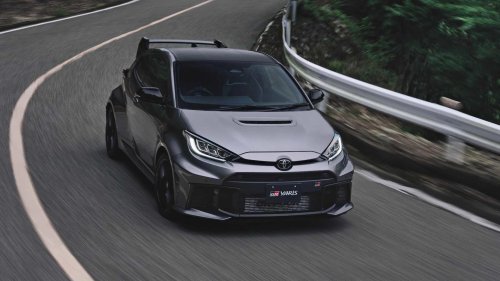
When we talk about three-cylinder engines, their "efficiency" and "bread and butter" come to mind. But there is another side to this small engine configuration, a side that produces insane power and has a cylinder size that even dwarfs many seasoned monster sports cars and supercar V8 engines and upcoming monster V6 engines, like the 654-hp 2024 Ferrari 296 V6 engine. A few 200+ hp three-cylinder cars have been made over the years. These include the futuristic BMW i8, the Toyota GR Yaris, and the GR Corolla. Nissan also has a monstrous three-cylinder car in its arsenal: a 400-hp Le Mans race car.However, the most powerful road-legal three-cylinder engine ever made produces 600 hp. For reference, the second most powerful road-legal three-cylinder engine produces half that. This engine's power density matches and, in some cases, even surpasses that of F1 engines. We delve deeper into many bleeding-edge and first-ever technological features responsible for creating the world's most powerful three-cylinder vehicle engine.For this article, we limited our search to production car engines only, including both limited-run and series production. There are numerous custom-made and racecar three-cylinder engines, like the 400-hp Nissan ZEOD RC. But those don't make the cut as they are off-limits for road-use. It is to be noted that the most powerful three-cylinder engine mentioned here has yet to go into production, but as the working examples are up and running in a production-worthy state, it made the cut. Koenigsegg's Tiny Friendly Giant Produces 600 HP A Twin-Turbocharged Three-cylinder Engine Without A Camshaft Koenigsegg This is the wildest three-cylinder engine ever made, period. And we are sure the person who came up with the name "Tiny Friendly Giant" is the funny kind! Koenigsegg has created an engineering marvel with its 2.0-liter three-cylinder engine. Each of its three cylinders has a bore and stroke measurement of 95 mm and 93.5 mm, respectively. That's huge, and rightfully so, because each cylinder needs to produce 200 horses. Koenigsegg's 2.0-liter engine's cylinders are bigger than those of the monstrous V8s, such as the Agera and Jesko, to name a few. No Camshaft And Twin Turbochargers Koenigsegg The new technological features that Koenigsegg has incorporated into its smallest engine are mind-boggling. For starters, there are no camshafts on this engine. That's because it has been replaced with an ingenious Freevalve technology. Instead of the traditional camshaft setup, this system uses a series of hydraulic and pneumatic actuators to control the intake and exhaust valves. This feature's coolest advantage is that each valve is independent, unlike the connected and pre-defined open-close mechanism of the camshaft railing.A standalone controller is connected to the ECU and fluctuates the opening and closing timing of the intake and exhaust valves according to engine demands. Freevalve also allows Koenigsegg to pack both Variable Valve Lift and Variable Valve Duration together, which is not possible in a traditional setup. This engine has four valves per cylinder: two intake and two exhaust. The customization possibilities are insane with this electronically actuated valve control unit. It will optimize the air-fuel flow and offer higher efficiency and performance.Koenigsegg Then there's the odd coupling of two turbos on this three-cylinder motor. Having just one turbo on three-cylinder cars has always been the norm. In fact, the most powerful series production three-cylinder car engine (the 300-hp Toyota GR Corolla) also has just one turbo. But Koenigsegg takes the road less traveled and uses two different-sized turbos to minimize turbo lag.It is a sequential setup, with the smaller turbo spooling up first from as low as 1,700 RPM. The bigger turbo kicks in once the engine revs higher (past 3,000 RPM). In this way, the notorious low-end turbo lag is minimized, and there is no lag whatsoever when transitioning from the small to the big turbo. One exhaust valve on each cylinder is connected to the small turbo, whereas the other is coupled to the big one. The electronically actuated valvetrain system also plays an important role in clubbing the engine revs and the turbo spools for a smooth-revving engine.Koenigsegg Koenigsegg Tiny Friendly Giant Engine Specs (Data sourced from Koenigsegg) Koenigsegg Couples The Inline-3 To Electric Motors For A 1,000+ HP Four-Seater Hypercar The Combined Power Output Was Initially Proposed To Be 1,700 Horsepower Koenigsegg The Tiny Giant alone is already an impressive motor, and we can only imagine how monstrous an entry-level Koenigsegg sports car with this motor alone can be. Well, that's speculative and a very interesting story that might someday come true. But this 2.0-liter three-cylinder was specifically designed for the Gemera four-seat hypercar. Adding two seats puts Koenigsegg in a very tricky situation with engine space. This compact engine was the result of that dilemma. But it is assisted by three electric motors.But unlike conventional hybrids, the electric motors were to do more heavy lifting here. Two motors sandwich the 2.0-liter three-cylinder placed longitudinally at the rear. Each of these motors is rated at 500 hp and 738 lb-ft.The third electric motor is placed along the shaft tunnel leading to the front axle and is rated at 400 hp and 369 lb-ft. The trio of motors is electrified by a 16.6 kWh 800V battery pack placed under the floor. The electric motors alone are capable of rolling the Gemera for 31 miles.Koenigsegg The Gemera is technically Koenigsegg's first-ever AWD vehicle. We say technically because not all wheels are driven by the engine. The front wheels get power from the engine, and the motor is located along the shaft. The rear wheels are powered by a 500 hp motor each. So, technically, all the wheels are connected to an electric motor. This helps provide torque vectoring on all four ends.The transmission is also unconventional, as a direct drive unit sends power to the wheels. This fixed ratio gearbox has two gear ratios, one for each axle. All of these sophisticated features help the Gemera put down an insane 1,700 hp and 2,581 lb-ft of torque via all four wheels. Theoretically, this powertrain setup can produce a monstrous 8,113 lb-ft of torque but has to be toned down drastically due to mechanical constraints of the transmission, the wheels, and the tires. These were the technical numbers that Koenigsegg proposed for the Gemera when unveiled in 2020. However, the production-spec versions were showcased last year with notable powertrain tweaks. Below is the summary of the original numbers that were proposed.Koenigsegg Koenigsegg Gemera Proposed Specs, 0-60, And Top Speed (Data sourced from Koenigsegg; It is to be noted that the above-mentioned specs were the ones listed when the Gemera three-cylinder was unveiled. The final production figures differ, and are mentioned below) Here's Why We Won't Be Seeing The Koenigsegg Three-Cylinder Anytime Soon Koenigsegg Sadly, this technological marvel of a three-cylinder engine will not be put into the Gemera or any other car anytime soon. It was slated to be used in the four-seater Gemera, but Koenigsegg shelved this engine after almost all Gemera owners opted for the optional Hot-vee V8 option.Christian Von Koenigsegg mentioned on the Top Gear Magazine podcast, "There were so few left that asked for the three-cylinder [that] we managed to convince almost all of them [to buy the V8]." Hence, the decision. But it's not the end of the road for the Tiny Friendly Giant, as he goes on to mention, "It's still interesting; we're still working on it, and we might eventually do it in the Gemera as well, perhaps, one day, in some version."The production version of the TFG also received a few significant tweaks, including a drop in total power to 1,381 hp and a trim of the electric motors to just one unit. The new electric motor is dubbed the "Dark Matter"; this monster of a unit produces 800 hp and 922 lb-ft of torque. The gearbox was also changed from the direct drive system to the Light Speed Transmission, first developed for the Jesko. Tiny Friendly Giant Three-Cylinder Vs Hot V8: Final Production-Version Specs Compared (Data sourced from Koenigsegg)