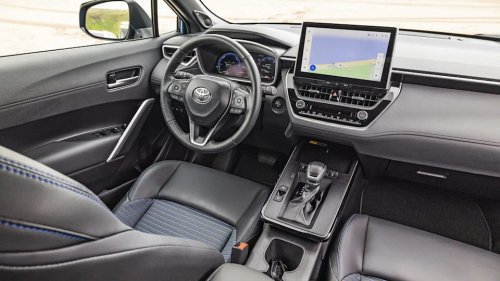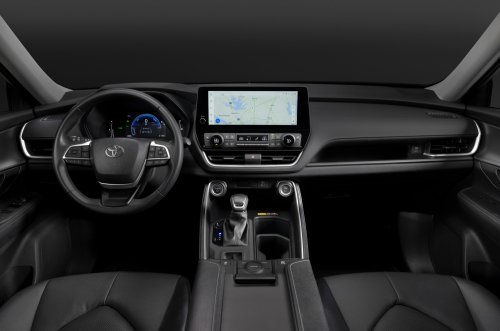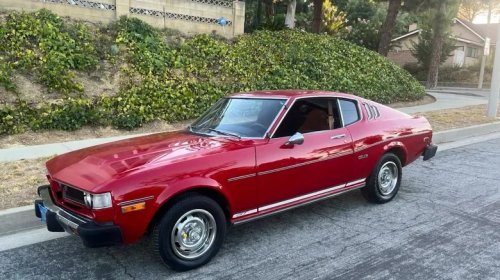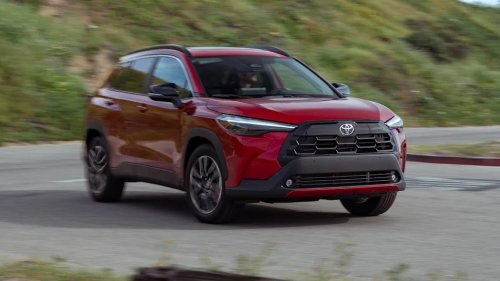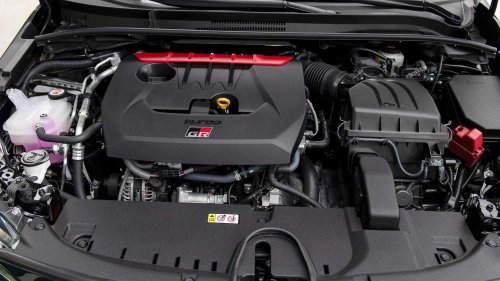
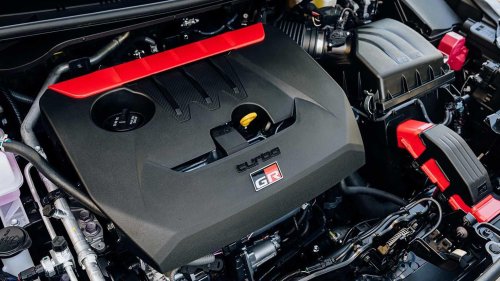
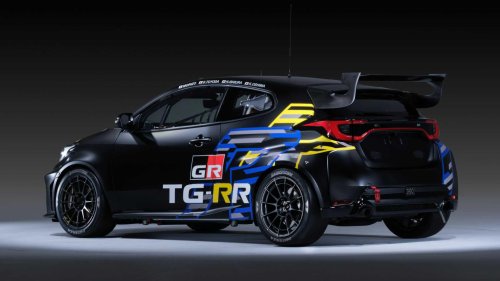
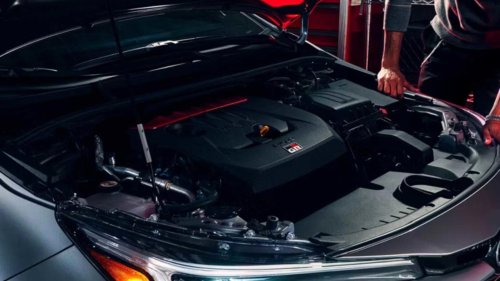
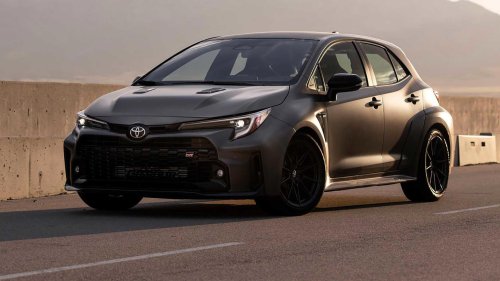
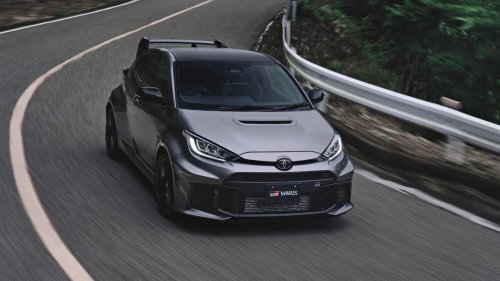
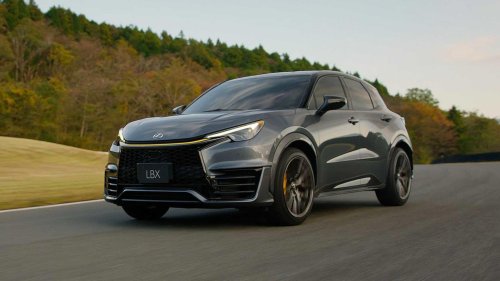
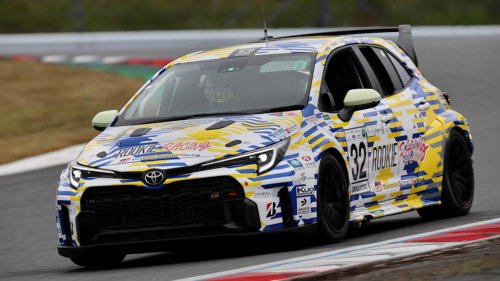
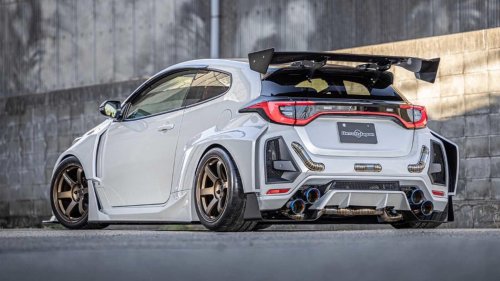
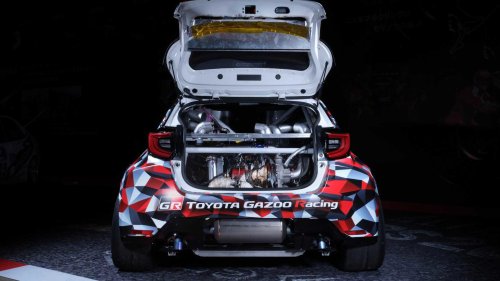



















Throughout its history, Toyota has produced some pretty spectacular engines. Your mind might wander to the legendary 2JZ-GTE inline-six, the dependable 2UZ-FE V8, or the incredible 1LR-GUE V10 built exclusively for the Lexus LFA.The engine we’d like to throw into the mix is a tiny 1.6-liter turbocharged three-cylinder engine. On paper, the powerplant might seem out of its depth, but the mill is a key element of some of the Japanese manufacturer’s best and most exciting modern cars. Toyota G16E-GTS ToyotaFirst put into production in 2020, the G16E-GTS was introduced with the sole intention of being used in performance cars. Perhaps a strange decision on initial thought, given the idea of a 1.6-liter three-cylinder engine doesn’t exactly scream performance, but the result was pretty special.Going for an engine this small was a deliberate choice to keep weight down and focus on power density, achieved with a three-cylinder engine allowing for a freer-flowing exhaust to make the most of its turbocharger. That was key in a world with ever-stricter emissions regulations to meet, meaning manufacturers have to be more creative in engineering high-performance engines. The Most Power-Dense Engine Toyota Has Built Toyota For all of Toyota’s legendary engines, the G16E-GTS stands above them all in power density with 187.5 hp per liter. Only one three-cylinder engine on the planet could outdo that, and that was an ill-fated 592hp, 2.0-liter Koenigsegg engine designed for use in the Gemera hypercar.Achieving that power doesn’t come easily, with plenty of advanced technologies onboard the G16E. For a start, it runs a pretty high compression ratio of 10.5:1 to help it offer both strong low-end response without losing out on decent top-end power. Its 300-hp peak output comes at 6,500rpm, with a redline at 7,200rpm – a relatively high figure for a compact turbocharged engine. It has a bore and stroke of 87.5mm x 89.7mm.The engine utilizes a single-scroll ball-bearing turbocharger, which helps maintain strong torque delivery across the rev range rather than focusing solely on top-end power. In the most recent form, the powerplant produces a peak of 295 lb-ft at 3,000 rpm and maintains that figure all the way through to 5,500 rpm.Helping all of this is Toyota's D-4ST direct/port injection system, which simultaneously sprays fuel into the combustion chamber and intake ports. This allows it to balance smoother combustion at low speeds with direct injection, enabling reliable power delivery when you’re driving hard.Forged pistons are a standard fixture, too, and are key to the G16E-GTS producing its power durably, particularly with its high boost load, up to 26.2psi in the hardcore GR Corolla Morizo sold in 2023. It Was Developed In Motorsport Toyota It’s fairly common to see production car engines being adapted for use in motorsports, but the G16E-GTS was designed for use in motorsports from day one. As soon as the first Toyota GR Yaris launched in 2020, the Japanese manufacturer was already fielding the model in Japan's Super Taikyu production-based series to continue developing and honing both the mechanical side and software of the engine.The effort has directly influenced several engine updates over the course of its life, as more torque and horsepower have been extracted over its lifespan so far. Worth noting that the eight-speed automatic gearbox made available for the 2025 model year GR Corolla was developed in this series, too. Which Models Use It? ToyotaAlthough an impressive feat of engineering, the G16E-GTS hasn’t been widely deployed by Toyota. Instead, it’s been reserved for just three production-performance cars globally. Toyota GR Corolla ToyotaYou’re familiar with the Toyota GR Corolla by now. Introduced to the United States in 2022, it turned the sensible but never exciting hatchback into one of the most thrilling cars Toyota has ever sold in America.With its potent G16E-GTS engine and sending power to a sophisticated GR-Four all-wheel-drive system, it serves as an incredibly capable rival to the Volkswagen Golf R and Honda Civic Type R.You get a manual as standard, though the option of an eight-speed automatic came with that model update mentioned earlier. As does extra torque – initially launching with 271 lb-ft, updated versions of the GR Corolla have a higher 295 lb-ft figure. All models feature front and rear Torsen limited-slip differentials as standard, too, for excellent power delivery. Toyota GR Yaris ToyotaBefore the GR Corolla was a thing in North America, the rest of the world had the Toyota GR Yaris. Serving as the debut of the G16E-GTS, the GR Yaris was introduced in 2020 to homologate its bodyshell for use in the World Rally Championship.Although a Yaris in name, it uses the rear axle of a Corolla, crams in a GR-Four system, and, in its most recent ‘Gen 2’ form, offers the same 300 hp as the GR Corolla, with earlier versions having 276 hp. That is, unless you’re in Europe, where stricter emissions laws cap the latest version at 276 hp – something to consider in 2051 when you look at importing the Yaris legally to the US.The GR Yaris continues to be updated often as well. A Type 26 version for Japan was revealed in March 2026, featuring a reworked steering wheel and tire selection. Minute changes, but ones that show Toyota’s Gazoo Racing is firmly committed to making the greatest cars it can. Lexus LBX Morizo RR LexusOnly one car branded outside of Toyota’s Gazoo Racing division has used the G16E-GTS, and that’s the Japan-only Lexus LBX Morizo RR. Yeah, it’s a crossover, but it’s a pretty special one at that. Oh, and GR developed it, too.With the same power output, all-wheel-drive system, and eight-speed automatic transmission as the GR Corolla, the package is pretty familiar. Only the seating position is higher, and the model focuses a little more on comfort than on hot-hatch thrills.Its interior is notably more luxurious than the other two GR cars, and it uses the engine as a result, but it also gets some neat touches, including seats from the RC coupe for a sportier feel. This is one to look at importing in 25 years if you want something really rare, niche, and cool. Toyota Has Run It On Hydrogen ToyotaAlthough production versions of the G16E-GTS are gas-powered, Toyota has adapted several engines to run as hydrogen combustion engines. Once again, the Super Taikyu series has been used as a test bed for this development.That started as early as 2021, when a Toyota Corolla Sport featuring an adapted version of the G16E-GTS competed in the series. Using the three-cylinder as the base, the fuel supply and injection system were modified to accommodate hydrogen as the fuel source.The technology has returned for numerous events in the series in the years since, notably in 2023, under the hood of a GR Corolla that used liquid hydrogen in its combustion engine.Although a production hydrogen combustion version of the G16E-GTS is unlikely to happen, and certainly not anytime soon, Toyota’s exploration gives us hope for a future where combustion engines can live on for decades to come. It Has Plenty Of Tuning Potential Result JapanAlthough already pretty powerful, the G16E-GTS is a classic case of Japanese overengineering. Tuners have naturally looked to exploit its potential in the years since its introduction, with several reputable builds showing north of 500 hp without the need to replace engine internals. It doesn’t take too long to find YouTube filled with 800+ hp builds, either.Long-term reliability at that point is hard to comment on, but owners have been known to get the engine up to 400hp in regular builds without problems. Oil pressure issues are known on early examples of the G16E-GTS that have been tracked regularly, especially with mods, though, with baffled oil pans seen as a key upgrade for these cases. Later iterations appear to have solved many of these issues from the factory, however. Could It Soon Be Replaced? Toyota Although the G16E-GTS is a feat of engineering and continues to be developed, it looks as though it could be replaced in the next generation of Gazoo Racing cars. Toyota is openly working on a new 2.0-liter turbocharged four-cylinder engine, codenamed G20E, expected to produce 400 hp in most production applications, though with Toyota engineers on record saying it could handle north of 600 hp.Could that be the modern-day 2JZ? Time will tell.Sources: Toyota, Lexus