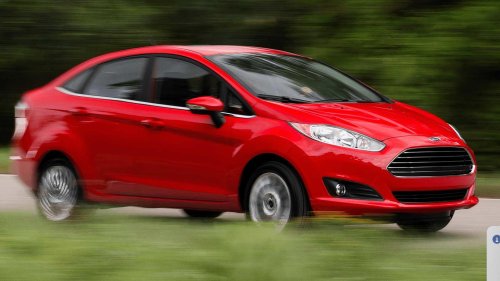
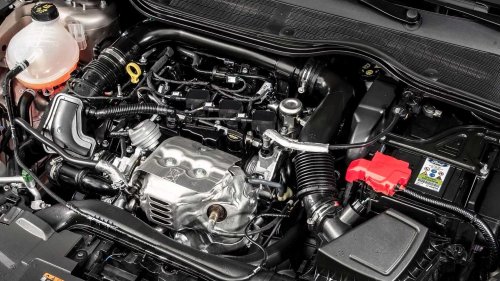
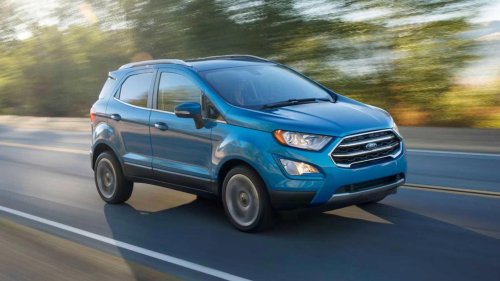
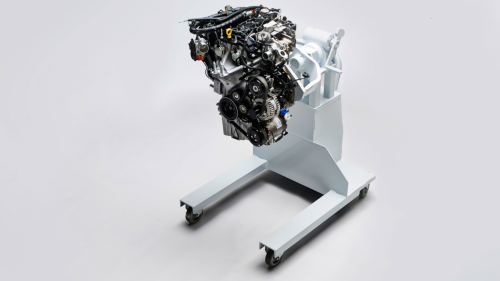
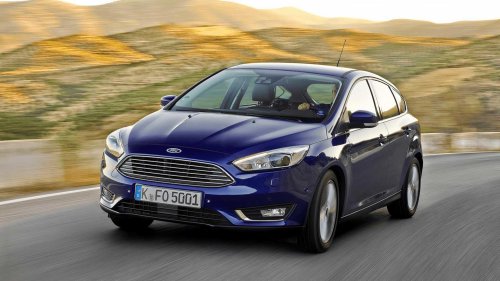
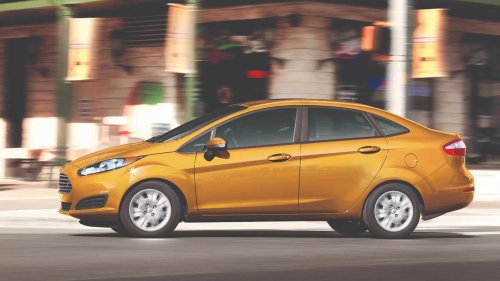
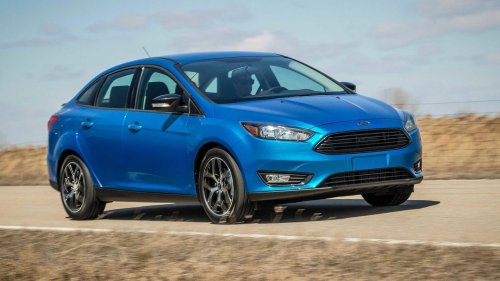
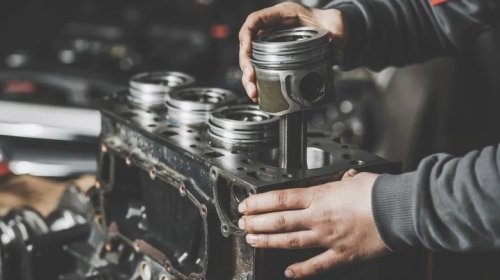
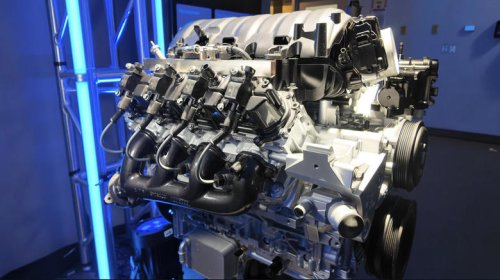
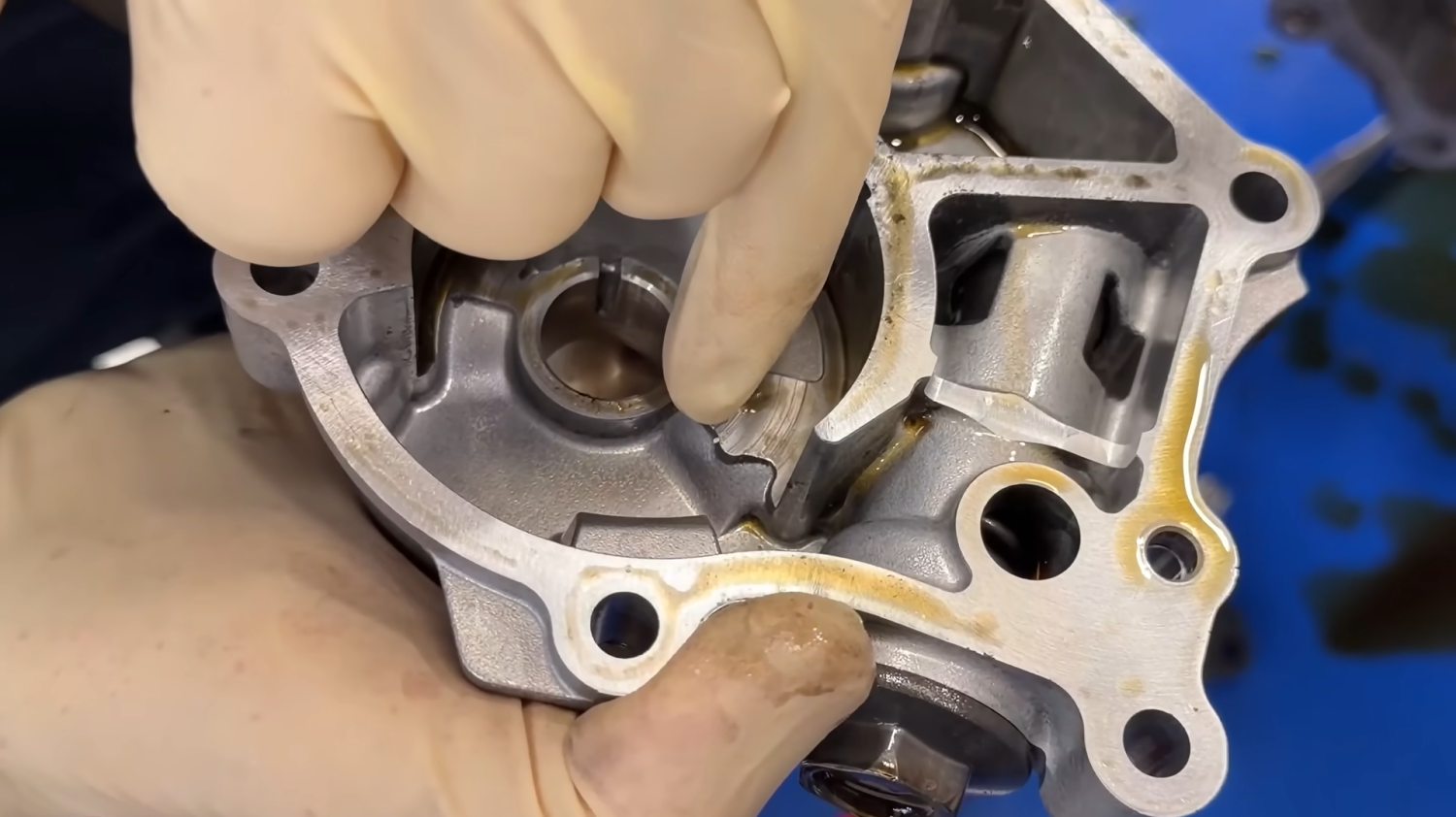
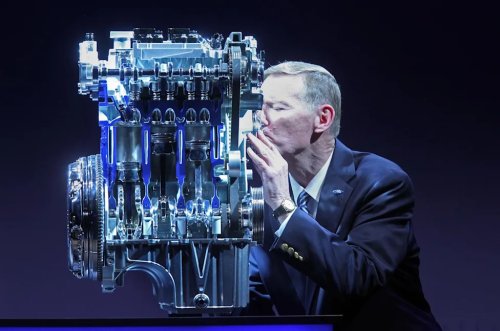
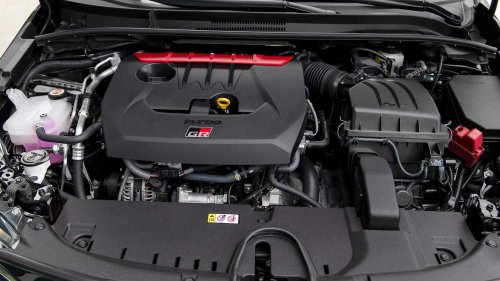
The smallest engine inFordhistory is also one of its most award-winning, oddly enough, but looking at the spec charts, you start to understand why.The 1.0-liter EcoBoost inline-three, codenamed "Fox," offered far more grunt than its naturally aspirated four-cylinder equivalents, as well as much-improved fuel economy. And weighing in at around 220 pounds with remarkably compact proportions, it proved to be an ideal powertrain for its intended new home in the Blue Oval's entry-level sedans, hatchbacks, and crossovers. Ford even went so far as to pack the engine block inside a carry-on bag, strolling through TSA and boarding a plane with a three-cylinder in tow, a memorable stunt that presaged the Fox's US debut in the 2014 Fiesta.FordIt made 123 horsepower (up 3 hp over the subcompact's base 1.6-liter four-cylinder) and a surprising 148 pound-feet of torque (up 36 lb-ft). Better still, the Fiesta achieved 31 city / 41 highway / 35 combined miles per gallon in EPA testing, up 5 miles per gallon from the naturally aspirated four-cylinder.The plaudits almost immediately rolled in. A worldwide jury of auto experts named the Fox three-banger its International Engine of the Year for three years running, and in 2019, it once again took home the class win for powertrains producing less than 150 metric horsepower. American auto reviewers loved it too, admiring the little mill's plucky torque that could get the little Fiesta (and later, the Focus compact car and EcoSport subcompact crossover) in and out of traffic with no sweat. But unfortunately for Ford, the good times wouldn't last very long. The Cracks Begin To Show – Literally FordThree-cylinder engines are inherently unbalanced. No matter where it is in the combustion cycle, there's always one cylinder pitted against two in the rotation, which causes a clattering, diesel-engine-like sound and noticeable vibrations throughout the car. Ford combated these issues with a flywheel and front pulley that, according to a contemporary MotorTrend review, were deliberately counterbalanced unevenly to cancel out the engine's rocking and rolling. The Blue Oval's engineers also gave the Fox a timing belt (not a chain) that was partially submerged in an oil bath for quieter operation.Unfortunately, that's where things started to go wrong. If the oil degraded, it would introduce contaminants onto the timing belt, causing some of its teeth to wear down and separate. The timing belt material would then clog the engine's mesh oil pickups – the belt runs through the oil pan, remember. In addition, hairline cracks would develop in the timing belt, leading to premature wear.Since the 1.0-liter three-cylinder is an interference engine, a snapped belt can bend valves and damage piston crowns, requiring at least a costly $1,500 rebuild of the cylinder head. If oil starvation was also an issue, the entire short block would cost around $3,000.2022 Ford EcoSport If this issue weren't enough of a concern, there were more issues when the EcoBoost three-cylinder made its way into the Focus and EcoSport. Combined with an automatic transmission (the Fiesta was manual-only), the powerplant received a revised oil pump design that was also prone to failure. Engine vibrations caused stress fractures in the pump belt tensioner seal, which would fatally reposition the tensioner arm and cause a loss of oil pressure. As you might expect, engine seizures were often the result. For its part, Ford finally recalled the problematic oil pump in 2024, three years after the engine went out of production for American customers. Model Years To Avoid FordUnfortunately, most EcoBoost three-cylinder engines are susceptible to the aforementioned issues. The engine was available in the Fiesta from 2014 to 2017, mated only to a five-speed manual gearbox. The Focus received the EcoBoost engine a year later with a mandatory six-speed manual, but in 2016, Ford offered it with a six-speed automatic, as well. The three-cylinder lasted till 2018 in those applications. Ford introduced the EcoSport to the United States in 2018, and front-wheel-drive models came with the 1.0-liter Fox engine as standard, while all-wheel-drive versions used a naturally aspirated 2.0-liter four-cylinder. The EcoSport dropped the base engine in 2021 before being discontinued entirely in 2022.Changes to the three-cylinder engine were inconsequential during the eight years it was offered in the US. Figuring out if the engine is a lemon requires a little careful inspection. Any rattling sounds from the engine bay could indicate insufficient oil pressure, which could be caused by a pickup clogged with timing belt material or a failing oil pump tensioner if the car's equipped with an automatic gearbox. The best indicator of the engine's health, however, is a detailed record of frequent oil changes and regular maintenance, which indicates lubrication was kept fresh enough to preserve both the timing belt and oil pump. Is There A Way To Prevent The Fox Engine's Problems? FordEcoBoost enthusiasts have found a few workarounds to ensure the pint-sized powerplant stays in good shape for the long haul. The Fiesta, Focus, and EcoSport all feature an engine oil life monitor that uses your driving data to recommend appropriate maintenance intervals. Experts say to ignore it and change the oil and filter at least every 5,000 miles. Using high-quality lubricants is also essential to keeping contaminants out, and it's crucial to use the correct oil weight to ensure adequate lubrication.As for the recalled oil pump assembly in auto-equipped EcoBoosts, the gearhead's advice would be to stick with the manual transmission – which also means avoiding the automatic-only EcoSport crossover, another win for driving enthusiasts. But if you simply must have a two-pedal driving experience, ensuring the 1.0-liter engine has had its recalls done could provide a measure of confidence. Otherwise, standard buying advice applies. Look for clean titles, low mileage, and evidence of caring previous owners – good cosmetic condition and name-brand tires are two clues that you're buying a car from someone who sweats the small stuff. How Much Is A Three-Cylinder Ford Worth These Days? FordThese days, a well-maintained, low-mileage Fiesta with the Fox engine sells for between $5,000 and $7,000, while an equivalent four-cylinder is about a thousand bucks more expensive. A Focus with the EcoBoost is about $1,000 more expensive than its Fiesta counterpart, while the naturally aspirated version is likewise about a grand more expensive. Valuing an EcoSport EcoBoost against its four-cylinder sibling is a bit less fair, but getting a front-drive three-cylinder will set you back around $14,000, while an all-wheel-drive four-cylinder is around $16,000.Those upfront savings are only worth it if the EcoBoost 1.0 was maintained perfectly, as any unscheduled repairs can quickly eat up any price advantage and then some. If it were our money and we were hell-bent on an efficient Ford three-cylinder, we'd try to find a pre-owned Escape with the "Dragon" 1.5-liter EcoBoost, which can pretty easily be found for less than $20,000 while still offering 30 mpg in daily driving – quite a bit better than the much smaller EcoSport.2015_ford_focus_sedan_front