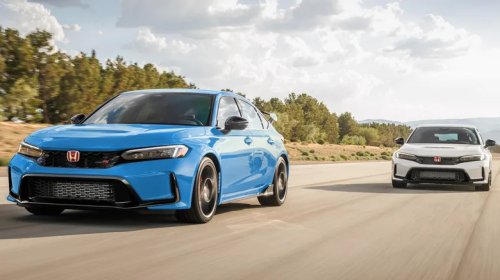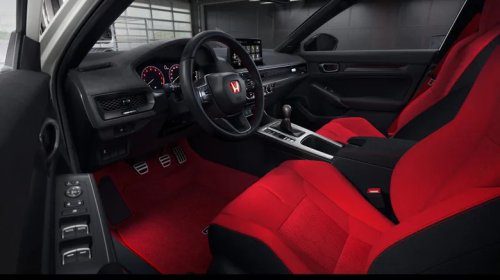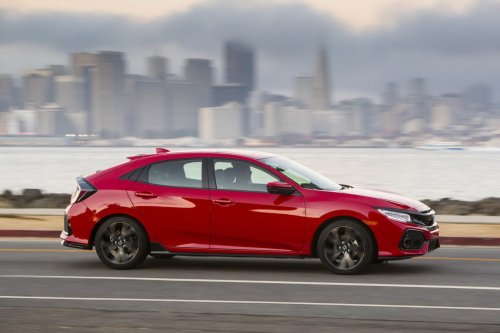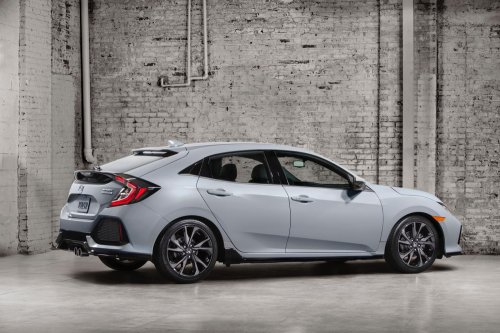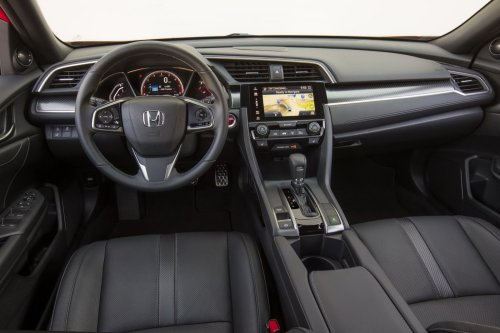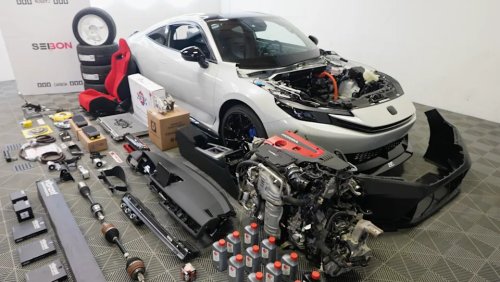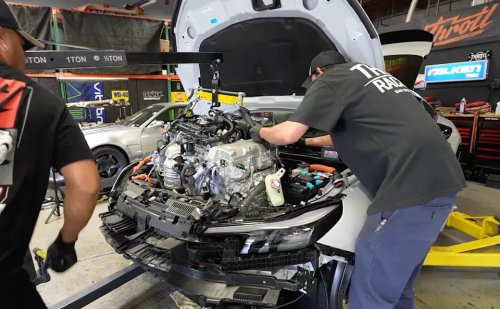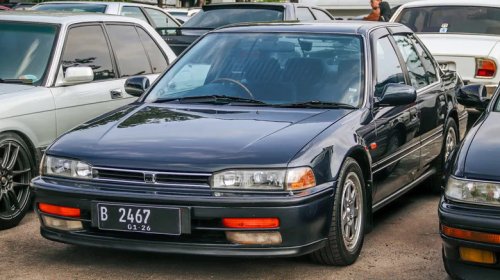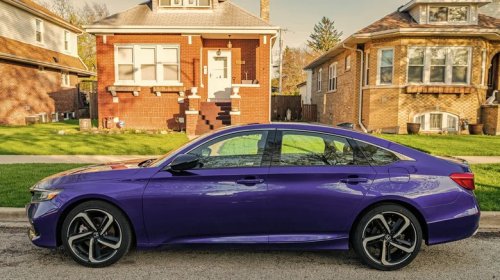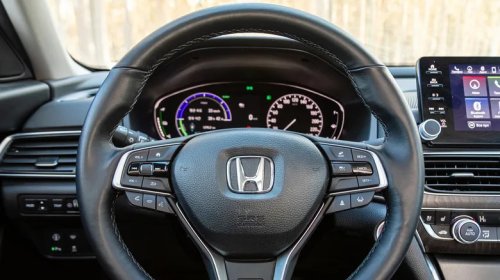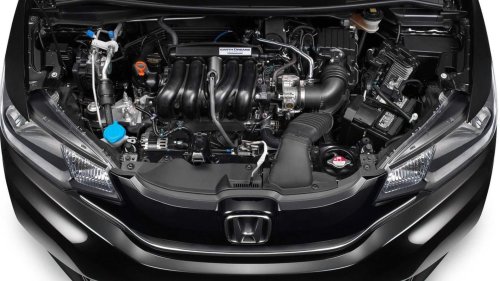
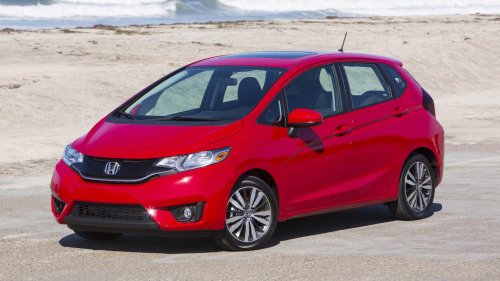
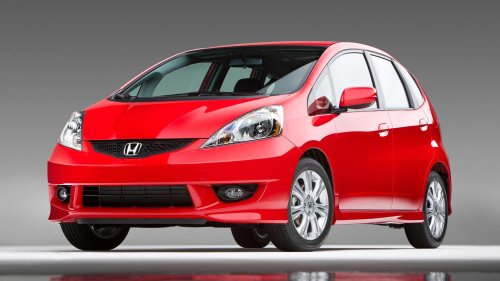
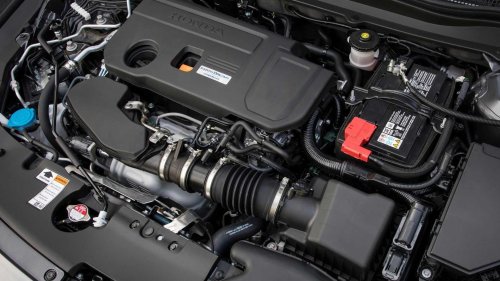
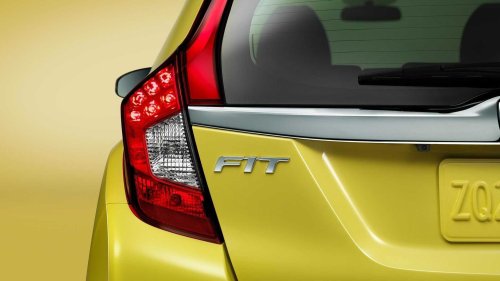



















Honda can quite rightly claim to be one of the best engine builders on the planet. It can lay claims to gems such as the B-series, famous for its tunability and range, and the K-series, which has done much in recent times to bolster the company's case. But perhaps the most impactful engine in Honda's range is the L-series, which quietly goes about its business day in, day out, and wherever you look.This compact four-cylinder family may be the most important of Honda's modern powerplants because it doesn't just serve one cult application or one bold halo car. Instead, it's to be found in Honda's bread-and-butter cars that slog around in a world where fuel economy, packaging, emissions, drivability, and affordability are the most important factors. It's the type of engine you'll find in some Civics, CR-Vs, Fits, Accords, Civic Sis, or Integras, and it's been quietly doing its sterling work for almost 25 years. The L-series Is Honda's Quiet Modern Workhorse HondaHonda is perhaps one of the least pretentious of the Japanese manufacturers and doesn't often make too many headlines in its own right. It does, however, go about its business in a serious fashion and produces unassuming engines like the L-Series that end up in millions of cars. This is a very compact engine architecture that's perfect for basic transportation forms but is also surprisingly capable as a turbocharged unit. And that's why you'll find the L-Series in so many nameplates, including the Fit, with its millions of global sales in more than 115 countries.The more famous Civic has also used an L-Series engine from time to time, and this has done its part in helping that particular car surpass more than 27 million worldwide sales. The L has therefore become a market cornerstone and should be treated as a major part of Honda's engine history rather than a footnote in stories about performance engines.Still, Honda hasn't always used the L-Series in its entry-level mass-market vehicles. The first-generation HR-V didn't have an L-Series at all but a 1.6L SOHC i-VTEC four-cylinder. The L-Series did, however, become Honda's preferred modern small engine family across a very large portion of North American and global vehicles, and especially when the 1.5 -liter turbo came onto the scene. The L-Series Was Built For A New Era Of Efficiency Not Nostalgia Honda Honda never designed the L-Series to be romantic but built it to answer demands in a changing market. It was essentially a response to tightening emission standards, and the company's engineers needed to come up with something that was still nice to drive while delivering unprecedented efficiency. This gave it a very important mission in Honda's primary marketplace. It needed to make the company's compact and midsize cars refined, economical, and mechanically clever without pushing up their price too much.As Honda focused on efficiency and adaptability, the L-Series tended to sit in the background, and didn't enter the same conversation as some of the company's performance legends. Honda had a clear purpose in mind and knew that it had to focus on compact dimensions, internal friction, combustion efficiency, pumping losses, and flexibility. It simply had to support naturally aspirated and turbocharged applications alike and come up with the right engine fit for a challenging and emerging world. The Fit Turned The L-Series Into A Real-World Staple Honda In 2015, Honda introduced the new Fit to the US market with a 1.5-liter Earth Dreams engine, producing 130 hp and 114 lb.-ft of torque. This was a small, efficient, and light engine with modest performance numbers, but it was still lively enough to make the Fit feel fun. It was also efficient, as in LX CVT trim, the Fit returned EPA ratings of 33 mpg city, 41 mpg highway, and 36 mpg combined. The entire package was sensible on paper and good in practice, and the third-generation Fit aptly captures what the L-Series does so well.The Fit turned out to be one of the smartest subcompacts that Honda had ever put on sale, with its center-tank packaging and adaptable interior. The engine perfectly complemented the vehicle's design, and Honda sold the Fit as an efficient and practical vehicle for the mainstream.While all of this was going on, Hona's pioneering B-Series and the ever-reliable K-Series were making bigger names for themselves because people were able to modify and race them or build tall tales all around them. Enthusiasts raved about those particular units, while the L-Series did its job in cars where ordinary people simply needed an efficient form of transportation. The L remained largely invisible under the hood, but as it had so many applications and worked so well, it became genuinely important in its own right. Turbocharging Made It More Than A Base Engine Honda When the 1.5-liter turbo option arrived, the L-Series stopped being merely functional and started to become a strategic cog in Honda's machine. It first appeared in the Honda Odyssey's oddly-named cousin, the Stepwgn, in 2015 and then in the Civic from 2017 and had direct injection, dual variable timing control on both intake and exhaust cams, a small-diameter turbine for strong low-RPM response, and an electronically controlled wastegate.This engine could now deliver the torque of a much bigger engine while still returning the economy of a smaller one. In the 2016 Civic sedan, the 1.5-liter turbo created 175 hp and 162 lb.-ft of torque in EX, EX-L or Touring trims. Honda then placed it into its 2017 CR-V for crossover duty, where it produced up to 190 hp. Mid-size sedans were the next point of focus, as the 2018 Accord delivered 192 hp and 192 lb.-ft from its version of the engine. And in relatively short order, the L-Series had become the efficient turbocharged core of Honda's mainstream lineup.The L-Series really started to come of age when an evolved version appeared in the Civic SI in 2024. It was now able to produce 200 hp in the Si and also served the 2025 Acura Integra well. This shows that the engine can clearly punch above its weight, given the right vehicle and application. The L-Series Tells You A Lot About Honda Itself Honda Like many other manufacturers in an emerging era, Honda knew it needed to change to survive and meet emissions, torque, and fuel economy pressures. It could no longer focus on simple, naturally aspirated, or high-revving engines and this ultimately led to the development of the L-Series.When this engine came along, it helped Honda revise its focus around cleverness, compactness, and efficiency so the company could confidently trade in the modern mass market. And the engine also became a bridge to an even more disruptive era. It’s one of the company's last big efforts to produce a strong generation of efficient combustion engines before electrification becomes the name of the game.The L-Series has undoubtedly done a lot of heavy lifting in Honda's massive reshuffle, and it certainly deserves a lot more credit than it gets. It didn't just build a reputation through one hero car, as it showed up, scaled up, and evolved whenever Honda needed it to. It also came to the rescue of vehicles like the Fit, Civic, CR-V, and Accord when efficiency, packaging, and even downsizing became unavoidable. And it still lives on in Acura's newest entry models as well, to show the breadth of its ability.Certainly, enthusiasts will always yell about Honda's more glamorous engines like the B16 or K20, but the L-Series surely has a stronger claim to relevance than the others. After all, Honda might have found it tough to navigate two decades of changing regulations and customer expectations without it, and that's probably why the L-Series is the most important Honda engine of all.