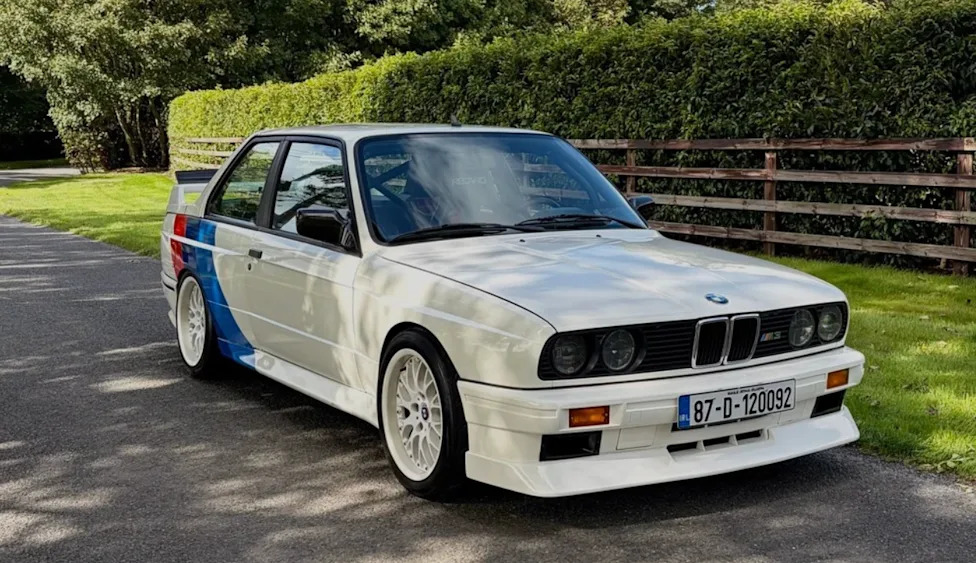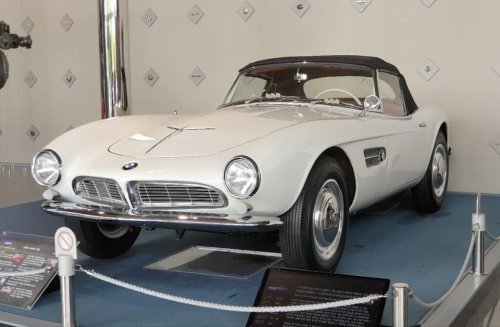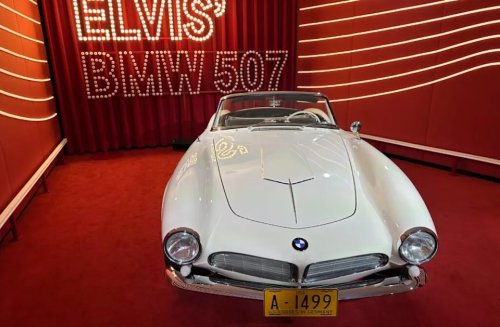
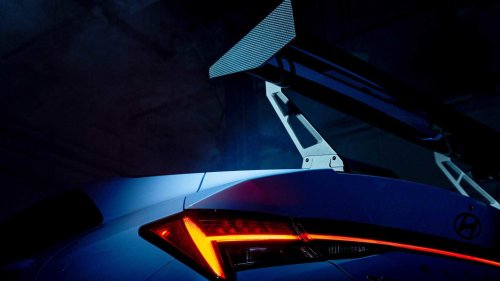
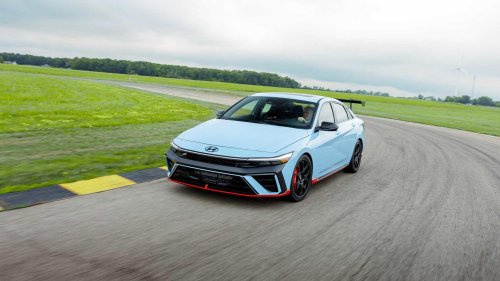
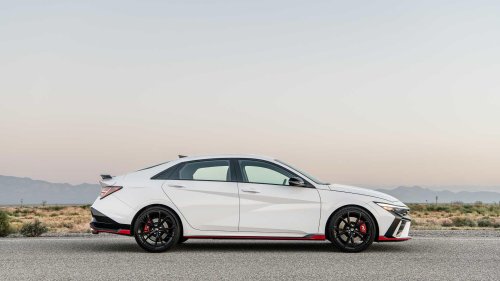
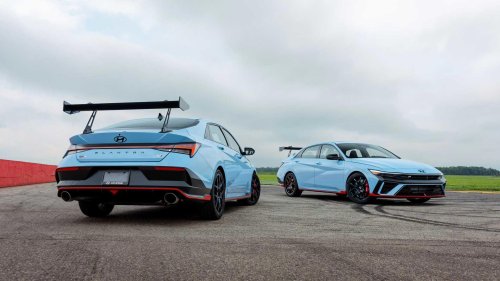
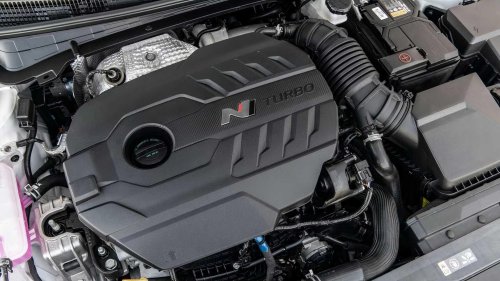
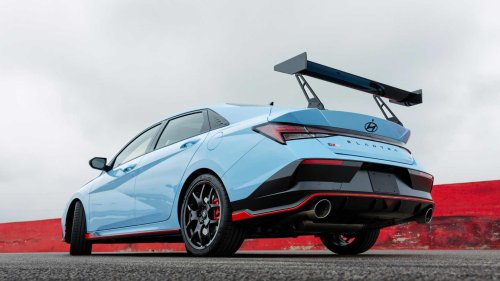
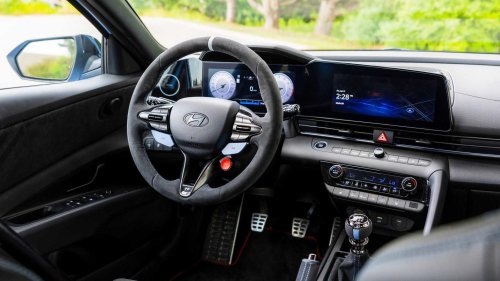
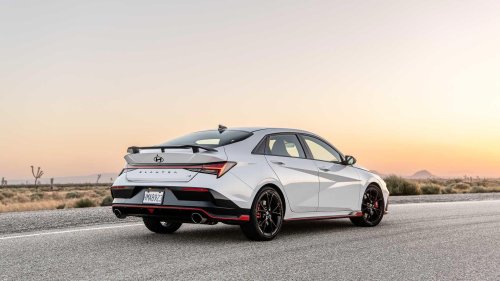
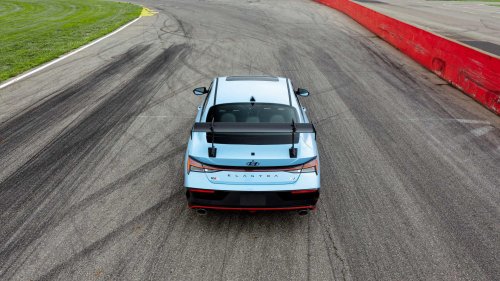



















We spend a lot of time behind the wheel. A lot. Just how much? On average, the American motorist spends around 293 hours driving every year. That’s more than 12 days in the driver’s seat every single year. Now, why would you (or anyone else, for that matter) want to spend all that time in a boring car? If you’re reading this, you likely don’t want a life banished to the most boring of cars. If that describes you, you’ve got options. And one Korean automaker thinks it has the perfect combination of athleticism and dependability wrapped up in one sports sedan. Life’s Too Short To Drive Boring Cars BMW Elvis Presley, “The King” himself, reportedly said, “Life’s too short to drive boring cars.” He certainly lived that way, collecting a wild assortment of iconic cars like a 1942 Lincoln Zephyr, a 1956 Lincoln Continental Mark II, a 1957 BMW 507, a 1971 De Tomaso Pantera (which he famously shot out of sheer frustration), and, of course, a couple of pink Cadillacs. Still, not all of us have Elvis money to spend on our garages. Fortunately, you don’t have to break the bank to get into an eager, fun-to-drive sports sedan these days. Don’t Give Up On Reliability Hyundai Sporty handling is one thing. But how much fun can you possibly have if your beloved sports sedan is constantly in need of some repair or subject to a steady stream of recalls? That’s one of the reasons why making an informed choice is so important. Not every brand has a reputation for reliability. Then there’s the Elantra N, the sports sedan from an unlikely source, Hyundai. The 2026 Hyundai Elantra N: Reliably Sporty Hyundai Years ago, the word Elantra was seldom uttered in a conversation about performance. In 2026, that’s not really the case. Sure, you could go for the standard Elantra with a 147-horsepower naturally aspirated 2.0-liter four-cylinder engine. That’s not exactly an exciting persuasion. But Hyundai’s resident compact sedan also gets the turbocharged treatment to inject a little life into the sensible nameplate.Hyundai On the one hand, the Elantra N-Line gets a 201-horsepower turbo 1.6-liter mill. But drop the “Line” from the conversation, and you’re left with the Elantra N, a bona fide sports sedan with the sort of driving dynamics and straight-line quickness that make it a solid rival for the likes of the Honda Civic Type R. And with Hyundai’s reputation for reliability, the Elantra N doesn’t have to be a compromise in the dependability department. Balanced Handling Hyundai You won’t find rear-wheel drive shenanigans or all-wheel drive grip here. Instead, you’ll find a sorted front-wheel drive platform. Hyundai’s compact segment bulldog is no lesser Elantra when it comes to carving corners. Part of the Elantra N’s handling aptitude is due to its electric limited slip differential and electronically controlled suspension setup. The chassis is also stiffer than the applications you’d find in the Elantra N-Line or other Elantra models. Make no mention of the Michelin Pilot Sport 4 S summer tires at every corner. Turbocharged Power Hyundai The turbocharged 1.6-liter four-banger in the Elantra N-Line is good for 201 horsepower. That’s a welcome bump over the comparably anemic output of the base naturally aspirated Elantra and even the fuel-sipping 1.6-liter hybrid. The Elantra N, on the other hand, produces 276 horsepower and 289 pound-feet of torque courtesy of a turbocharged 2.0-liter four-pot engine.It’s enough oomph to place it firmly at the top of the Elantra food chain, but it’s also more than enough grunt to out-muscle several of its closest competitors. Take the Volkswagen Jetta GLI, for example. The Jetta GLI, while slightly more affordable than the Elantra N, is 48 horsepower shy of Hyundai’s sport compact. Opt for the dual-clutch gearbox in the Elantra N, and the “N Grin Shift” button will free up an additional 10 horsepower. That’s a total of 286 ponies on demand. Grab A Gear Hyundai Unlike the Honda Civic Type R, the 2026 Hyundai Elantra N is available with two transmission options. The first is a do-it-yourself six-speed manual gearbox. You’ll find a red button, just like the NGS button in the dual-clutch model, but it doesn’t free up any additional power. Instead, it activates automatic rev-matching downshifts to make dropping down a gear smooth and satisfying.Then there’s the eight-speed dual-clutch automatic transmission. For drivers seeking to get the most raw thrill out of their Elantra N, the six-speed is the most engaging option. However, the more powerful dual-clutch model is quicker of the two. In testing, the eight-speed Elantra N blasted to 60 mph in 4.8 seconds. That’s quick enough to beat the Civic Type R by 0.1 seconds. Go for the six-speed, and a competent manual driver could be able to get the Elantra N to 60 mph in close to six seconds. A Reputation For Reliability Hyundai Among the most reliable car brands for 2025 and 2026, Hyundai scores above average for the industry. Not by much, mind you, but it’s enough to out-score Genesis, Mazda, Honda, and Audi in the JD Power 2026 Vehicle Dependability Study. In the study, Hyundai had 198 problems per 100 vehicles, on par with BMW and just behind Nissan. In terms of the individual model, the 2026 Hyundai Elantra and Elantra N scored 86 out of 100 for quality and reliability, outscoring the Toyota Corolla, Volkswagen Jetta, and Mazda3. That bodes well for Hyundai’s gutsy turbocharged sports sedan. Segment-Leading Warranty Coverage Hyundai Hyundai, and the Elantra specifically, might earn top marks in the 2026 Vehicle Dependability Study. But what happens when things do go wrong? The industry standard for a compact car like the Honda Civic Si is three years or 36,000 miles, whichever comes first. The Hyundai Elantra N, on the other hand, benefits from the brand’s five-year, 60,000-mile basic warranty. Hyundai clearly wants you to buy one, too. It offers the Elantra N with three years of complementary service and a 10-year, 100,000-mile powertrain warranty in addition to the basic coverage. So, Should You Buy One? Hyundai With a starting price of $35,100, the Hyundai Elantra N is one of the best performance compact bargains on the market. In comparison, to get your hands on an entry-level BMW 2 Series Gran Coupe, you’d have to add around $5,000 to your budget. That said, the Elantra N’s looks aren’t for everyone. The aesthetic is a collection of sharp lines, creases, and rakish squints. Some critics might find the sloping rear end especially challenging. Looks aside, the little Korean sports sedan is quick, nimble, and, most importantly, fun.Sources: Hyundai, AAA, Edmunds, J.D. Power