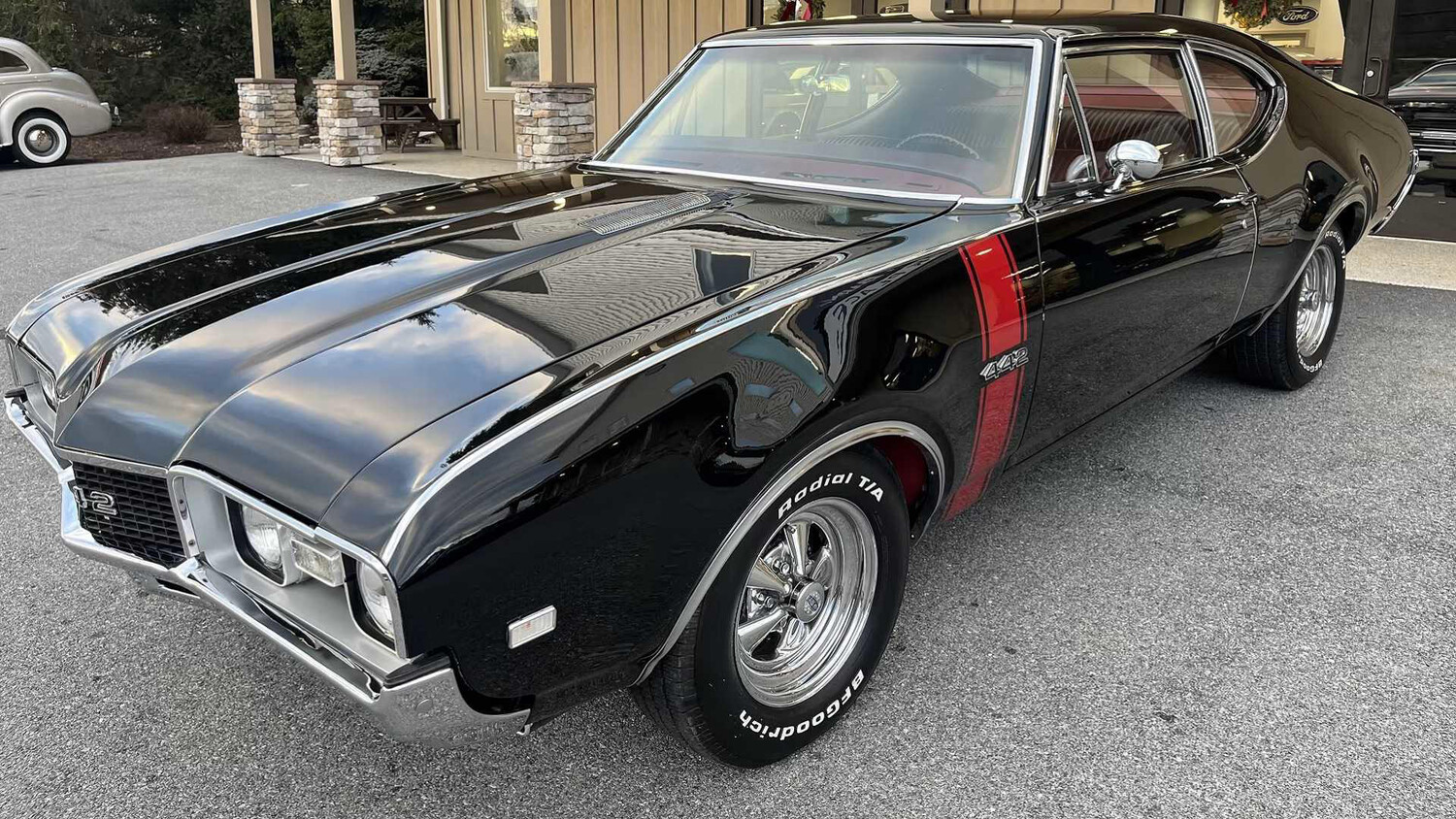
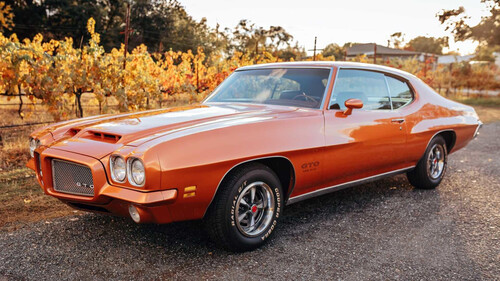
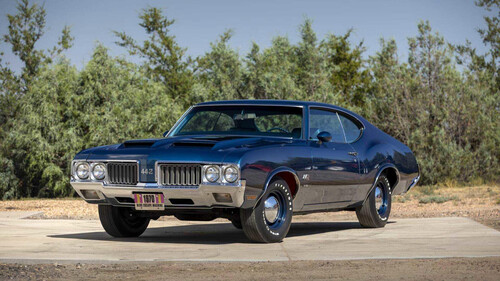
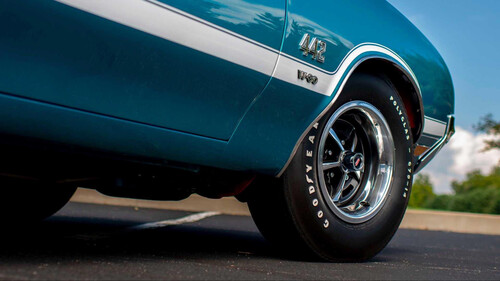
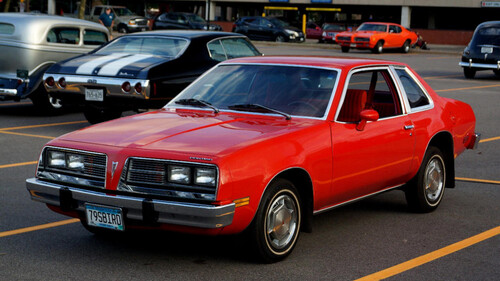
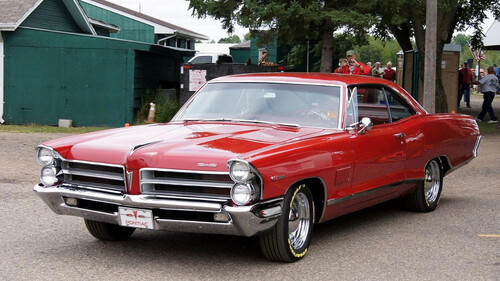
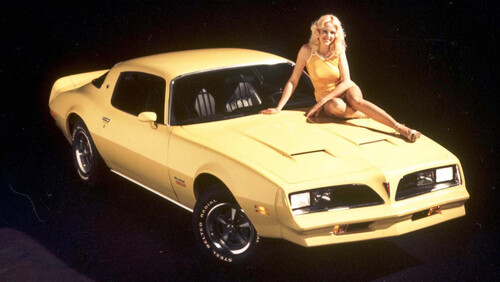
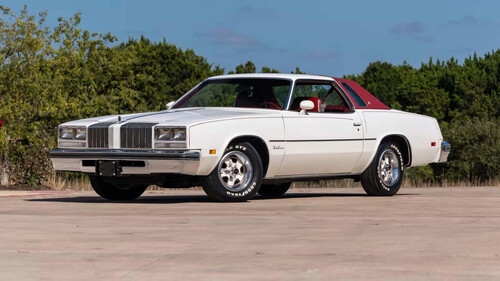
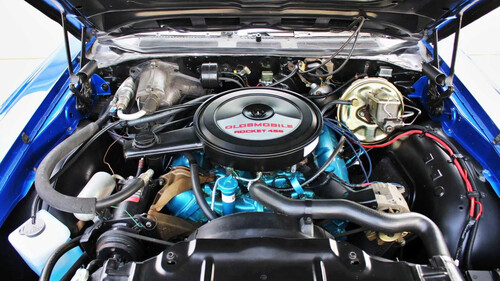
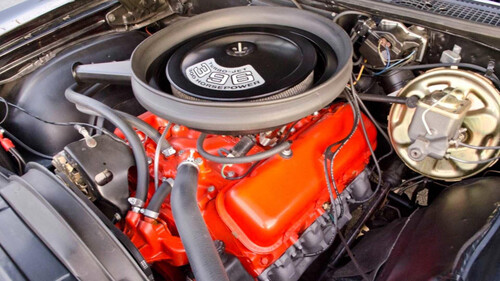
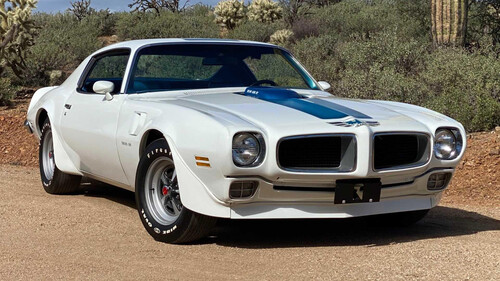
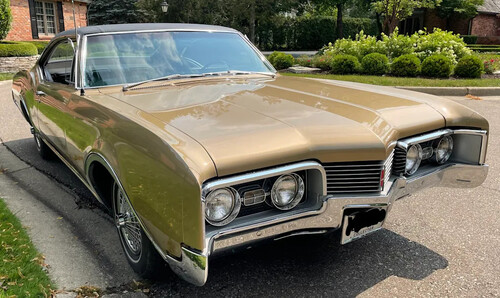
The 1960s muscle car era is remembered for its thundering big-block bruisers — the kind of iron that rattled fillings and scorched quarter-miles. But not every performance-hungry buyer wanted a drag-strip special. For those who craved a more balanced machine, the small-block V8 offered a compelling alternative: lighter, more compact, and friendlier to a set of corners. The question is, which small-block muscle car of that golden decade squeezed out the most twist? We dug into the history books to find the torquiest small-block V8 of the 1960s — and the answer might surprise you. UPDATE: 2026/08/10 12:20 EST BY JARED SOLOMON This article has been updated to clarify the Oldsmobile 350’s factory torque ratings and explain why “small-block” did not mean the same thing across every GM division.As well as being cheaper than their big-block siblings, the small-block engines are more compact and lighter. Bearing in mind that every muscle car of the era had its engine up front, this improved weight distribution, and therefore handling.For drivers looking for a well-balanced and enjoyable experience, going down the small-block route certainly had its advantages. Nobody ever wanted less grunt, though, so HotCars tracked down the torquiest small-block V8 muscle car built during the 1960s. “Small-Block” Did Not Mean The Same Thing At Every GM Brand Comparing 1960s small-block engines is more complicated than arranging their displacement and torque figures in a table. Chevrolet produced clearly separate small-block and big-block engine families, but Pontiac did not follow that formula. Pontiac V8s ranging from 326 to 455 cubic inches shared the same basic architecture and external dimensions.Oldsmobile’s situation was different again. Its 350 is commonly described as a small-block because it used a shorter deck than the larger 400 and 455 engines, but it was completely unrelated to Chevrolet’s famous small-block 350. The two engines merely shared the same displacement.For this comparison, “small-block” refers to the smaller-displacement performance V8s treated as such within their respective brands. That keeps the Oldsmobile 350 in contention, but the Pontiac 350 HO is better understood as a smaller-displacement member of Pontiac’s single traditional V8 family rather than a conventional small-block. Oldsmobile Cutlass W-31 Was Powerful But Did Not Have The Highest Torque Black 1968 Olds Cutlass Oldsmobile Rocket V8 W-31 Specs (Source: Oldsmobile)While the 4-4-2 was the range-topping Cutlass on offer from Oldsmobile in 1968 with its big-block 400 ci V8 — good for 345 hp and 440 lb-ft of torque — the lower-end models were far from gutless. Also drawing on the legendary Rocket V8 from historic American car brand Olds, the standard version featured a slightly longer stroke of 4.057 inches but a significantly smaller bore, resulting in a 350 ci displacement.It also came with a two-barrel carburetor, unlike the 400's four-barrel unit, and its compression ratio was lower at 9.1:1 compared to 10.5:1. That setup produced 246 hp and 355 lb-ft — not as much as the mighty 4-4-2, but hardly weak. For those wanting a more potent small block, the W-31 package came swooping in, cape and all. The W-31 Had The Performance To Back Up Its Reputation The W-31 was more than an impressive collection of numbers on an Oldsmobile order sheet. A period Car and Driver road test sent a Cutlass S W-31 through the quarter-mile in 14.5 seconds at 97.2 mph. That was serious performance for a naturally aspirated 350 ci V8 in the late 1960s, especially since the car was carrying less engine over its front wheels than Oldsmobile’s big-block alternatives.Its aggressive camshaft also gave the W-31 a very different personality from the regular Cutlass 350. Drivers had to work the engine harder to reach its strongest performance, but the reward was a small-block Oldsmobile capable of delivering acceleration that placed it firmly in muscle car territory. It may not have enjoyed the fame of the 4-4-2, but it certainly had enough speed to embarrass larger-engined machinery at the drag strip. The Torquiest Oldsmobile 350 Was Not Actually The W-31 The W-31 may have been the most exciting version of Oldsmobile’s 350, but it was not the one with the highest factory torque rating. Oldsmobile listed the 1968 Ram Rod 350 at 325 horsepower and 360 lb-ft, while the less aggressive four-barrel 350 produced 310 horsepower and 390 lb-ft. This was the engine with the most torque.That difference came down to how the two engines delivered their performance. The W-31 used a much more aggressive camshaft that moved its power higher up the rev range, helping it produce an additional 15 horsepower. However, the milder four-barrel engine developed its peak torque at a lower engine speed and ultimately made 30 lb-ft more.The distinction does not remove Oldsmobile from the top spot. It simply means the torquiest small-block Cutlass was the regular four-barrel 350, while the W-31 was the sharper, more competition-focused choice. Ram Rod 350 Option Featured Cherry-Picked Performance Upgrades Mecum Auctions The enhanced Rocket V8, which went by the name Ram Rod 350, used the same cylinder head castings as the base powerplant. It did, however, receive the upsized valves from the game-changing 455 V8, which improved airflow into the engine and boosted power. The camshaft timing was also made more aggressive, shifting the power band toward higher RPM.This had the effect of creating a rough idle at lower engine speeds, which meant all W-31s had to be sold with manual brakes rather than power-assisted units. The vacuum required to operate power-assisted brakes simply wasn't sufficient given the limited power available at low RPM, making power brakes incompatible with this setup.The 350 was also fitted with a beefier harmonic balancer, which reduced vibrations transmitted to the crankshaft from the engine. Those vibrations not only place the crank under greater stress — leading to potential damage or failure over time — but also sap efficiency. The final piece of the W-31's potent powertrain puzzle was a ram-air induction system.A series of scoops located beneath the front bumper fed large intakes that routed all the way to a dual-snorkel air cleaner, which in turn supplied the engine. The additional cold airflow allowed the Rocket V8 to extract even more power. High-Output Small-Block Pontiac Firebird Was Another Potent GM Offering Mecum Auctions Pontiac 350 HO (Source: Pontiac)General Motors had the small-block V8 formula well sorted in the latter years of the '60s, as the second-torquiest example came from another of its brands: Pontiac. The achievement was courtesy of the 350 ci V8 slotted under the hood of its iconic Firebird.Like sister brand Oldsmobile, Pontiac offered a standard and an enhanced version of its small-block 350, the latter dubbed 'High-Output.' While the standard engine used a two-barrel carburetor, the HO received a four-barrel unit. The compression ratio was also raised from 9.2:1 to 10.5:1, and the camshaft timing was sharpened accordingly.Those upgrades pushed output from the standard 350's 265 hp and 355 lb-ft to a healthy 320 hp and 380 lb-ft in HO form. Not quite enough to unseat the Rocket V8 in the Cutlass, but Pontiac's 350 HO was a strong runner-up in the small-block torque contest. Pontiac's Hot Firebird Was More Popular Available with a three- or four-speed manual gearbox or a two-speed automatic, the Firebird sold significantly better in 1968 than its Cutlass equivalent. As per Barrett-Jackson Auctions, Pontiac moved a total of 2,638 examples of the Firebird equipped with the 350 HO that year.That figure is more than three times the number of Cutlass' that Olds managed to sell. This is arguably because Pontiac had a stronger reputation in the performance car arena at the time, though the Firebird also carried a meaningful weight advantage. While the Cutlass weighed in at 3,463 pounds, the Firebird tipped the scales at just 3,226 lbs. The Pontiac's 15 hp power advantage over the Cutlass likely played a role as well, since outright power figures tend to attract more attention than torque numbers. Oldsmobile Holds The Title Of Torquiest Small-Block From The 1960s The Firebird's lighter weight not only aids acceleration but also makes the car more agile through corners and more composed under braking. That said, the Olds 350 V8 still produces more torque than the Firebird's HO unit — and that alone earns it the honorable title of the 1960s small-block V8 muscle car with the most twist.