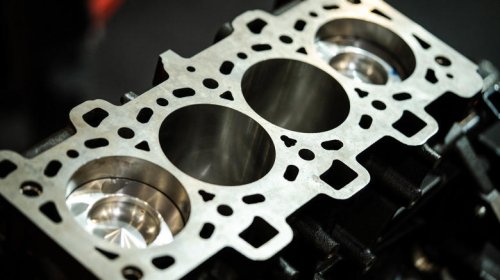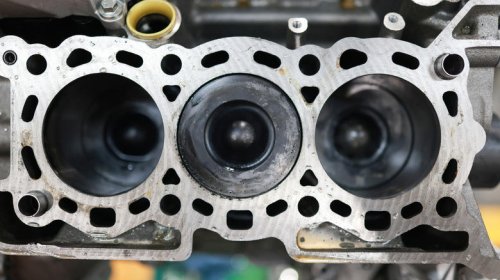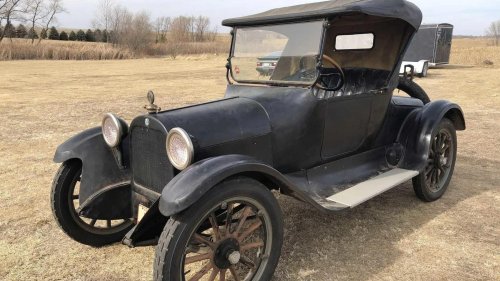
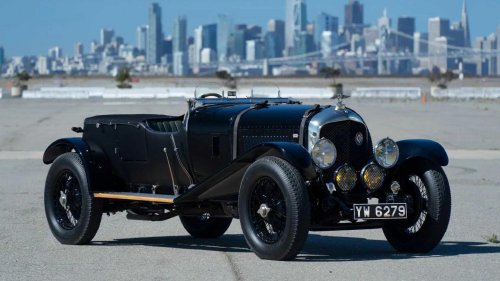
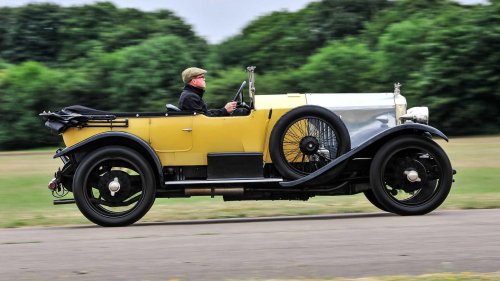
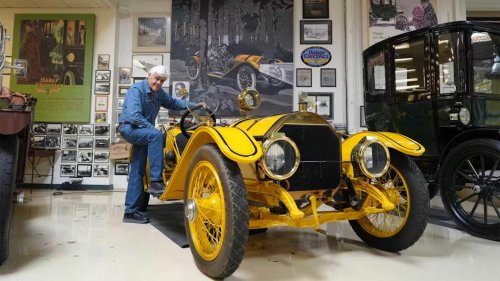
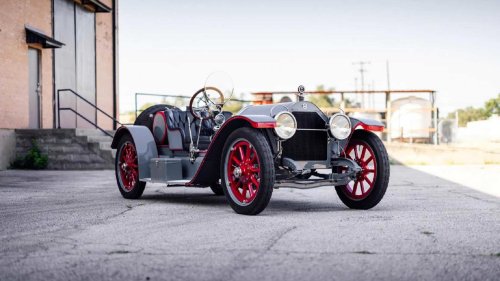
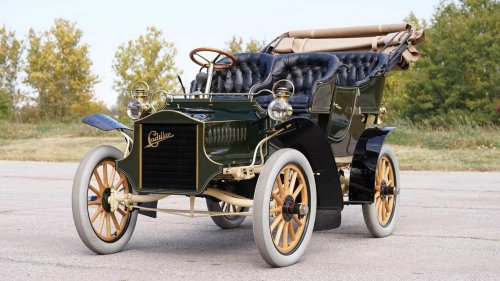
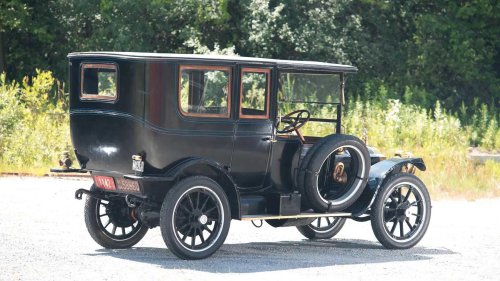
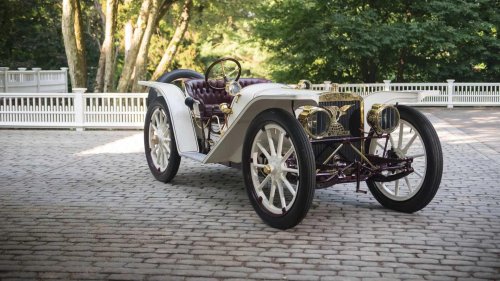
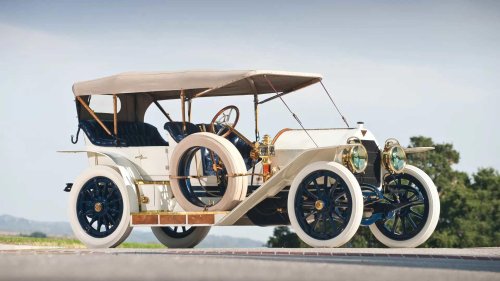


















Four-cylinders don’t have the silk of a straight-six or the brute punch of a big V8. They shake more and sound meaner than musical. But they’ve moved the world. From brass-era behemoths to modern workhorse diesels, the humble four has powered family sedans, sports cars, and cross-country tourers for over a century. We think of “fours” as small, but history says otherwise. Some production cars packed cylinders the size of coffee cans and strokes that read like ruler marks. The results were wild torque, low redlines, and legendary stories.This list rounds up the ten largest four-cylinder engines ever fitted to production cars, ranked by displacement from the smallest (still huge) to the biggest. Expect chain drives, T-heads and L-heads, underslung frames, transaxles, and a few names that still make enthusiasts grin. Yes, several entries are pre-war and proudly old-school, but they were built in real numbers for paying customers and they absolutely count.We’re ranking by displacement only (liters/cc or cubic inches). “Production car” means a model built and sold to the public in multiple units, not a one-off racer or prototype. Cars could be luxury tourers, sports cars, or mainstream models, trucks and pure race specials are out. Gasoline and diesel both qualified. For engines used across variants, we took the largest verified spec. Ties in displacement get ordered by the year the engine first hit a production car. Dodge Brothers L-Head Inline-Four: 3.5 Liters First Installed In: Dodge Model 30/35 (1914) BaTDodge’s first car went straight at Ford’s Model T with better power and tougher build. Its 212-cid (≈3.5-liter) flathead four made about 35 hp, and more importantly, useful torque. The engine sat in a welded all-steel body – another Dodge bragging point – and drove through a 3-speed sliding-gear transmission when Ford was still using a planetary. Dodge built these in big numbers.The bore and stroke (about 3.9 x 4.5 inches) underline the intent: mid-range pull off idle and low-rpm durability. You won’t see 70 mph, but you’ll climb anything and lug happily all day. Plenty of Series 116 and Fast Four descendants kept the 212-cid theme going through the 1920s, proving the layout’s strength. Bentley SOHC Crossflow Inline-Four: 4.4 Liters First Installed In: Bentley 4½ Litre (1927) BaT The Bentley 4½ Litre replaced the 3-Liter with a larger, more muscular single-overhead-cam four. Despite the model name, the capacity is 4,398 cc. With four valves per cylinder and twin ignition, it was very advanced for a production four – especially one that powered Bentleys to Le Mans glory in the late 1920s. The standard touring engine made about 110 hp, and racing spec and the later blower pushed far beyond.The engine wasn’t tiny inside – it swung a 140-mm stroke. That gave the 4½ its locomotive feel – pull everywhere, revs be damned. W.O. Bentley didn’t chase fragile high-speed trickery, he built a tough, cool-running big four that would finish 24 hours. Even the “Blower” cars kept the base architecture and added a supercharger rather than re-invent the block. Call it the last truly great giant four of the vintage racing era. Vauxhall L-Head/Overhead-Valve Inline-Four: 4.5 Liters First Installed In: Vauxhall 30-98 (E-Type) (1913) Stellantis Britain’s famous 30-98 arrived with a 4.5-liter four in E-Type form, later updated to an OHV OE engine of 4,224 cc. The E-Type’s side-valve unit gave about 90 hp at 3,000 rpm – serious output for the day – and enough legs to push a properly bodied 30-98 toward the “guaranteed” 100 mph at Brooklands in tuned trim. Production spanned the teens and 1920s, and real customers used them as fast tourers and hill-climb cars.The trick wasn’t just displacement. Designer Laurence Pomeroy crafted a chassis and gearing that let the big four breathe. With light coachwork (Velox or the boat-tailed Wensum) and long gearing, the car ate miles at speed. In period Britain, nothing said “go far, go fast” quite like a 30-98 with that big, lazy four up front. Mercer T-Head Inline-Four: 5.0 Liters First Installed In: Mercer Type 35-J Raceabout (1911) Jay Leno's YouTube Channel Mercer’s Type 35-J Raceabout is road-car minimalism done right: no doors, no frills, just a chassis and a big T-head four. Displacement sat just under 5.0 liters (≈300–307 cid, varying with year). Output was “only” around 60 hp on paper, but the car weighed little, and the engine delivered instant torque. Contemporary estimates put top speed at ~90 mph – nuts for the early 1910s.Finley Robertson Porter’s engine used cylinders cast in pairs, dual ignition, and monster valves. The Raceabout wasn’t a stripped racer, Mercer built and sold them to enthusiastic road customers who then went out and won things. If you’ve ever seen one climb a hill, you know why: grab second, roll into that big four, and it pulls like a freight elevator. Stutz/Wisconsin T-Head Inline-Four: 6.39 Liters First Installed In: Stutz Bearcat (1912; Wisconsin four through mid-1917) BaT America’s first “supercar” had a huge four. Early Stutz Bearcats ran a 390-cid (≈6.4-liter) Wisconsin-built T-head with four valves per cylinder – exotic for the time – making around 60 hp and plenty of shove. A 3-speed transaxle and an underslung chassis kept weight down and the center of gravity low.By 1917, Stutz had moved to its own 390-cid 16-valve four cast as a single block, but the Wisconsin-powered cars had already cemented the legend. Period accounts list heaps of race wins and road victories by customer-owners. The engine doesn’t rev; it thumps. That’s the joy of a giant T-head – effortless, elastic torque that shrugs off tall gearing and hills. Cadillac L-Head Inline-Four: 6.44 Liters First Installed In: Cadillac Model L (1906) BaT Before Cadillac became “the Standard of the World” with V8s, it built a monster four. The Model L launched in 1906 with a 392.7-cid (≈6.44-liter) L-head inline-four – 5.00-inch bore and 5.00-inch stroke – rated at 40 hp. It sat above the Model H and introduced a bigger-bore version of Cadillac’s new four-cylinder design on a longer wheelbase.The engine’s square 5x5-inch dimensions and five main bearings gave it a thick torque curve right off idle. Cadillac was already leaning into quiet, reliable luxury by 1906, and this big four fit the bill. It’s easy to forget how large early fours got before the industry split the job among more cylinders. Cadillac’s 6.44 is one of the best documented – and it belongs high on any displacement list. Packard T-Head Inline-Four: 7.08 liters First Installed In: Packard Model 30 (1907) RM Sotheby's Packard’s Model 30 was the brand’s sweet spot in the brass era: quality, engineering, and quiet muscle. Its 431.9-cid (7 liters) T-head four gave the car its name and character – huge displacement, low stress, and no drama. Packard built these in meaningful volume from 1907 through the early 1910s – this was the company’s top seller for years and the ultimate four before Packard moved on to sixes.Specs tell the truth: five main bearings, pressure lubrication for the era, and a robust rear transaxle on some variants. Period catalogs and museum write-ups list real 60-mph top speeds for the Model 30, which is plenty when you’re hauling an aluminum-paneled touring body and seven passengers. If you think “big Packard,” your brain jumps to straight-eights. Don’t sleep on the big-four years – they set the brand’s standard. American Underslung L-Head Inline-Four: 7.8 Liters First Installed In: American Underslung 50 HP Roadster (1908) RM Sotheby's The American Motor Car Company flipped the frame under the axles to drop ride height – decades ahead of the stance trend. Its 50 HP Roadster carried a colossal 476.5-cid (about 7.8-liters) L-head four. Rated 50/60 hp at just 1,000 to 1,200 rpm, it delivered long-legged thrust and a signature low silhouette. A big four like this didn’t need revs; it breathed torque.You’ll see some sources list ~499 cubic inches for other years, but factory-backed catalog and auction documentation for 1908 machines pegs the Roadster at 476.5 cid. Either way, it’s one of the biggest production fours ever sold, and a genuine showroom model, not a one-off. The car used a 4-speed, transmission brake, and drum rears, with that famous “underslung” chassis laying the body down between the rails. It looked fast standing still and pulled like a locomotive. Simplex T-Head Inline-Four: 9.8 Liters First Installed In: Simplex Model 50 (1909–1914) RM Sotheby's If you want displacement, the Simplex Model 50 is the boss. Its 597-cid (9.8 liters) T-head four used separate intake and exhaust cam profiles and massive, individually cast cylinders cooled by big water jackets. Rated at 50 hp by the era’s ALAM formula, the car was all about effortless torque at low revs, not peak power. Think continental touring at 50 mph when most roads barely supported it. This engine was the heart of a genuine production luxury performance car – expensive, fast, and sold to customers, not just a handful of works drivers.The drivetrain told the rest of the story: a 4-speed manual and double chain drive to the rear axle. With a wheelbase well past 120 inches, the Model 50 didn’t so much accelerate as heave itself forward on a tidal wave of torque. Collectors call them “chain guns” for the way those side chains whir. Period reports and today’s auction notes back up the specs: 600 cubic inches, 60-hp rated, and a real-world pace that embarrassed smaller contemporaries.Source: Wikipedia, Stellantis, RM Sotheby's