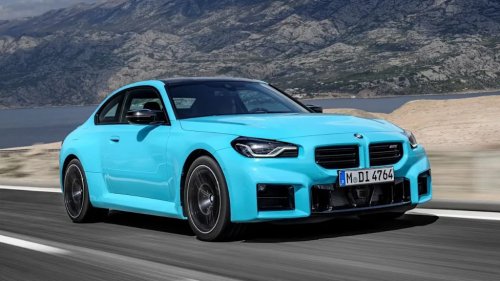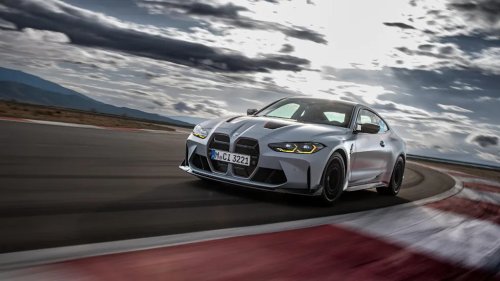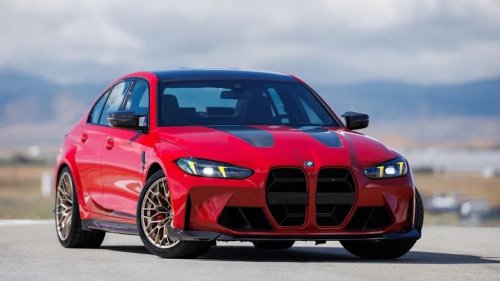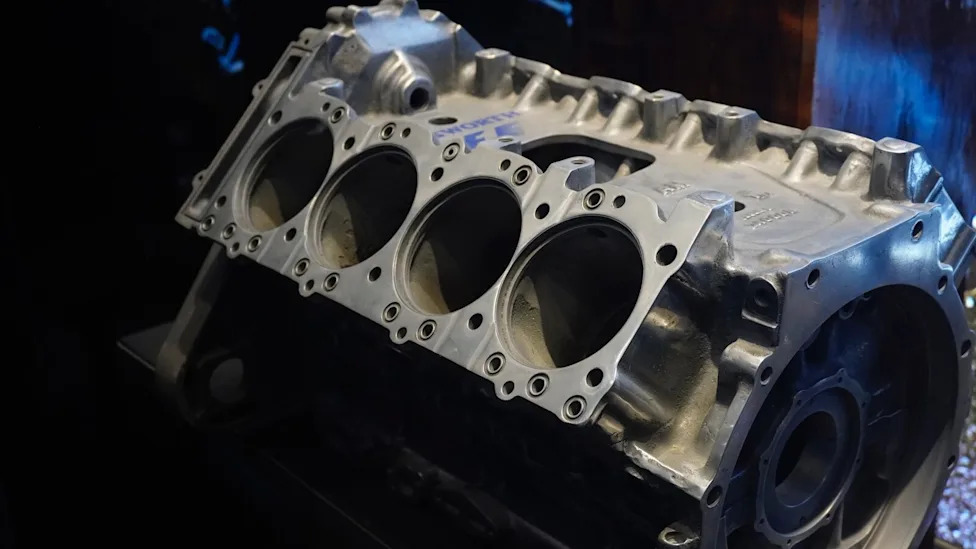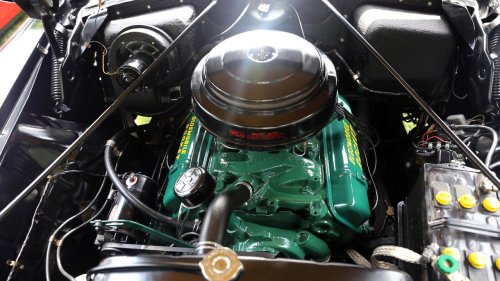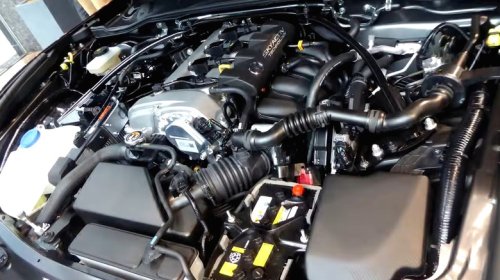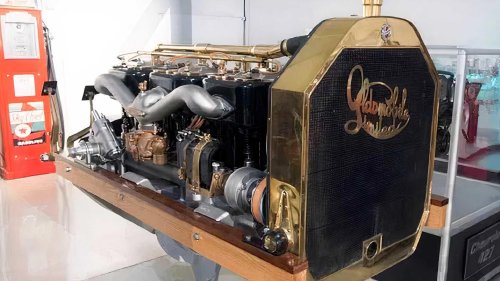
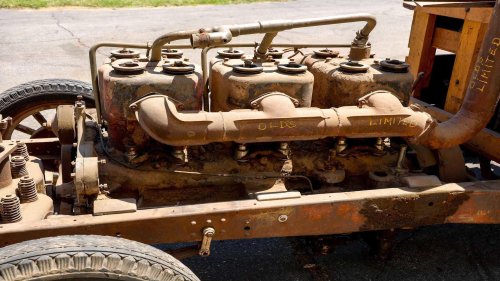
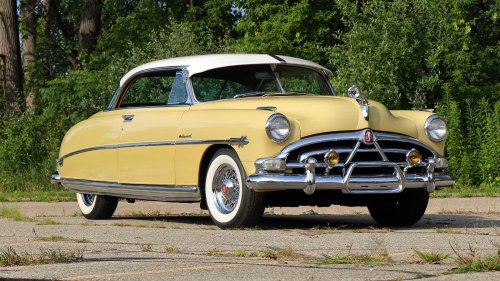
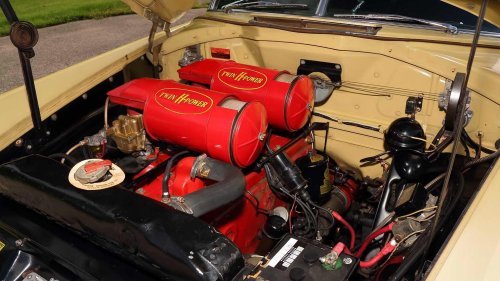
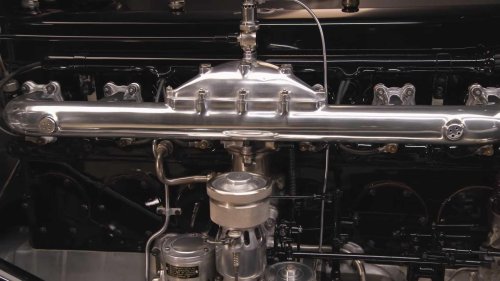
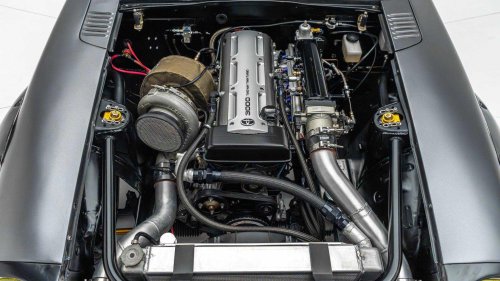
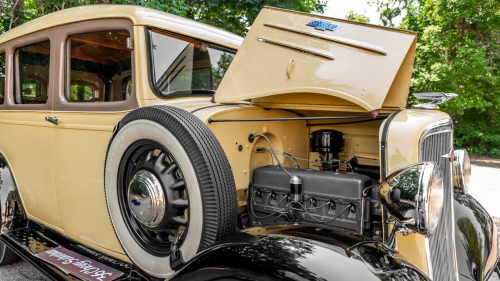



















Six-cylinders are having a comeback moment. From Porsche’s flat-sixes to BMW’s turbocharged inline units to Maserati and AMG ditching V8s altogether, the layout is everywhere again. It wasn’t always like this though, and for most of the 20th century, the six-cylinder sat in an awkward spot: more refined than a four, cheaper than a V8, and rarely the centerpiece in a performance legend.Today, forced induction and tighter emissions have pushed six-cylinders into performance territory they never should’ve reached on displacement alone. But long before turbos and direct injection made three-liter engines punch like yesterday’s big blocks, automakers chased power the only way they knew how, by making engines absolutely massive. To really understand just how far the six-cylinder has come, you need to look backward more than a century. And that trail starts with a monster so absurd by modern standards it feels like a prank: Oldsmobile’s 11.6-liter straight-six from 1912. The 1912 Oldsmobile Limited Had A Six-Cylinder The Size Of A House General Motors museumThe early 1900s weren’t about efficiency or clever engineering. If you wanted a car to move faster, you built an even bigger engine and hoped nothing exploded. That’s exactly how Oldsmobile approached its flagship Model Z Limited. In 1910, the Limited debuted with a 505 ci (8.3-liter) six-cylinder. Most brands would have stopped there. Oldsmobile didn’t. By 1911, they bumped it up to 707 cubic inches and 11.6 liters, making it the biggest production six-cylinder car engine ever fitted to a passenger vehicle.Hagerty That’s bigger than a Viper V10, bigger than a Chevy 572 crate motor, and far beyond anything short of locomotive territory. And the thing made just 60 horsepower, but context matters. Transmissions were heavy, crankshafts were crude, and aerodynamics didn’t exist yet. Those 60 horses were pushing a luxury land yacht on 42-inch wooden wheels. And for its era? That was considered top-tier engineering.The Model Z Limited wasn’t some stripped-down experiment either. It was the Bentley Mulsanne of its day, hand-built, massive, and reserved for the wealthiest customers in America. Only 140 units were made in 1912. One of the last known examples sold for $3.3 million at auction, and it’s the kind of artifact that'll probably never surface again.Every part of the car existed only because the engine demanded it. The four-speed manual had to be reinforced like farm machinery. The chassis looked more like something from a trolley car than a luxury vehicle. And the straight-six itself stretched so long under the hood you could practically host dinner on it. The Hudson Hornet And Its NASCAR-Slaying Straight Six Mecum Auctions Fast-forward four decades, and things had changed; engines were smarter, lighter, and stronger. But a few brands still believed a six could punch above its weight without losing its identity. That’s how the Hudson Hornet became a NASCAR legend. 1951 Hudson Twin H-Power Straight Six Mecum Auctions You read that right, a five-liter inline-six, naturally aspirated, making more torque than most muscle cars would achieve a decade later. Hudson engineered that engine with racing in mind. The brand was hungry for blood on the NASCAR circuit, and they got it. The Hornet won three straight championships between 1951 and 1953, humiliating V8-powered rivals with what seemed like black magic at the time. Engine Features Twin Carter one-barrel carbs delivered even distribution across all six cylinders, long before EFI existed. A chrome-alloy block kept things rigid under constant abuse. Miracle Dome aluminum heads optimized combustion. Cast iron manifolds helped it breathe and stay cool. Forged, counterweighted crankshaft kept vibrations in check. Aluminum pistons with chrome sealing meant it revved clean at a time when most engines shook themselves to death. Hudson didn’t treat the straight-six like a budget alternative. They built it like a race engine first and a production mill second, and it paid off. By 1954, the final iteration with “Super Induction” tech squeezed out 170 horses, just before Hudson merged with Nash to form AMC. After that, the era of big sixes faded, and V8s took over as the default power source for American performance. The Six-Cylinder’s Identity Crisis YouTube - Jay Leno's Garage For most of the 20th century, the six-cylinder was trapped in no-man’s land. It wasn’t as glamorous as a V12, and it didn’t have the brute force reputation of the V8. Automakers used it as a stepping stone, something “better than base” but less exciting than premium. But cars like the Model Z and Hudson Hornet prove the layout never lacked potential. It just took completely different paths depending on the era.In the pre-war and brass-era days, engines weren’t about efficiency or architecture. If you wanted power, you added displacement until it either worked or broke. The Oldsmobile’s 11.6-liter juggernaut is proof. By the post-war 1950s, engineering replaced guesswork. Brands like Hudson showed you could get V8-level performance with half the cylinders if you were willing to innovate. Then the ’70s and ’80s killed displacement.Emissions, fuel crises, and government regulations sent everyone scrambling to shrink engines. Sixes were suddenly economy options, not statement pieces. The resurrection we’re seeing now isn’t really a comeback, but a return to something six-cylinders were always capable of being. The Modern Six-Cylinder Is Built On Old, But Smarter Ideas Bullet Motorsports Look at the biggest performance names today:Nissan GT-R - 3.8L twin-turbo V6 BMW M3/M4 - Twin-turbo 3.0L inline-six Porsche 911 - 3.0L twin-turbo flat-six Toyota Supra - Twin-turbo inline-six Even trucks and SUVs use boosted sixes instead of V8s:Ford F-150 Raptor - Twin-turbo V6 Toyota Tundra - Twin-turbo V6 hybrid Land Cruiser - Finally ditched the V8 for a six Why? Because the formula finally caught up with the ambition. Forced induction, direct injection, alloys, and variable timing are everything Hudson was trying to do, with a hundred years of extra tech backing it up. But no one is building a six-cylinder with 11 liters of displacement anymore. Most don’t even crack four. But that’s not a downgrade, it’s proof of how far the layout has evolved.Still, nothing today will ever match the sheer unreality of a 707ci inline-six powering a luxury car on wheels the size of a grown man. And nothing will match the grassroots brilliance of Hudson rewriting the rules of stock car racing without ever building a V8. The Engines That Shaped Automotive History via Bring A Trailer Both the Oldsmobile and the Hudson sit at opposite ends of the six-cylinder’s identity, one was excess without limits, the other was precision without compromise. And both shaped what came next, even if most people don’t realize it. The Model Z’s behemoth engine represents the raw, almost primitive belief that size is everything. That idea carried all the way into American big-block culture decades later. The Hudson’s 308, meanwhile, foreshadowed everything we celebrate today: high compression, better breathing, smart fueling, and usable torque. You could drop that blueprint into a modern Mopar crate catalog, swap the carbs for injection, and it would still make sense.Six-cylinders aren’t dead; they were just waiting for the rest of the industry to catch up. From 707 cubes to twin-snorting turbos, the layout’s story has always been about one thing: finding new ways to make fewer cylinders do more work. And if you ask most enthusiasts, that’s what makes these old giants even cooler today than when they were built.