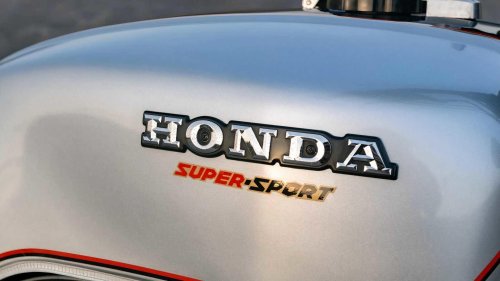
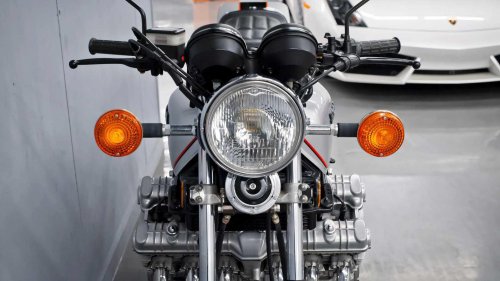
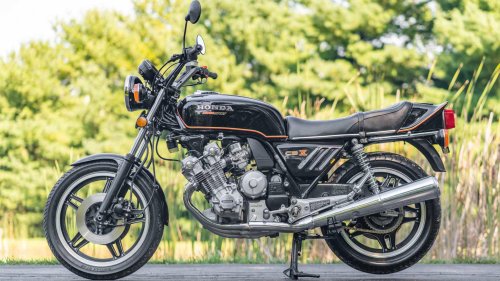
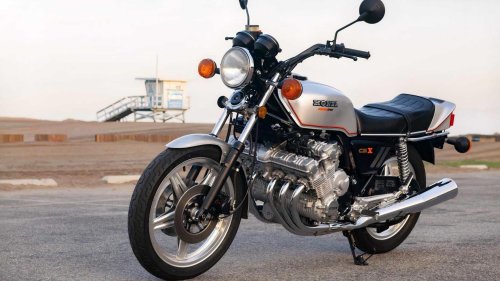
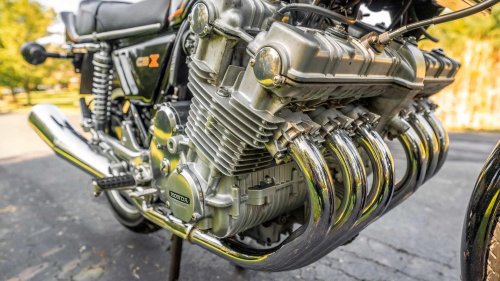
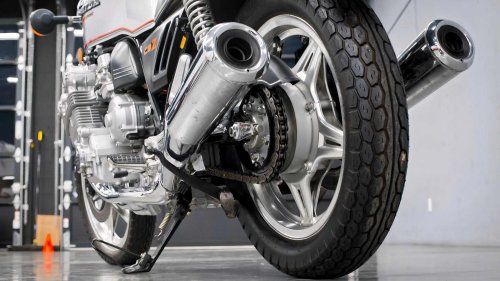


















Nowadays, Honda is known (and sometimes criticized) for being rather conservative, especially when it comes to its motorcycle division. But things haven’t always been this way, and folks well-versed in motorcycling history are fully aware of the brand’s revolutionary achievements from the past. And there was no shortage of them, mind you, as the Japanese marque was anything but risk-averse back then. Never afraid to raise the bar or challenge existing standards, it went on to do just that on multiple occasions and was swiftly followed by its rivals. Take, for instance, the groundbreaking CB750 introduced in 1969—a true legend of its time and the bike that changed the game forever. A Time When Honda Still Made Bold Moves Bring a TrailerUnmatched reliability, a smooth 736cc inline-four powerplant, and fantastic performance across the board, all paired with a smaller price tag than other, less dependable machines in its class. Known as the world's first superbike, the first-generation CB750 really took things to the next level in every way, and it almost single-handedly brought the British motorcycling industry to its knees. Companies like Triumph and Norton couldn’t keep up with all that refined technology coming from Japan, even with direct government intervention trying to keep them afloat. The Japanese Takeover Continues Bring a TrailerHonda’s four-banger led the onslaught, cementing its place in history as a landmark of technological advancement. Its success emboldened Honda to push the envelope even further, resulting in what was arguably the wildest road-going motorcycle of that era by the late seventies. The bike in question was unlike anything else on the road at the time, equipped with six cylinders of Japanese goodness sure to get it noticed wherever it went. That complexity would ultimately bring about its downfall, though, while also turning it into a cult classic phenom further down the road. Honda Tries To Rewrite The Rules A Second Time Bring a TrailerEnter the CBX1000; iconic, overengineered, and often regarded as the best-sounding production motorcycle in existence. It broke cover in 1978, a time when the CB750’s success had long been eclipsed by competitors such as the Kawasaki Z1. Honda was in dire need of a new flagship to take its place, and the CBX seemed like the perfect answer at the time. The bike's standout feature (by far) was its powerplant, a beefy 1,047cc inline-six with 24 valves, dual overhead cams, and 105 horsepower in its stable. All this force enabled the CBX to run the quarter-mile in 11.64 seconds and continue accelerating to a top speed of around 135 mph.It would do so while sounding absolutely phenomenal, and we strongly encourage that you look it up for yourself on YouTube to understand what we really mean. The exhaust soundtrack has often been compared to that of Formula One cars from the good old days, so listening to its six-cylinder symphony is a genuine delight at high revs. As such, Honda’s flagship didn’t just go fast while turning heads with its unique powerhouse, but it also sang a tune that’s so easy to feel in love with the first time you hear it.Another fun fact about the mill is that it was incredibly smooth, so much so that you could balance a coin on it sideways at idle and lower revs. The CBX1000 was born during an interesting time in motorcycling history, though—an era characterized by huge advancements in engine technology but very little progress in areas like brakes and suspension. Its chassis was thus notoriously flimsy for such a massive bike, barely able to contain all that power at a curb weight of around 600 pounds. The forks were laughably thin and so was the frame tubing, often making us wonder how the CBX didn’t simply tear itself apart. Racing DNA Doesn’t Always Translate Into Sales Bring a TrailerDevelopment was spearheaded by Shoichiro Irimajiri, whose experience in the world of motorsport played a key role when creating the CBX. Irimajiri had previously designed the RC165 and RC166, Honda’s high-revving GP racers also powered by six-cylinder engines. Much of that inline-six tech trickled down to the road-going CBX, but it also brought about some problems which prevented it from ever achieving mainstream commercial success. First, having two extra cylinders compared to its rivals meant higher production and servicing costs, instantly making it less competitive from a pricing standpoint.Moreover, the added complexity of that 24-valve engine was a headache in and of itself. We totally understand how needing to synchronize six carburetors can become a constant annoyance, and just about any sort of maintenance on such an intricate engine requires some serious expertise. Performance was a mixed bag too, because the bike was an absolute rocket in a straight line but rather unwieldy due to its weight and underdeveloped chassis. Riders sought something a bit more practical, so many of them opted for machines such as the Suzuki GS1000 and Honda’s very own CB900F. In fact, it didn’t take long for the latter to overtake its contemporary cousin in terms of sales. Commercial Failure Followed By Widespread Adoration Bring a TrailerThe CBX was revamped in 1981, becoming a sport-tourer with fairings and panniers in the hope of reviving the public’s interest. It sadly didn’t work, though, leaving Honda with no choice but to have it unceremoniously discontinued after the model-year 1982. But the beast refused to fade into oblivion, and it is nowadays cherished as a cult classic anyone would love to own. It’s not uncommon for pristine specimens to fetch well over $15,000 at auction, especially when it comes to those predating the tourer facelift from ‘81. A few have even exceeded $25,000, which should give you a pretty clear idea about its popularity among collectors.Heck, a clean 1979 model was sold for a whopping $37,000 on Bring a Trailer back in 2023, shortly after another made its seller almost 32 grand. That sort of cash is more than enough to get you a top-tier modern superbike, but that simply doesn’t have the charm of a vintage six-cylinder gem and genuine icon of its time. And it’s not just collectors that hold the CBX in such high regard, as we’ve also seen no shortage of custom bike builders giving it the bespoke treatment over the years. So, although Honda’s flagship may have flopped back in the early ‘80s, its spirit is still alive and well today. What The CBX Represents In Public Consciousness Bring a TrailerPeople don’t remember it for being a commercial failure, but rather as a legendary machine that the market was just not ready for. Despite its flaws, it stands as a clear reminder of Honda’s willingness to go wild back in the day, and that’s one part of the marque’s personality we would really love to see again. It seems like wishful thinking given the cautious business approach it sticks to nowadays, so we might have to just accept that such bold moves won’t be made anytime soon. There is a tiny slither of hope, though, because history often repeats itself and Honda’s revolutionary tendencies might return when we least expect them.