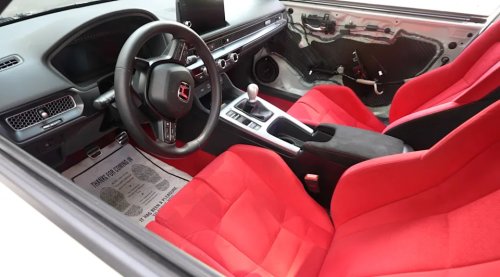

























Honda Issues Massive Recall Over a Tiny Cracked Circuit Board That Could Violently Deploy Airbags on ChildrenWhen you think of a dangerous automotive recall, you usually picture a failing transmission, a snapping steering column, or sudden brake loss. But Honda’s latest manufacturing crisis proves just how terrifyingly fragile modern automotive electronics really are.The Japanese automaker has just issued a massive recall affecting over 100,000 vehicles, spanning nearly a decade of highly popular models, including the Civic, Accord, CR-V, and Pilot. And the entire crisis traces back to a microscopic crack on a single circuit board that has the potential to turn a crucial safety device into a severe blunt-force hazard.Honda’s Moisture-Prone Short CircuitModern cars do not just blindly fire off airbags anymore; they rely on sophisticated weight sensors embedded in the passenger seat to determine exactly who, or what, is sitting next to the driver.AdvertisementAdvertisementAccording to the recall filing, the core issue lies within the printed circuit board of that specific weight sensor. A tiny capacitor on the board is highly prone to cracking under standard use.Once that capacitor fractures, it creates a fatal vulnerability to environmental moisture. If humidity or dampness from a spilled drink seeps into the housing, it triggers an internal short circuit that completely scrambles the seat’s telemetry data.When the sensor shorts out, the vehicle’s computer system gets completely confused about the passenger’s actual weight.Normally, if a child in a car seat or a small-statured adult is sitting in the front, the system is programmed to actively suppress the front and knee airbags to prevent the sheer explosive force from causing severe injury.AdvertisementAdvertisementHowever, because of this cracked capacitor, the shorted system defaults to a fully active state. In the event of a crash, the airbags will violently deploy regardless of who is in the seat, creating a massive injury risk for the exact passengers the system was designed to protect.The Supply Chain Domino EffectThe most fascinating part of this recall is how the failure actually originated. This wasn’t a sudden design oversight by Honda engineers. The defect is the result of an incredibly chaotic supply chain domino effect.A natural disaster at a secondary manufacturing plant forced a first-tier supplier to suddenly swap the base materials used to build these specific capacitors. That rushed material change completely compromised the structural integrity of the circuit board, leading directly to the microscopic cracks now plaguing 100,000 vehicles on the road today.Owners of affected vehicles will need to take their cars directly to a dealership, where technicians will be forced to completely rip out and replace the entire seat weight sensor assembly to eliminate the short-circuit risk.