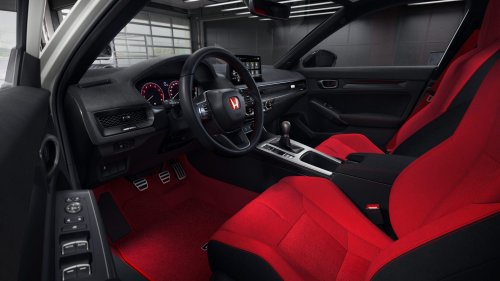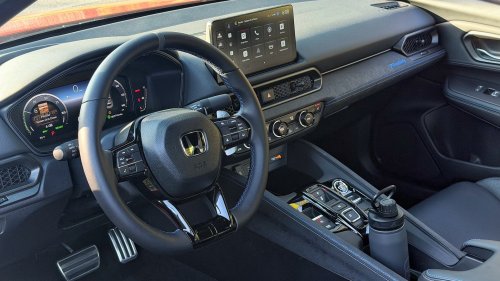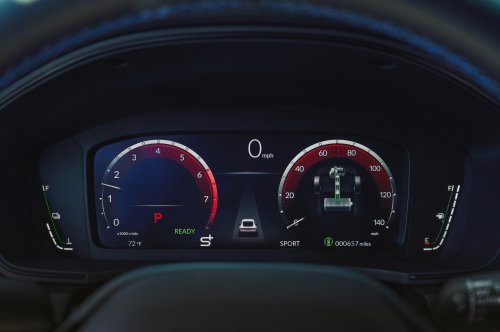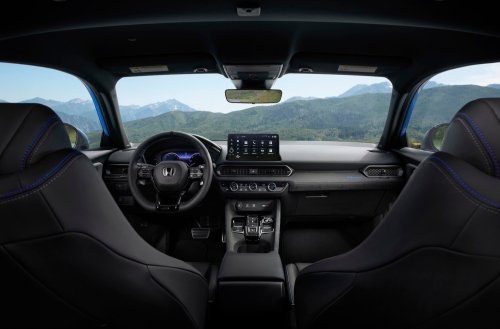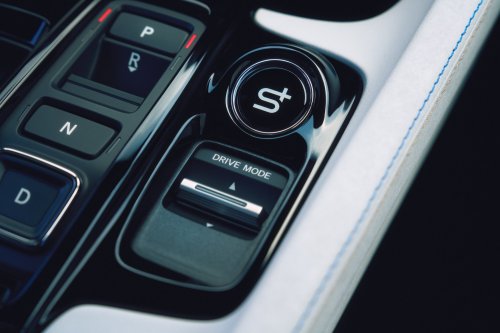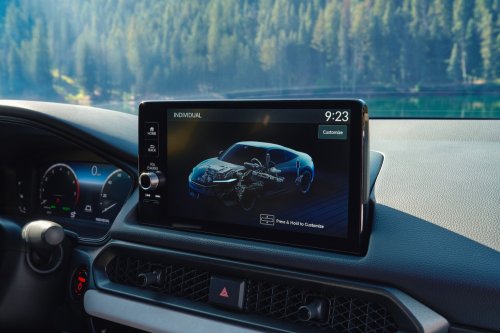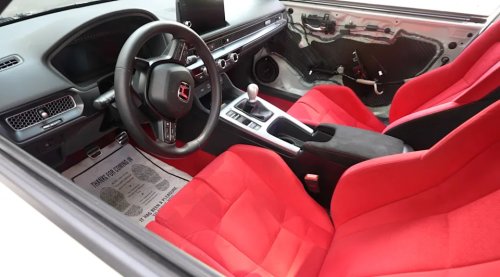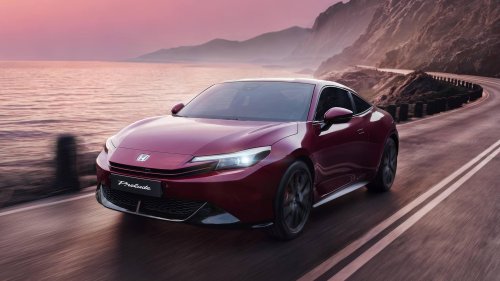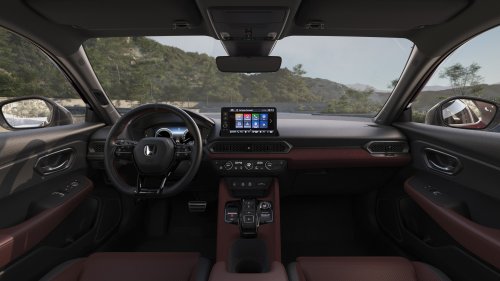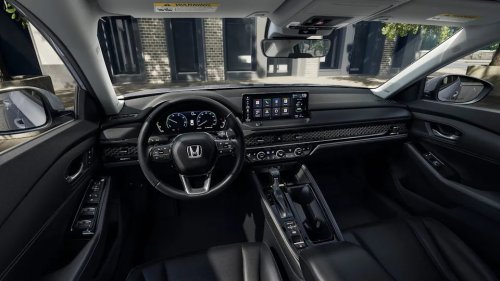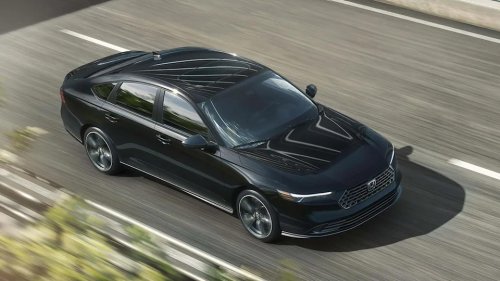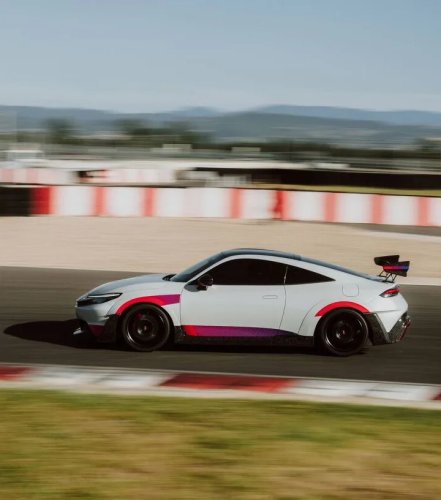
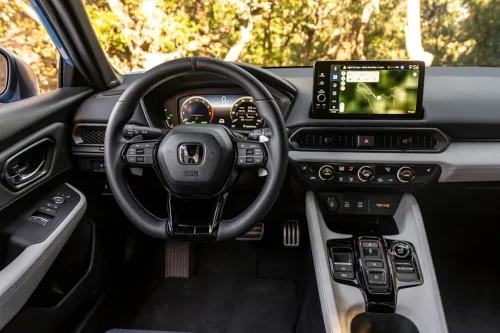
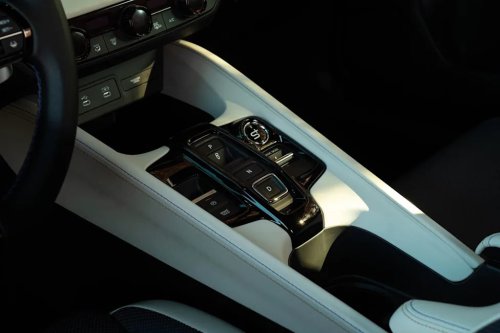
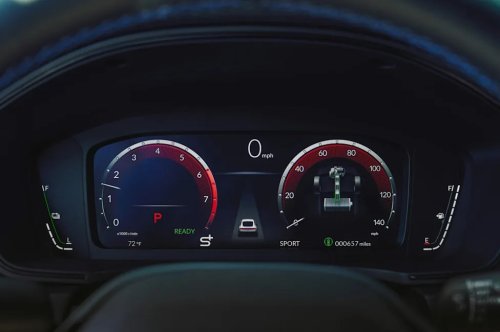
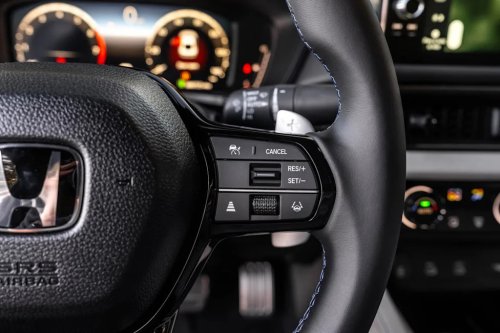
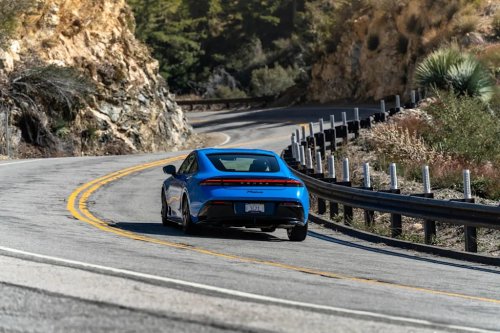



















How Honda S+ Shift Simulates a TransmissionHondaLike any deeply committed petrolhead, I struggle mightily with the idea of simulating a vital portion of the driving experience. Nearly every time I've given those simulations a chance, though, I surprisingly ended up liking the result. I say nearly, because there are exceptions. Cough, Fratzonic exhaust, cough.Honda's S+ Shift system is a perfect example of the kind of conundrum I'm talking about. The two-motor hybrid powertrain in the Prelude doesn't actually have a transmission in the traditional sense. An electric motor drives the front wheels in most cases, while an electronically controlled clutch allows for direct drive from the engine during steady-state, high-speed cruising. Naturally, that results in a rather boring powertrain, one Honda certainly didn't deem acceptable in the Prelude, hence the development of this new, simulated eight-speed dual-clutch transmission. It's weird. The Prelude was even featured in our Weird issue, in large part due to this feature.2026 Honda Prelude cabinJonathan HarperStrangeness aside, I was also hopeful. Honda has a long history of shipping a driving experience far greater than the sum of its parts might appear at first glance. The various generations of Prelude have always played a vital role in this history, so I went to Yoshiharu Saito, Prelude powertrain project leader, to learn how it works.AdvertisementAdvertisementHonda emphasizes two previous steps forward in hybrid drive technology it made before S+ Shift that led to this next technology being possible: Linear Shift Control and Direct Acceleration. The first, Linear Shift Control, was developed to bring what the driver hears from the engine in line with their inputs. Naturally, Honda's two-motor hybrid system uses the internal combustion engine as a generator, which means it's simply buzzing away to its own tune in an effort to fill the battery pack in the most efficient way possible. The electric traction motor uses power from the battery to accelerate the car. Drivers found the disconnect between engine noise and forward motion odd, though, so Honda engineered Linear Shift Control to align the engine noise such that it sounds like it's revving and "shifting" through gears when your foot is on the throttle, like a traditional transmission. Meanwhile, Direct Acceleration is simply a means to fire the engine up early (ensuring plenty of power is being fed to the battery) to supply much more effective and natural torque off the line should a driver ask for a quick start.As you might suspect, virtually all of the magic needed to produce S+ Shift is in the software. Never press the S+ Shift button on the center console, and the Prelude will drive like Honda's other hybrid vehicles. Enter the S+ Shift world, though, and you step into Honda's Narnia of simulated shifting.Richard Thompson III(Ed note: Saito's quotes in this story were translated from Japanese by Honda.)"Honda S+ Shift was developed not only to create the enjoyment of behaving like a DCT, but also as a technology that enhances the fundamental powertrain values of responsiveness and linearity," Saito says. "The response and linearity to even slight accelerator input changes during acceleration and deceleration, such as on uphill roads or freeways, are capabilities not previously achieved in conventional hybrids, and we believe this allows drivers to enjoy a true dialogue with the vehicle."AdvertisementAdvertisementThe secret sauce of what makes the new Prelude's powertrain engaging is all in the fine-tuning and calibration of the electric motor and internal combustion engine. While Honda tells me it's not trying to simulate the sound of any specific engine from its history, it does admit the torque curve and acceleration are meant to mimic a 2.4-liter naturally aspirated four-cylinder. That seems perfectly reasonable considering the electric motor doing the real accelerating is a mildly torquey little beast.Shifting via the steering wheel-mounted shift paddles is where the fun really begins. When you pull a paddle for an upshift in S+, Honda says it briefly puts the motor into regeneration mode. This instantly drops the revs of the internal combustion engine and obviously drops the output of the electric motor, simulating the interruption in acceleration you'd expect from upshifting with a traditional transmission. Even the sound is trying to be faithful to the sensation, as Honda uses its Active Sound Control system to play the noises you'd expect to be hearing over the Prelude's four speakers. These interruptions are also why the Prelude is slower to 60 mph by 0.8 second when in S+ mode.The rev counter that appears when you put the Prelude into S+ Shift modeHonda"The system reads real-time engine data such as engine speed and throttle opening, and selectively emphasizes specific frequency components through the cabin speakers," Saito said. "The settings are significantly adjusted for each drive mode. In particular, during downshifts, the system is tuned to make the blipping sound stand out."Said rev blipping on downshifts is perhaps the most satisfying part of the S+ Shift system. Honda artificially raises the generator motor's power generation each time you pull a paddle for a downshift, which naturally causes the internal combustion engine to spike its revs and produce the same quick blip up the rev range you'd expect when downshifting in a DCT. Depending on the situation, Honda says it will even briefly reduce the drive motor's output during a downshift, giving you the same decelerative toss forward feeling one would expect from a large change in revs. Yes, there's a "man behind the curtain," but at the same time, the sensations you're feeling in the car are real ones from the true powertrain components simply being manipulated by Honda's software tuning.AdvertisementAdvertisementThe previously detailed ASC plays a large role in making this system feel "real," and its implementation was one of the biggest mechanical challenges for Honda."Applying ASC requires noise smoothing as a prerequisite," Saito started. "This involves a wide range of design considerations, including engine block and crankshaft rigidity, coupling stiffness with the Front Drive Unit (front-mounted motor), placement of component natural frequencies, and the vehicle's sound insulation package. While fully leveraging the knowledge gained from the Civic Type R, we tailored the sound to align with the Prelude's concept and the driver's intentions, creating a sound experience that feels appropriate and engaging."Jonathan HarperIn case you're unfamiliar, Honda started its ASC journey (simulated engine noise) with the Type R. That car obviously makes its own, natural sounds, though, which made engineering the Prelude's system a whole different ballgame. The sound is Honda-like in nature, but it's generic and only "revs" to about 6000 rpm. In other words, it's no VTEC screamer.Beyond the noise itself, there's a method to Honda's shifting logic, and it fell back on experience with past DCTs like the one in the now-discontinued NSX. The same shift control logic used in that car's nine-speed DCT is applied here in the Prelude.AdvertisementAdvertisement"For example, during cornering, upshifts are held in order to prepare for acceleration after exiting the corner," Saito tells me. "Similarly, downshifts during braking are determined to prepare the driving force needed for acceleration after braking. In addition, the system is tuned to perform sequential downshifts that take advantage of the close gear ratios."By "downshifting" to a lower gear and holding it there in corners, that feeds more power into the battery and keeps it charged for maximum acceleration out of a corner. It's both exactly what you'd expect from a regular DCT, but also helpful in making the Prelude punchier to drive on corner exit.Jonathan HarperHonda could've engineered in a one-pedal drive mode or something close to it, but it intentionally left that feature out. This decision was driven, once again, by Honda trying to make the drive experience as close to that of a regular internal combustion engine as it could. Even choosing an eight-speed "transmission" was intentional for Honda. Funnily enough, Honda says it chose eight because that's the current number of gears used in Formula 1 transmissions. The ratios are rather close together in practice, which seemed fitting for a naturally aspirated four-cylinder car that needs to keep the revs up to produce speed. Honda even matched eighth gear cruising rpms (2160 rpm at 60 mph) to the same overall ratio as when the engine directly powers the front wheels in an effort to smooth out that transition.Many parts of this simulation are quite convincing, but there are some big holes Honda needs to cover still. For example, there's no way to permanently lock the car into its manual shifting mode. Should you pull a paddle and put it into manual mode, you'll need to keep doing so, otherwise, the car will revert back into an automatic transmission mode. It still "shifts," but the car is controlling the ratios. Does that hurt the simulation in my mind? It sure does. Honda also doesn't let you run the car into a virtual rev limiter, as it automatically upshifts should you hit redline in manual mode, yet again limiting how convincing the simulated transmission feels. All is not lost, though, because Honda left the door open for change.Jonathan Harper"During development, we validated the behavior by driving on a wide variety of courses, and we believe the current hold time is optimal," Saito says. "However, we understand that depending on individual customer preferences and driving environments, there may be situations where it feels short, and we would like to reflect this feedback in future development."AdvertisementAdvertisementHonda will tell you that the ability to switch things up is great indeed. While it chose an eight-speed for this application, there's no reason it couldn't engineer a different version with a six- or seven-speed transmission instead. After all, the vital parts of this equation are all software in nature. Honda tells me it didn't need to develop any new hardware to make this system work. Even existing computer chips were plenty fine to run this sophisticated transmission simulator thanks to previously used technologies like Linear Shift Control. The Civic Hybrid is already confirmed to add S+ Shift tech in its next update, which should make that lovely economy car a little more exciting to drive. And if you haven't noticed already, Honda and Acura are going all-in on hybrids, so get used to S+ Shift enhancing the drive on Hondas for a long time to come.You Might Also LikeIf You Can Only Own One Car, Make It One of TheseThese Are the Most Popular Cars by State