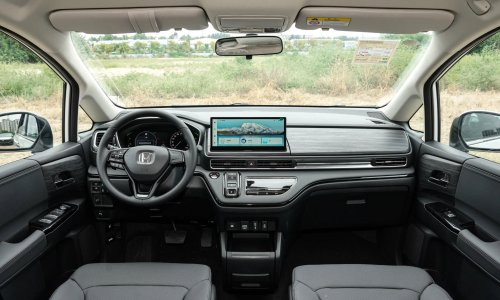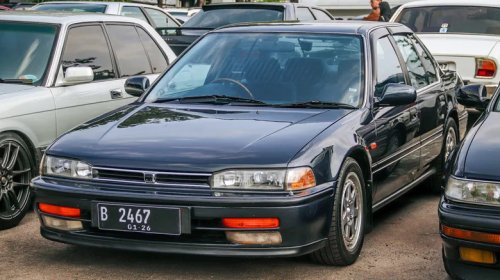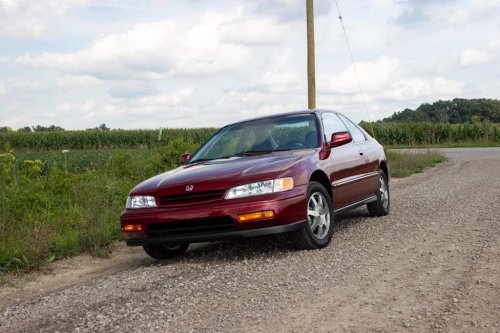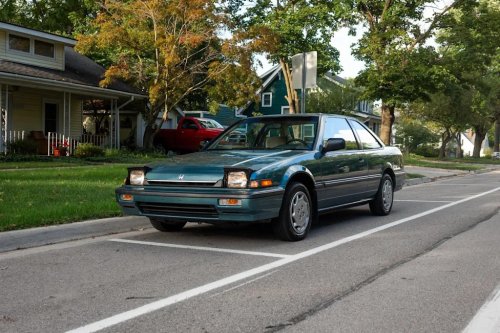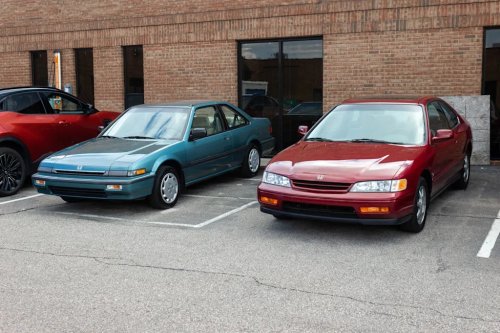
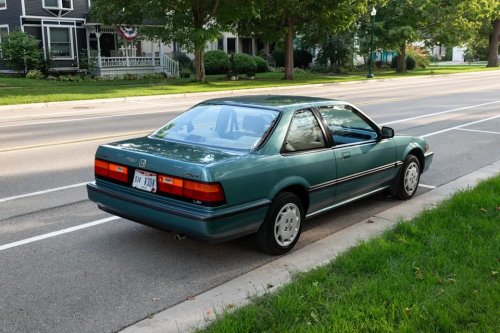
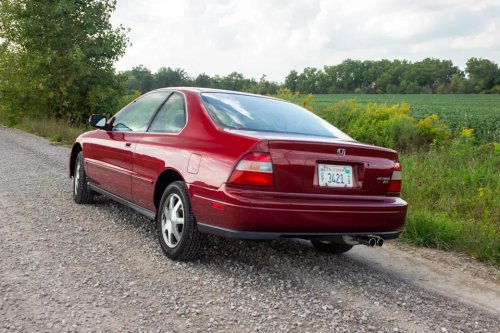
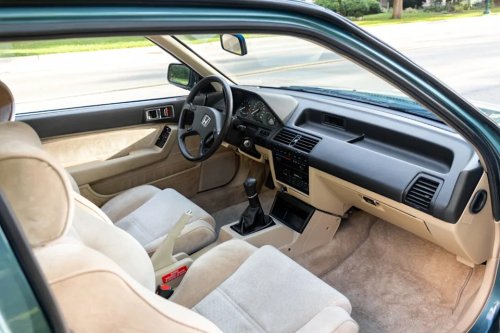
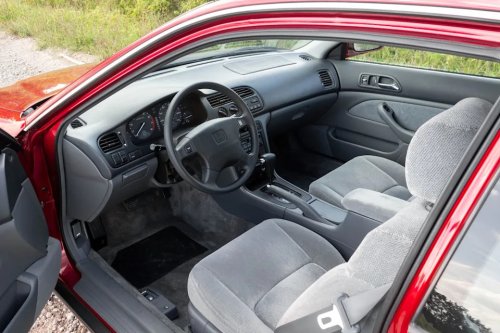
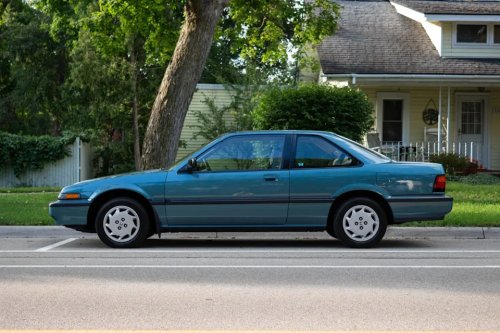
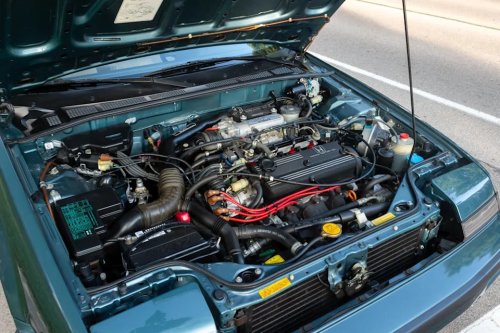





















These Two Pristine Honda Accords Have Still Got ItCaleb Miller - Car and DriverAs a kid, I dreamed of having a time machine. I was a history nerd who watched Cold War documentaries and taped Who concerts before school instead of cartoons. While I would have reveled in witnessing Pete Townshend smash a guitar in person, most of my time-machine fantasies (unsurprisingly) centered around cars. So, when Honda brought a pair of mint-condition Accord Coupes—one from 1988, the first year of the coupe, and another from 1994—to Car and Driver headquarters, it felt as if my dreams had finally come true.The Accord has a rich history in the United States and an especially long list of accomplishments here at Car and Driver. The Accord first went on sale in the United States in 1976. In 1982, it became the first passenger car from a Japanese automaker to be built in the U.S., and a year later, the Accord earned its first appearance on the Car and Driver 10Best list, a feat it would go on to achieve a record 40 times—and counting. These two Accord Coupes, both wearing VIN 001 and with under 1000 miles on their odometers, provide the closest glimpse possible of what Car and Driver editors of yore experienced when they named the model to their 10Best lists.Caleb Miller - Car and DriverStyle Sure Has ChangedThe nostalgia hits from 20 feet away. On modern roads, next to towering Ford F-150s and Jeep Grand Wagoneers, the two Accords look positively tiny. They also stand out in traffic for their clean designs. The rectilinear shape of the 1988 model and the bubblier surfacing of the 1994 model both present a stark contrast to the aggressively styled cars of today, which are creased by crisp lines, mouths agape with ever-bigger grilles. While you still see the occasional '90s Accord, the 1988 coupe is a truly uncommon sight today, and the pop-up headlights instantly identify it as a relic.Caleb Miller - Car and DriverSlide into the driver's seat, and the first thing you'll notice is the visibility. Modern cars have significantly thicker roof pillars, and for good reason, as these beefier reinforcements protect occupants in crashes. But the airy, fishbowl feeling you get inside these classic Accords has a calming effect—particularly in the 1988 coupe, whose upright greenhouse and plunging wedge-shaped nose provide an unobstructed view of the road ahead. These Accords show that you don't need blind-spot monitors with pillars this thin, since a quick peek over the shoulder gives you all the confirmation you need that the coast is clear. Just try not to think about what would happen if you were to get T-boned by a GMC Hummer EV.Caleb Miller - Car and DriverThe cabin of the 1988 Accord LX-i feels surprisingly nice. Most plastic is relegated to the lower half of the interior, and the doors are upholstered in a soft felt. The cloth seats are supremely comfortable, and the package is loaded with then-premium features, including cruise control, power mirrors, and power windows with an automatic driver's window. The steering wheel is thin, and instead of a horn where the Honda badge sits, there are four small horn buttons easily within reach of your thumbs.Caleb Miller - Car and DriverThe 1994 Accord EX feels a bit more plasticky inside, and the dark gray spec is less inviting, but the cabin is still a wonderfully tactile place. The steering-wheel horn buttons have been reduced to just two. There are loads of features, from power mirrors to a power sunroof, as well as power windows and cruise control. The cosseting cloth driver's seat has power-adjustable height, and by 1994, Honda had added a key interior feature: cupholders. Still, they are puny by modern standards. Both cabins also transport you back to a time before laptop-sized screens, Apple CarPlay, and AI voice assistants; they are filled with buttons and dials that emit satisfying clicks, and their analog gauges glow cool blue-green hues at night.The simple act of starting these classic Accords is a reminder of how much has changed. The keys are small and simple, devoid of buttons, just a plastic head and a metal blade. Rotate your wrist and the engine sputters to life. Starting a modern Accord Hybrid may feel more refined, but the four-cylinders under these hoods have a buzz that imbues the cars with a sense of eagerness to explore the open road.Caleb Miller - Car and DriverDriving the 1988 AccordThe 1988 Accord Coupe is an absolute peach to drive. The first thing that jumps out is just how plush the ride is. Michigan's notoriously pockmarked roads are often at odds with modern cars, which are set up to feel sporty and ride on ever-larger wheels. The '88 Accord, however, feels tuned with comfort in mind, and its 14-inch wheels mean there is plenty of tire sidewall to absorb road imperfections.But the soft ride means that when you do push the '88 Accord, you quickly discover a healthy amount of body roll. Still, the way the car leans when going around bends happens progressively, communicating your proximity to its limit. On a twisty back road, the Accord feels fluid and engaging. The steering is taut, with minimal play on center, and not particularly heavy but provides plenty of feedback. The steering ratio is quite slow, so you have to dial in quite a lot of steering angle through tighter turns, but it doesn't feel cumbersome.Caleb Miller - Car and DriverWhile some 1988 Accords made just 98 horsepower from a 2.0-liter inline-four engine, this LX-i example featured fuel injection, among other upgrades, bringing output to 120 horses and 122 pound-feet of torque. Those numbers are paltry by modern standards, but with a curb weight well under 3000 pounds, the Accord still feels peppy. It's not hard to keep up with modern traffic, as its rev-happy engine and manual transmission encourage you to zip along.The five-speed manual gearbox is the real highlight. The clutch is fairly light and the bite point is relatively high, but it quickly becomes second nature. The shift action is buttery, slotting into each gear without a fuss. The whole stick-shift dance feels incredibly natural, and if you've driven the latest Civic Type R, you'll know that is one thing that Honda hasn't changed.Caleb Miller - Car and DriverSix Years Later . . .The 1994 Accord EX shares many traits with the 1988 model, but while the ride is still comfortable, the car feels stiffer. There's noticeably less body roll and improved midcorner stability, but the car still strikes a nice balance between sporty handling and absorbing bumps. The steering has a bit more on-center play than the older Accord's, feeling especially light at highway speeds, but curvy back roads reveal a talkative, responsive helm.By 1994, the Accord had upgraded to a 2.2-liter four-cylinder with VTEC variable valve timing. The engine produces 145 horsepower and 147 pound-feet of torque, but it has to haul a few hundred extra pounds; this made the 1994 Accord feel more lethargic than its predecessor, amplified by a four-speed automatic gearbox that is reluctant to downshift unless you stomp on the gas. Get on it, though, and it still feels plenty swift, although I found myself yearning for the engagement of the older Accord's manual.Caleb Miller - Car and DriverWriting about new cars has a way of keeping you locked into the present, every day previewing another shiny new machine just around the corner. A weekend with two pristine classic Accords forced me to look into the past. It revealed a through-line all the way from the 1988 model's pop-up headlights to the current Accord's hybrid powertrain: a focus on practicality and quality without sacrificing driving enjoyment. Even in the context of modern cars, these time capsules prove that the 1988 Accord Coupe LX-i and 1994 Accord Coupe EX are still 10Best winners.Gift Guide: Best Ride-On Electric Cars for KidsFuture Cars Worth Waiting For: 2025–2029