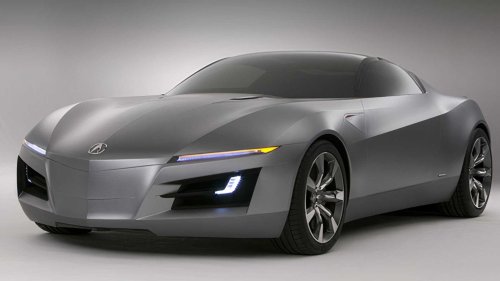
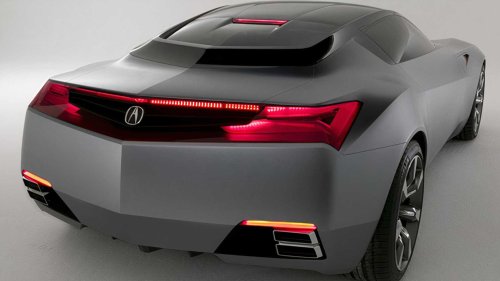
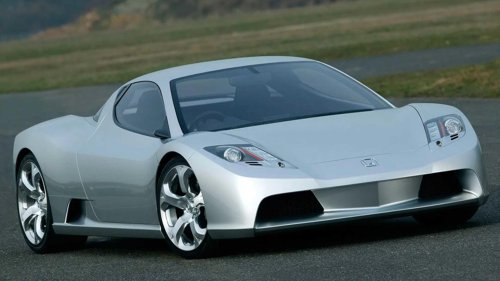
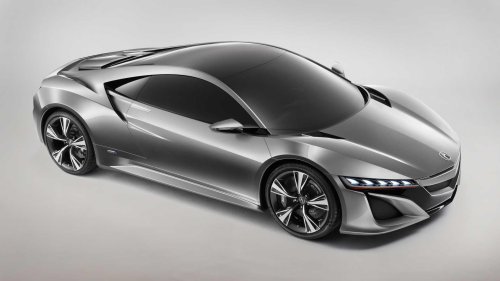
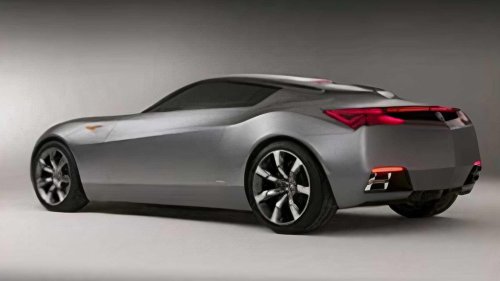
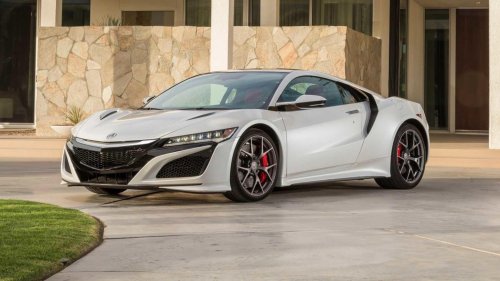
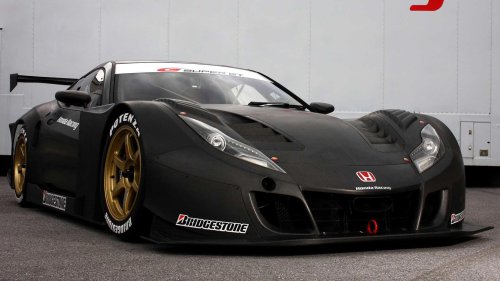
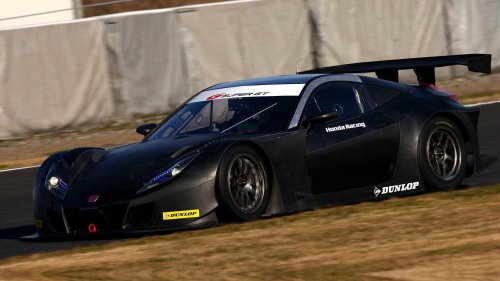

















When the V10 engine is brought up, a handful of cars are most likely to pop into every enthusiast’s mind, one of them being the Dodge Viper. This iconic American sports car is one of the most famous examples of a recent V10-powered vehicle relatively accessible to the ordinary driver. What many car enthusiasts might not know, however, is that Honda was once on the verge of producing its own rival to the Viper, complete with a V10 engine.A series of factors, primarily related to difficult economic circumstances, made it impossible for this car to reach the production stage. However, it remains a fascinating glimpse into what could have been. Let’s take a closer look at this interesting concept car, as well as a race car that’s closely related to it. The Advanced Sports Car Concept: The Acura That Never Was AcuraThe Advanced Sports Car Concept (ASCC) was a 2007 concept car that Honda introduced at the North American International Auto Show in Detroit. It was originally intended as a preview for a future second generation of the NSX, though things did not quite play out that way. The NSX did eventually end up getting a very different second-generation model.Unlike the mid-engined first-gen NSX, the ASCC had a front-engined layout. The engine in question was a 5.0-liter V10, said to produce an output in the region of 450 horsepower. This was a massive jump up from the first-generation NSX, which even in its most powerful form produced 290 horsepower. Further details on the mechanical aspect are fairly scarce, and we do not know what transmission the V10 engine was paired with.AcuraThe ASCC got a lukewarm reception when it was revealed. Not only was the introduction of the new engine an unexpected move, but the car also had an unusual-looking design, which attempted to blend classic and modern design cues in a slightly clumsy way. The design of the pop-up headlights that characterized the first-generation NSX was referenced in the ASCC's slim LED headlights. The appearance of the car was smooth, with flush door handles and no visible grille. More reminiscent of a digital render than a real-life car, the ASCC looked slightly unfinished, with a silhouette that was intended to be sleek and agile but came across as somewhat blob-like.Only a year after the ASCC had made its debut, disaster struck. The effects of the 2008 financial crisis on Honda’s operations, combined with growing environmental awareness that stopped the V10 from being a viable engine choice, resulted in the concept never becoming a production model. How The ASCC And Its Demise Fit Into The Journey That Led To The New NSX Honda The ASCC was not the first concept car that attempted to imagine what a successor to the NSX could look like. The car that claims that title had arrived in 2003: the Honda Sports Concept (HSC). A mid-engined car with a V8 engine, the HSC had a design that took inspiration from the classic NSX. However, Honda later explained the concept was more intended as a general exploration of design possibilities.Acura Why Did The ASCC Not Make It To Production? AcuraThe ASCC did not end up serving as the inspiration for the NSX’s second generation, as Honda’s original plan intended, due to the combination of two core factors: the 2008 financial crisis and the automotive world’s sharp pivot towards environmental concern.The 2008 crisis left no part of the global economy untouched. Automakers were forced to adapt quickly to survive, changing their plans for the future and modifying their lineups. In America, the “Big Three” of automotive manufacturing were hit heavily by the circumstances. Both General Motors and Chrysler came close to bankruptcy, and several of their brands became casualties of the crisis. Ford, meanwhile, sold off several of the brands under its umbrella.On the other side of the world in Japan, a similar situation played out. Honda’s plans included the introduction of the high-end Acura sub-brand to the Japanese market. This operation had to be canceled, and the Acura name is only just now beginning to make its way to Japan nearly 20 years later. The plan to turn the ASCC into a new NSX was similarly shot down as part of the restructuring effort.Acura Economic circumstances were not the only factor at play, however. The concept car had arrived at the wrong time. The early 2000s were characterized by a change of direction for the automotive world, which increasingly began to show environmental concern as emissions regulations tightened and public opinion shifted. By the time the ASCC had been unveiled, it was becoming increasingly clear that a V10-powered sports car did not have much of a long-term future. Even the Dodge Viper, symbol of all-American brawn, only lasted for one more generation before being discontinued in 2017.As a result of this growing pressure, combined with its financial struggles, Honda decided to pivot towards a hybrid powertrain for the second-generation NSX. This decision ultimately proved to be the wrong one, as the new model failed to live up to its legendary predecessor. What Acura Made Instead: The HSV-010 GT Race Car HondaAll the work that went into creating the ASCC and its V10 engine may not have resulted in a production model, but it found a different outlet in the motorsport world. Three years after the concept car had made its debut, Honda unveiled a race car which drew design inspiration from the ASCC: the HSV-010 GT. The car competed in the GT500 class of Super GT racing, and parts of its design and aerodynamics were pulled from the ASCC project. Its name, HSV, stood for Honda Sports Velocity.Honda was able to use a quirk in the regulations to its advantage when bringing the HSV-010 to life: while Super GT race cars normally had to be based on a production car, the automaker was able to use the ASCC’s design as a base on the grounds that it was production-feasible.Honda The HSV-010, however, was only similar to the ASCC on a fairly superficial level. Under the skin, it had some very different features, including carbon fiber bodywork and a race-ready carbon fiber monocoque. The V10 engine that had defined the ASCC was absent in the HSV-010, which sported a 3.4-liter V8 instead in order to comply with GT500 regulations of the time. The engine had an output of around 500 hp, was limited to 10,000 rpm, and was paired with a paddle-shifter synchromesh gearbox.The HSV-010 enjoyed a four-year racing career, during which it managed to rack up a championship title, five wins, and 11 podium finishes. Its successor, which arrived in 2014, was based on the car the ASCC could have been: the second-generation NSX.Sources: Honda