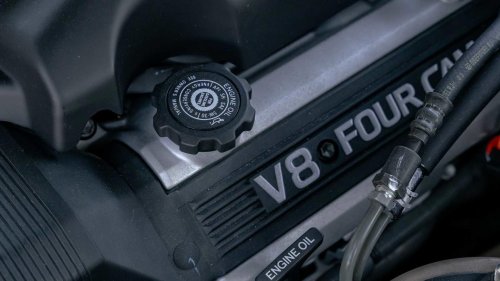
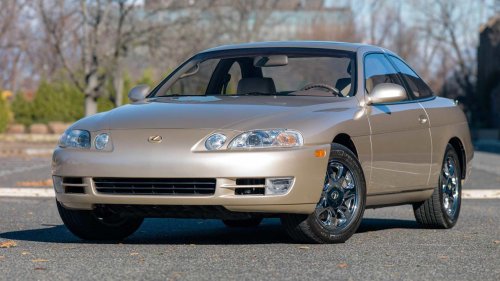
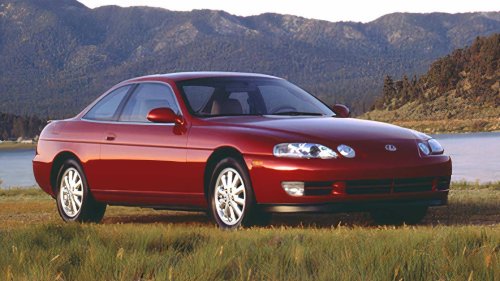
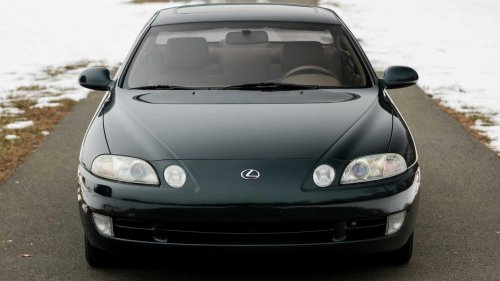
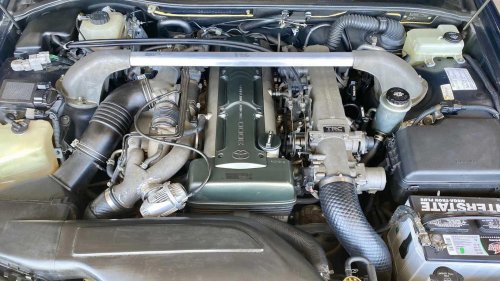
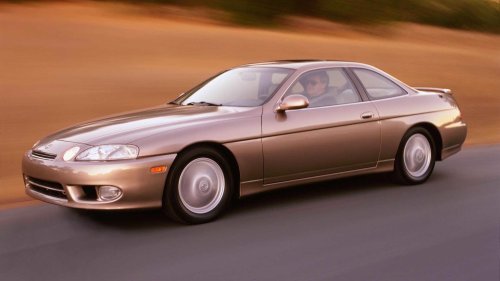
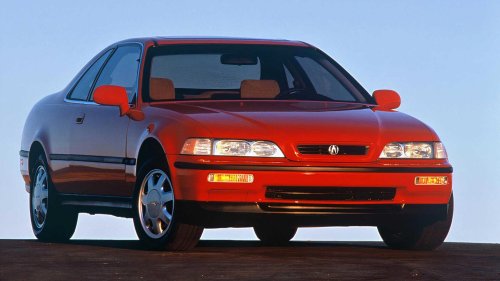
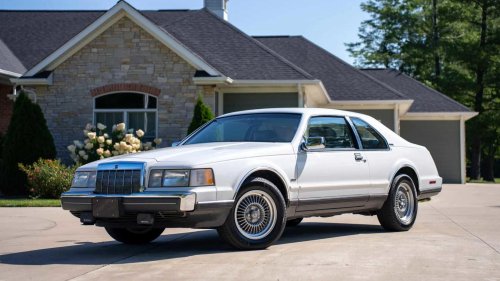
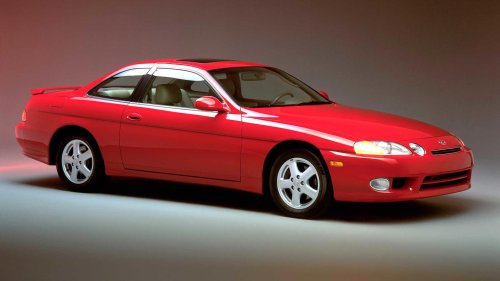



















When it came to producing engines, the reputations of which would last long after their service lives ended, Toyota was near the front of the pack in the 1990s. You really don't have to think about it long before you'll come across mills like the 1UZ-FE V8, most famously found within the Lexus LS 400. There was also the 22RE, an extremely reliable, let alone famous, four-pot that earned its stripes under the hoods of the Tacoma and 4Runner.However, typically, you find only one famous engine offered per car model, as the odds of having two legendary powerplants offered by the same nameplate are quite small. Lexus, though, managed to do just that. In the early 1990s, the luxury brand released the SC. It was a luxury coupe loosely based on the Toyota Supra. Its claim to fame? During its first generation, it offered both the 2JZ straight-six and the 1UZ-FE V8, two engines that deserve spots in the proverbial engine hall of fame. The Holy Grail Of Hidden Gems Bring A TrailerIn 1989, Lexus hit the market for the first time. In short, the brand was Toyota's all-in attempt to break into the American luxury market. At the time, the US was ripe for new luxury brands, as its own domestic producers were consistently losing business to foreign luxury automakers, namely BMW and Mercedes-Benz. As for Japanese-bred competition, Honda's luxury arm, Acura, had already been operating in the States since 1986.Bring A Trailer Lexus' first model was its flagship, the LS 400. Shortly after came the ES 250, a mid-size entrant based on the Toyota Camry. Then, coming in third place was the Lexus SC, whose name literally stands for "Sport Coupe". Lexus was dipping its toe into the ever-expanding world of 90s luxury coupes, as the market was already saturated with examples like the Acura Legend, the Buick Riviera, Jaguar XJS, and the Cadillac Eldorado. There were several others, as well.Lexus Immediately upon its launch, the Lexus SC was extremely well-liked by both critics and civilians. Its styling was praised for being minimalist enough to look like a Lexus, but exciting enough to convey a sense of modern sportiness. Motor Trend was captivated by the first-gen SC enough to name it the 1992 Import Car of the Year. Car and Driver was just as smitten, referring to the then-new Lexus SC as a "bulls-eye".Bring A Trailer After the SC had a couple of years under its belt, folks began to appreciate the fact that it was, in essence, a more luxurious Toyota Supra. However, you can argue that it might have been even better than the Supra, depending on who you ask, because it offered a V8 on top of the 2JZ straight-six. Although, of course, it doesn't have the extremely iconic looks of a fourth-gen Supra, which muddies the water a bit. But, Supra handling with a factory V8? You can't scoff at that. Two Fabled Engines 1992 Toyota Aristo 30v Kicking off the first-gen Lexus SC's powerplant offerings was that 3.0-liter 2JZ straight-six. It's a naturally aspirated unit, and carries the code name "2JZ-GE." The GE variant is the most popular of the 2JZ family, and has seen loads of use by models like the SC 300, the Lexus IS 300, and the extremely quirky Toyota Origin.The mill boasts things like a 24-valve valvetrain, sequential fuel injection, and a cast-iron engine block mated to an aluminum cylinder head. The 2JZ-GE also boasts a notoriously strong forged steel crankshaft, along with forged connecting rods hooked into cast pistons. SC models using the mill carry the model name "SC 300".However, depending on who you talk to, the engine of interest is probably the 4.0-liter 1UZ-FE V8 found in the SC 400. The mill was first made famous by being the engine of choice for the Lexus LS 400, and has since garnered a reputation for itself as one of the most reliable engines ever made. Anecdotally, the engine cost Toyota $400 million to design and produce back in the early 1990s.The engine features four total camshafts, a 32-valve valve train, and enough over-engineering to make sure it's still a relevant and well-sorted engine over 35 years later. The SC's version is virtually identical to the one found in the LS 400, save for some different mounting hardware.Lexus Handling either engine is a four-speed automatic transmission, which became a five-speed following the 1998 model year. However, another unique aspect of the first-gen SC was its optional use of a five-speed manual transmission until the 1997 model year.Sadly, though, the stick could only be optioned with the SC 300, as Toyota didn't build the 4.0-liter V8 with a manual gearbox application in mind. The first-Gen SC also takes advantage of rear-wheel drive and a fully independent suspension setup. You could also have Toyota's TRAC traction control system as an option.While sales were strong during the first half of the first-gen SC's life, things began to take a turn for the worse around 1995. That year, sales began to dip sharply, alarmingly, even. For context, Lexus managed to shift roughly 20,667 examples of the SC during its first full model year, 1992.However, just three years later, sales had fallen by about half. Come 2000, its final model year, the SC sold just 631 times, just four percent of its initial 1992 high. After that, Lexus replaced the SC with the second-gen iteration, the SC 430. For those in-the-know, the second-gen variation is considered by some to be one of the worst cars to come out of the 2000s. How It Stacked Up Let's take a look at just how well the Lexus SC compared to some of its competitors during its debut model year. We know it offered impressive power numbers and a quick 0–60 mph time, so it's important that other automakers were able to keep up with the Supra in a nice suit. 1992 Acura Legend Coupe Acura NewsroomThe Legend was, in essence, the Lexus SC's cheaper distant cousin. In 1992, the Lexus SC 300 fetched a starting price of about $32,700, whereas the base Legend "LS" coupe was about $31,850. While this is a positive in favor of the Legend, a gigantic downside immediately became apparent: no manual transmission option.The lack of a stick puts the Legend out of contention for many would-be sports coupe buyers, especially back in the early 1990s. Not to mention, the Legend didn't offer a V8 option. 1992 Lincoln Mark VII Bring A TrailerNext up was one of the Lexus SC's closest domestic competitors, the Lincoln Mark VII. The Lincoln Mark Series was already an extremely well-established and popular name in the US, but its influence had waned significantly since the height of its popularity some decades earlier. It was struggling to compete in a new world full of sloping, foreign cars with its boxy, old-school look. Not to mention, its tired 5.0-liter V8 was evenly matched by the Lexus SC 300's 3.0-liter six regarding horsepower output. Its starting price was about identical to the SC 300's at around $32,600 in 1992. The Most Humble 1990 Japanese Icon LexusThe Lexus SC never wanted to be a tuning car icon, nor did it want to be associated with the Toyota Supra, at least not at first glance. It merely wanted to provide owners with an unmatched level of luxurious sportiness, along with an esteemed level of reliability from either of its two famous engines. All hyperbole and jokes aside, there aren't many cars out there that managed to offer two legendary engines side-by-side at the same time, but the first-gen Lexus SC did, and it also managed to look great, remain humble, and go fast while doing it.