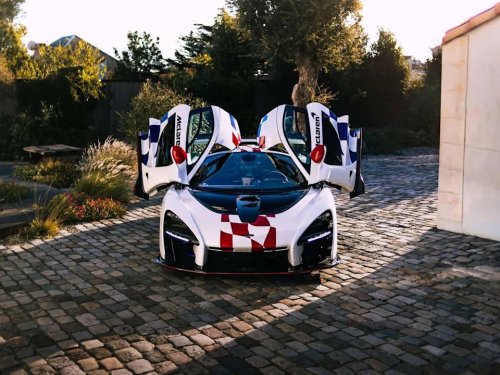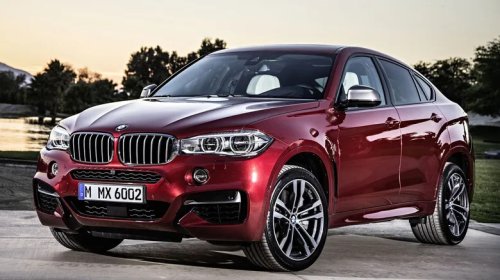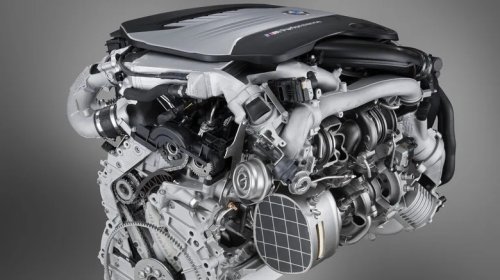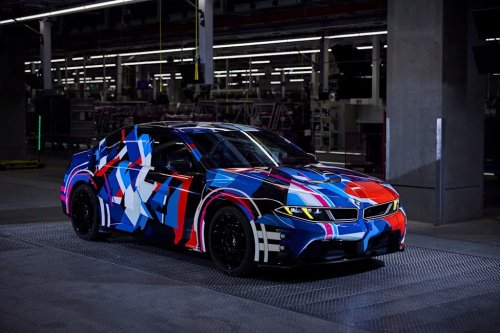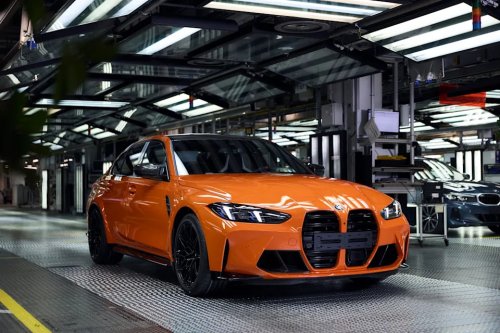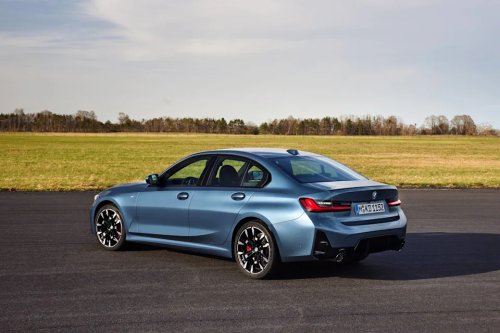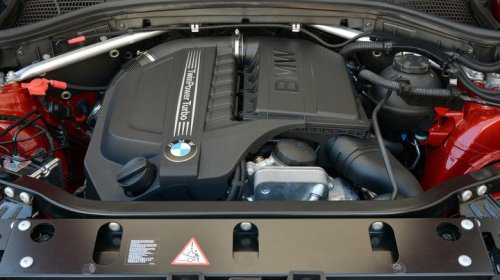
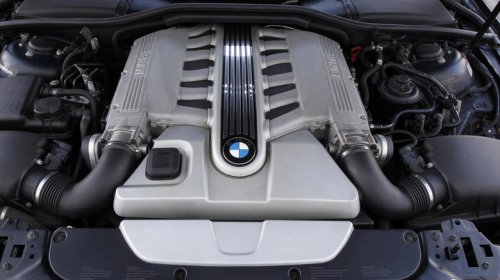
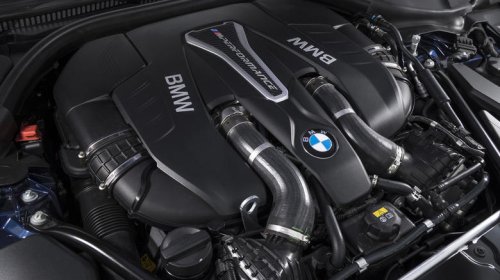
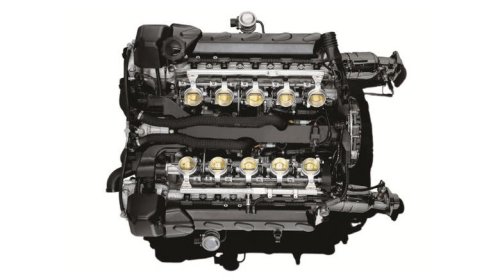
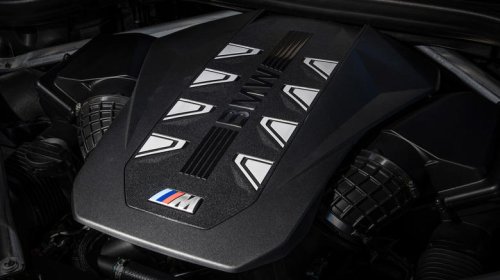
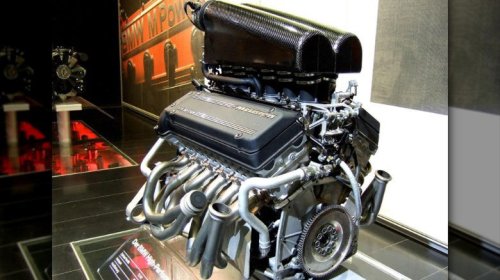



















BMW N55 Inline-6 – 452 horsepowerThe N55 engine appeared in a variety of BMW models, but its most potent form was in the Alpina B4 S Edition 99, where it made 452 horsepower (446 bhp). Its increased power output was thanks to a pair of high-performance turbochargers, a new intercooler, and some other, smaller tweaks. A new Akrapovič titanium exhaust also boosted the car's output and was exclusive to the Edition 99. However, very few buyers will ever be able to experience this ultimate iteration of the 3.0L N55 because only 99 examples were made.In its less potent form, the N55 could be found under the hoods of everything from bestsellers like the 3 Series and X3 to the Z4 roadster. It also appeared in larger models like the X5, X6, and 5 Series. It was produced between 2009 and 2018, and the Alpina B4 S Edition 99 was a fitting end-of-the-line tribute to its production run.BMW N73 V12 – 459 horsepowerBuilt from 2003 to 2016, the N73 was the third BMW V12, after the M73 and M70. The brand's first V12 was introduced back in 1987, and the N73 first appeared in 2003. It was featured in the fourth-generation 7 Series, where it made an officially claimed 445 horsepower (439 bhp). BMW bought Rolls-Royce in 1998, taking complete ownership of the brand from 2003 onward, and the N73 V12 played a key role in launching the new era of the British brand. It sat under the hood of the newly redesigned Phantom, which had been given a thorough overhaul to modernize it for a new generation of buyers.The Rolls-Royce N73 was larger than the unit in the 7 Series, with a displacement of 6.75L compared to the regular 6.0L. It was also more powerful, with over 459 horsepower (453 bhp) on offer thanks to Rolls-Royce's tweaks. The N73 was succeeded by the N74, which again featured in both the BMW 7 Series and Rolls-Royce models.BMW N63 V8 – 523 horsepowerThe N63 might not be the most reliable engine that BMW has made in recent years, but there's no doubting its power. It can be found under the hood of a range of high-end BMW models, including the X5, X7, and 7 Series, as well as the 8 Series and its Alpina-modified sibling, the B8. It's also found in some Range Rover models. Buyers favor the engine because of its potency and smoothness, though it's subject to a variety of problems that make keeping it in top condition tricky.It's been in production since 2008, and an updated version remains in production as of this writing. A key reason for its longevity is that it's relatively efficient in V8 terms, helping BMW to meet its global emissions targets while still providing demanding customers with the power and prestige of a V8 engine. The most powerful variant makes 523 horsepower and has appeared in the M850i xDrive.BMW S85 V10 – 555 horsepowerBMW's only V10 engine is one of the brand's most powerful to date, with 507 horsepower on offer in its Euro-spec form. It appeared in the E60 M5 and in the E61 M5 Touring, which combined the power of the motorsport-inspired engine with the practicality of the 5 Series wagon. Alongside the new, groundbreaking engine, the M5 also featured several other technological innovations, including adaptive suspension. As well as the M5, the S85 was also available in BMW M's sister model, the M6.It was never used in another BMW model outside of the M5 and M6, although its design formed the basis of the S65 V8 that was used in the E90 M3. However, it was borrowed by boutique carmaker Wiesmann for its MF5 supercar. Wiesmann tweaked the engine further, resulting in an officially claimed output of 555 horsepower. Only 43 examples of the V10-powered MF5 were built, making it the rarest Wiesmann to date.BMW S68 V8 – 585 horsepowerThe S68 V8 is a recent addition to BMW's engine lineup. It is offered in range-topping cars like the X7 and XM. In the XM Label Red, the most powerful variant of the XM, it churns out 585 horsepower. In addition, the XM Label Red features an electric motor that pushes the powertrain's combined output to 748 horsepower. Peak power from the V8 arrives at 5,600 rpm, while peak torque is available from 1,800 to 5,400 rpm.The S68 was designed to replace the S63 in the M engine lineup after the latter was forcibly retired due to changing emissions regulations. Unusually for an M engine, plans for the S68 include making multiple trims available for some of its models. This was reportedly meant to make developing the engine more cost-effective — rather than reserve it for the top M-badged versions of every model, using it in a wider variety of variants helped to justify its high development costs. That ensured that developing a next-gen V8 was feasible for BMW in the face of impending electrification, while other manufacturers have chosen to halt the development of their V8 engines or even phase them out altogether.BMW S70/2 V12 – 618 horsepowerArguably the most famous BMW V12 engine of all is one that never appeared in a BMW-badged car. The S70/2 V12 was developed by BMW's M division specifically for the McLaren F1 and generated a whopping 618 horsepower. That was an unprecedented figure for a naturally aspirated V12 engine at the time, and it remains equally impressive today. In fact, the F1 is still the fastest naturally aspirated car ever built, and given that the electric revolution is now well underway, it seems unlikely that it will ever be beaten.It propelled the F1 to a top speed of 240.1 mph, a record at the time. Despite its groundbreaking performance, the F1's extremely high price kept production numbers very low. Only 106 examples were built, and the fact that the S70/2 never appeared in any other production car makes it one of the rarest BMW engines ever.