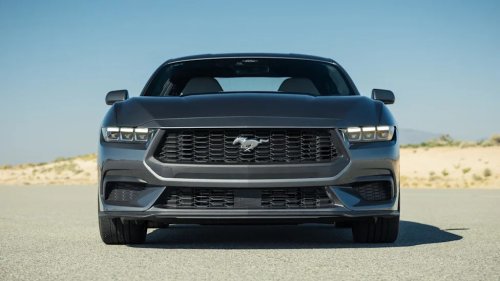
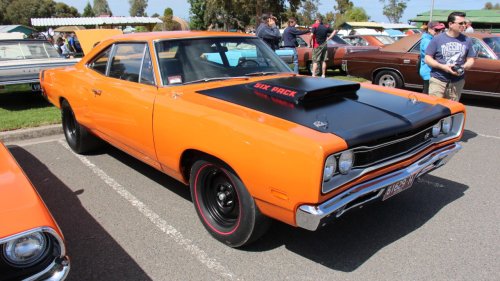
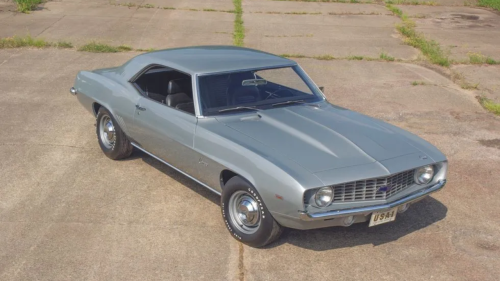
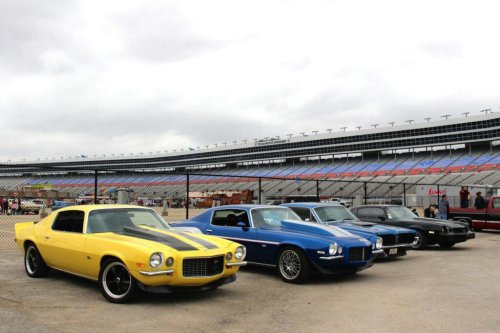
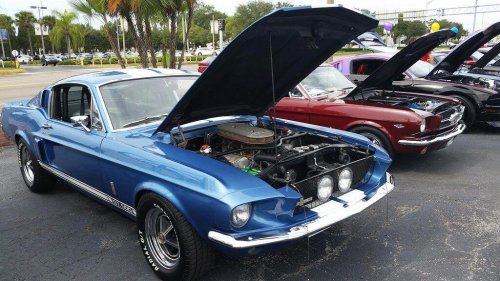
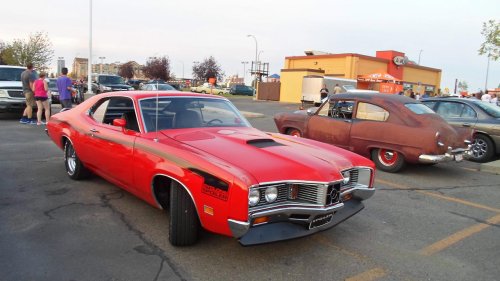
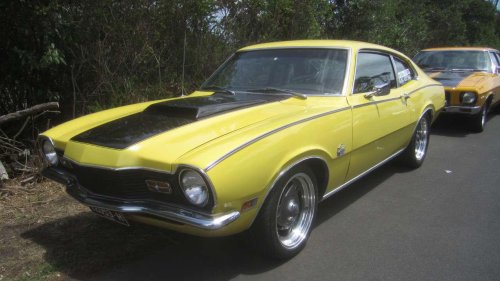
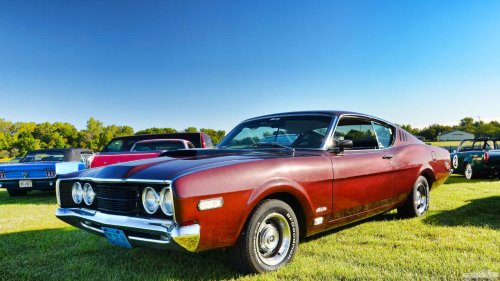
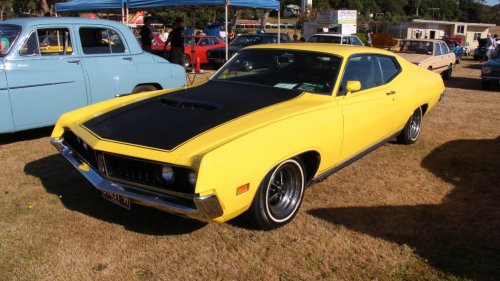
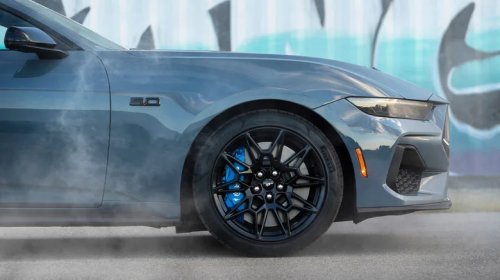
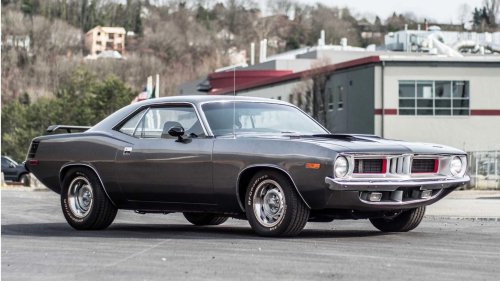
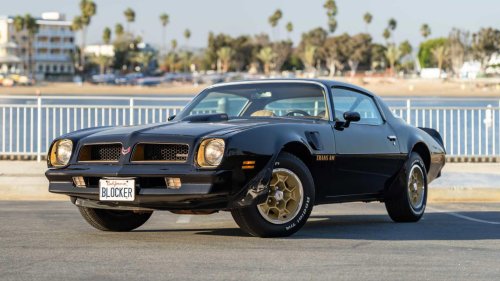
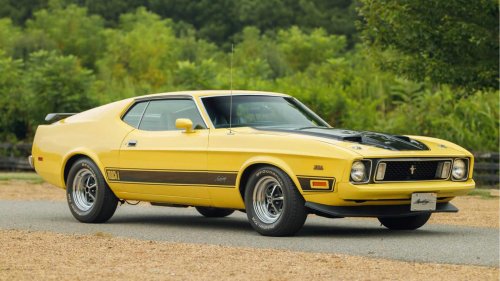
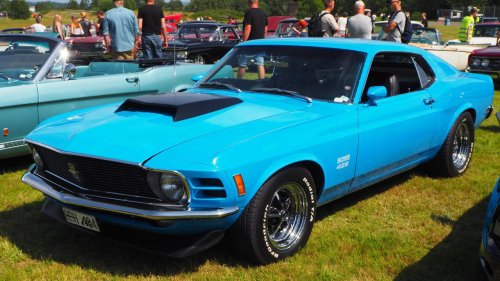
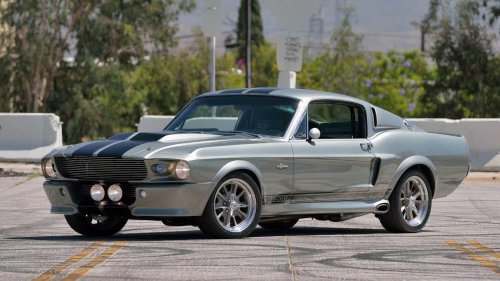
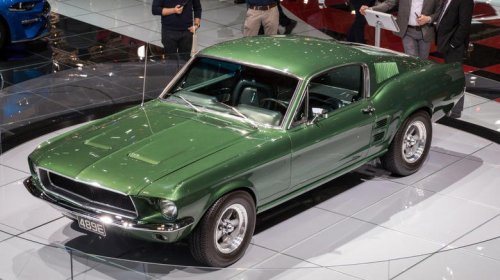
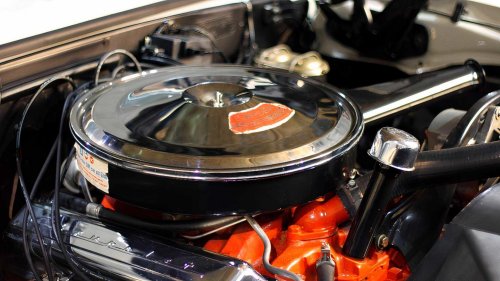
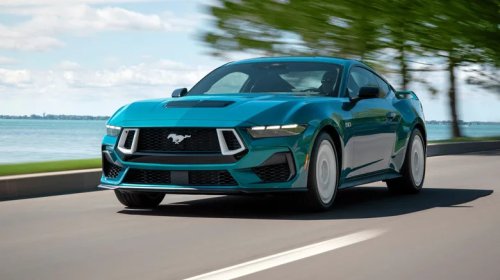
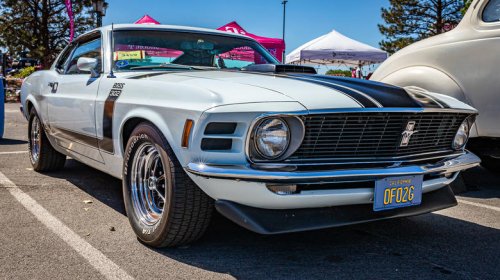
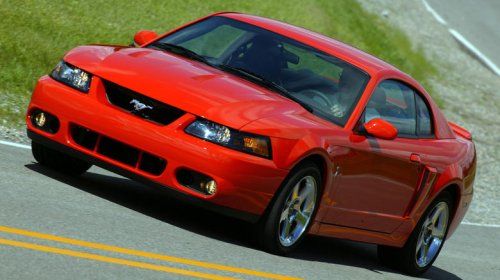
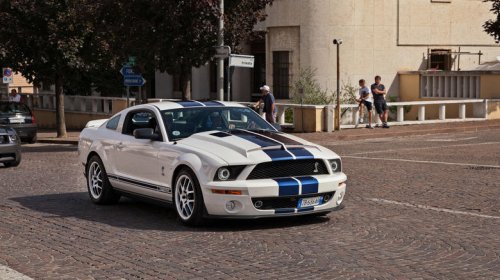
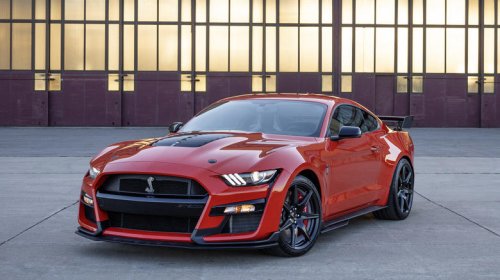
Boss 302When the Mustang first appeared in the 60s, Ford wanted to take it racing. The Mustang was always quite good at the Trans Am series, but in the late 60s, it was time to give the powertrain a pretty big overhaul. This engine had to fit into the displacement regulations, and also show the competing Camaro who was boss. Literally. Ford developed the Boss 302 primarily to take the Mustang racing, but of course, there was a road-going version too.The original Mustang Boss 302, sold in 1969 and 1970, was named after its newly designed engine, the Boss 302. As the name implies, it displaced 302 cubic inches (or 4.9 liters), and it was rated at a decent 290 hp from the factory. This matched the figure put out by the competing Camaro Z/28, but in reality, the Boss 302 was capable of putting out way more power. Test mules from back in the day could easily push over 300 hp.Obviously, the most notable and only application of the Boss 302 engine was the Mustang Boss 302. The super short-lived and super limited Boss 302 remains one of the most valuable Mustangs to this day, and the Boss 302 engine was an absolute rocketship both on the road and the race track. It isn't, however, the most elusive of the Boss Mustangs.4.6-liter supercharged Modular V8The SN-95 Ford Mustang arrived in 1994, and it brought along some pretty major improvements over the Fox Body that preceded it. One thing is for sure though, the SN-95 Mustang kickstarted the muscle car horsepower war that still wages today, with the Terminator Cobra. The initial SVT Cobra version was pretty good, and power picked up a little bit throughout the years. Things got serious in 2003, with the introduction of the Terminator Cobra.Arriving during the twilight of the fourth generation Mustang, the Terminator Cobra was the frontrunner of something that would become very common in the world of muscle cars: forced induction. From the factory, the 2003 and 2004 SVT Cobras stuck a supercharger on the 4.6-liter Modular V8, which debuted on the SN-95 Mustang and replaced the old small block 5.0 liter.The end result was 390 hp, which gave the engine a huge leg up on the previous Mustang SVT Cobra. What's more, the Terminator Cobra is known in the automotive community for how easy it is to squeeze more power out of, easily gracing 500 hp with the lightest of mods. To this day, the Terminator Cobra is one of the finest examples of the Mustang breed, and if the car is painted in the showstopping Mystichrome paint, also one of the most elusive and sought-after. 5.4-liter supercharged Modular V8After the Terminator Cobra caused a major splash with its supercharged V8 and pretty serious power output, Ford decided to up the ante for the Mustang's fifth generation. Rather than using the SVT Cobra name, it decided to adorn the flagship Mustang with a name it deserves: Shelby. The Shelby GT500 arrived for model year 2007, and in this case, 500 referred to the claimed power output. The era of the factory 500 hp Mustang was here.That power was made possible thanks to the much-improved powertrain under the hood. Displacing around 800cc more than the standard 4.6-liter Mustang, the 5.4-liter Modular V8 under the hood also added a supercharger for good measure, resulting in 500 hp. A pretty impressive figure, and one that was very difficult to put down thanks to the solid rear axle. Still, the GT500 did have its straight-line chops, as befits a muscle car.The 5.4-liter supercharged V8 actually had a few things in common with the unit that powered the original Ford GT. What's more, with a supercharger from the factory, you could squeeze much more power out of it, and really get that adrenaline pumping.5.2-liter Voodoo V8The sixth generation Ford Mustang, introduced for model year 2015, brought along some fresh styling to the legend, and while the powertrain remained largely the same for the Mustang GT, the chassis is where all the crucial stuff happened. After decades of using the archaic live rear axle, Ford finally moved the Mustang to a proper independent rear suspension setup that it desperately needed. This gave the Mustang the handling prowess it was missing, so naturally, a track-focused derivative was soon to follow.That arrived in the form of the Shelby GT350, another revival of an iconic badge from race-bred Mustangs of the 60s. The most notable thing about the Shelby GT350 was the engine, as Ford did the unthinkable: It gave the Mustang a flat-plane crankshaft. Previously, this type of crankshaft was reserved for the very best V8s that Italy had to offer. Now, you could have it in a Mustang.What did the flat-plane crankshaft give you? A redline of 8,200 rpm. The Voodoo V8 is a truly impressive powertrain, and with over 500 hp from the factory and plenty of headroom for additional power gains, it cemented the Mustang's changed personality and transformed it into a track demon. It was also paired exclusively with a manual transmission.5.2-liter Predator V8When the time came for the sixth generation Mustang to receive a Shelby GT500 derivative, Ford had to pull out all the stops. For one thing, the Mustang was a proper racehorse, rather than your average old straight-line pony car. Ford proceeded not just to give the GT500 even better handling hardware, but also to install the most powerful engine ever fitted to a production Ford model.Under the hood of the most recent Shelby GT500 sits a 5.2-liter supercharged V8 dubbed the Predator. Despite the similar displacement, the Predator is not related to the Voodoo, not least because the Predator uses a cross-plane crankshaft. With an incredible 760 hp and 625 lb-ft of torque, the GT500 is a proper monster. To ensure it was as fast as possible, Ford only let you have the GT500 with a dual-clutch automatic transmission, the first of its kind on a Mustang.The ridiculous, Hellcat-beating stock power figures speak for themselves, and of course, it's a treat for the ears too. The Predator is a very durable powertrain, and it's not difficult to extract even more power out of it — Just in case you think 760 hp is too pedestrian.



















 +2 others