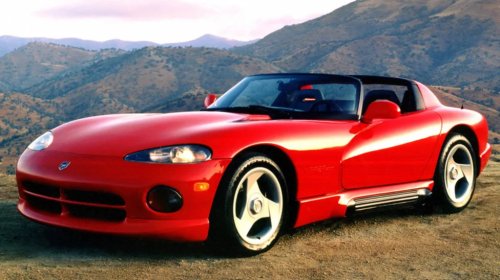
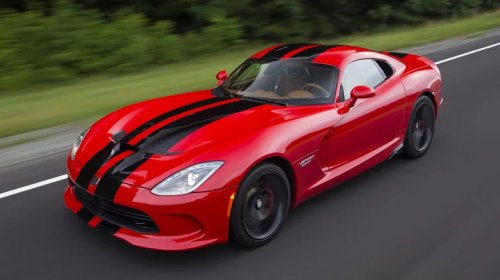
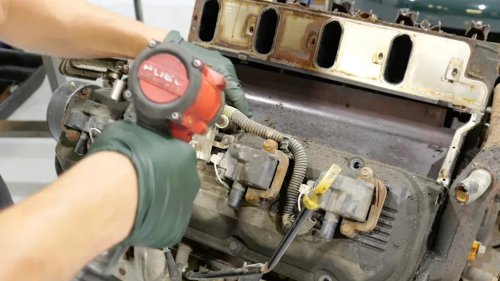
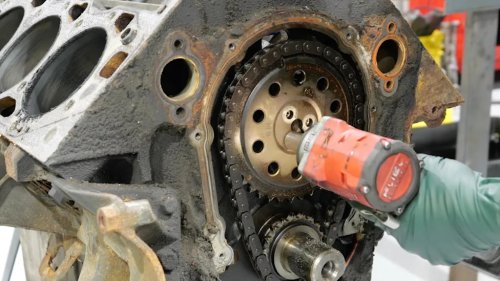
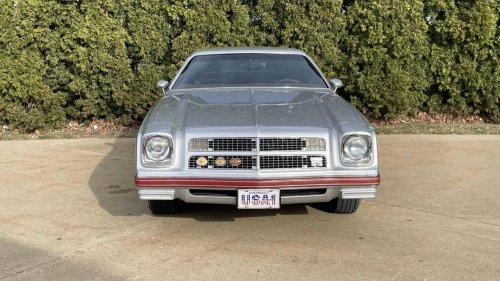
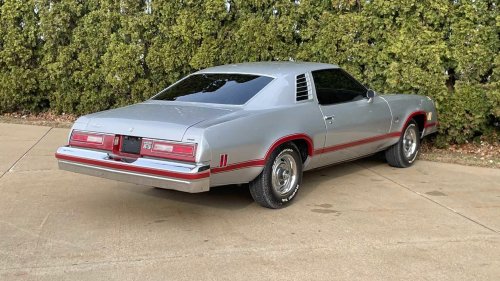
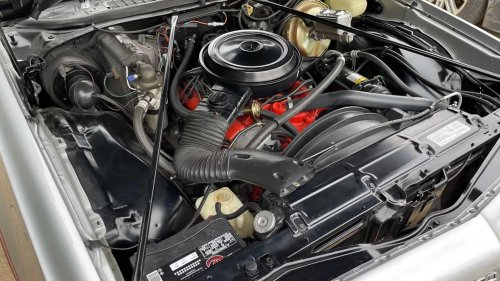
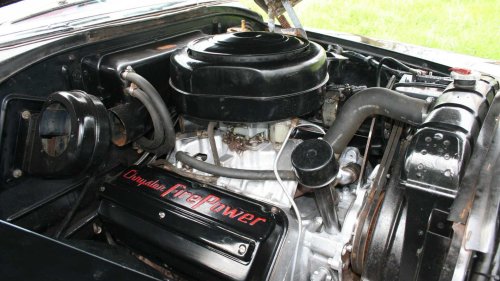
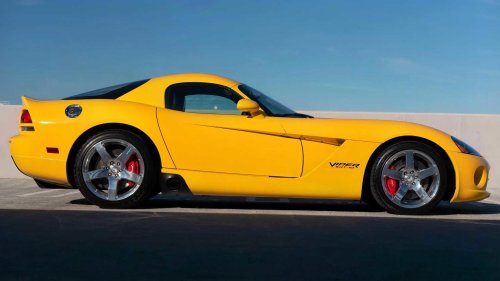
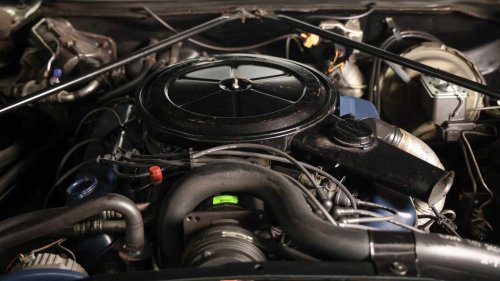
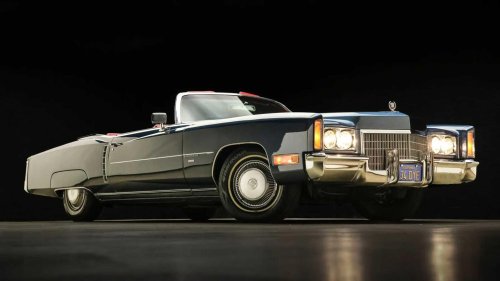
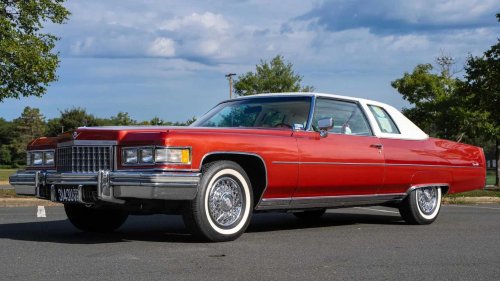
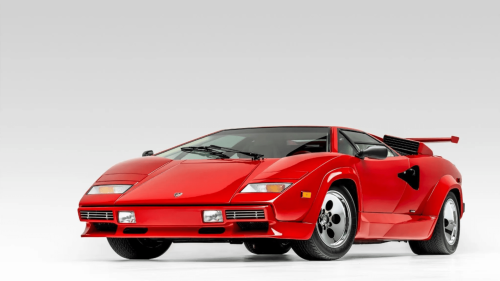
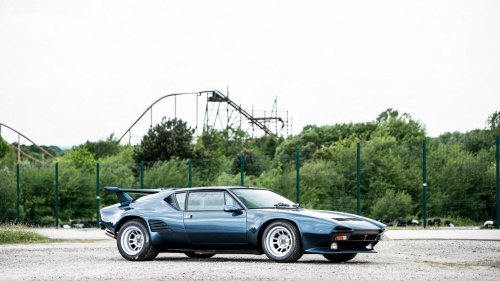
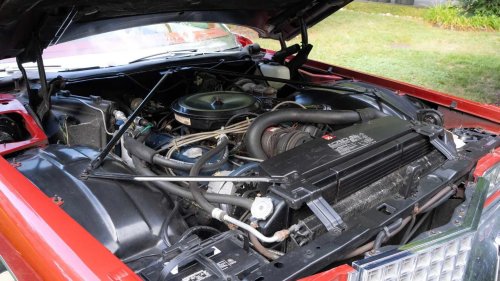
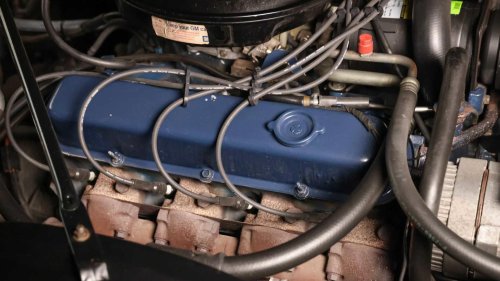
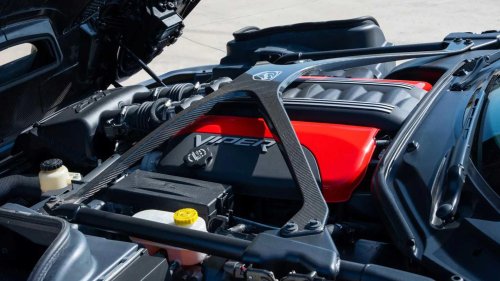
In the 1970s, performance headlines belonged to wedge-shaped supercars and exotic badges. Yet, the largest engine you could actually buy did not come from Italy or Germany, but it came from the USA. While sports cars chased revs, and racetrack credibility, General Motors leaned into scale and smoothness, building a V8 so large it eclipsed the displacement of most iconic supercars of the era.This was not a prototype or a short-run experiment. It was a production engine installed in everyday luxury cars driven across American highways. Understanding why Cadillac went this big reveals how differently performance was defined in the 1970s, especially just before the malaise era settled in. The Cadillac 500 V8 Was The Biggest Displacement Production Engine Of The '70s Via: Bring a TrailerThe Cadillac 500 V8 arrived in 1970 as a statement of scale that only American luxury engineering could justify. At 500 cubic inches, or 8.2 liters, it instantly became the largest-displacement V-8 ever offered in a regular production passenger car. Cadillac kept it in production through 1976, right as tighter emission rules and fuel economy pressures began reshaping the industry.With a displacement of 500 cu-in, Cadillac defined performance differently. Smoothness, effortlessness, and low-speed authority carried more weight than redline numbers or lap times. This engine delivered exactly that. Peak output varied by year and rating method, but torque remained the headline. Early versions from 1970-1971 made 365–400 hp and most of the 535–550 lb-ft of torque was available just off idle, which suited cars weighing north of 4,500 lbs. Why The Power And Performance Of The Cadillac 500 V8 Dropped After 1972 Via: Bring a TrailerIt is important to note, that early 1970s figures used gross ratings, measured without accessories or emissions equipment. By 1972, the industry switched to net ratings, which better reflected real-world output but made the numbers look smaller on paper. After 1972, the engine was rated at 190–235 hp and 360–385 lb-ft of torque. In addition to the change from gross to net ratings, Cadillac dropped the compression ratio from 10.0:1 to 8.5:1 from 1971.Where European supercars chased high-revving drama, Cadillac focused on relaxed speed and isolation. That philosophical split explains why displacement figures from this period still stick in memory. Eight-point-two liters simply sounds unreal, especially when most exotic cars of the same decade ran engines half that size. Cadillac Models That Used The 8.2-Liter Cadillac 500 V8 Via: Bring a Trailer The 8.2-liter Cadillac 500 V8 was not reserved for a single halo model. Cadillac spread it across much of its early-1970s lineup, making this enormous engine surprisingly accessible by luxury standards of the time. Buyers did not need a special order or a limited-edition badge. They simply chose the biggest engine available. Cadillac Models Powered By The 500 V8 Via: Bring a TrailerCadillac Eldorado: The most technically interesting application. Cadillac paired the 500 V8 with front-wheel drive, a rare setup for an engine of this size. The Eldorado proved the engine’s flexibility and helped define Cadillac’s personal luxury image. Cadillac DeVille: Offered in coupe, sedan, and convertible body styles, the DeVille represented the heart of Cadillac’s sales volume. Cadillac Fleetwood: Positioned above the DeVille, including the Fleetwood Brougham, with an emphasis on ride quality and rear-seat comfort. Cadillac Calais: The entry point into Cadillac ownership, yet still eligible for the brand’s largest engine. Most versions paired the engine with a Turbo-Hydramatic automatic transmission and rear-wheel drive, aside from the Eldorado’s front-drive layout. These cars targeted buyers who valued quiet strength over flash, often long-distance highway drivers who expected durability and minimal effort.Via: Bring a Trailer In real-world use, the engine earned a reputation for longevity when maintained properly. Owners of these Cadillac record-setting 500 V8-powered cars remember effortless passing power and low-stress cruising rather than outright speed. That everyday usability explains how an engine this large ended up in so many driveways, and why it remains such a striking footnote in American automotive history. Even 1970s Supercars Had Smaller Engines Than the Cadillac 500 V8 Bring A Trailer Calling it the biggest production V8 ever is not about bragging rights or straight-line speed. In the same decade that Europe produced some of its most iconic supercars, none of them came close to Cadillac’s displacement. These cars defined performance for their era, which makes the comparison fair and revealing. High-Displacement 1970s Supercars That Still Came Up Short Bonhams Cars1974–1990 Lamborghini Countach: V-12 engine: 3.9-4.8 liters 1973–1976 Ferrari 365 GT4 BB: Flat-12 engine: 4.4 liters 1971–1992 De Tomaso Pantera: Ford Cleveland V-8: 5.8 liters Take the Lamborghini Countach. Early versions ran a 3.9-liter V-12, later growing to 4.8 liters. It delivered drama, revs, and speed, but not size. The Ferrari 365 GT4 BB followed a similar path with a 4.4-liter flat-12 designed for balance and high-speed stability rather than sheer displacement. Even the De Tomaso Pantera, often cited as the muscle car of the supercar world, topped out at 5.8 liters with its Ford 351 Cleveland V-8.These supercars represented the best of European manufacturers that chased speed, handling, and racing credibility. Cadillac chased something else entirely. Its engineers prioritized low-rpm torque, smooth operation, and the ability to move heavy luxury cars without effort.A simple table makes the contrast obvious: mid-engine exotics clustered between 4.0 and 5.8 liters, while Cadillac sat alone at 8.2 liters. Displacement alone does not define performance, but it does define priorities. In the 1970s, no production supercar needed an engine that large to achieve its goals. Cadillac did, because its goals were fundamentally different; which was effortless cruising. Why The Cadillac 500 V8 Could Exist In The '70s, But Not Today Via: Bring a Trailer The classic American big block V8 reached its peak just before the industry changed direction. After 1976, tightening emissions standards, fuel economy regulations, and shifting buyer expectations made engines like Cadillac’s 8.2-liter V8 increasingly difficult to justify.Federal emissions rules required catalytic converters, lower compression ratios, and cleaner combustion. Fuel crises pushed manufacturers toward efficiency. By the late 1970s, even Cadillac began downsizing, moving to smaller-displacement engines derived from the same architecture.Via: Bring a Trailer Modern performance follows a different formula. Turbocharging, direct injection, and hybrid assistance allow smaller engines to make more power than ever, with far less displacement. Under today’s regulations, an 8.2-liter naturally aspirated V-8 would struggle to meet emissions targets or fuel economy standards at scale. That is why no manufacturer under General Motors or otherwise has attempted anything similar since.Via: Bring A Trailer It would not be until 2002 that Dodge surpassed Cadillac’s benchmark, when the second-generation Dodge Viper arrived with an 8.3-liter (506.5 cu-in) engine. Unlike Cadillac’s V-8, the Viper used a V-10 layout, signaling a very different performance philosophy. In later iterations, the Viper’s engine grew further to 8.4 liters (512 cu-in). While that made it one of the largest-displacement engine fitted to a road car, the Cadillac 500 V8 remains unmatched as the largest V-8 ever offered in a regular production passenger vehicle.Yet, even today, the Cadillac 500 V8 still remains the largest displacement V8 in series production. It represents a moment when engineering freedom, consumer expectations, and American car culture aligned. For enthusiasts, it stands as a reminder that performance once meant effortless torque and quiet authority, not just lap times or horsepower per liter. That is why this engine remains unmatched, and why it still earns respect decades later.Sources: Cadillac, General Motors, Bring a Trailer.





















 +32 others