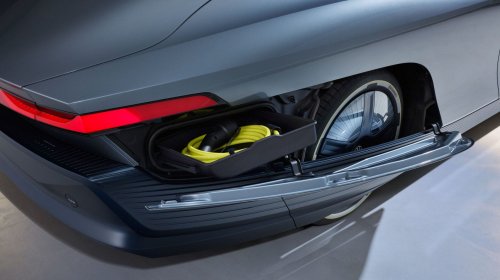
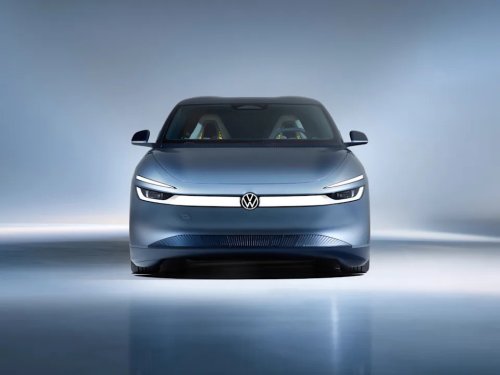
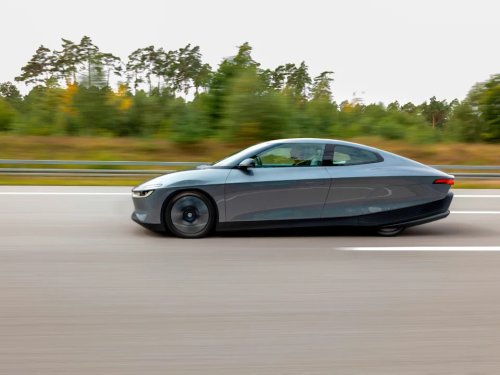
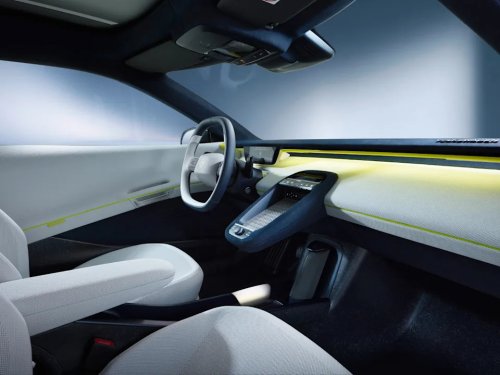
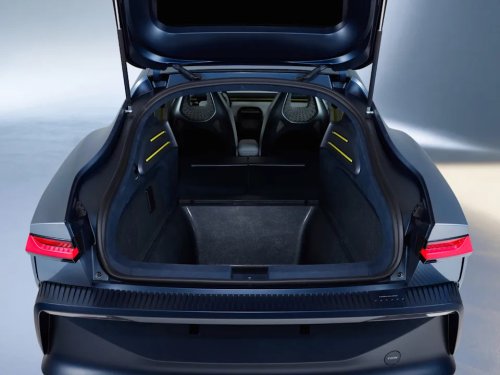
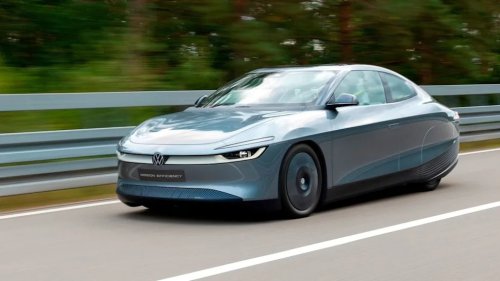
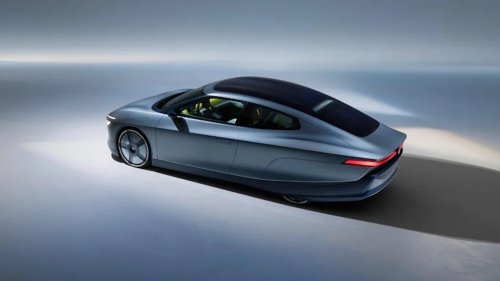
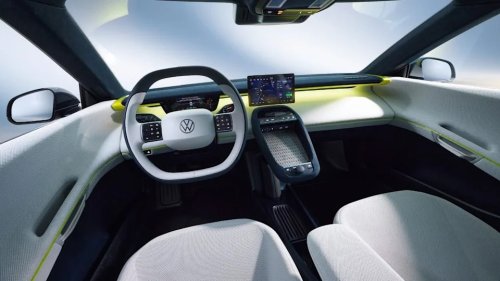
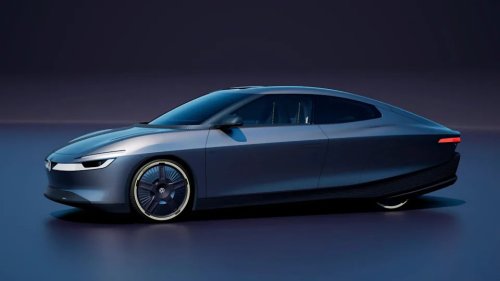
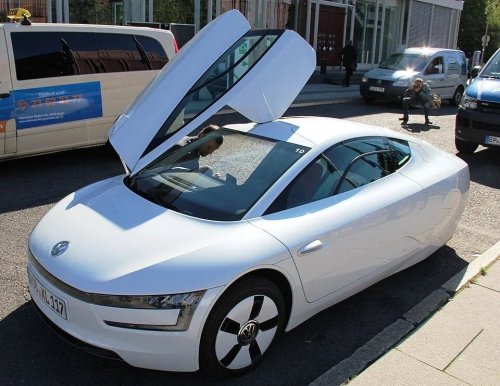
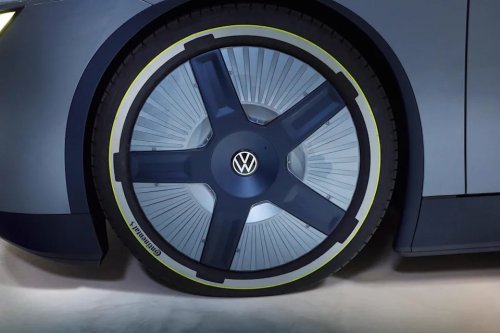
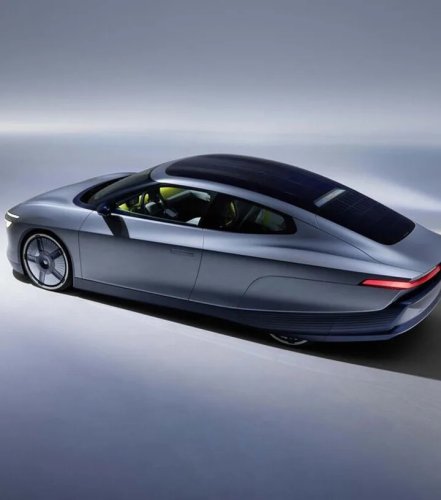
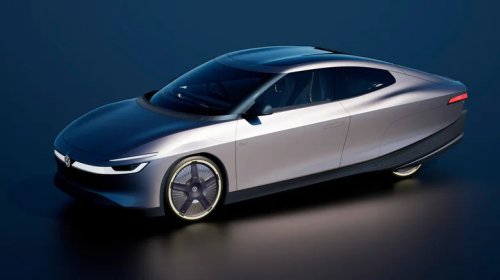
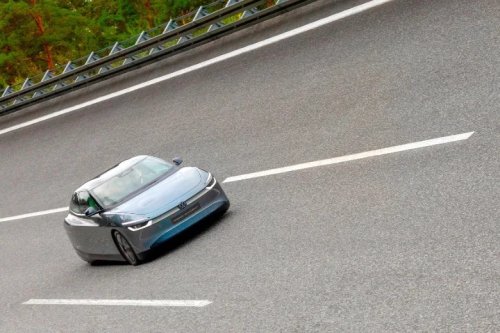
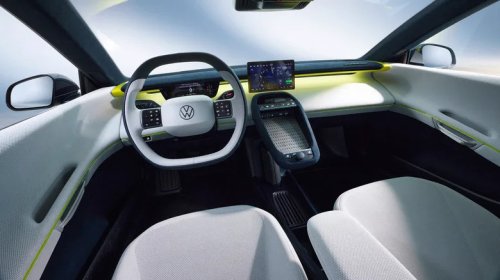
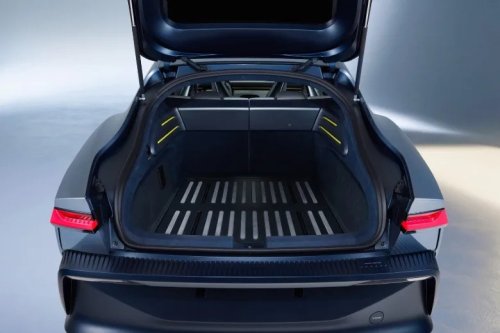
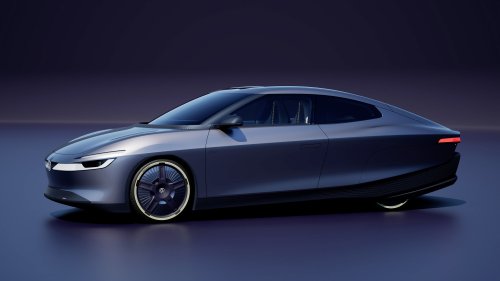
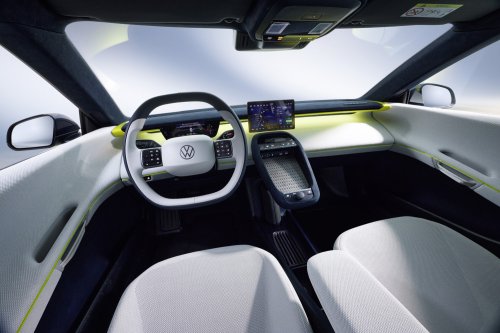
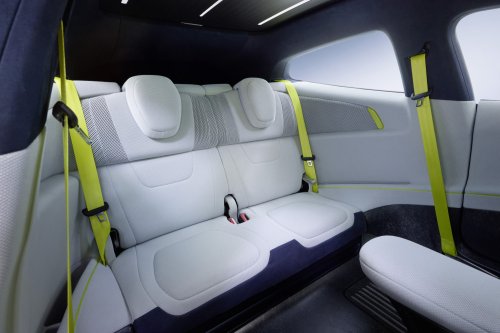
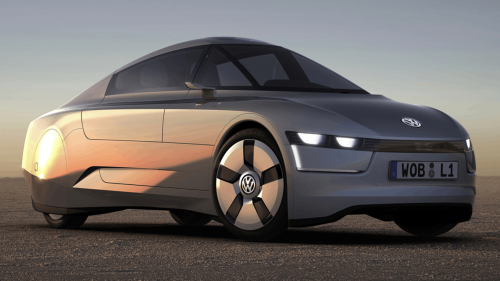
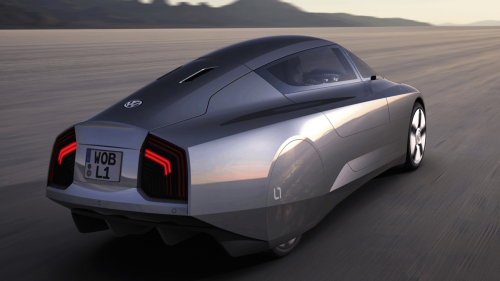
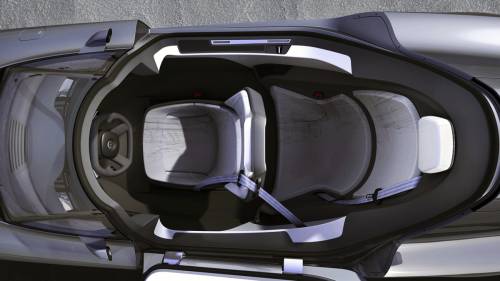
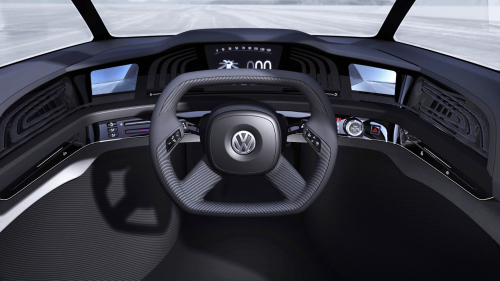
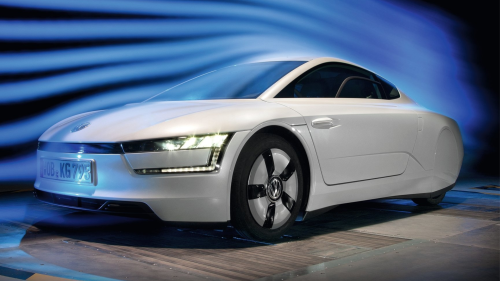
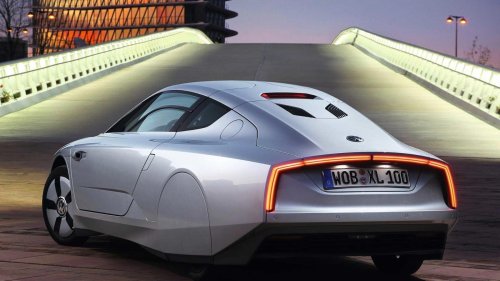
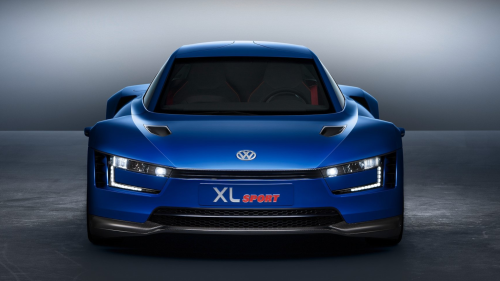
You know the Volkswagen XL1, the six-figure, gullwinged car with a carbon fiber tub… and 68 horsepower. It was designed as the most fuel-efficient production car built, and it succeeded. A few years before that car came into production in 2013, though, the concept of a compact, lightweight, hyper-focused, efficient car had been teased by VW, and it’s one you probably never even knew existed. Volkswagen L1 Concept VolkswagenThe history of the ultra-efficient VW stretches back to 2002, with the prototype 1-Liter Concept being revealed. This was a tiny, streamlined two-seater car that proved VW had the capability to build a car that could cover 100km on one liter of fuel. That’s 62 miles on just over a quarter of a gallon.Although an impressive technical showcase, nobody really expected it to advance to anything close to production. At least that was the case until 2007’s Frankfurt Motor Show, when then-VW boss Ferdinand Piëch announced plans to put a derivative of the car into production before the end of the decade. It would take another two years to see the evolved form of those plans, with the reveal of the Volkswagen L1 Concept. Similar in purpose, but dramatically more evolved from its original prototype stage. What Was Its Purpose? Volkswagen Just like the original, the purpose of the Volkswagen L1 was to build a car capable of traveling 100km on one liter of fuel, though this time, with the intention of putting it into production. While its form factor remained reminiscent of the original 1-Liter Concept, its styling had evolved to look more futuristic and ready to hit the road. Aggressive-looking, narrow headlights brought it in line with VW’s styling direction at the time, although it did retain a similar, incredibly tight rear and Honda Insight-esque aero wheel covers of that 2002 concept. Small In Size, And In Space, But Big In Tech Volkswagen It was a tiny, tiny car, measuring just 12.4 feet long, 3.6 feet tall and 3.9 feet wide. Shorter than a VW Fox hatchback, as low as a Lamborghini Murcielago, and narrower than any production car of the time. Yet, it remained a two-seater, thanks to the carryover of the unconventional tandem seating position. We can’t say the rear seat looked particularly appealing for a short journey, but it was certainly there.Despite being so small, the L1 packed some incredible technology in its construction. It utilized a carbon fiber reinforced plastic monocoque chassis, while the exotic material was used for the front seat and for its futuristic bodywork. As a result, the whole vehicle weighed just 838lbs. Helping to achieve its drag coefficient of just 0.195 was the use of rear-view cameras in place of mirrors, neatly housed on the side-hinged canopy, as well as one at the rear of the car. Pretty revolutionary for 2009. What Engine Did It Use? Volkswagen While the original 1-Liter used a 300cc one-cylinder diesel engine, the L1 replaced that with an 800cc two-cylinder diesel hybrid configuration. In effect, the combustion engine was a 1.6-liter TDI, which had just debuted in the Golf at the time, that had been sliced in half.That powered the rear wheels, with a small electric motor integrated within its seven-speed dual-clutch automatic transmission. In most cases, the motor would remain inactive, only deploying its power under hard acceleration, although it did have the ability to fully take over from the diesel engine for short distances.Unsurprisingly, it wasn’t an overtly powerful powertrain. In its default ‘Eco’ mode, it’d put out 27hp and 74lb ft of torque. Stick it in ‘Sport’ (yeah, there was a sport mode) and peak power would rise to 29hp, allowing for 0–62 mph in 14.3 seconds and a 99mph top speed. Speed wasn’t the point, though, with this powertrain allowing the L1 to cover 416 miles on a full quota of its 2.2-gallon tank. The Production Car It Inspired VolkswagenAlthough it didn’t hit production before the end of the decade, the Volkswagen L1 would eventually morph into the road-going VW XL1. The overall design concept remained in place when it was revealed in 2013, measuring a similar length and height, though its width grew to 5.5 feet, allowing for slightly more conventional seating inside.Emphasis on slightly, as the fixed passenger seat (in order to keep weight down and help accommodate the car’s battery) was staggered relative to the driver. Getting in was at least easier, thanks to the separate gullwing doors in place of the concept’s one-piece canopy. There was a semblance of a trunk as well, but it had just about enough space to hold its charging pack, and nothing more.A derivative of the L1’s powertrain remained, too, albeit with power significantly boosted to 68hp and 103lb ft of torque. It could now cover up to 31 miles on its electric motor alone, too.Volkswagen Increasing the car’s width, battery size, and adding all the bits necessary to make it road legal did inflate its weight to 1,753lbs, and reduced its drag coefficient to 0.189. In spite of that, it could still return 0.9l/100km (261mpg), making it the most efficient car on sale.Not that many of them were on sale. Just 250 were built and only 200 of those sold to customers, all of whom had to be serious enthusiasts about the vehicle, as it wasn’t cheap. Owing to its complexity in engineering and extensive use of carbon fiber in its construction, the XL1 retailed for the equivalent of around $130,000 and was only available in Europe. That was bona fide supercar territory for an 800cc economy car. Even then, VW reportedly lost a significant amount of money on each one sold.Yet, the legacy it left behind is invaluable from a marketing perspective. If only Dieselgate hadn’t come along to wipe away all that good work… There Was Almost A Sports Car Based On It, Too VolkswagenAlthough the VW XL1 used sports car materials, it was about as far from a sports car as you could realistically get in the way it drove. Yet, it came pretty close to spawning a proper, lightweight car for the enthusiasts. No, seriously. In 2014 at the Paris Motor Show, a year on from the introduction of the XL1, the XL Sport was revealed. It was far wider, longer, and angrier-looking than its economy-focused counterpart, and had the powertrain to back those looks up, too.Owing to VW Group’s takeover of superbike manufacturer Ducati in 2012, housed in the middle was the most powerful engine found in a road-legal superbike at the time, a 1158cc V-twin engine lifted from a 1199 Superleggera. That meant 197hp and 99lb ft of torque, with an 11,000rpm redline, in a car weighing just under 2,000 lbs.That resulted in a car that could do 0–62 mph in 5.7 seconds and with a top speed said to be north of 270kmh (168mph). We can only imagine how much fun it was through the corners, too. Production never happened, again owing to Dieselgate, despite reports that selling a limited number of models had been discussed internally.


















 +78 others