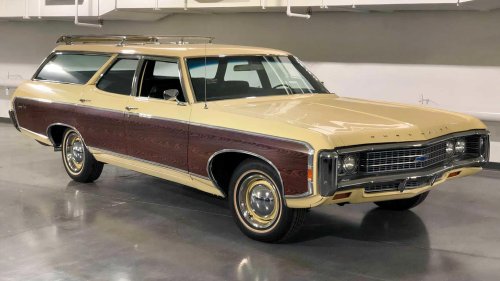
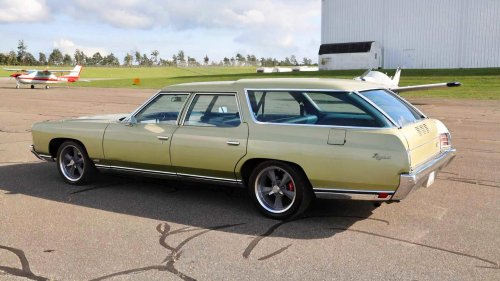
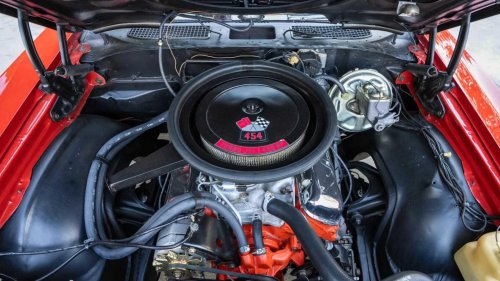
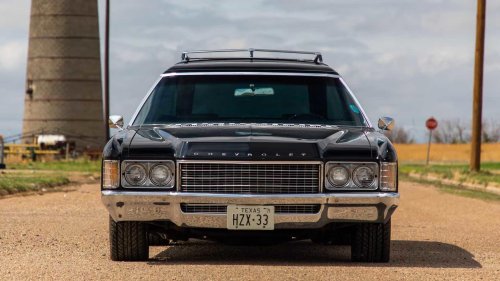
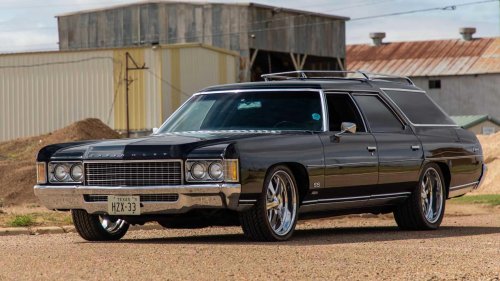
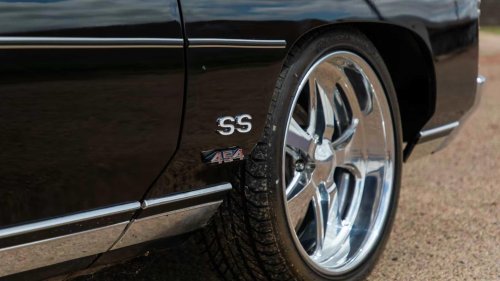
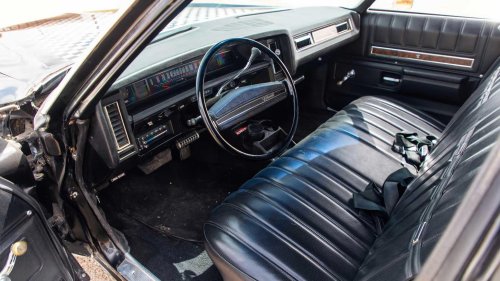
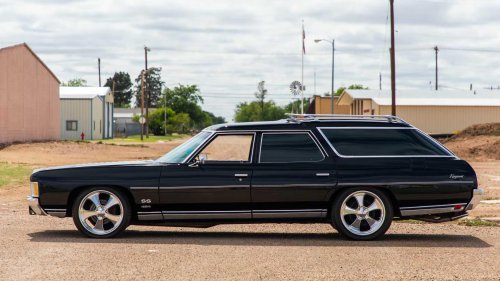
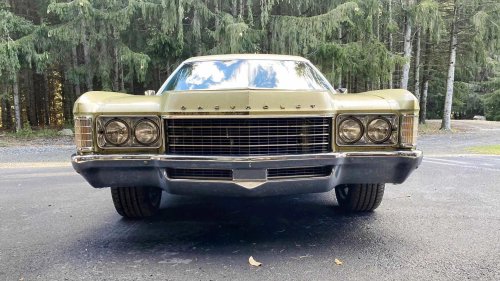
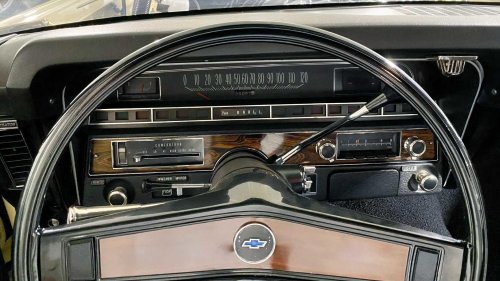
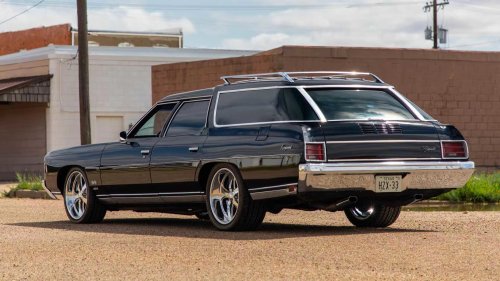
When people think about the peak of American muscle, their minds usually go straight to coupes and convertibles. Chevelles, GTOs, Road Runners, and Chargers dominate the conversation. Station wagons rarely enter it. That makes sense on the surface. Wagons were built to haul families, groceries, and luggage, not to chase performance records. But during the late 1960s and early 1970s, Detroit did not always draw clean lines between practicality and excess.At the height of the muscle car era, American automakers shared engines freely across body styles. If a platform could physically accept an engine and the driveline could handle the torque, buyers were often allowed to order it. That approach led to some unexpected combinations, including full-size station wagons with engines powerful enough to rival those of contemporary sports cars.One Chevrolet muscle wagon wagon, in particular, stands out today not because it was marketed as a performance vehicle, but because it combined family-hauler packaging with hardware normally reserved for Chevrolet’s most powerful full-size cars. The Chevrolet Kingswood Estate Was Never Supposed To Be A Performance Car Bring a TrailerThe Chevrolet Kingswood Estate sat near the top of Chevrolet’s station wagon lineup in the early 1970s. It was large, heavy, and unmistakably American (yee-haw). Built on General Motors’ B-body platform, it shared its underlying structure with full-size sedans like the Impala and Caprice. That shared foundation is the key to understanding how this wagon became something far more extreme than its appearance suggested.GM’s B-body architecture was designed to handle large engines and serious torque. These cars used body-on-frame construction, rear-wheel drive layouts, and durable driveline components. The same platform served as the basis for police vehicles, taxis, and high-output sedans. From an engineering standpoint, there was nothing fragile or wagon-specific about it.Bring a TrailerBecause of that, wagons were not isolated from Chevrolet’s engine catalog. They received many of the same small-block and big-block options as their sedan counterparts. The idea that wagons were mechanically softened is largely a modern assumption. At the time, they were simply another body style mounted on proven hardware. That reality opened the door to some extreme factory combinations, including the ridiculously overpowered 454 cubic inch Chevy V8.Fun Fact: The Kingswood Estate sat at the very top of Chevrolet’s station wagon lineup, which meant buyers weren’t locked out of the brand’s most aggressive engine options. If it could be ordered in a full-size Chevy, the Kingswood Estate usually qualified. Big-Block Power Available In A Family Hauler Bring a TrailerIn 1970 and 1971, Chevrolet’s engine lineup reached its most aggressive point. This was the brief moment before emissions regulations, insurance pressures, and fuel-economy concerns reshaped the American car market. During that window, buyers could order full-size Chevrolets with some of the most powerful engines the company ever produced.At the top of Chevrolet’s full-size engine lineup sat the 454-cubic-inch LS5 V8. Not to be mistaken with Chevy's specially tuned LS6 454 that pushed 450 hp in the Chevelle and El Camino muscle cars, the LS5 was rated at a massive 360 horsepower and was the most powerful engine officially available in full-size Chevrolets during the peak muscle-car years. But in a wagon? Who allowed that? Enter The 1971 Chevrolet Kingswood Estate SS 454 Mecum Period ordering practices allowed buyers to specify large-displacement engines across most full-size body styles, including station wagons. While documented examples are rare, Chevrolet’s own option structure confirms that 454 V8-equipped wagons were mechanically supported within Chevrolet’s full-size option structure.Fast-forward over 50 years later, and hiding in the used market today are rare examples of 454 LS5 V8-optioned Kingswood Estate SS models – some of America's craziest sleeper wagons of the golden era.The platform could accept the massive V8 engine, the driveline could handle it, and Chevrolet was still operating in an era where customer choice took priority over strict model separation. If a buyer prioritized extreme power over convention, the full-size ordering structure did not explicitly prevent it. The 1971 Kingswood Estate SS 454's Performance Came Close To Supercars Of The Era Mecum Describing a station wagon as having supercar-level performance sounds like exaggeration until period testing data is considered. Full-size Chevrolets equipped with the 454 were capable of mid- to low 14-second quarter-mile times in stock form, with well-optioned examples dipping into the high 13s under ideal conditions. That level of straight-line performance placed them uncomfortably close – at least from a standing start – to cars that today are spoken about as early supercars, including the Ferrari Daytona and Lamborghini Miura P400S, which is just a ridiculous sentence to type. Not equal, not comparable at speed, but close enough that the overlap looks absurd on paper.Mecum It is easy to assume that the added weight of a wagon body would erase that advantage. In reality, the V8’s massive torque output helped offset curb weight more effectively than peak horsepower figures alone suggest. These engines delivered immense low-end and midrange power, which mattered more in real-world acceleration than top-end speed.Gear ratios and rear-wheel drive layouts further contributed to the effect. Full-size Chevrolets were often geared to maximize torque delivery rather than optimize fuel economy. The result was startling acceleration for a vehicle designed to carry an entire family.MecumThe fact that a wagon like this belonged in the same performance conversation at all is wild.Fun Fact: Even when fitted with big-block power, most Kingswood Estates left the factory with bench seats, column shifters, and woodgrain trim. On the outside and inside, it still looked like a car built for school runs, not stoplight battles. Rarity And Why These Wagons Were Overlooked Mecum Despite the mechanical possibility, LS5-equipped wagons were never common. Most buyers selecting full-size wagons prioritized passenger capacity, towing ability, or comfort. Performance was rarely the main objective. As a result, very few wagons were ordered with the most extreme engine combinations. Documentation for these cars is also thinner than for traditional muscle coupes. Enthusiasts closely tracked Chevelles, Camaros, and Corvettes, while wagons received far less attention. Build sheets were discarded, dealer records were lost, and many cars lived hard lives before being scrapped. I don't blame them, though. Who would have known this would be such a funky topic of discussion so many decades later?That lack of visibility kept values low for decades. Collectors focused on headline-grabbing muscle cars, while performance wagons remained obscure. Even today, V8 wagons are debated precisely because so few examples survived with complete paperwork. Ironically, that rarity and neglect are exactly what make them interesting now. Why This Kind Of Wagon Would Never Exist Again Bring a TrailerThe conditions that allowed a car like this to exist disappeared almost immediately. By 1972, emissions standards forced dramatic reductions in compression ratios and power output. Gross horsepower ratings were replaced by net figures, revealing just how much performance had been lost. Insurance companies began penalizing high-horsepower vehicles, fuel prices rose, and consumer priorities shifted. Station wagons became firmly associated with family duty, while performance was increasingly confined to clearly defined trims and marketing strategies.Bring a TrailerModern performance wagons do exist, but they are engineered intentionally and marketed as such. They are refined, safe, and technologically complex. What made the Kingswood Estate special was that it was not designed to be outrageous. It became outrageous simply because the order sheet allowed it. I like thinking about whoever thought this one up and wrote it into the options. I bet they were fun at dinner parties.Fun Fact: Because so few performance wagons were saved early on, originality matters more than shine today. A documented, correctly optioned Kingswood Estate often draws more attention from collectors than a fully restored example with an uncertain history.Big-Block Wagon Values And Market ContextMecumOne 1971 model year 454 SS Kingswood wagon traded hands in 2022 via Mecum Dallas, bringing in just $33,000 despite seemingly great condition and the massive 360-hp LS5 under the hood. Since then, big-block wagons that once struggled to attract attention are now drawing serious interest when documentation is present. Still, pricing data remains limited due to rarity, but interest in muscle-era wagons has grown steadily.The idea of a station wagon with supercar-level power sounds like a myth until the facts are laid out. Chevrolet did not build this vehicle as a statement. It happened because the company had not yet learned to restrict itself.That makes the Kingswood Estate one of the most honest performance vehicles of its era. Basically, it existed because American manufacturing freedom made it possible, which is what makes the story so much better. Today, that freedom reads as excess. In the early 1970s, it was simply another option on the order form.Sources: GM, Chevrolet, Hagerty, Bring a Trailer, Hemmings



















 +35 others