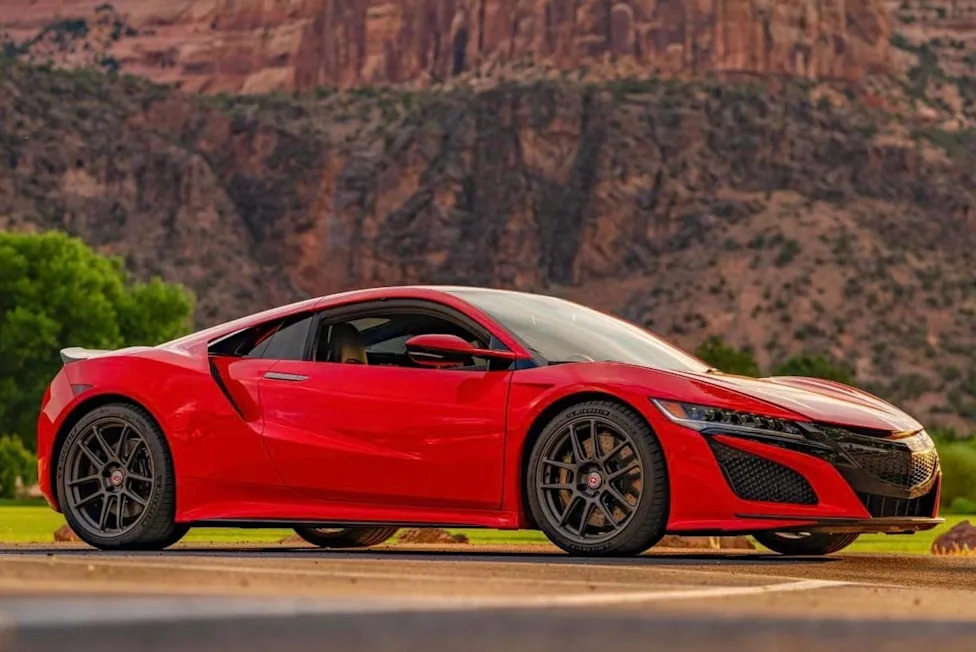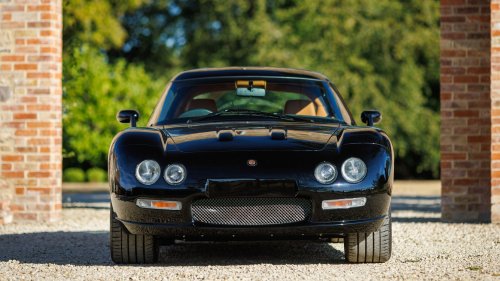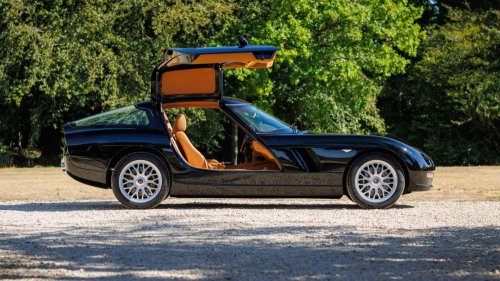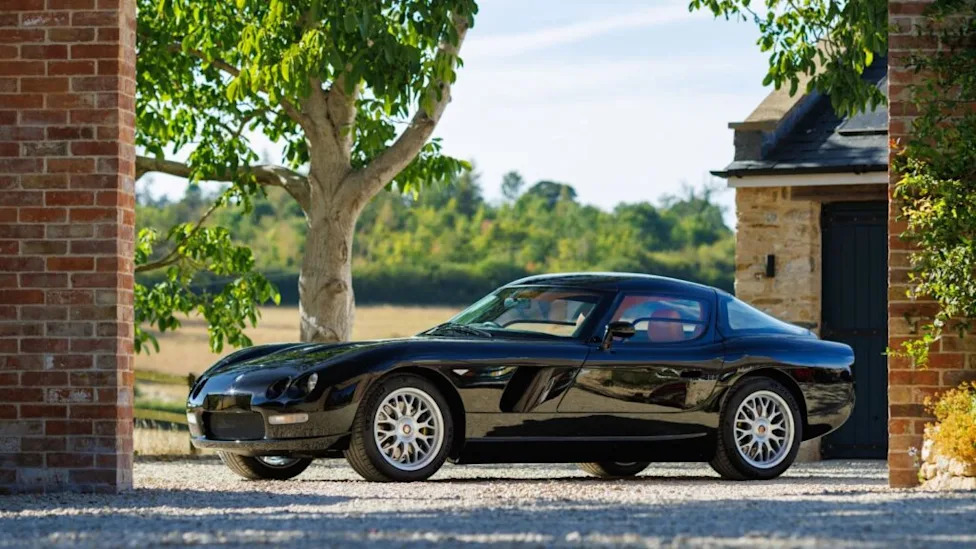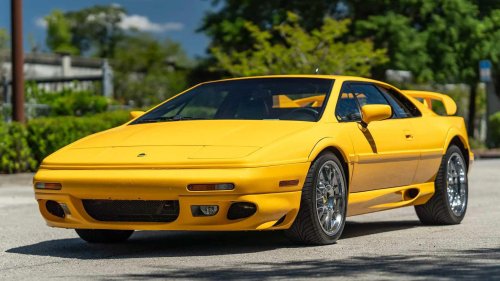
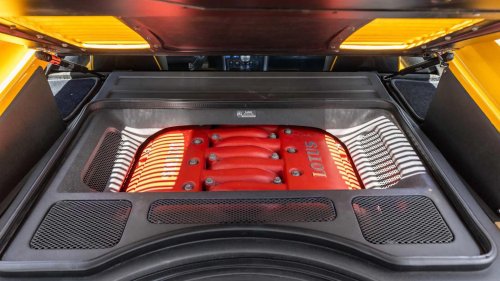
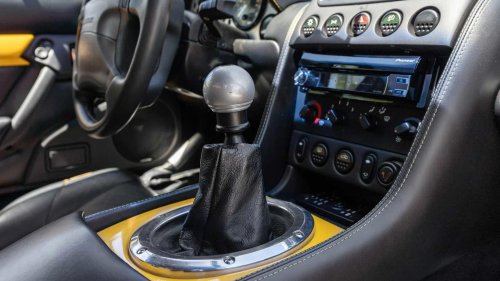
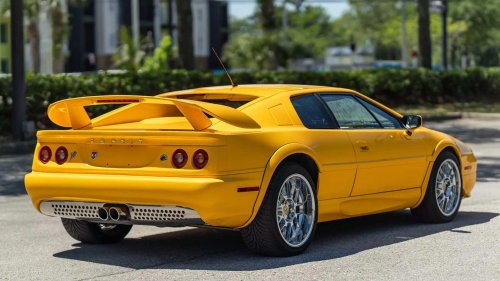
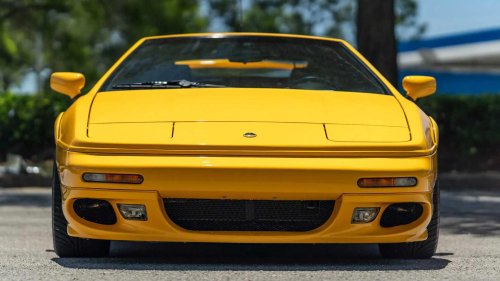
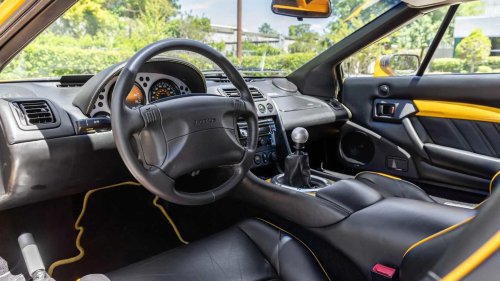
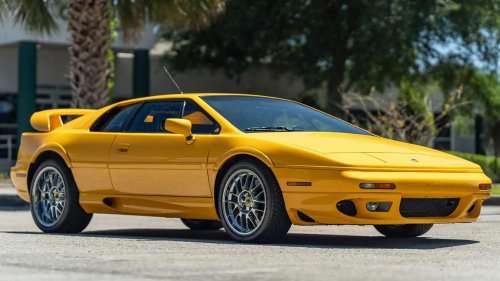



















Finding a mid-engine V8 supercar with a manual gearbox for less than $70K sounds like a Craigslist scam in 2025. Ferrari 355? Over $100K. Lamborghini Diablo? Quarter million. Even Acura NSX values are now through the roof. However, one car from the late ‘90s still delivers exotic looks, a twin-turbo punch, and a stick shift without six-figure pain.Built in limited numbers, it’s a lightweight, fast, and very real supercar that never caught the hype wave, until now. What is it? Let’s just say Bond drove an earlier version, and the one you want is the last analog exotic supercar left under the radar. The Supercar Nobody Saw Coming: The Lotus Esprit Twin-Turbo V8 Via: Bring a Trailer From 1994 to 2004, Lotus built the Esprit V8 Series 4, the car that quietly became the cheapest mid-engine twin-turbo supercar with a manual gearbox you can still buy. Only 1,517 left Hethel’s factory in that ten-year span, which makes it rarer than a Ferrari 355 or a Porsche 911 Turbo of the same era. On paper, it had the right mix: wedge-shaped styling that still looks sharp today, a mid-mounted V8 with turbos, and the kind of road presence usually reserved for Italian exotics.According to Classic.com, the Esprit V8’s average market price sits at $69,424. Some examples have traded hands for as low as $25,000, while the top sales just cleared $220,000 for pristine, low-mile collector cars. Stack that against its rivals and the Lotus still looks like a bargain. A Ferrari 355 regularly costs over $100,000, a Lamborghini Jalpa crosses $90,000, and even the 993-gen Porsche 911 Turbo pushes well past six figures.So why hasn’t the Esprit V8 blown up in value the same way? Part of it comes down to Lotus’s reputation. The brand was always seen as a little fragile, with dealers that couldn’t match Ferrari or Porsche when it came to support. In the U.S., that stigma kept the car under the radar. Add in a limited presence on the collector circuit, and you have an exotic that was overlooked for decades.Now that prices on the usual suspects have gone stratospheric, the Esprit V8 is finally getting its due. It has the looks, the rarity, and the raw numbers to back up its case, yet it still trades for used Corvette money. That alone makes it one of the last genuine analog exotics that most enthusiasts can still realistically chase. Twin-Turbo V8 Power And A Manual Gearbox That Demands Respect Via: Bring a TrailerLotus Esprit V8 Specs SheetLotus didn’t just drop any engine into the Esprit when it needed a proper supercar punch. It built the Type 918, a 3.5-liter twin-turbocharged V8 that made 350 hp and 295 lb-ft of torque. That may sound tame next to today’s 700-hp monsters, but in the mid-90s this was exotic territory. The Esprit V8 could sprint from 0 to 60 mph in around 4.1 seconds and top out at 175 mph, figures that put it right alongside cars like the Ferrari 348 and the Acura NSX.What made the car truly different was the pairing of that turbo V8 with a 5-speed manual gearbox. Lotus used a Renault-based UN1 transmission, a carryover from earlier four-cylinder Esprits. Today, the Esprit V8 is the cheapest mid-engined manual V8 supercar you can buy. The engine overwhelmed it at first—gearbox failures were common in early cars. Lotus eventually reinforced the internals, and careful owners learned to respect the torque curve rather than abuse it with clutch-dump launches.This is where the Esprit sets itself apart from modern supercars. Today’s dual-clutch automatics shift faster than you can blink, but they don’t demand the same involvement. Rowing through the UN1 takes effort. The throws are long, the clutch is heavy, and it punishes sloppy drivers. Nail the shift though, and the car rewards you with a raw, mechanical connection that’s hard to find in anything newer.Via: Bring a TrailerCompared to the Ferrari 348’s gated shifter or the Acura NSX’s slick manual, the Esprit feels more brutal and less polished. That’s the point—it’s a supercar that makes you work for it. And with the twin-turbo V8 snarling right behind your ears, it turns every gear change into a small victory. Raw Chassis, Sharp Handling, And A Reputation That Bites Back Via: Bring a Trailer The Esprit V8 sat on a steel backbone chassis with a fiberglass and composite body draped over it. The whole package weighed just over 3,100 lbs, which gave the car serious agility compared to heavier rivals. Lotus tuned the suspension for feedback above all else. That meant quick steering, razor-sharp response, and a level of communication through the wheel that modern cars with electronic filters simply don’t deliver. Comfort never really factored into the setup. This was a car designed to thrill, not to coddle.At the limit, the Esprit could be twitchy. Mid-engine balance brought precision, but it also punished sloppy inputs. Early V8 models didn’t have traction control or ABS, and those systems only appeared later. Drivers had to rely on instinct and talent, which gave the Esprit a reputation for being a car that could bite back if you got greedy with the throttle.Via: Bring a Trailer Compared to something like a contemporary Porsche 911 or the first-generation Audi R8, the Esprit feels raw and demanding. The Porsche offered polish and predictability, while the R8 brought all-wheel drive security. The Lotus delivered a more analog kind of fun, where every corner asked the driver to stay switched on. It wasn’t forgiving, but it was addictively rewarding when you got it right.The car’s reputation for fragility didn’t help either. Jeremy Clarkson once joked that "Lotus" stood for “Lots Of Trouble, Usually Serious,” a dig at both the reliability and the knife-edge handling. But enthusiasts who understood the Esprit’s quirks saw it differently. The lack of electronic safety nets, the stiff ride, and the sharp responses made the V8 Esprit one of the last true old-school supercars. It gave you speed, feedback, and a little fear, all wrapped into one fiberglass wedge. Rising Prices Show The Last Analog Exotic Won’t Stay Cheap Forever Via: Bring a Trailer Market data shows how far the Lotus Esprit V8 has moved in just a few years. The cheapest recorded sale sits at $25,024, while a collector-grade example touched $220,000. The current average price hovers around $69,000, which is still bargain territory when you consider its performance and rarity. For context, a Ferrari 355 from the same era averages closer to six figures, with engine-out services adding thousands to upkeep.Collectors are waking up to what the Esprit V8 represents. This was the final evolution of Lotus’s wedge-shaped supercar, and one of the last analog exotics you could buy with a twin-turbo V8 and a proper stick shift. Cultural associations add weight too. Bond famously drove an Esprit in The Spy Who Loved Me and For Your Eyes Only, while Lotus’s racing pedigree reinforced the car’s exotic image.Ownership isn’t without headaches. Cooling liner failures, gearbox wear, and general fragility mean you can’t skip proper upkeep. Still, compared to Ferrari’s sky-high servicing, the Lotus offers a more approachable way into supercar ownership. If you keep on top of the maintenance, the running costs don’t completely ruin the experience.Via: Bring a Trailer What makes the Esprit stand out today is the blend of affordability and raw exotic appeal. Few cars deliver this much speed, presence, and rarity for under $100K. You get the kind of old-school thrills modern supercars dial out, but in a package that still turns heads at Cars and Coffee.Values are climbing, and the window to grab one at a reasonable price is closing. As enthusiasts and investors recognize the Esprit V8 as the last true analog exotic of its kind, expect prices to keep moving upward. For now, it remains one of the best-kept secrets in the supercar world.Sources: Lotus Cars, Classic, Hagerty, Bring a Trailer