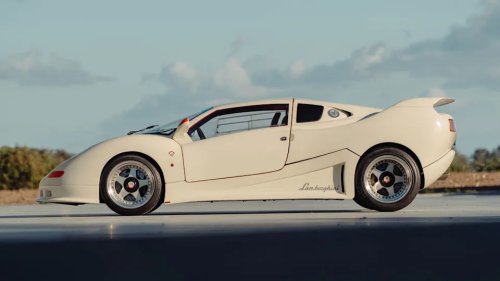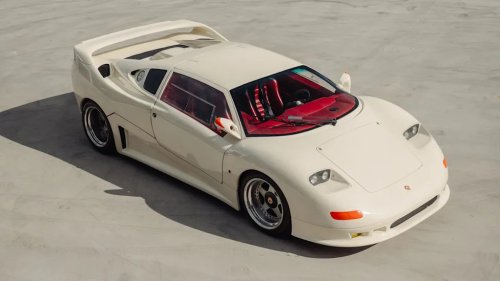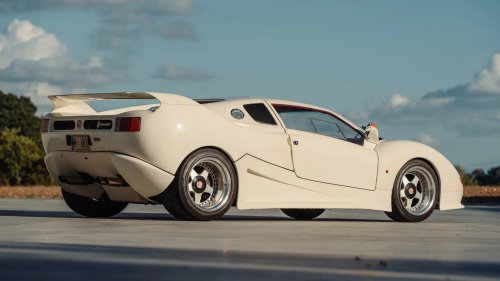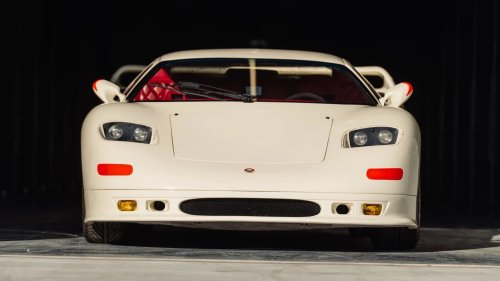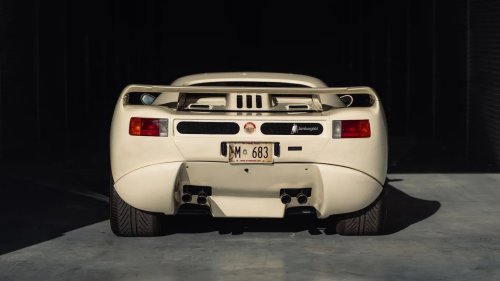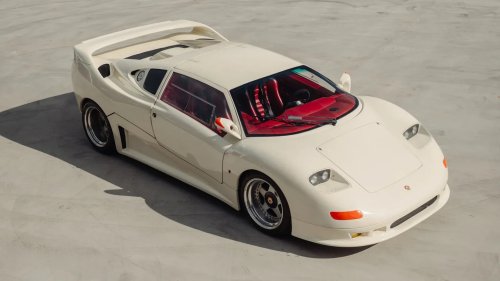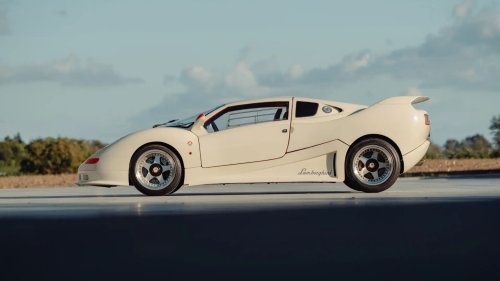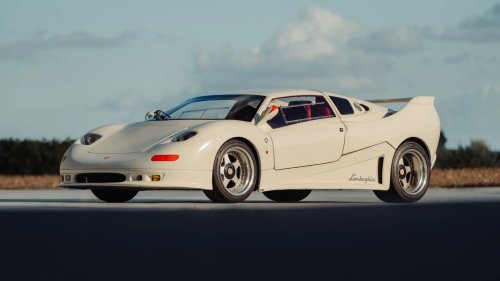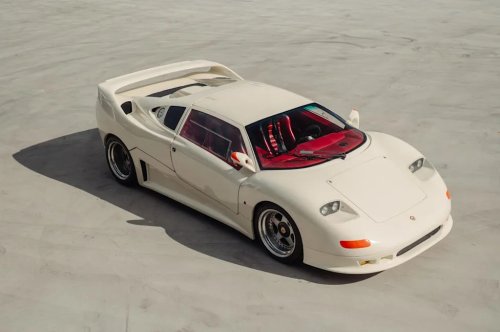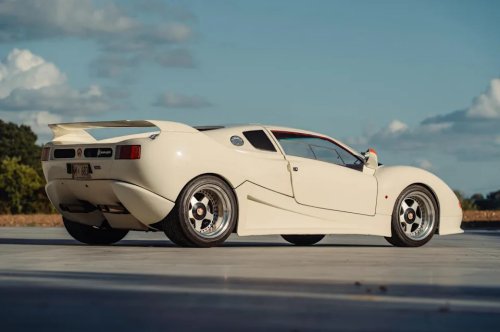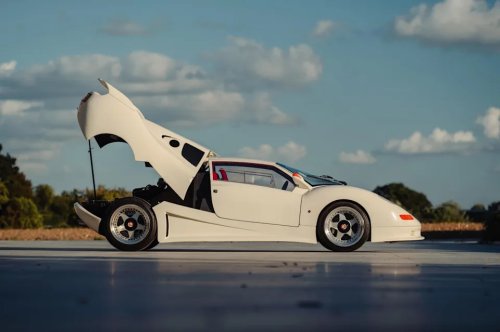
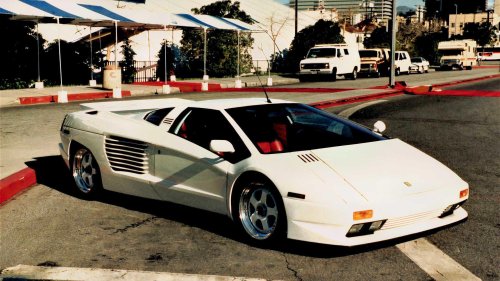
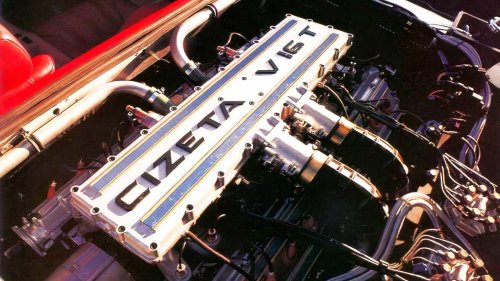
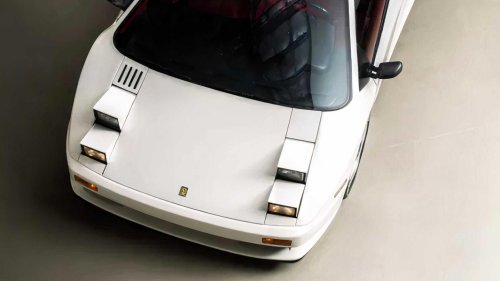
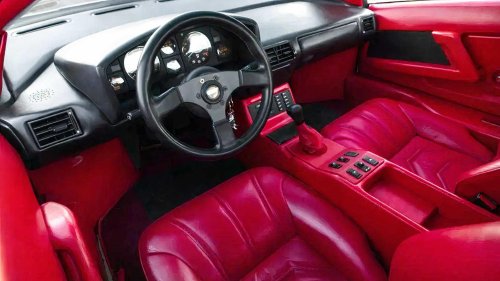



















What does someone need to do to out-Lambo Lamborghini, or out-Ferrari, well, Ferrari? You’re effectively engaging in an automotive arms race so expensive and so fraught with challenges that most who try never get it off the ground. But one designer realized that when it comes to Italian supercars, the people best suited to beat them have already joined them. Only then could they fit an engine so bonkers that it's still talked about today. An Italian Engineer Who Never Settled for Less Mecum Taking the fight to the established supercar aristocracy sure sounds like the MO of Italian auto engineer and designer Claudio Zampolli. Born in what would become the supercar capital of Modena in 1939, Zampolli entered a part of the world so dedicated to the pursuit of driving that it would shape the rest of his life.At a time when icons like Enzo Ferrari were making their first big waves across Italy, Zampolli would scale the fences around local race tracks like Fiorano to watch the team at work. Naturally, the local racing scene prompted Zampolli to take up an engineering degree with a concentration in automotive design.In a place like Modena, known more for its supercars than even the sparkling wine or the mouth-watering Prosciutto, that was like trying to be the biggest wig at a Wall Street Stock Exchange. After completing his education, a key position in Lamborghini's burgeoning engineering team awaited him in the late 1960s. From there, it really was off to the races. Working for Lambo, Striving for Something Different Bring A TrailerIn collaboration with the rest of Lamborghini's design team, which included legends like New Zealand native Bob Wallace, Zampolli designed some of Lamborghini's all-time greatest creations. Icons like the Miura and the Countach came out of Lambo’s design studio during Zampolli’s tenure with the company.In that time, he bumped shoulders with people like Marcello Gandini, the man who laid the Miura’s timeless classic body over its Dallara-designed chassis,as well as Gian Paolo Dallara himself. Constantly sharing brainpower with some of Italy’s most talented engineers and designers did wonders for Zampolli’s automotive intuition. For most people, a position that appealing would be something to cling to until they physically can't get behind the wheel anymore.But Claudio Zampolli was not one of those people. After working with Lambo from 1966 to 1974, Zampolli must have decided that even by the standards of his bosses, his talents were capable of something “more.” More in many different respects, more aggressive styling lines, more power, more speed, and most importantly, more cylinders. Cizeta-Moroder V16T: A Goofy Name for a Seriously Amazing Supercar WikicommonsBy the late ‘80s, Zampolli was out at Lamborghini, having moved to the United States and setting up a mechanic shop in Los Angeles that serviced the very same Lambos he once helped engineer. He even fixed up Ferraris under the same roof, which must have made his old co-workers roll their eyes. But this time in LA gave Zampolli time to design something of a competitor to his old firm, something so crazy it almost makes the Countach look tame by comparison.One of Zampolli's mechanic shop clients was none other than the award-winning composer and world-famous Euro disco composer, Giorgio Moroder. While having his Countach serviced at Zampolli's shop, Moroder caught wind that Zampolli was preparing to field a direct competitor to that same flagship Lambo. Before long, Moroder was a partner in the new operation, founded in Modena as Cizeta Automobili SRL.Zampolli and Moroder commissioned the same Marcello Gandini that spearheaded the Countach project years earlier. It surely helped that Gandini was thoroughly furious at Chrysler for what he described as meddling in the design of the Lamborghini Diablo. As a result, it’s genuinely hard to tell Cizeta’s flagship apart from a Countach without a massive array of quad headlights extended. The chassis underneath was bespoke, made of a tube-steel spaceframe altogether different from a Countach's, though it was designed by Ianose Bronzatti and Achille Bevini, two ex-Lamborghini engineers. Coilovers at all four corners made the C16T handle like a supercar, and it was all in support of an engine not quite like any other. The 16 in V16T, An Engine You’ll Never See Again CizetaWhat prompted Cizeta to smack a transverse-mounted V16 engine in the middle of its flagship sports car? So far as Claudio Zampolli was concerned, if it were a V8, a V10, or even a V12 under that rear hatch, it wouldn't be any more special than the Lambos and Ferraris he was so dead set on competing with. With this in mind, nothing short of a herculean effort was needed to provide an engine Zampolli deemed was worthy. Cizeta 16T Specs Contrary to popular belief, the V16 in the V16T wasn't two eight-cylinder blocks welded together. Rather, it was an architecture borrowed from two Lamborghini V8s from the Urraco, and fused into a single block casting with two separate crankshafts. That's right—not dual camshafts, but dual flat-plane crankshafts mounted end to end inside the engine block. What resulted was an engine that was quite the opposite of two V8s welded together, but a bespoke, all-original six-liter monster that put 540 horsepower and 400 lb-ft of torque down to the rear tires.The engine's bizarre transverse layout meant the rear clip had to be wide in a way that even makes modern hypercars blush. Decades before the Revuelto was notorious for being barn-level wide, the V16T was actually 30 mm wider than the modern flagship Lambo. With a zero-to-60 sprint as low as four seconds, a 12.4-second quarter mile time, and a top speed estimated at north of 200 mph, the V16T was every bit the equal of a Countach, and then some. Crazy Engine Plus Eccentric Design Equals Insane Pricing Bring a TrailerInside, a V16T was a far different animal than Countach or even a Diablo. Being so much wider than the big Lambos and nearly a foot longer meant people over six feet tall need not worry about squeezing inside. There was more headroom once you were comfortably seated as well, and the trademark awful entrance and egress native to most Lambos was well-mitigated by these larger proportions.Without a central driveshaft tunnel like a Countach, you could even see out the rear window when you backed the car up. Even inconspicuous areas of the cabin were decked out in soft-touch leather and polished metal. Meanwhile, the HVAC system, built to withstand American sensibilities rather than European ones, was far better than the practically useless unit in a Countach or Diablo.All these little things, items that made the V16T more like a GT car than a traditional supercar, made its $300,000 launch MSRP in 1991 seem reasonable. That’s over $700,000 in modern money. For some context, the inaugural Diablo had a base price of $239,000 brand new, or just under $570,000 in today’s dollars. This made the V16 one of the most expensive supercars in the world not named the McLaren F1. So Rare, You’ll Probably Never See One HemmingsOn paper, Cizeta just sort of, forgot to stop manufacturing the V16T well into the 21st century. The company didn’t close down until Claudio Zampolli’s death in 2021 at the age of 82. In an interview with Hagerty as late as 2018, Zampolli still stated the car was theoretically still in production. In the end, only 9 production cars were built plus the original prototype, for a total of 10 examples.In total, there was only one prototype bearing the Cizeta-Moroder name. But there were also nine production coupes from after Moroder left the project, with production moving from Modena to California between 1999 and 2003. The company would spend the rest of its days in the sunny confines of So-Cal.This brief California run produced the sole V16T Roadster ever made, a car so rare it’s almost impossible to accurately appraise it. On the rare occasion it does cross the auction block, the original Cizeta-Moroder prototype that started it all sold for over $1.3 million. Another, purchased by the Sultan of Brunei, sold for $665,000 at an auction also run by RM Sotheby's. Given the story behind it, it’s a stunner that they didn’t sell for more.Source: Cizeta Engineering, RM Sothebys