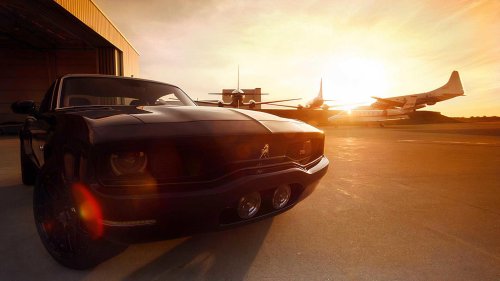
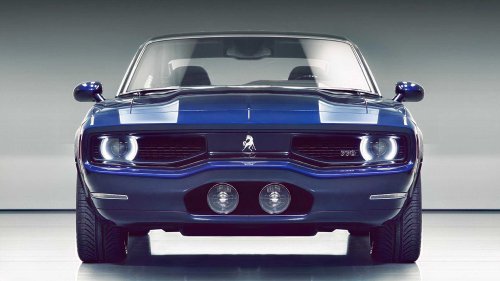
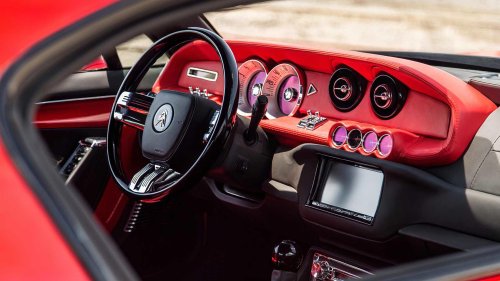
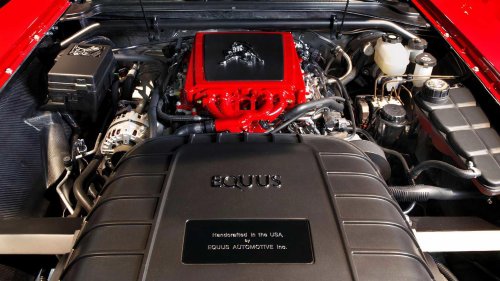
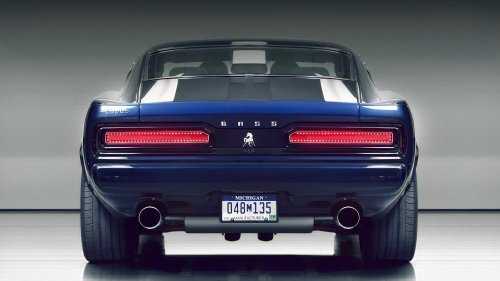
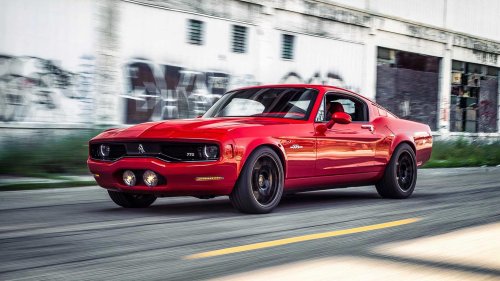
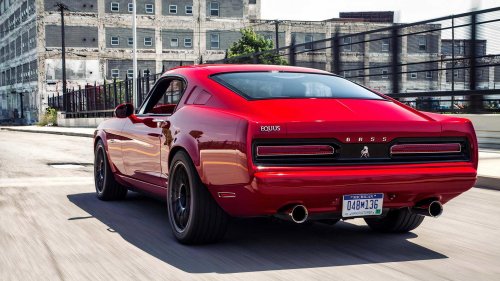



















When you hear the word "supercar", the first image in your head is a low-slung mid-engine European exotic car. A surgical instrument that looked like it was sculpted by the wind, stitched in the finest of leathers and engineered to be precise in everything it does but also fast in a straight line. American cars don't possess the image; classic American muscle cars are powerful, loud, heavy, blunt instruments built to be as fast as it can in a straight line. It relies on brute force rather than aerodynamics, and the brawny styling supports that.For decades, the automotive world accepted that these two worlds could never truly cross paths. You either chose the raw, tire-shredding charisma of a V8 muscle car or the high-revving, sophisticated dynamics of an exotic. But a few years ago, a boutique manufacturer decided to build a bespoke car from the ground up that looked like a classic muscle car but drove and handled like a supercar. America Isn't Known For Making Supercars Hagerty The recipe for an American performance car was solidified in the 1960s. A classic long hood, front engine, rear-wheel drive muscle car with a massive V8 with too much power and torque. These cars were made to dominate drag strips, eat up highways with ease and still have quite a reasonable price tag. The goal was to give the public as much power at the most affordable price. This is why cars like the Ford Mustang, Chevrolet Camaro, and Dodge Charger were so successful, as most blue-collar workers could have a taste of real performance.However, across the pond, they did things differently. European manufacturers built cars for tight, twisting mountain roads and high-speed endurance racing like the 24 Hours of Le Mans. Their cars required sophisticated independent suspensions, lightweight materials, mid-engine layouts for balanced weight distribution, and highly complex, high-revving engines. This was applied to their road cars, which made them incredibly expensive to develop and build; they became the exclusive playground of the ultra-wealthy. America never quite felt the need to copy this approach. Why spend hundreds of thousands of dollars on a fragile European exotic when a locally built V8 could give you the same visceral thrill for a fraction of the cost? Horsepower Was Never A Problem Bring a TrailerAmerican muscle cars never lacked power. Detroit has always known how to squeeze massive horsepower numbers out of its engines. But the reason American cars never entered the supercar conversation was when the straight roads ended. Traditional American muscle cars excelled at raw acceleration, but they lacked the refinement and composure needed to compete with Europe’s elite. While a Ferrari, Aston Martin or even Alfa Romeo used advanced aerodynamics and lightweight aluminum or carbon fiber, classic muscle cars relied on heavy steel bodies and leaf-spring rear suspensions that traced their lineage back to horse-drawn wagons.They were loud, brash, and brilliant in a straight line, but entering a sharp corner at high speed in a vintage muscle car took some real bravery. They lacked the steering feedback, braking efficiency, and chassis rigidity required to dance on the edge of physics. To the European automotive scene, American cars were simple, unrefined one-trick ponies. A Small Company Decided To Take On An Ambitious Project Equus Automotive This massive gap in the market is exactly where boutique, low-volume automotive manufacturers thrive. Major automakers have to worry about mass production, global supply chains, strict corporate budgets, and broad consumer appeal. They rarely take massive financial risks on niche concepts that won't make any money. However, a small, independent company isn't bound by those same corporate rules.A decade ago, a boutique manufacturer stepped into the spotlight with an incredibly ambitious goal. They didn't want to just restore an old car, nor did they want to build a modern low-slung supercar. Their objective was to capture the absolute peak of 1960s American muscle car design and marry it to the telepathic dynamics of a 21st-century exotic. They wanted a car that could turn heads at local meetups but comfortably hold its own on a road course against a Ferrari 458 Italia or a Lamborghini Aventador. It was a project that required starting completely from scratch. The Equus Bass 770 Is A Modern Supercar Wearing A Muscle Car Disguise Equus AutomotiveEquus Automotive made this ambitious dream a reality when the Equus Bass 770 was unveiled in 2013. When images of the car first hit the internet, many people assumed it was a highly modified version of a vintage 1969 Ford Mustang fastback. But that assumption completely diminishes what Equus actually accomplished. It looks like a Mustang, but it is a fully bespoke, hand-built supercar. Not a single body panel or structural component was borrowed from an old Ford donor car. The body itself is made of lightweight aluminum and carbon fiber, ensuring maximum structural rigidity.Equus Automotive designed an entirely new chassis and body that intentionally pays homage to the greatest design cues of the muscle car era. While the fastback roofline and side profile scream '69 Mustang Fastback, look closer, and you will see hints of the classic Chevrolet Camaro, the Plymouth Barracuda, and the Dodge Charger in its front grille and rear tail panel. It is a beautiful, rolling love letter to 1960s Detroit design, engineered using some of the best modern technology. This Car Was More Than Just A Retro Mustang Equus Automotive Step inside the Equus Bass 770, and any thought of this being a simple retro project completely vanishes. The interior is a masterclass in custom craftsmanship, where almost every single surface is wrapped in high-grade, hand-stitched leather. Unlike vintage muscle cars with their thin plastic steering wheels, rattling trim, vinyl seats, and complete lack of sound insulation, the Bass 770 has a truly high-end cabin.It even has modern amenities like a touchscreen infotainment system, air conditioning, power windows, and a premium audio system. This is complemented by retro-styled gauges, metal switches, and a clean, minimalist dashboard layout. Over 5,000 man-hours were invested in the creation of each vehicle, with almost everything done in-house. All of this hand-built complexity and engineering refinement came with a staggering price tag: when new, the Equus Bass 770 started at roughly $250,000, with fully customized versions easily climbing past $290,000. Hand-Built With A Supercharged Corvette DNA Equus Automotive To give this retro masterpiece the performance of a true exotic, Equus looked to the absolute pinnacle of American engineering at the time, which led them to the Chevrolet Corvette C6 ZR1. They sourced the legendary, hand-built 6.2-liter supercharged LS9 V8 engine and stuck that in the engine bay, but pushed it as far back as possible. It also got a quick-shifting six-speed dual-clutch transaxle for optimal weight distribution.But putting a 640-horsepower engine into a car means nothing if the chassis can't handle the stress. Equus engineered a completely custom aluminum chassis from the ground up, specifically designed to handle the massive torque of the supercharged V8 and still managed to keep weight around 3,640 pounds. To ensure the car didn't handle like a traditional muscle car, they integrated General Motors' highly advanced Magnetic Ride Control suspension system. The MagneRide suspension allows the Bass 770 to remain perfectly flat through high-speed corners while still delivering a smooth, compliant ride on rough pavement. The Performance Was On Par With Supercars Of The Time Equus Automotive For a quarter of a million dollars, the Bass 770 couldn't just look fast, it had to be fast and it was. Thanks to the supercharged LS9 and its lightweight aluminum/carbon-fiber construction, the Equus Bass 770 could rocket from 0 to 60 mph in just 3.4 seconds. Keep your foot pinned to the floor, and it would charge all the way to a blistering top speed of 200 mph.To put those numbers into perspective, those were the exact performance benchmarks of the Ferrari 458 Italia. To slow this beast down, Equus fitted massive Brembo carbon-ceramic brakes, giving it the stopping power of a modern track car. It didn't just out-accelerate almost every muscle car on the planet; it could run side by side with mid-engine exotics on a racing circuit, combining brutal American straight-line acceleration with sophisticated, predictable handling. The Coolest Looking Mustang You May Never See Equus Automotive Despite its mind-blowing performance and breathtaking design, the Equus Bass 770 remains an incredibly rare car in the automotive world. Because it was completely hand-built by a boutique firm, production numbers were extremely low. The original plan was to make 100 cars a year, but that never came to fruition, and only a handful of units exist worldwide. With a price tag hovering around $300,000, it was out of reach for traditional muscle car enthusiasts, while typical supercar buyers often preferred established European badges like Ferrari, Porsche, or Lamborghini for that money.Over time, the Bass 770 has become somewhat forgotten. You are more likely to spot a Ferrari 458 or even a Bugatti at a local car show than seeing a Bass 770 in the wild. Even today, as Ford rolls out its ultra-exclusive, race-bred Mustang GTD to take on the world's best track cars, the Equus Bass 770 is even more exclusive. It Was Way Ahead Of The Restomod Craze Equus Automotive Looking back, the Equus Bass 770 was remarkably ahead of its time. Today, the automotive industry is absolutely obsessed with high-end restomods and "reimagined" classics like the multimillion-dollar Singer Porsche 911s or custom carbon-fiber builds from Ringbrothers. Collectors are willing to pay fortunes for vintage icons paired with modern engineering. Equus anticipated this entire movement over a decade ago, way ahead of this trend.Instead of modifying an existing classic, they went a step further by creating an entirely new, bespoke vehicle from a clean sheet of paper. The Bass 770 remains one of the boldest, most uncompromising American exotic experiments ever attempted. It proved that you didn't have to sacrifice the gorgeous, soulful styling of the 1960s American icons to achieve world-class supercar performance.Sources: Equus Automotive, Top Gear, Motor Authority.