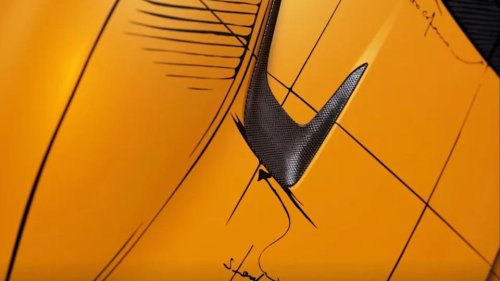
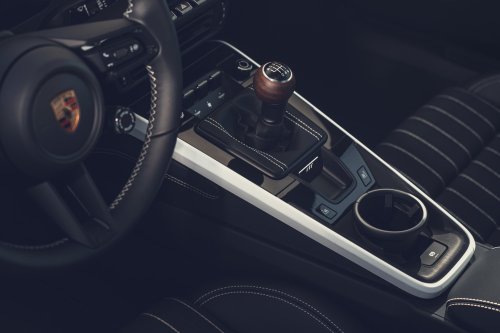
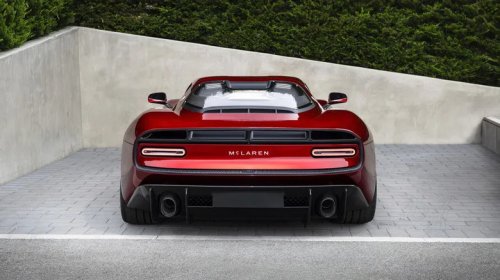
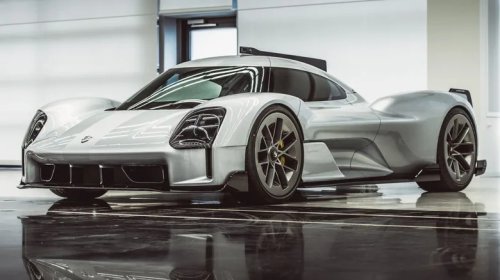
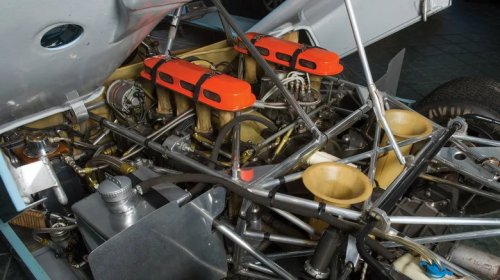
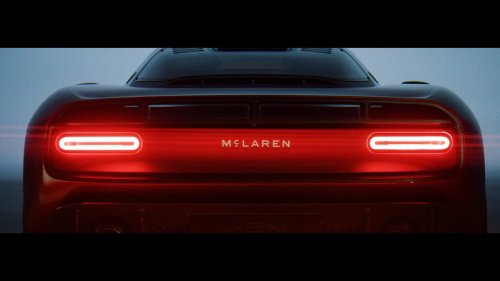
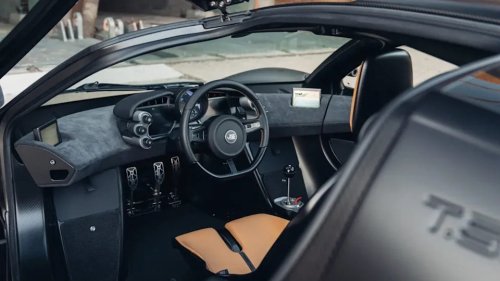
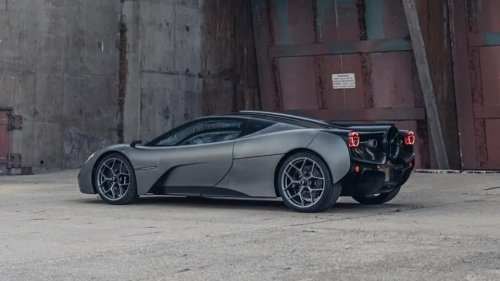
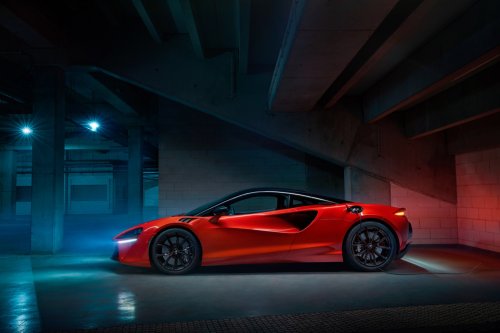
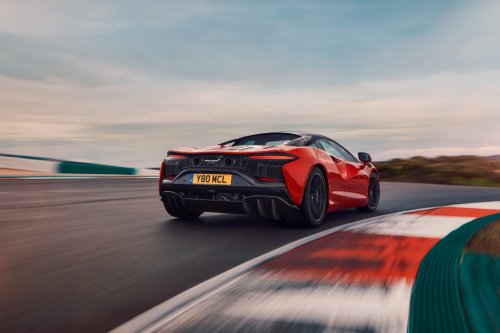
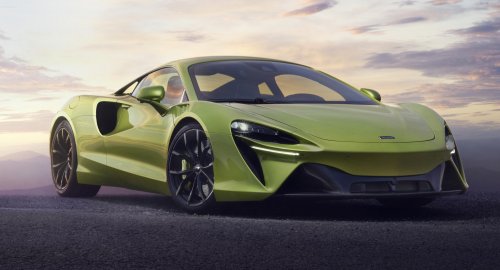
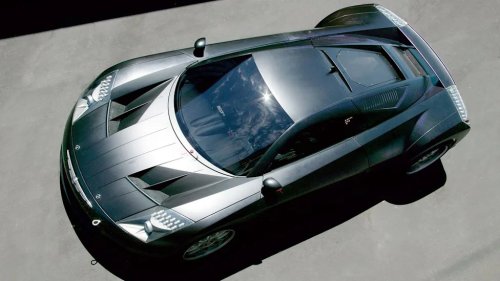
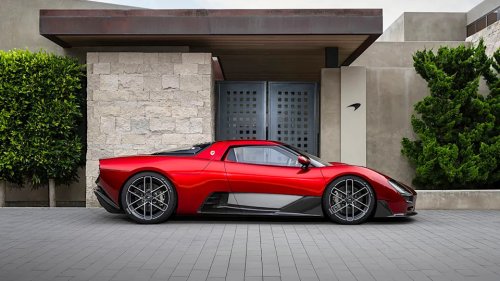
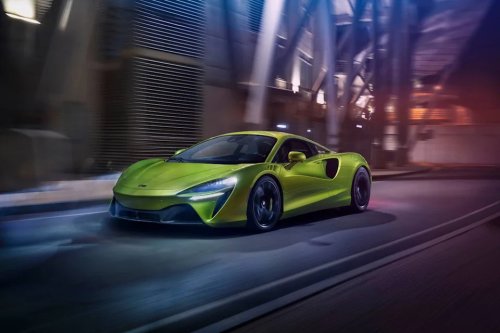
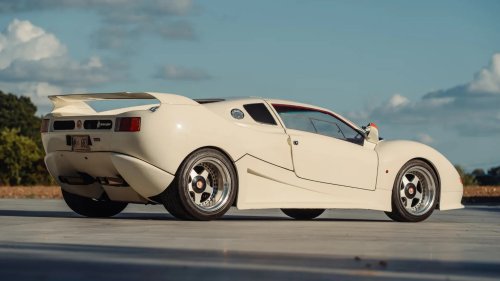
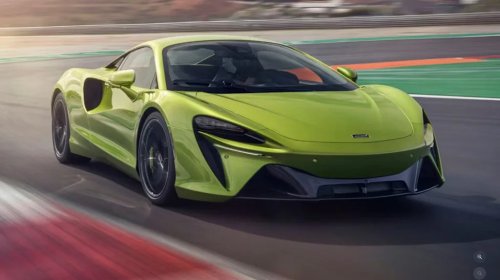
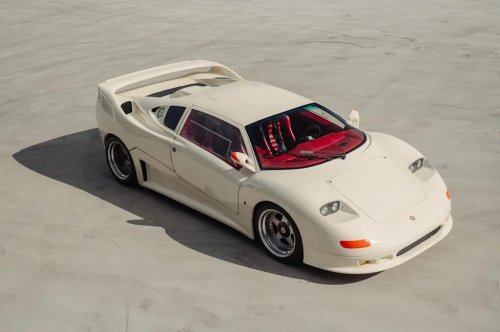
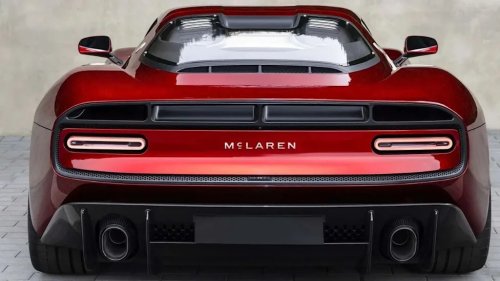
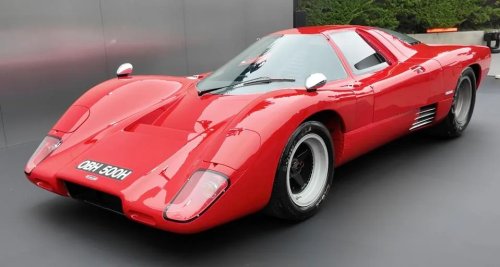
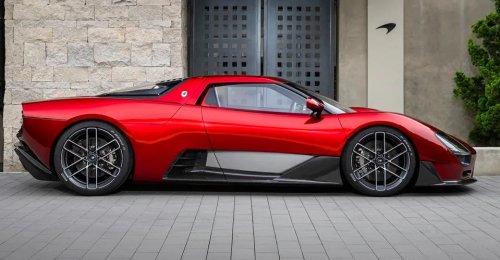
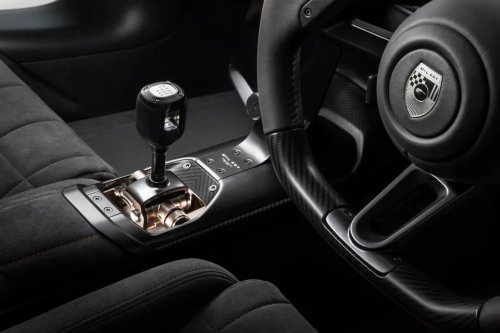
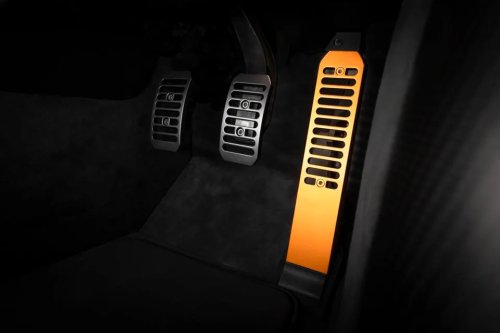
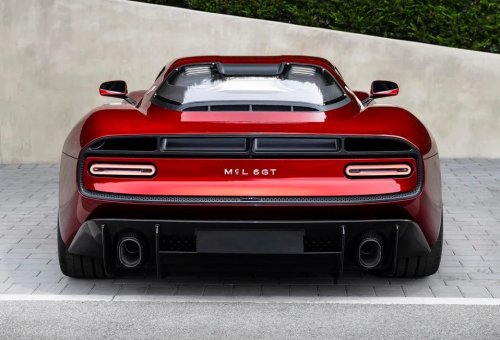
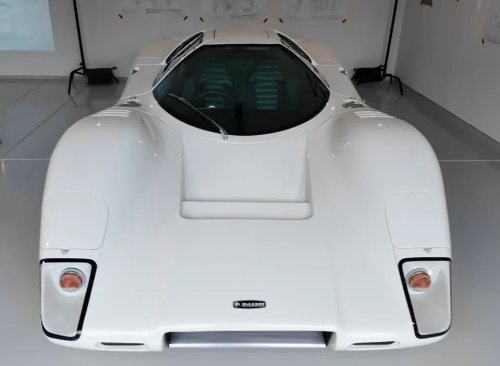
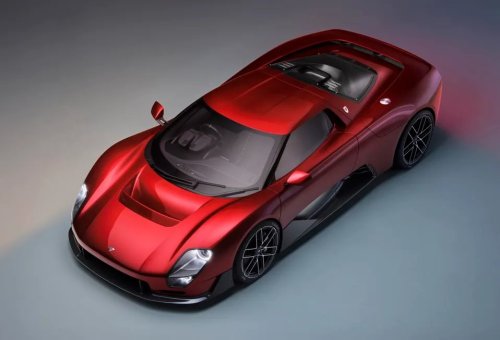
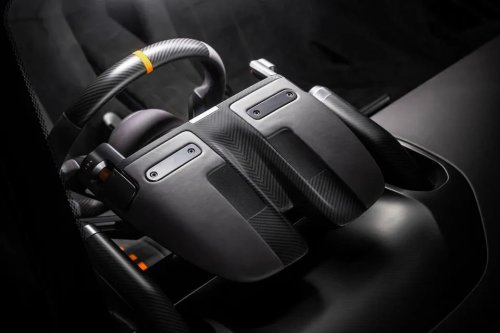
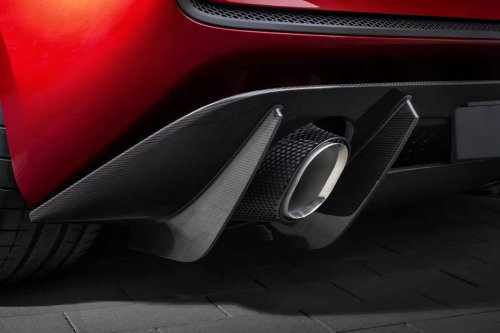
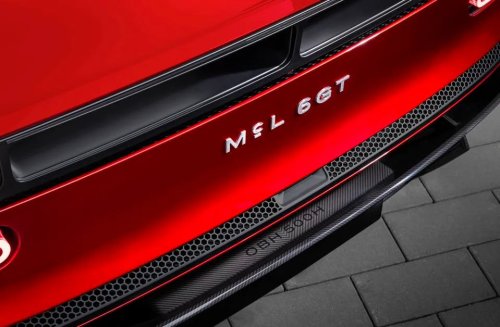
The McLaren McL 6GT is a concept car paying homage to a past McLaren classicMcLarenIs it ironic to call McLaren's new manual-transmission, rear-wheel-drive V8 supercar a vision of the future? Maybe, but that's exactly what the new McLaren McL 6GT represents.Revealed during 2026 Monterey Car Week, the McL 6GT is a concept previewing a production model scheduled for 2028. It also represents something more significant for McLaren: a return to the philosophy that inspired the company's road-car ambitions more than half a century ago.The McLaren M6GT was built in 1969 and insprired the new concept carThe McL 6GT takes its inspiration from the McLaren M6GT, the road-going sports car Bruce McLaren wanted to build in the late 1960s. That project never reached series production, but its basic formula—a lightweight, mid-engine machine closely related to McLaren's race cars—foreshadowed virtually every road-going McLaren that followed.The McL 6GT's clean shapre follows the formula for 1960s supercar designNearly six decades later, McLaren is revisiting that formula with carbon-fiber construction, V8 power, rear-wheel drive and, most joyously, a manual transmission.AdvertisementAdvertisementYes, a manual McLaren.The McL 6GT concept features a traditional manual transmissionThat last feature may ultimately define the McL 6GT. McLaren hasn't offered three pedals in a production road car since the original F1 debuted in 1992. Every subsequent McLaren, from the MP4-12C through today's Artura, 750S and W1 era, has relied on increasingly sophisticated automated transmissions. The McL 6GT deliberately moves in the opposite direction.Here's something you never see in a modern supercar — three pedalsIts gearbox is part of a broader focus on what McLaren calls tactile, analogue driving. Hydraulic steering, physical switchgear and machined aluminum controls are designed to make every interaction with the car feel intentional. Even the shift lever receives special attention, with its shape and throw engineered around mechanical feel and a three-dimensional version of McLaren's historic "Speedy Kiwi" emblem incorporated into the shifter.In an industry increasingly defined by touchscreens, drive-by-wire systems and software-generated driving modes, that approach borders on rebellious. Which is clearly the point.The McL 6GT's taillights are inspired by the "racing loop" design of the 1969 M6GT"The McLaren McL 6GT imagines what our inspirational founder had wished to complete but with six additional decades of innovation and passion woven through every element," McLaren Automotive CEO Nick Collins said at the car's introduction.AdvertisementAdvertisementThe concept also signals McLaren's intention to create a new class of limited-production models beyond its regular supercar lineup. The production McL 6GT arriving in 2028 will sit outside what the company describes as its core and expanded portfolio, suggesting exclusivity—and likely pricing—well beyond McLaren's standard models.Bruce McLaren's vision for a road car began in 1969The McL 6GT: the Supercar Bruce Never Got To BuildUnderstanding the McL 6GT requires going back to the M6GT.Bruce McLaren's original concept grew from the M6A, the hugely successful Can-Am racing machine developed during an era when McLaren was establishing itself as one of motorsport's most innovative teams. McLaren envisioned adapting that racing architecture into a road car, effectively creating a street-legal supercar decades before the term became commonplace. Only a tiny number of M6GTs were completed before Bruce McLaren died in a testing accident at Goodwood in 1970, leaving the project unfinished.McLaren Special Operations revisited that history earlier this year by presenting a recreated M6GT at the Goodwood Festival of Speed. But the McL 6GT goes a step further, with McLaren asking what Bruce McLaren might build today if he had access to six decades of advances in materials, aerodynamics and powertrain technology. The resulting car is unmistakably modern, but its proportions immediately reference the 1960s.The McL 6GT's clean roofline ends in a "kambach rear endThe McL 6GT sits extremely low and wide, with a roofline that flows almost uninterrupted into the rear deck before ending in a Kammback tail. This single, continuous shape, versus the collection of vents, wings and aerodynamic appendages commonly seen on modern supercars, culminates in a cabin that appears almost embedded within the body.AdvertisementAdvertisementThat simplicity is intentional. Racing sports prototypes of the 1960s were largely shaped by airflow and mechanical packaging, creating smooth, organic forms wrapped tightly around their engines and occupants. The McL 6GT attempts to recreate that appearance without sacrificing contemporary aerodynamic requirements.Exposed carbon fiber is featured throughout the exterior and interior of the McL 6GTSeveral smaller details make the historical connection more explicit. A "Racing Loop" lighting signature references the original M6GT taillights. Bruce McLaren's M6GT license plate is presented as a subtle exterior graphic, while his signature appears in the engine bay and the Speedy Kiwi logos is etched into the fuel filler cap. The cabin features boxed quilting and exposed carbon fiber complemented by digital instrumentation meant to preserve the visual clarity of 1960s gauges.The McL 6GT's classic deisgn is backed by advanced modern engineeringCarbon Fiber Connects The McL 6GT and M6GTIf a manual gearbox represents the McL 6GT's philosophical return to the past, carbon fiber is what connects that philosophy to modern McLaren engineering. Lightweight construction has been fundamental to McLaren's road cars since the F1 introduced a carbon-fiber monocoque to production automobiles more than three decades ago. The McL 6GT continues that tradition with a full carbon-fiber monocoque surrounded by carbon-fiber body panels.McLaren has not yet released the vehicle's horsepower, displacement, curb weight or performance figures, though the company confirms it will use V8 internal-combustion power. And, really, the absence of numbers is almost appropriate. Modern supercars have spent the past decade chasing increasingly absurd specifications: 1,000 horsepower, 2,000 horsepower, sub-two-second acceleration runs and electronically limited top speeds few owners will ever experience.A prodction version of the McL 6GT should arrive in 2028The McL 6GT is making a different argument. Instead of asking how much technology can be placed between the driver and the road in pursuit of another tenth of a second, McLaren is asking how much can be removed while retaining modern levels of performance. That means a mechanical gearbox instead of paddles, hydraulic steering instead of compute-code-defined electronic assistance, and physical controls designed around fingertips rather than software menus.AdvertisementAdvertisementNone of this means the McL 6GT will be slow. Given McLaren's experience with lightweight carbon construction and high-output V8 engines, there's little reason to expect anything short of extraordinary performance. But outright performance doesn't appear to be the car's primary mission. Driver engagement does. And, sadly, that makes the McL 6GT truly unique in today's supercar world.It could also make the McL 6GT particularly relevant when the production version arrives in 2028. By then, electrification and increasingly sophisticated driver-assistance technology will have pushed performance cars even further toward software-defined experiences. McLaren's answer will apparently be three pedals, rear-wheel drive, hydraulic steering and a V8 mounted inside a carbon-fiber chassis.That doesn't sound like progress according to the conventional automotive playbook…but Bruce McLaren might have considered it progress of another kind.More than 50 years after his original M6GT failed to reach production, McLaren is preparing to build the road car its founder envisioned—a lightweight supercar rooted in racing technology but engineered first and foremost around the person sitting behind the wheel.AdvertisementAdvertisementThe McLaren McL 6GT won't be the first time a car company's path forward involved a close re-examination of where it started.This article was originally published on Forbes.com




















 +63 others