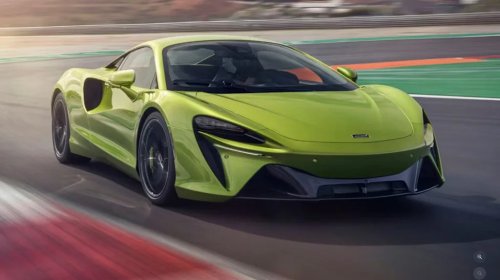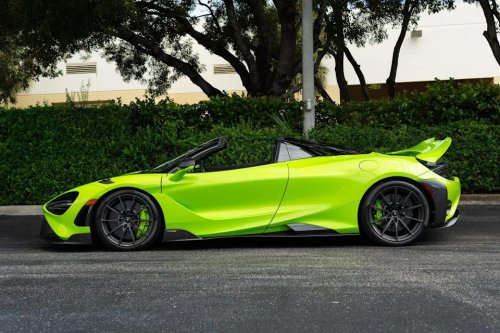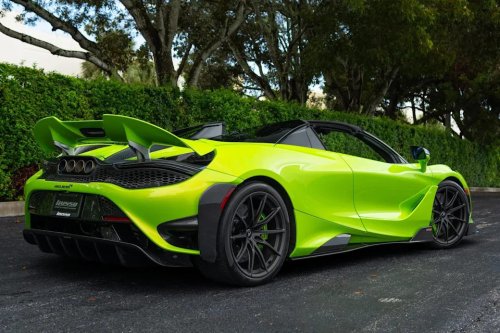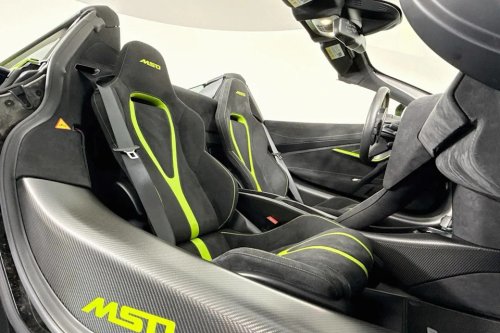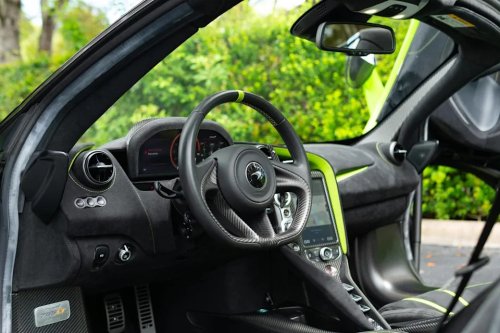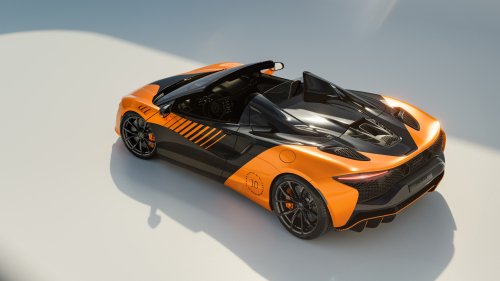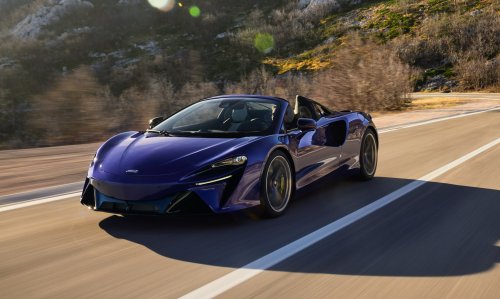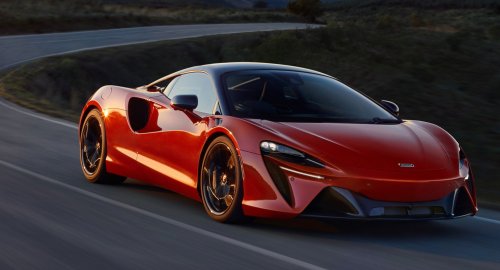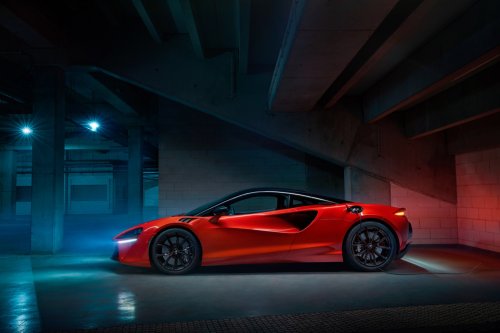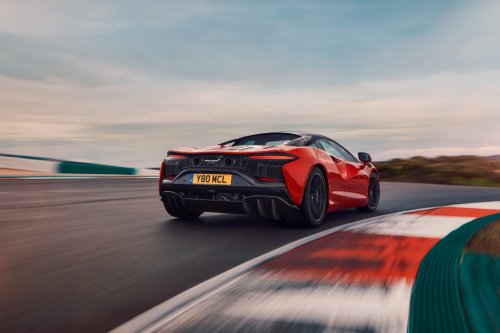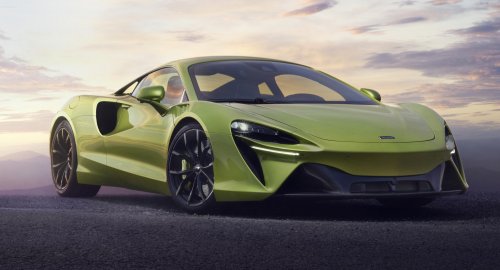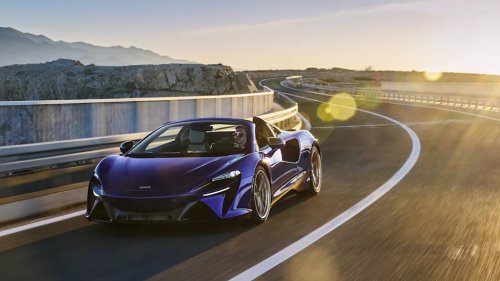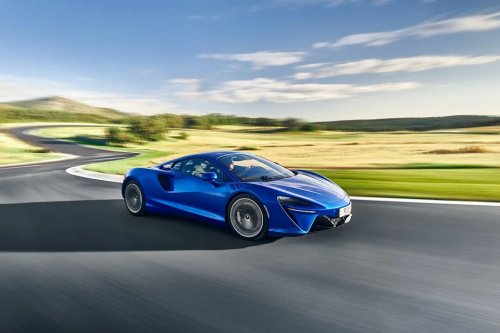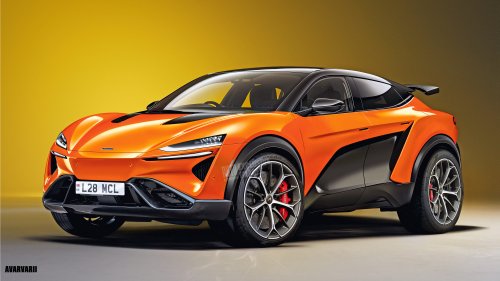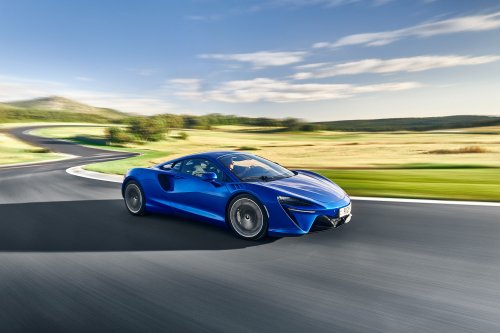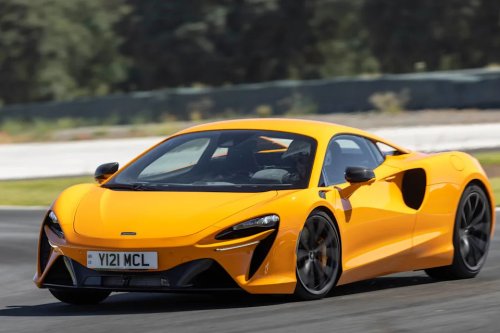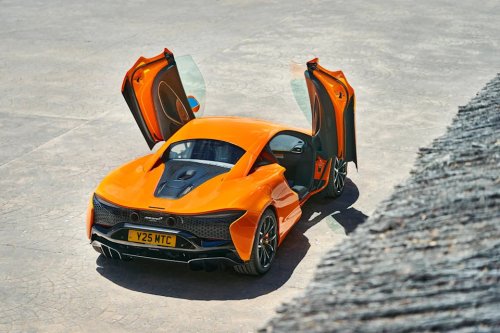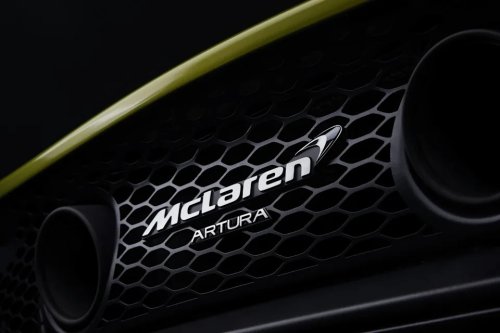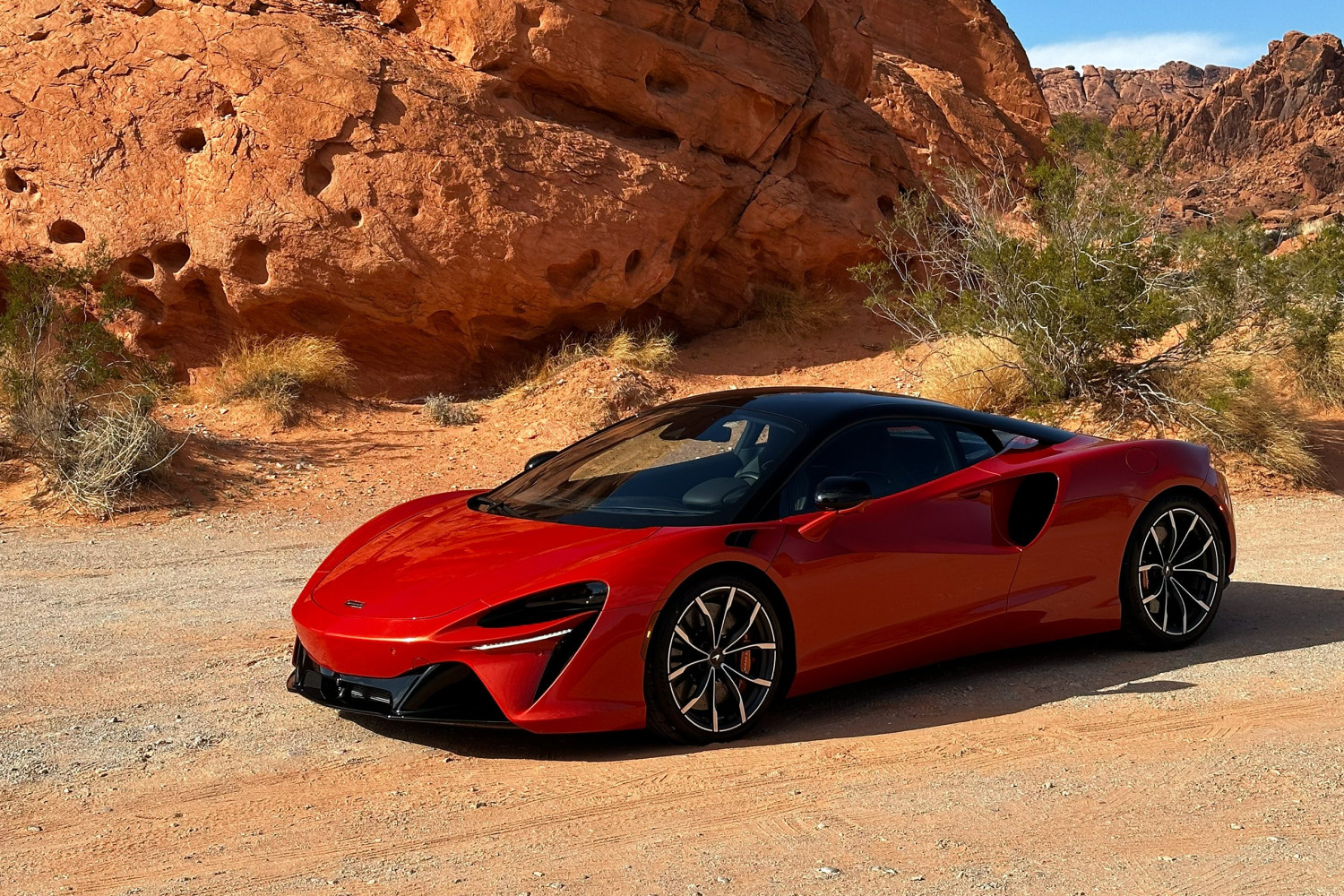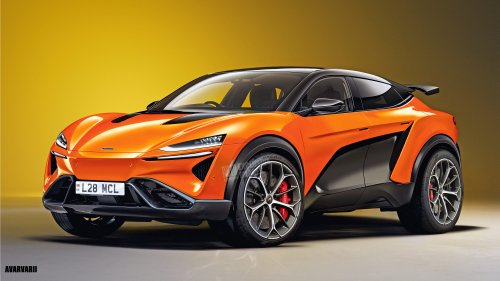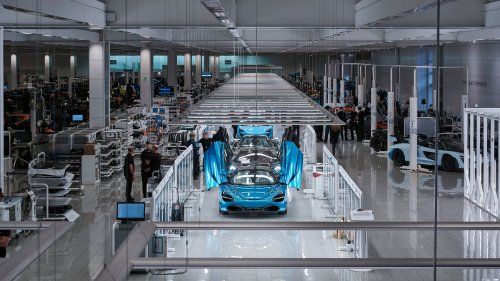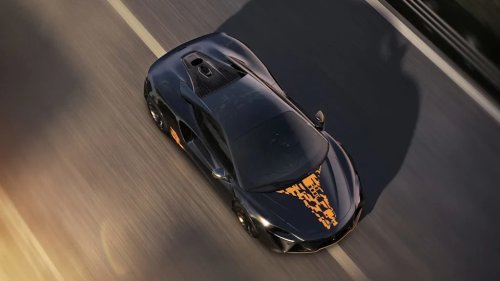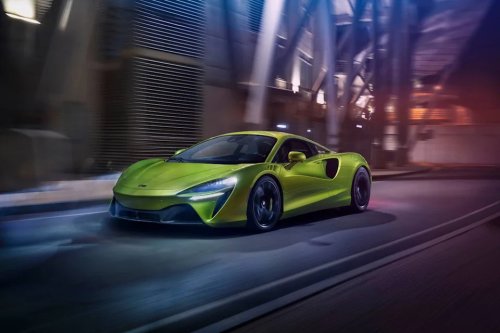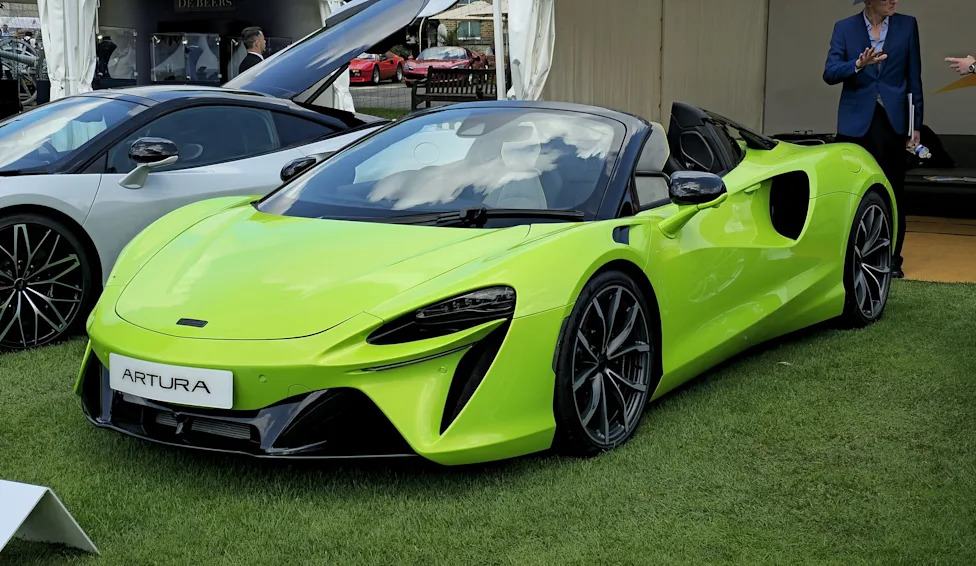



















McLaren Spent a Fortune Reinventing the Artura From Scratch — It Won't Get Long to Cash InBackfire NewsShawn HenryWed, September 23, 2026 at 10:45 PM UTCAdd us on GoogleMcLaren Spent a Fortune Reinventing the Artura From Scratch — It Won't Get Long to Cash InMcLaren built the Artura from a blank sheet of paper: a new carbon-fiber tub, a new hybrid V6 architecture nobody else in the industry had tried, and a fundamentally different idea of what an "entry-level" McLaren should be. Less than five years after the first one reached a customer's driveway, the automaker's own dealer network is reportedly being walked through a product roadmap that treats the Artura's successor as a 2027 problem. If the Artura's run at McLaren really does wrap up around 2028, the car that was supposed to reinvent the company will have had about seven years to earn back what it cost to build. For a platform this expensive, that is not a long runway.Start with what actually sits behind the seats. The Artura's M630 engine is a 3.0-liter twin-turbo V6 built around a 120-degree bank angle, a configuration no other manufacturer has put into production. The wide vee lets McLaren tuck both turbochargers into the valley between the cylinder banks in a "hot-vee" layout, which shortens the exhaust plumbing, sharpens throttle response, and packages the whole unit low and tight in the chassis. On its own, that combustion engine makes 577 horsepower. Bolted to it is a 94-horsepower electric motor fed by a 7.4-kWh battery pack slung beneath the rear bulkhead, combining for 671 horsepower and 531 lb-ft of torque at launch, enough for a 3.0-second run to 62 mph and an electronically limited 205-mph top speed. The electric motor does double duty as the car's reverse gear, which is part of why the Artura's transmission doesn't have one of its own. McLaren has since nudged combined output to roughly 690 horsepower for the current model year, but the fundamentals it revealed at the car's Bahrain debut on February 17, 2021 haven't changed. McLaren has kept the range visually fresh in the meantime, too, most recently with a limited Artura Spider tribute edition tied to the team's Formula 1 title run.None of that hardware carried over from anything else in McLaren's lineup. The Artura also introduced McLaren Carbon Lightweight Architecture, an entirely new carbon-fiber monocoque built to accommodate a battery pack and hybrid plumbing that the old MonoCell tub, dating back to the 2011 MP4-12C, was never designed around. A clean-sheet tub and a clean-sheet engine in the same car is an enormous R&D bill for a company that, even in a good year, sells low thousands of cars globally. It's the kind of investment an automaker typically expects to amortize over a decade or more, spreading it across several nameplates and facelifts the way McLaren stretched its old M838T V8 across the 12C, 650S, 675LT, 720S, and 750S.AdvertisementAdvertisementThe Artura hasn't gotten that luxury. Industry registration tracking from S&P Global Mobility shows roughly 510 Arturas found U.S. buyers in 2025, up 15 percent from the year before, only for that momentum to reverse hard, down about 18 percent over the first half of 2026. McLaren hasn't put an official expiration date on the car, and a company spokesperson has declined to confirm one. But the product roadmap McLaren has reportedly been walking dealers through points to a mid-engine hybrid V6 successor, code-named P34, arriving in 2027 with an entirely new in-house engine and gearbox of its own, aimed at the same buyer the Artura was built for.The timing lines up with who's actually paying the bills now. McLaren Automotive completed its sale to Abu Dhabi's CYVN Holdings and Bahrain's sovereign wealth fund, Mumtalakat, in April 2025, giving the automaker full outside ownership for the first time in its history and, per the companies' joint statement, access to "additional capital, advanced engineering expertise and pioneering technology." Capital that size doesn't usually get deployed to keep amortizing a car that's already sold; it gets deployed toward the next one. McLaren has separately committed roughly 500 million pounds to build its own engines in Britain rather than continuing to develop them piecemeal, a move that only makes sense if the company plans to spread that in-house tooling across more than one future model rather than simply servicing the Artura's already-finished M630.It's worth clearing up why the Artura went hybrid in the first place, because the obvious answer is wrong. Under EU emissions rules, manufacturers building fewer than 10,000 cars a year, McLaren included, are allowed to negotiate their own CO2 targets rather than chasing the fleet-wide average every mass-market brand has to hit. McLaren wasn't backed into a hybrid drivetrain by regulators the way a Volkswagen or a Stellantis brand would be; it chose one, betting that instant electric torque fill and a lower center of gravity from the battery pack would make the Artura genuinely quicker, not just greener. That bet paid off on a stopwatch. It just didn't buy the car much time on a production line.The rest of that roadmap is a bigger story on its own, one we've already broken down in detail: a roughly 810-horsepower P34 supercar reportedly undercutting the outgoing 750S on price, a four-door SUV code-named P47 aimed at buyers who've never cross-shopped a McLaren before, and a 2+2 grand tourer to eventually replace the GTS. McLaren has also hired its first Chief Creative Officer and, in July, closed out its old Super Series bloodline with the 788HS, a 200-unit send-off split between coupe and spider. None of it happens without the Artura first proving that a clean-sheet hybrid McLaren could actually sell.AdvertisementAdvertisementFor anyone currently driving one, or shopping a used one, the practical implications are milder than "discontinued" tends to sound. McLaren has a documented history of keeping parts and service support running for platforms well after production ends, including cars built in far smaller numbers than the Artura, and the same dealer investment plan reportedly funding P34 prep, at least $1 million per store and a 25 percent bump in service capacity, benefits every McLaren already on the road, not just the new ones. Where buyers should pay attention is depreciation. A hybrid supercar with a battery pack and a bespoke engine that won't share parts with its successor is a different resale proposition than a naturally aspirated V8 McLaren with a decade of parts commonality behind it. Expect early Arturas to find their value floor faster than the 720S did, and expect that floor to keep moving until McLaren actually confirms an end date.The more interesting legacy here probably isn't the Artura itself. It's the M630 engine underneath it. A 120-degree hot-vee V6 built from nothing is exactly the kind of hardware an automaker wants to prove out on a lower-volume car before betting a flagship on it, and if McLaren's next chapter really is built around in-house powertrains developed in Britain, the Artura will have done its job long before its own production run technically ends.Featured image: McLaren Artura Spider, photo by Calreyn88 via Wikimedia Commons, licensed CC BY-SA 4.0.