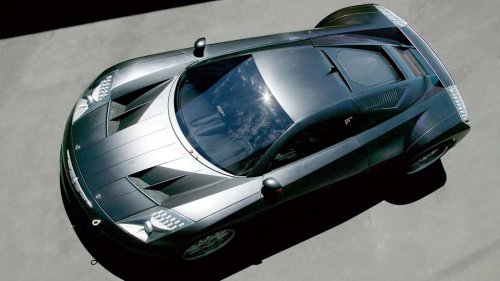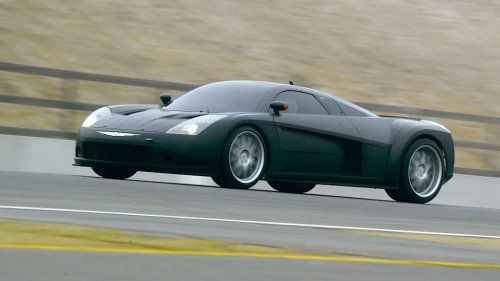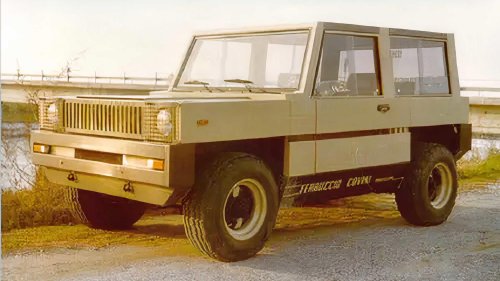
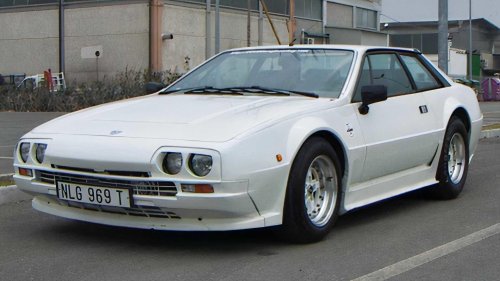
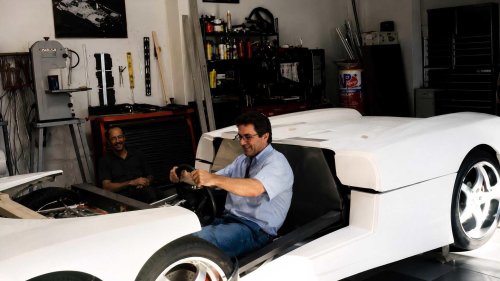
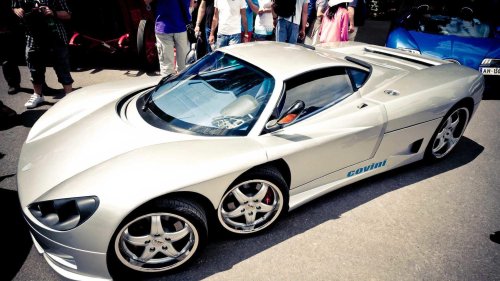
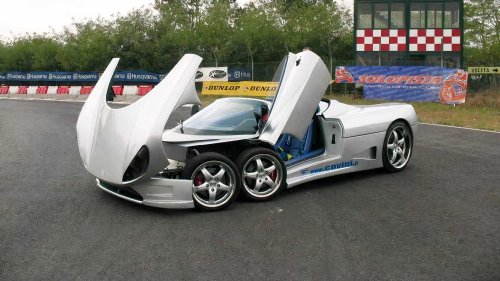



















Let’s talk about automotive gimmicks for a second, because there’s a definitive difference between an objectively good one and one that makes you want to hurl. To not be passed off as cringe-worthy, a gimmick needs to be one of two things: visually pleasing or functional. Well, here’s a story of an Italian supercar with a gimmick that toed the line between those two mediums. It was both a low-key brilliant idea, but it was also so ridiculous it’s comical. How an Italian Engineer Broke All the Rules, Had Fun Doing It Covini EngineeringItalian automakers are typecast as a little unhinged. There simply aren’t many truly “boring” Italian cars, even the cheap stuff has a propensity to be fun in some way. But to Ferruccio Covini, founder and owner of Covini Engineering, the established automotive order is an affront to the spirit of innovation.Born in 1948, Covini grew up in the post-war Italian sports car renaissance that made icons like Ferrari and Lamborghini household names. Still, his proficiency in supercar design would come later in life. Because early in his career post-engineering school, Covini set his sights not at the track, but on the trail.Short partnership stints with famous names like Callaway, Chevrolet, and Cadillac, led to the development of Covini’s first prototype, the T44 Soleado. A clever quasi-Jeep with four-wheel drive, interchangeable flat body panels, and a turbodiesel engine, diesels would become something of a theme for Covini early on. The Beginnings of a Supercar Maker, Born From Something Else Federico Theo Covini/Wikimedia CommonsIt was pushing the limits of diesel tech, not out-and-out traditional supercars like Ferraris, Lamborghinis, or Paganis, that was at the heart of Covini's ambitions. Like Cummins or Detroit Diesel in America, Italy too had a native diesel engine manufacturer beloved by tuners in the form of VM Motori. Covini used these Italian turbodiesels to build some truly bonkers experimental mid-engine sports cars.Curiosities like the B24 Turbocooler, powered by a 2.4-liter four-cylinder VM Motori engine, was among the first, if not the first diesel platforms to exceed 200 km/h (124 mph). The follow-up, dubbed the T40 Overboost, followed a similar premise with a larger five-cylinder VM Motori engine. This one made 221 horsepower and hit 60 mph in 7.5 seconds, not bad for the mid-1980s.By 1998, the Covini C36 Prototype was hitting 300 km/h or 186 mph in testing, powered by a 3.6-liter turbodiesel straight six. But this would mark the final time a diesel platform represented Covini’s flagship product. From then forward, Covini’s focus turned to something utterly ridiculous, but equally amazing. Covini C6W: A Bonkers Idea Back With Real Engineering Covini EngineeringAfter the admittedly intriguing diesel sports car gimmick had run its course, Covini endeavored to find a new avenue that’d separate them from mainstream Italian supercars. Knowing an out-and-out slug fest with Ferrari or Pagani would assuredly fail, the eccentric engineer and his team reached into the deep past of racing history for inspiration. In the late 1970s, the historic Tyrrell Racing group in Surrey, England, experimented with a Grand Prix chassis called the P34, which used a set of four small front wheels instead of two large ones on the promise of better-streamlined aerodynamics.Whether the theory had any merit is debatable, but the platform did win a race at the 1976 Swedish Grand Prix, and even completed a 1-2 finish with Jody Sheckter and Patrick Depailler behind the wheel. It was the spirit of the P34, a car Ferruccio Covini respected deeply, that was at the heart of his pride and joy, the C6W. With a fiberglass and carbon fiber body laid over an in-house-developed tube-steel frame, Covini had dreamed up a similar framework as early as the mid-'70s before a lack of low-profile performance tires shelved the idea.Only in 2003 did the idea of a six-wheeler supercar find itself back on the table, with the inspiration of the P34 racer helping refine the design. The car was powered by a 4.2-liter Audi V8 engine, shared with the S4 through S8, the A6, A8, and Q7, plus the VW Touareg and Phaeton. Coincidentally, it’s the same engine the Dutch Spyker firm used in their C8 sports car. It wasn't the same block as the 4.2-liter V8 in the Audi R8, but thanks to in-house tuning and an ECU re-map from Covini to boost power as high as 440 horsepower, this isn't a downside at all. A Supercar So Flashy, It Puts Pagani to Shame Covini EngineeringWhen the C6W made its debut, first in 2004 and then in 2005 with a revised concept at the Geneva Motor Show, people were so shocked they even thought it was fake. Others even accused the C6W’s media and press kits of being Photoshopped. But little could these people reconcile, the C6W was all too real. Not only was it real, but Covini touted the C6W as having genuine benefits over traditional supercars.Per advertisements from the period, Covini praised the C6W’s four front wheels as bringing better braking power to the table. The logic being, of course, being that four Brembo discs in the front was by definition better than just two. Whether that's true or not is anyone's guess, but so far as great automotive gimmicks go, the C6W really did take the cake. It looked closer to something you’d see in a superhero comic book or even a sci-fi anime, rather than something you can actually drive.Speaking of driving, independent double wishbone suspension at all four, or rather six, corners, plush inboard spring-dampers, and dual steering axles gave a feedback response befitting of a real, true-to-form driver's car. Grip was marketed as being almost bewitching given how small the 16-inch quad front tires are. In contrast to the single 20-inch tires at the back, it gives a look to the C6W you’ll most certainly never see again. With a top speed of 186 mph, it really was supercar fast as well. Crazy Engineering Equals Crazy Expensive Covini EngineeringCovini initially touted its production facility in Italy as being capable of building six to eight C6Ws a year when it debuted in 2004. Over the course of a 12-year period thereafter when Covini was fielding production orders, production was limited to 6-8 units annually, with very few total manufactured. None of them had Spartan botched-up interiors either; each came decked out in custom-tailored Italian leather, a gated shifter for the six-speed manual gearbox, a backup camera at a time when not all supercars had one, and milled aluminum trim pieces in abundance. In every way that mattered, it was indeed a supercar, not just an oddity.For a boutique automaker most in the industry would call a little bit goofy, the final execution on the C6W was nothing short of respectable. That attention to detail, plus the bonkers layout with genuine cultural staying power, made the C6W an astoundingly valuable car. Prices started at roughly €580,000 at launch, that’s roughly $650,000 back in the mid-2000s. With the benefit of time, plus a mythical status among enthusiasts that makes it a genuine appreciating asset, the rare occasion one pops up for sale is almost sure to net seven figures. For a company that isn’t Ferrari, Lamborghini, or Maserati, that’s an achievement well worth celebrating.Source: Covini Engineering