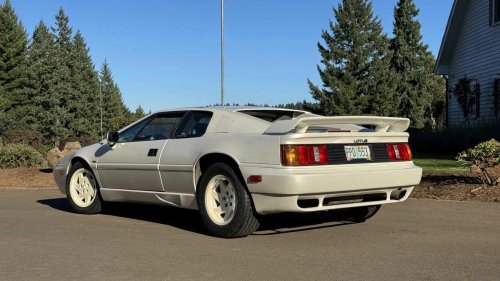
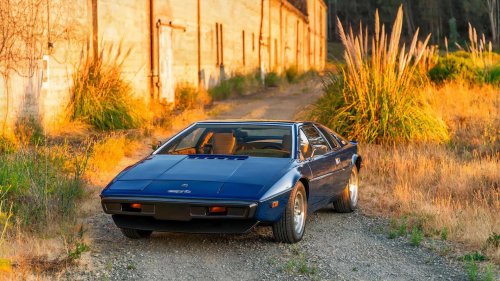
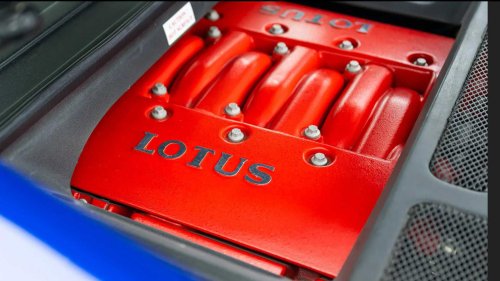
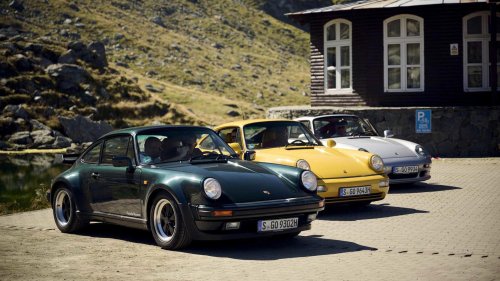
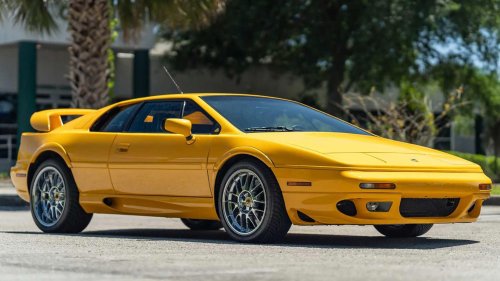
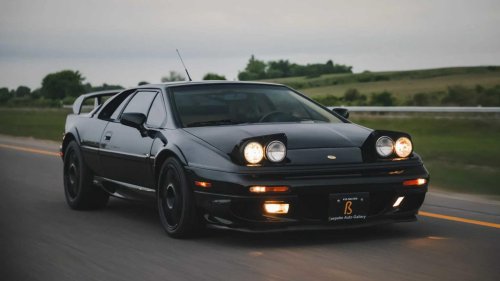
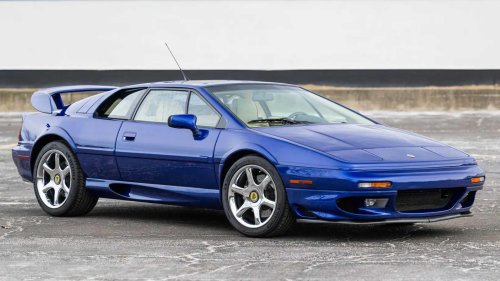
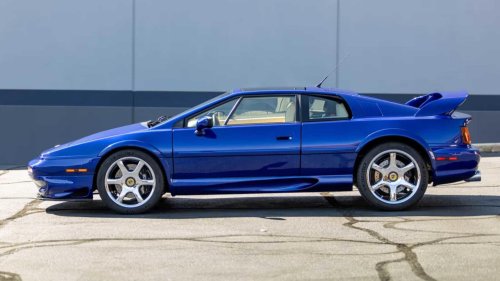
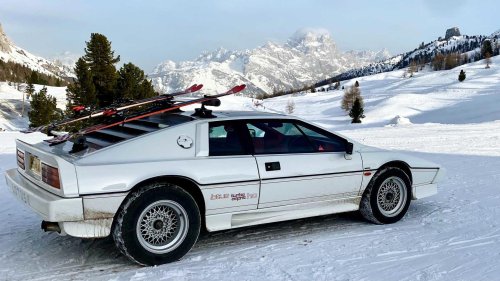
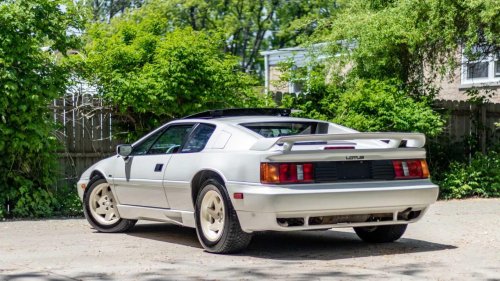
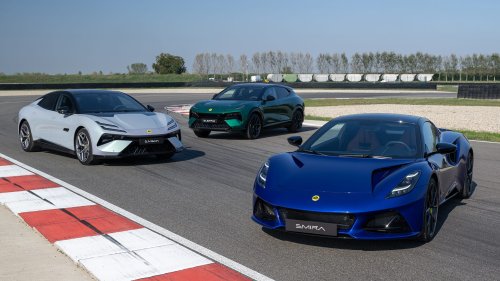
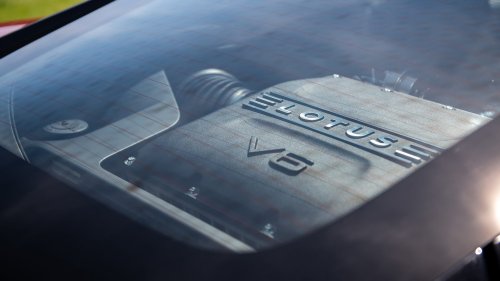
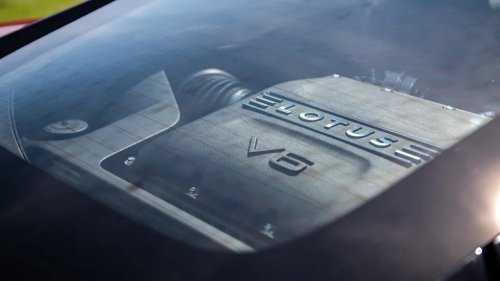
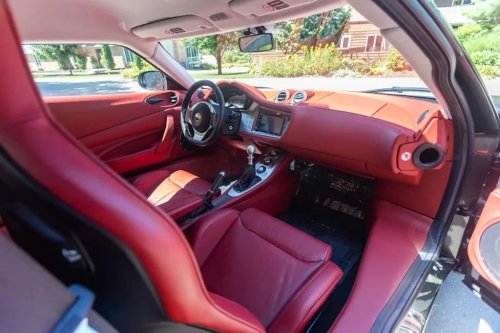
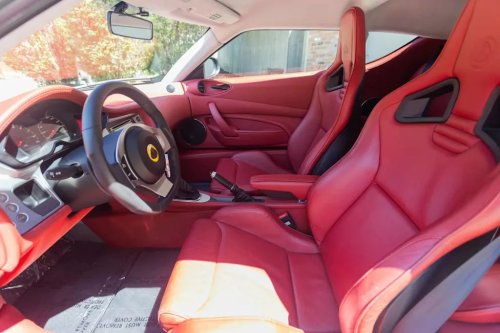
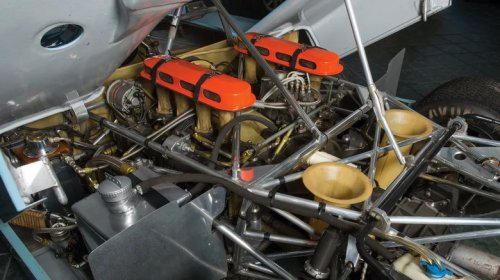
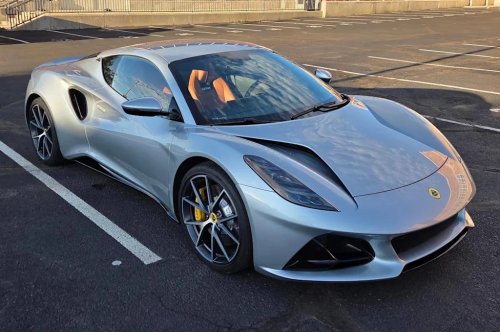
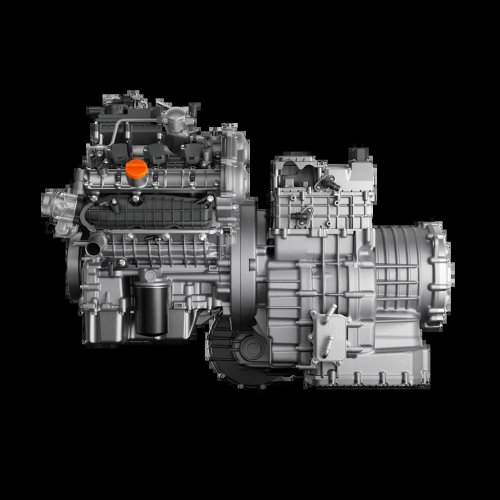
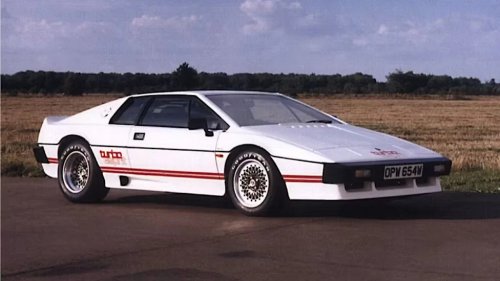
During the mid-1990s, Porsche was ahead of the game in the sports car world. The 911 Turbo, with its rear-engine layout and driving dynamics built for purists, was the benchmark that intimidated every rival. But in a small factory in Norfolk, England, a British sports car manufacturer was quietly building something that could make the life of the Porsche 993 Turbo hard. It could put up quite a tough challenge for almost half the price. Lotus Built A 911 Turbo Killer and Almost No One Noticed Bring a TrailerLotus was the only British carmaker capable of such as car back then. The engine on this British sports car was built to make 500 horsepower. Lotus had to choke it back to 350 because the French family-car gearbox bolted into the drivetrain would have exploded at full power. The headlight motors came from a Pontiac Fiero. The steering wheel was from a Pontiac Trans Am. The door mirrors were lifted off a Citroen CX. And yet this thing, this gloriously cobbled-together British underdog, could hit 60 mph in 4.1 seconds and run all the way to 175 mph. Lotus built approximately 1,613 of these across eight years. The world barely noticed. It absolutely should have.Colin Chapman wanted a V8 in a Lotus as far back as 1964. It took the brand 32 years to actually do it, and when they finally delivered, they built one of the most ferocious, naturally underrated sports cars of the entire decade. The Lotus Esprit V8 Via Bring a TrailerThe car is the Lotus Esprit V8, and if you are not already grinning, you will be shortly. The Esprit had been running a four-cylinder engine for nearly two decades before the V8 arrived, wearing a body that looked like a spaceship and packing an engine that whispered Vauxhall. The original four-cylinder car was the one that turned into a submarine for James Bond in The Spy Who Loved Me. The V8 version never got that moment. The Esprit V8 paid for that bad timing with a lifetime of obscurity it never deserved.The Esprit's design came from the pen of Giorgetto Giugiaro, the man who used his own Maserati Boomerang concept as the starting point. The result was one of the most aggressively beautiful wedge shapes ever put on four wheels, a car that looked like it was doing 150 mph standing still. Here is a fact that always gets people: the backbone chassis underneath the DeLorean DMC-12, the time machine from Back to the Future, was derived directly from the Esprit. Doc Brown's stainless steel flux capacitor mobile was built on Lotus bones. The Esprit appeared in a few Bond movies, always with the four-cylinder. When the V8 arrived in 1996, it was the best the Esprit had ever been, but Hollywood had already moved on. The Type 918: Lotus' First Ever V8 Engine Via: RM Sotheby's Here is where it gets genuinely impressive. While TVR, Morgan, Marcos, and AC were all borrowing engines from other manufacturers, Lotus sat down and designed an entirely new V8 from scratch. Not a modified unit, or a rebadged block from a parts bin. A clean-sheet, all-aluminum, twin-turbocharged V8 with a flat-plane crankshaft, dual overhead cams, four valves per cylinder, and a pair of Garrett T25 turbochargers. For a company of Lotus' size in 1996, this was almost unheard of. The Type 918 produced exactly 100 horsepower per liter, a number that supercar manufacturers were genuinely proud of at the time. It weighed just 220 kilos with everything attached, lighter than some four-cylinder units from the same era. The signature red crackle-finish cam covers became an instant icon that every Esprit owner recognizes immediately.Now here is the part that makes you want to flip a table. The engine made 500 horsepower on the dyno. Five hundred horsepower. But the Renault UN1 gearbox borrowed from a family hatchback could not survive that kind of punishment, so Lotus strangled it back to 350 horsepower to keep the transmission alive. The car that customers drove home was running at 70 percent of what the engine could actually do. In race trim, the same unit produced over 560 horsepower in the Esprit GT1 and Elise GT1 cars, and in unrestricted development it blew past 600 horsepower. All of this from a 3.5-liter V8 in 1996. The Type 918 had two main variants: 350 hp turbocharged, and 536 hp in motorsport specification. Portotypes explored naturally aspirated variants as well. The Esprit V8 Could Embarrass a 993 Turbo for Half the Price PorscheLet the numbers do the talking. In the '90s, the Porsche 993 Turbo cost well over $105,000. The Lotus Esprit V8 was $79,945. In period testing, the Esprit hit 60 mph in 4.1 seconds, ran the quarter mile in 12.7 seconds at 112 mph, and cleared 100 mph in 10.2 seconds. That put it in Ferrari F355 territory, a car asking $30,000 more for essentially identical straight-line performance. The Esprit was lighter too. The 993 Turbo weighed between 3,300 and 3,500 lbs. The Esprit came in at 3,067 lbs. On a twisty road, physics was firmly on Norfolk's side. The skid pad number of 0.94 g is a figure some modern performance cars are still chasing today. 350 HP, 175 MPH, and 4.1 Seconds to 60 Via: Bring a TrailerTo put the Esprit's performance in context, a C4 Corvette made 300 horsepower in the mid-1990s. A Mustang Cobra made 305. The Lotus, hand-built in a leaky factory by a company with a fraction of the resources of its American rivals, made 350 from a bespoke twin-turbo V8 it designed itself. The top speed of 175 mph matched the Ferrari F355 and came within spitting distance of the 993 Turbo's 180 mph. Then there was the Sport 350 in 1999, the most extreme road-going Esprit ever built. Just 50 examples. Stripped to 2,866 lbs, fitted with AP Racing brakes, magnesium wheels, and a carbon-fiber rear wing, it was ahead of virtually everything on the road at the time. Lighter, Cheaper, And Just As Fast On A Twisty Road Bring a Trailer While Porsche was spending decades engineering around the inherent handling challenges of a rear-mounted engine, Lotus just put the engine in the middle and got on with it. Natural weight distribution, a composite body built using Lotus' own patented Vacuum Assisted Resin Injection process, and Kevlar reinforcement through the roof and sides. The result was a car that could embarrass far more expensive machinery around a set of corners. Inside, it was far more comfortable than the Esprit's reputation suggested. Hand-stitched leather on the seats, dash, and doors. Full air conditioning. A Becker sound system. Power everything.It was a proper supercar interior that cost less than the deposit on a 993 Turbo. Run the inflation numbers and the case for the Esprit gets even stronger. Its $79,945 price tag in 1997 equals roughly $155,000 today. The 993 Turbo at $105,000 translates to over $200,000 now. The buyer who picked the Lotus saved the equivalent of $50,000 in modern money for a car that was lighter, faster to 60, and more exciting on every back road they could find. Why Nobody Remembers The Fastest Lotus Ever Made Via: RM Sotheby'sNo marketing budget. None. No Super Bowl ads, no celebrity endorsements, no campaign. The car was the only advertisement Lotus had, and almost nobody ever saw one in person. Total Esprit V8 production across the entire eight-year run came to approximately 1,613 examples. Ferrari sold ten times as many F355s. Porsche moved more 911 Carreras in a single month. The body was a 20-year-old design when the V8 arrived, restyled twice but still a time capsule when parked next to a 993 Turbo or an F355 in a showroom. Lotus' Reputation for Unreliability Scared Buyers Away The reliability issues didn't help. Early cars suffered from cylinder sealing problems where overheating allowed coolant to breach the cylinders and end up in the sump. At $80,000, that's not something you expect to deal with. The Renault gearbox, despite heroic engineering efforts to keep it alive, remained fragile under sustained hard use. One dealership mechanic described the cars as very unreliable and awful to work on, making clear that repairing Esprit was essentially his entire job description. One obsessive owner praised it, then admitted that getting out of it without looking ridiculous was basically impossible. Both of them were right. No Movies, No Pop Culture Moment, No Legacy Sotheby's MotorsportJames Bond drove the four-cylinder. The V8 got nothing. While Porsche and Ferrari worked their global dealer networks and spent millions on brand building, Lotus was operating out of Norfolk with a roof that leaked. The Final Edition, just 82 hand-built cars, rolled out in 2004 with almost no attention. The Elise had already stolen the spotlight as the future of the brand, and the Esprit left quietly while everyone was looking the other way. It was one of the very last production cars ever made with pop-up headlights, sharing that distinction only with the C5 Corvette. When it left, that era of design went with it. The Esprit V8 Is Finally Getting the Respect It Deserves London ConcoursRight now, a clean 993 Turbo costs between $150,000 and $250,000. A clean Esprit V8 is still available for around $50,000. Same era, same performance ballpark, one third of the price. That window is closing fast. The most expensive Esprit V8 sold recently went for $220,000 at Bring a Trailer, and the market is clearly waking up. The 50-unit Sport 350 and the 82-unit Final Edition are already commanding over $100,000 when examples surface. Get in now or spend the rest of your life explaining why you didn't. The Last Analogue Lotus Before Everything Changed Bring a TrailerThe Esprit V8 was the last of everything that made Lotus what it was. Last pop-up headlights. Last manual-only gearbox. Last car without traction control, stability control, or any electronic safety net at all. The Emira is brilliant, but it has screens, driver aids, and a Toyota engine. The Esprit V8 had hydraulic steering, a throttle pedal, and the knowledge that if you got it wrong, that was entirely on you. This was the last car Lotus ever built that truly lived by Colin Chapman's most famous principle: simplify, then add lightness. 350 horsepower, 1,379 kilos, nothing between you and the road. Glorious.