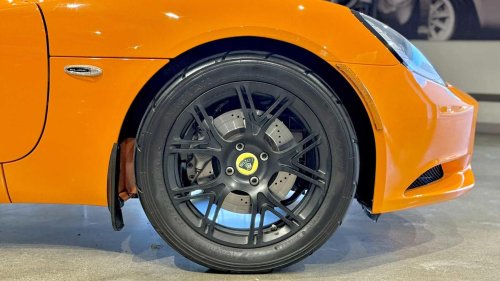
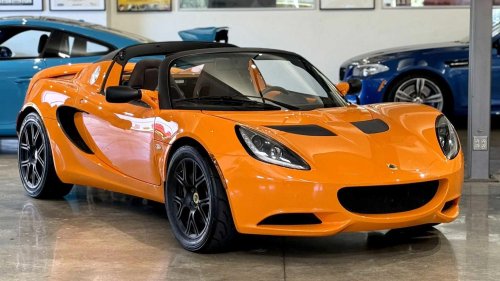
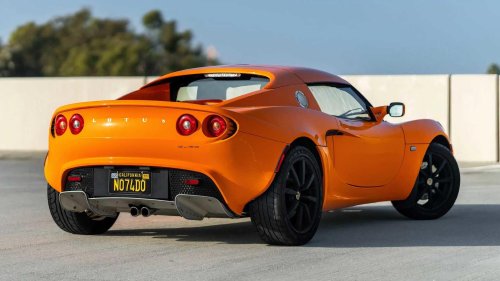
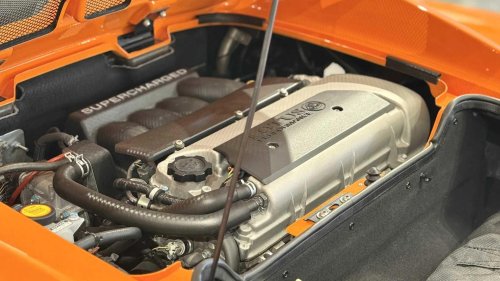
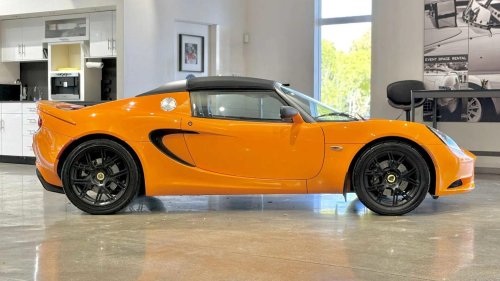
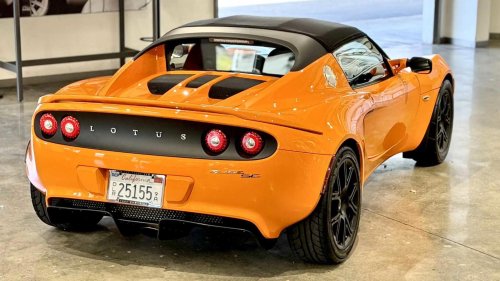
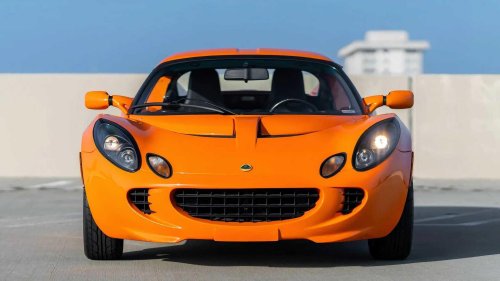
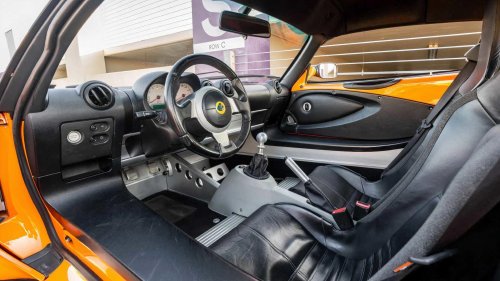


















The performance car industry has always had a simple story to tell about speed. More power is everything. It is a story that sells well because it is easy to understand. You add horsepower, the car gets faster. This principle shaped the muscle car era, the supercar era, and the modern era of turbocharged everything. It is also, in a very precise set of circumstances, completely wrong.There is one approach to performance that bypasses the horsepower arms race entirely, and Lotus has spent most of its existence demonstrating it. The car that made the argument most cleanly was produced at their factory in Hethel, Norfolk, across a decade when rivals were adding cylinders and the rest of the industry was chasing power figures. This car was doing something else. What Happens When You Remove the Problem Bring a TrailerColin Chapman built his reputation on a single observation. A lighter car is faster than a heavier car, regardless of power. He called it "adding lightness," which was really the opposite of what everyone else was doing. While American manufacturers stacked displacement and British rivals chased top speed, Lotus built cars around aluminum extruded chassis, composite bodywork, and the absolute minimum of everything else. The result was a series of sports cars that consistently outperformed machinery with two or three times the power output, not because they were faster in a straight line, but because they were faster everywhere else.The physics are simple. Halve the weight of a car, and you need half the power to achieve the same acceleration. Cut the weight further and the tires, brakes, and suspension all operate in a more favorable range. Direction changes take less effort. The car does not need to be told to stop or turn, it just does. The conventional performance hierarchy treats power as the primary variable, but in a sufficiently light car, power becomes almost secondary.Lotus had been making this argument for decades, from the Seven in 1957 through the iconic Elan, the Europa, and every lightweight roadster that followed. By the early 2000s, with a second-generation model in production and a new Toyota-sourced engine in development, the case was about to become harder to ignore than ever. The numbers, when they arrived, would force a reappraisal of what performance actually meant, and which cars deserved to be benchmarked against rivals with far greater power and far higher price tags. The Lotus Elise S2 and Why the Numbers Do Not Tell the Whole Story Bring a TrailerThe 2004 Lotus Elise S2 111R is where the argument crystallizes. The chassis was a bonded extruded aluminum tub with independent double wishbones front and rear, no power steering, and no conventional stability control. The car was rear-wheel drive and mid-engined, keeping the heaviest components close to the center.Lotus's own data for the 111R puts power-to-weight at 220 hp per tonne, or 10 pounds per hp, a figure that sits comfortably ahead of the Boxster S 987 despite the Porsche having 102 more horsepower. A Mazda MX-5 of the same era weighed around 2,300 to 2,500 pounds with comparable power. A Honda S2000 AP2 weighed 2,864 lbs with 237 hp. The 111R weighed 1,896 lbs. The Elise was lighter than both rivals with less power than either, and quicker on real roads than most cars with twice its output.Bring A Trailer It's worth noting that the 111R was a European model designation. The car sold in North America from 2005 was called the Federal Elise, later renamed the Elise R for 2007. Both run the same 2ZZ-GE engine, the same 189 hp, and the same six-speed gearbox, so the performance and buying arguments apply equally. The SC arrived in 2008 under the same name in both markets.The 111R ran 0-60 in 4.9 seconds standard, or 4.7 with the optional Sport package. The Boxster S 987, with 291 hp, needed around 5.2 seconds. A car with 54 percent less power reached 60 mph faster than the Porsche. That is not a rounding error. That is the weight equation made visible.The Porsche wins in a long straight. On anything with corners, the Elise's combination of low mass, mid-engine balance, and unassisted steering creates a feedback loop between car and road that the Boxster, for all its competence, cannot replicate. Period comparisons from contemporary road tests noted that on real roads, the gap between the two cars' pace was larger than the spec sheets suggested, consistently in the Elise's favor once the road stopped being straight. The Boxster costs more new, more to run, and is slower everywhere that matters to most drivers. The Toyota Engine Lotus Made Its Own Bring a Trailer The switch from Rover's K-series to Toyota's 2ZZ-GE in 2004 was one of the most consequential decisions in the S2's life. It was a fine engine in context, but its head gasket reputation and the collapse of Rover as a company made the change necessary as well as desirable.The 2ZZ-GE is a 1.8-liter DOHC unit from the Toyota Celica GT-S, but Lotus did not simply bolt it in. A bespoke Lotus T4 engine management system replaced the Toyota ECU. A custom exhaust, revised intake, and recalibrated fuel mapping produced a final output of 189 hp at 7,800 rpm with the VVTL-i variable valve timing system switching cam profiles at around 6,200 rpm.That cam switch is part of what defines the 111R's character. Below 6,200 rpm the engine pulls cleanly but modestly. Above that threshold the VVTL-i system opens a second, more aggressive cam profile and the power delivery changes character sharply. Lotus chose this engine because its chain drive and robust internals. Toyota's manufacturing quality made it effectively bulletproof in Elise specification, where the engine never had to move a heavy car or endure the heat soak of a cramped, poorly ventilated installation. The last 2ZZ engine ever built by Toyota was presented to Toyota's president by Lotus in 2010 after being installed in a special Elise R. That is not a story Toyota tells about an engine it considered ordinary. How the Elise Competes With Cars Twice Its Power Bring a TrailerThe power-to-weight figure is the headline, but it does not explain everything. What the Elise's weight figure also does is transform the chassis into something that would be impossible to achieve in a heavier car. Double wishbone suspension front and rear is common enough. But in a car weighing under 1,900 lbs, those suspension components are managing a mass so low that their response characteristics are completely different from the same setup on a 3,000 lb sports car. There is less inertia to overcome when changing direction. Less weight transfer under braking and acceleration. Less load on the tires, which means the contact patch operates in a more linear portion of the grip curve for longer.The practical result is that the Elise generates handling limits most road cars cannot approach. A Porsche 911 of the same era had more total grip. It also had enough mass that reaching that grip limit required significant commitment and sufficient speed. The Elise reaches its limits at lower speeds on shorter straights, which means on the roads most people actually use, the Elise is the faster car. Track comparisons between the 111R and cars like the Porsche Cayman 987, which had 242 hp and over 1,100 lbs more to carry, repeatedly showed the Elise competitive on lap times at circuits where pure horsepower was not the determining factor. On any circuit with more than two corners, that describes most of them. What the Lotus Elise S2 Is Worth Today Bring a TrailerThe S2 111R averages $33,500 in good condition, with concours examples reaching $77,000, based on current valuation data tracking 392 Elise sales. The SC commands a meaningful premium, with the broader S2 range averaging $43,802 across recorded transactions, peaking at $95,008 for a 2010 supercharged example sold in 2022. The base K-series cars sit lower and offer genuine value for buyers willing to manage the head gasket risk, though a pre-inspected example is essential.The 111R, sold in the US as the Federal Elise from 2005 and the Elise R from 2007, is the variant the market has settled on as the one to own. The Toyota engine removes the reliability anxiety that follows the K-series, the 189 hp output is sufficient to exploit the chassis on public roads, and supply of unmodified cars with clean histories continues to thin. A Porsche Boxster S 987 in comparable condition sits at similar or lower prices today, offering more power and more refinement. The Elise offers less of both and more of everything that actually matters on a real road. What To Look For When Buying an Elise S2 Bring A Trailer The single most important structural check when buying an Elise S2 is the front upper wishbone pick-up points. Galvanic corrosion where the aluminum wishbones meet the chassis is irreparable and has written off many otherwise sound cars. An engineer's report from a Lotus specialist before purchase is not optional. The front clamshell is a single fiberglass composite piece and cracks easily, including from minor curb contact. Replacement is expensive and time-consuming, so inspect carefully along the lower edges and around the front corners.On Toyota-engined cars, check the gearbox change from second to third when the engine is cold. A crunch indicates the synchros are wearing, particularly on SC models. The Toyota 2ZZ-GE is chain-driven and generally considered bulletproof, but the gearbox itself requires attention if the car has been used hard.Bring A Trailer On K-series cars, check the dipstick for white emulsion and confirm the temperature stabilizes at around 85 degrees Celsius in normal use. Cambelt service is required every four years or 36,000 miles, and skipped examples are a significant risk. Rear toe-link failure is a known issue on track-used cars. Upgraded replacement parts are available from specialists and are worth fitting proactively.Budget for specialist servicing from a Lotus-experienced independent. The car will reward careful ownership with exceptional reliability. It will not forgive neglect.Sources: Hagerty, Classic.com, Evo, Bring a Trailer.