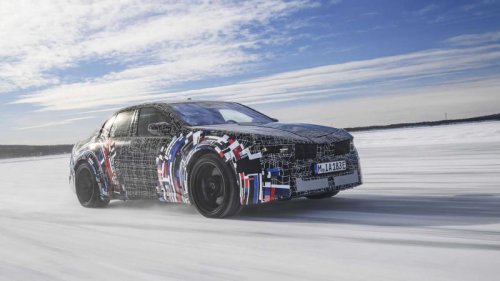
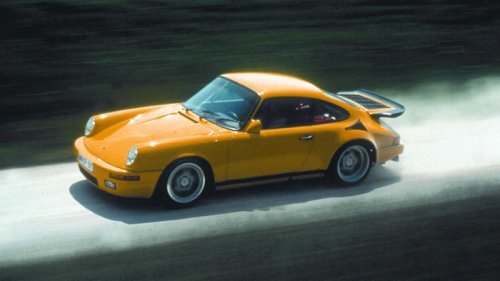
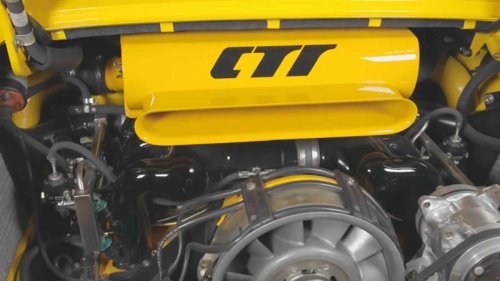
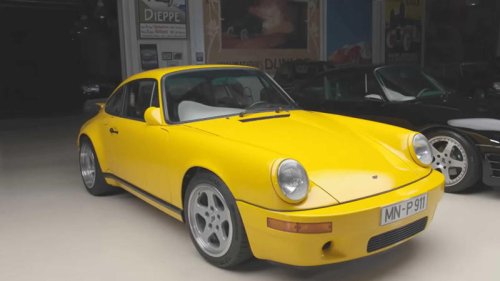

















Not a day goes by without being exposed to yet another viral car video these days. Social media is rammed full of excellent content, whether it is a new supercar model, a classic found in a barn, or just a bunch of drag racing SUVs, and all of it is only a click or two away. But believe it or not, millennials, there was a time when phones and social media didn't exist. There was a time when even the internet wasn't part of our daily lives.But this didn't mean that news of some of the most exotic cars of the time didn't filter through. And no we aren't talking arriving on some kind of Fred Flintsone-style hand-carved stone tablet. Possibly the world's first viral car video came about by word of mouth, and more importantly, being shared and copied illegally. At the same time, it created a legend of an iconic car and an even more iconic racetrack. Are you faszinated yet? Performance Cars Are Hyped Even Before They Are Launched These Days BMW There was a time when a spy shot would only come from a person with an anorak and a flask of coffee waiting outside a factory or racetrack for three days straight. Not anymore. Spy shots come from manufacturers themselves, with camouflage patterns likely decided by a focus group, and a slow drip feed of hype-inducing details. If you live in certain parts of Germany, you'll see test mules being used to go skiing. It's almost as if the carmakers want them to be spotted.Of course, there are the endless testing laps of the Nürburgring for pre-production cars, but the super sedan or sports car going viral on the Nordschleife isn't going to harm its performance chops in the eyes of enthusiasts. To put it simply, social media is there as free publicity for carmakers, and an easy way for details, lap times, and just cool content, to be quickly shared around. Before Social Media Things Were Simpler — And Harder Nissan In the olden days there were things called car magazines, which were a bit like tablets, but you didn't need to charge them up. Car launches were generally hyped through motor shows, rather than clickbaity short vids on YouTube, and manufacturers ascertained public interest by walking up to people and asking, "what do you think?"The idea of any kind of short film was tricky. Either you would need to get a TV channel to feature it, often via a new bit of futuristic tech, or you could put it on a VHS cassette and ask people to buy it. Not exactly a recipe for riding a wave of hype. But one manufacturer managed to do the impossible, becoming world-famous through a viral video—in the '80s. The RUF Yellowbird Got Its Hype From VHS If you were a car fan in the '80s, it is quite likely that a friend would give you a grainy VHS tape of a yellow sports car driving outrageously fast around a racing circuit in a land far, far away. The official title of the 1989 video is Faszination on the Nürburgring, but by the time most pirated copies had passed through several hands, the name of the 20-minute-long film was probably long forgotten. The driver is Stefan Roser, a man in a T-shirt and white socks, who drifts and power slides the yellow Ruf CTR ‘Yellowbird’ as if he was touge racing.What makes the video heart-in-mouth, and Stefan's easy-going wheel twiddling even more impressive, is the fact that the Yellowbird was the fastest car in the world at the time. The narrow-body, single wing-mirror, CTR of 1987 is fitted with a 3.4-liter twin-turbocharged flat-six. Seeing Roser apply bootfuls of boosted air-cooled power, and armfuls of opposite lock as he drove past tourist motorcycle riders made this the first viral car video. And if you hadn't seen a copy in the '80s, you needed to find one fast. The Yellowbird's Nurburgring Lap Is Legendary Ruf The story goes that Roser pitched the idea to Alios Ruf as a way of drumming up a bit of interest in the car. The CTR had launched in 1987, and two years later the company was brainstorming on how to make a presentation for the company. Stefan suggested getting a few shots at the 'Ring, but this turned into a hot lap complete with a helicopter and camera.Two laps of Stefan simply driving the CTR as fast as he could would become Faszination. Before long, the video had gone global, and the CTR, while not from a big name supercar brand, had become a well-known name among enthusiasts. It even helped to put the Nürburgring, which was a lesser known racetrack at the time, on the radar of gearheads across the planet. The Yellowbird Was Once The Fastest Car In The World YouTube/ Jay Leno's Garage The 1989 RUF CTR (Group C Turbo RUF) Yellowbird features a slippery body and a reduction in weight. The 463-horsepower coupe reached 211.14 mph when recorded on the record track at Ehra Lessien, and could hit 60 mph in 4.0 seconds. The suspension and brakes were also upgraded.Just 29 Yellowbirds were ever completed, including a few lightweights, identified by a lack of fog lights at the front, says Hagerty, making it a lot rarer than a lot of the supercar competition. The power is channeled through a proprietary 5-speed manual transmission developed by RUF. Driver aids were limited to how heavy your right foot was. How The Yellowbird Compared To Other Supercars Jay Leno's Garage/ YouTubeThe Porsche 959 and Ferrari F40 had been scrapping it out in the mid '80s to become the world's fastest car. The argument seemed to be settled when the Ferrari became the world's first 200 mph car, eclipsing the 959's top speed by just three mph. At the time, it seemed almost unfathomable that the F40 could hit this speed, and unlikely that anyone would be creeping past it any time soon.It turns out that the CTR didn't just creep past it, it blitzed past it by another 10 mph, with its top speed of 211 mph. It took until 1989 for Jaguar to release the XJ220, at which point the CTR would be bested. The Jag hit a verified 217 mph, taking the title for itself. The McLaren F1 of 1992 blew everyone out of the water with its top speed of 240.1 mph. The Ruf CTR Yellowbird Is Also Worth More Than Most Supercars Ruf may not be a household name like Ferrari and Porsche, but its most famous model recently sold for a lot more than many '80s icons. One of the Pfaffenhausen-based firm’s CTR Yellowbirds went up for sale at Gooding Christie’s annual Amelia Island Auctions, causing quite a stir. The car sold for an incredible $6,055,000, earning it the title of Hagerty's "sale of the year".This means that you could buy three Porsche 959s for the same price, and still have change. A 1988 959 Komfort sells for $1,450,000 in good condition, whereas a 959 Sport will set you back $2,300,000. A Ferrari F40, meanwhile, has a good condition price of $2,550,000.