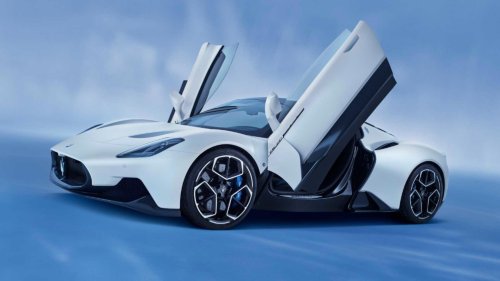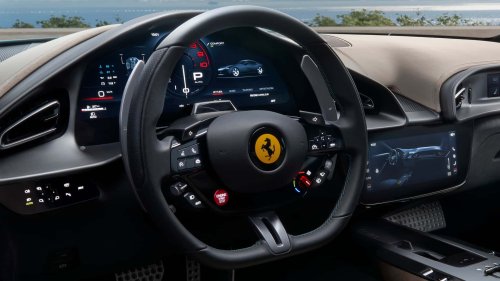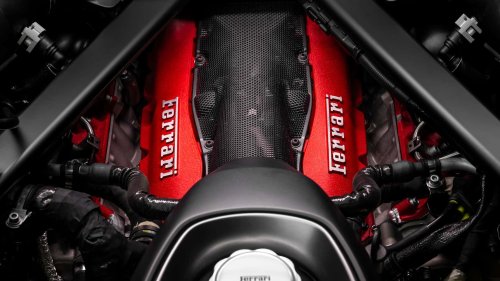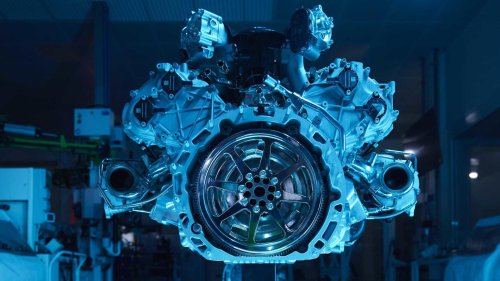
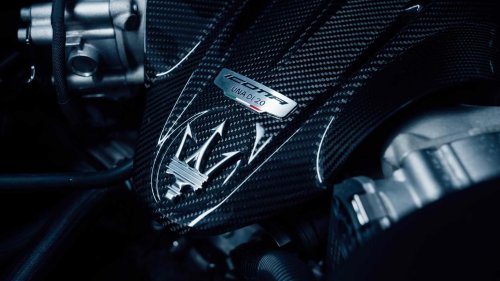
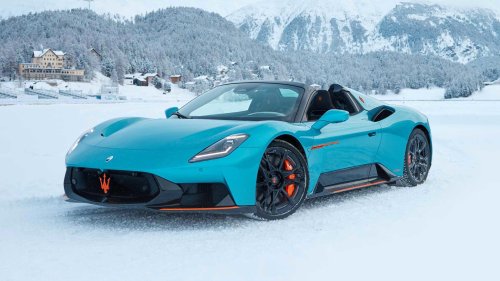
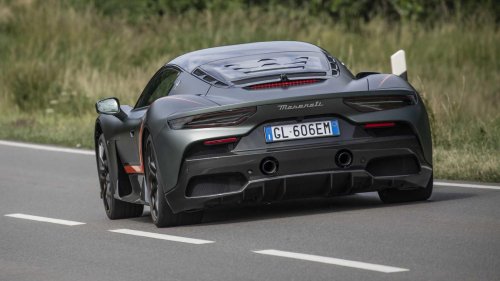
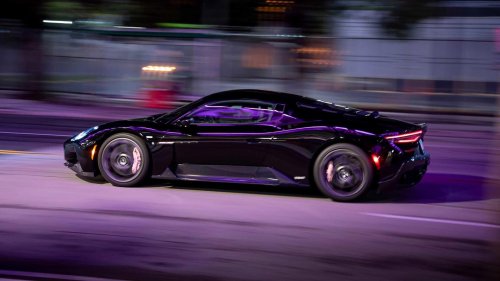
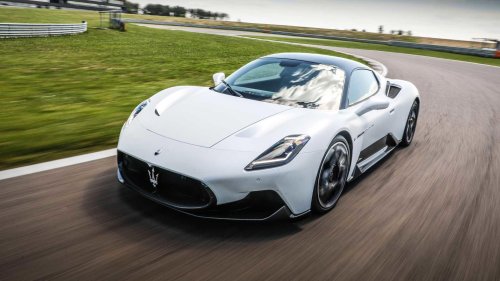
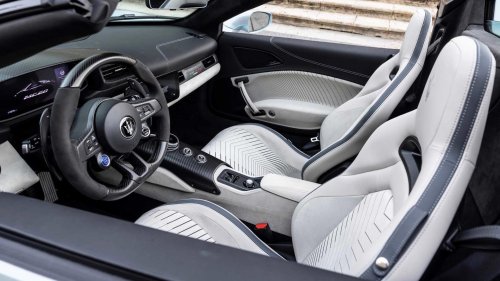
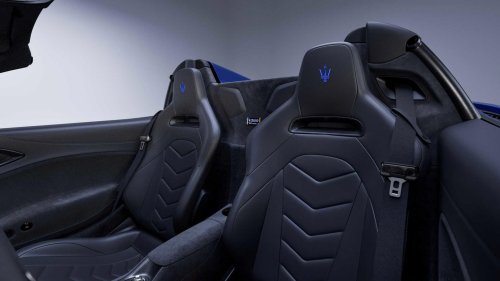
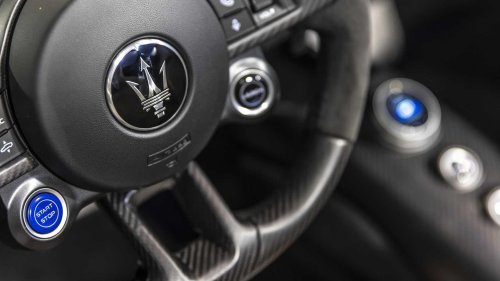


















The sports car segment remains a low-volume but vital halo category for the automotive industry. These aspirational cars serve as a platform for technical innovation and brand prestige. Over the last five years, luxury SUVs have dominated the overall market share, but sports cars remain a desirable product. Over the last five years, demand has transitioned from traditional high-volume sales toward a divided market defined by steady interest in attainable, lightweight driving machines and an increasing demand for high-end, performance-oriented luxury models.There is a desire among today's consumers for a seamless blend of heritage-inspired mechanical engagement and cutting-edge digital connectivity. There has also been a significant pivot toward high-performance hybrid and electric powertrains to satisfy environmental regulations and improving torque responsiveness. This has led to an increased adoption of impressive and refined V-6 engines that rival their V-8 counterparts. Downsizing Flagship Engines In 2026 MaseratiEngine downsizing in the performance car world has transitioned from a niche efficiency strategy to a dominant engineering philosophy. Driving this has been the increasingly stringent global emissions standards and the pursuit of better power-to-weight ratios. Reducing displacement and cylinder counts means that manufacturers are able to lower internal friction and overall engine mass. Doing so significantly improves fuel economy and reduces carbon output without sacrificing the high output expected by enthusiasts.Advancements in turbocharging and high-pressure direct injection aid downsizing endeavors. Applying these components allows smaller engines to produce torque curves that often surpass those of larger, naturally aspirated powerplants. Downsizing has also become the foundation for modern performance hybridization. Compact internal combustion units paired with electric motors fill the torque gaps and provide a level of immediate responsiveness. Despite some resistance from purists regarding changes in exhaust note and mechanical character, the trend has proven essential for maintaining the viability of high-performance vehicles in a more regulated and environmentally conscious market. Maserati Holds On To The American Market MaseratiMaserati currently finds itself in a precarious transitional period in the U.S., characterized by a significant downturn in market performance as it struggles to define its value proposition within the broader Stellantis portfolio. After peak sales years nearly a decade ago, recent annual figures show a sharp contraction, with 2025 results dropping nearly 60 percent from 2023 levels to just over 11,000 units. This leaves the brand trailing behind more exclusive competitors.Consumer sentiment in America reflects a growing identity crisis. While enthusiasts still praise the brand’s distinct Italian styling and emotive engineering, many modern buyers are deterred by perceived reliability issues, rapid depreciation, and a product range that feels uninspired. Most criticisms suggest that the brand's products are too expensive to compete with high-volume German luxury brands and lack the performance cachet to challenge top-tier sports car manufacturers. The MCPura Shows The Potential Of V-6 Power Maserati The 2026 Maserati MCPura serves as the definitive halo car for the brand. The mid-engined sports car has acted as a technical flagship that bridges the gap between the company’s storied racing heritage and its high-performance future. Since its introduction in 2022 as the MC20, the Italian marque has positioned this model at the very top of its catalog. It is the first modern Maserati to feature a carbon-fiber monocoque and the proprietary twin-combustion V-6 engine. This effectively signals the brand's return to the mid-engine supercar segment since the 2004 MC12.In terms of market performance, while Maserati’s overall U.S. volume has faced significant headwinds recently, the MCPura has maintained a strong, low-volume presence. The brand reports selling around 1,000 units annually in the U.S. and often commands prices well above its starting MSRP due to high demand for limited-run variants. This consistent interest has helped maintain the brand's prestige and prompted the cancellation of the proposed electrified Folgore model. Ferrari Technology Put To Good Use MaseratiThe heart of the 2026 Maserati MCPura is the 90-degree-bank Nettuno 3.0-liter V-6 engine that serves as a landmark achievement in the brand's engineering history. The engine's design is defined by its Cold Vee layout, where the two single-scroll parallel turbochargers are mounted on the outside of the cylinder banks rather than within the valley. This architecture utilizes a closed-deck aluminum block with wet steel cylinder liners and aluminum heads to manage high thermal loads while maintaining a relatively low weight.Its most innovative feature is the Maserati Twin Combustion system, which incorporates a passive pre-chamber and a dual-ignition setup. Inspired by Formula One technology, this system uses a central spark plug to ignite a rich mixture in a small pre-chamber, which then shoots jets of flame into the main combustion chamber through specialized orifices to ensure a faster, more efficient burn. Development of the Nettuno was an entirely in-house effort led by the Maserati Innovation Lab and the Maserati Corse historic technical base.While the engine shares some basic dimensions and firing order with the Ferrari-derived V-6 used in Alfa Romeo performance models, the Nettuno is a highly bespoke evolution protected by multiple international patents. It is assembled at the dedicated Maserati Engine Hub at the historic Viale Ciro Menotti plant in Modena, Italy. This is the first time in over two decades that Maserati has produced its own high-performance engines on-site. V-8 Supercar Performance Abilities Maserati The 2026 Maserati MCPura delivers 621 horsepower at 7,500 RPM and 538 pound-feet of torque starting at 3,000 RPM. This power is channeled to the rear wheels through an eight-speed oil-immersed dual-clutch transmission, enabling the coupe to sprint from 0 to 60 MPH in 2.9 seconds.The vehicle’s aerodynamic profile and carbon-fiber construction allow it to maintain stability well into its high-speed range, completing the quarter-mile in 11 seconds at 130 MPH. The MCPura will continue to reach a top speed of 202 MPH, while the open-top Cielo variant is limited to a marginally lower top speed of 201 MPH. A Chassis To Match Peak Performance MaseratiThe 2026 Maserati MCPura is built upon a high-tech, ultra-lightweight carbon fiber monocoque, developed in collaboration with Dallara. The chassis alone weighs 220 pounds, but still provides a high torsional rigidity. The suspension configuration consists of a double-wishbone assembly at the front and rear, complemented by a semi-virtual steering system. This setup employs two bottom links and one top link to maintain a constant tire contact patch during high-speed cornering for sharp and instinctive handling and high lateral acceleration.To balance this track-focused precision with everyday usability, Maserati equipped the MCPura with active dampers that can be adjusted via the central drive mode selector. In its default GT mode, the suspension softens, providing a supple ride quality reminiscent of traditional Italian grand tourers and filtering out road imperfections. The use of forged aluminum components reduces unsprung mass, allowing the chassis to remain composed on rough surfaces, while still offering the Corsa setting for maximum stiffness and responsiveness during spirited driving. The MCPura's Luxurious And Sporty Interior Maserati The interior of the updated 2026 Maserati MCPura variant focuses on functional minimalism. The layout is designed to eliminate distractions and heighten the sensory connection between driver and machine. The cockpit is strictly driver-centric, featuring a slimmed-down central tunnel clad in matte carbon fiber to prevent glare and a new squared steering wheel with a thicker rim for improved ergonomic grip.Maserati applies a racing-inspired use of Alcantara and technical fabrics across nearly all touchpoints, which provide high-grip surfaces during spirited maneuvers. The cabin's centerpiece is the mechanical drive mode selector, which is inspired by luxury horology and positioned prominently in the tunnel.Maserati This focus on essentialism means that most non-driving controls are digitized or moved to the wheel, ensuring the driver’s hands rarely need to leave the primary controls. The low seating position and wide-view digital rearview mirror maximize the visibility required for high-speed placement. Despite its track-ready aesthetic, the MCPura is equipped with a comprehensive suite of modern amenities that maintain Maserati’s grand touring pedigree.Standard comfort and convenience features include dual 10.25-inch displays with a configurable digital instrument cluster and a central touchscreen running the Maserati Intelligent Assistant. You also get wireless Apple CarPlay and Android Auto with a Wi-Fi hotspot and over-the-air update capability and dual-zone climate control.MaseratiIf you are looking for a more bespoke or luxurious environment, the optional and premium features allow for significant personalization. Options include the Sonus faber Premium Audio 12-speaker system specifically tuned for the MCPura's unique cabin acoustics. The drop-top Cielo model has access to a PLDC glass roof, with smart glass technology that can transition from transparent to opaque at the touch of a button. The brand's Fuoriserie Program gives you access to a high-level customization suite offering laser-etched Alcantara patterns, specialized stitching, and unique carbon fiber weaves to ensure no two interiors are identical.