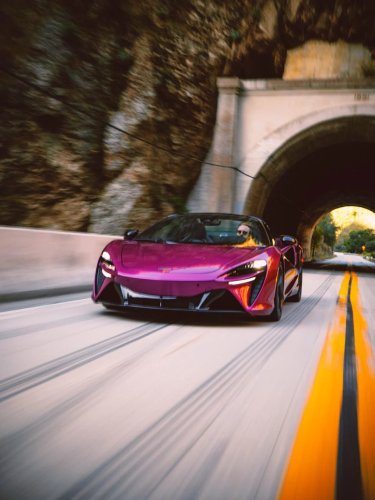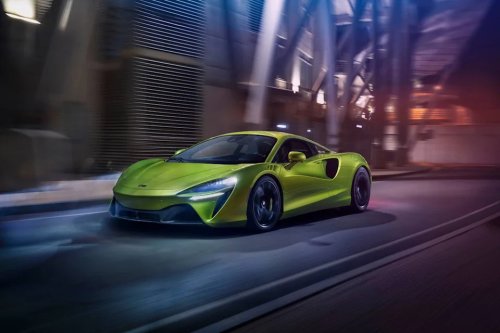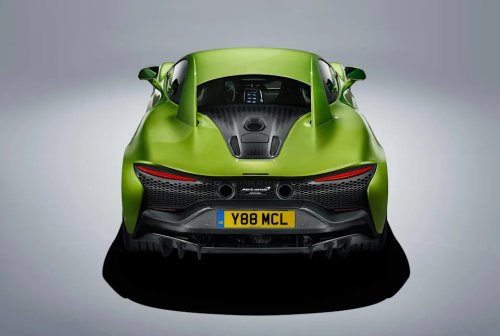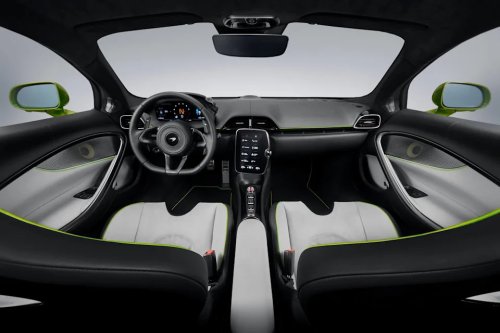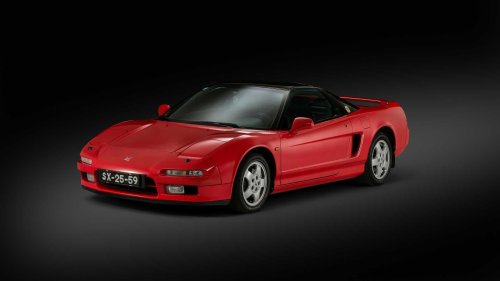
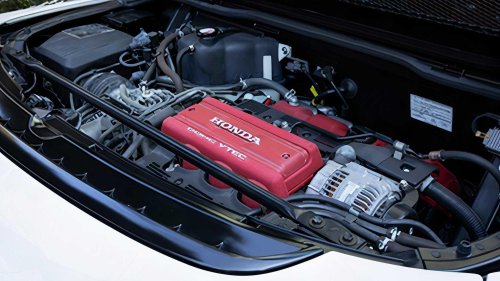
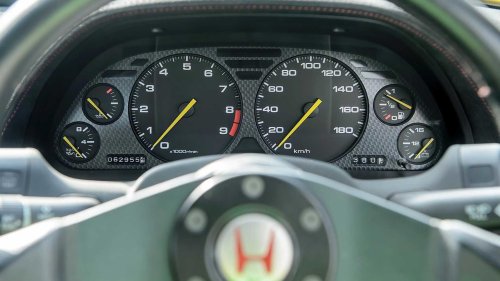
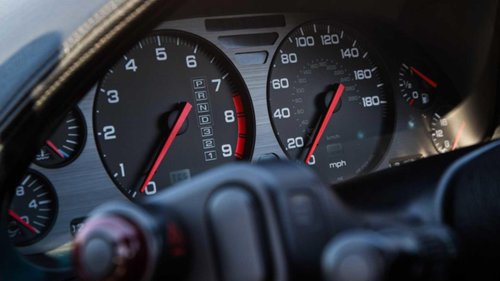
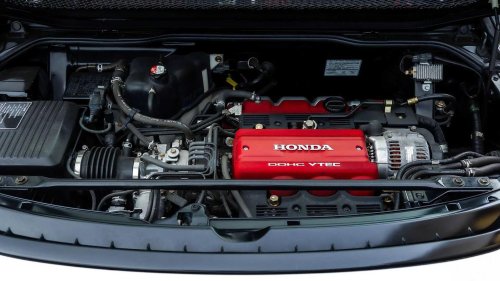
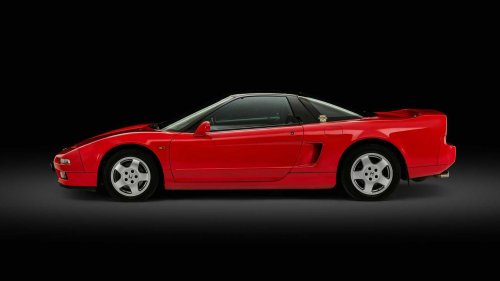
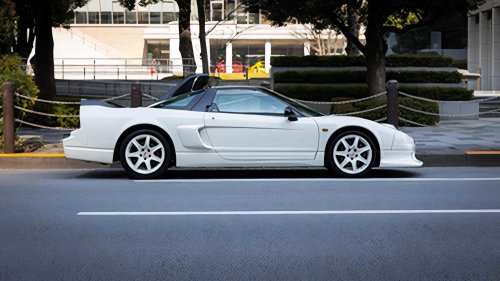
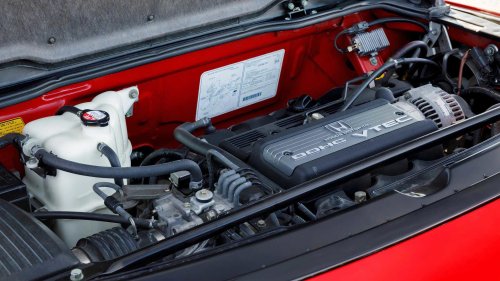
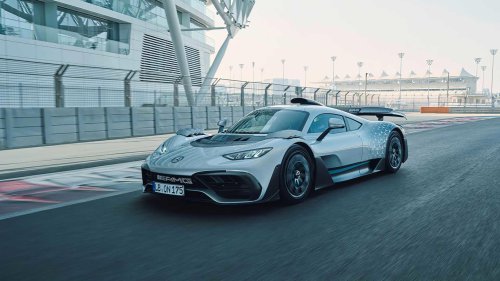
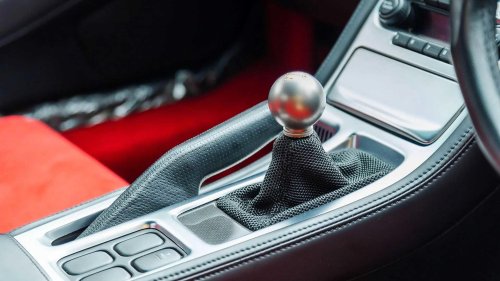
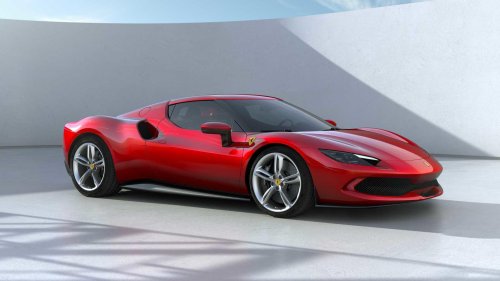
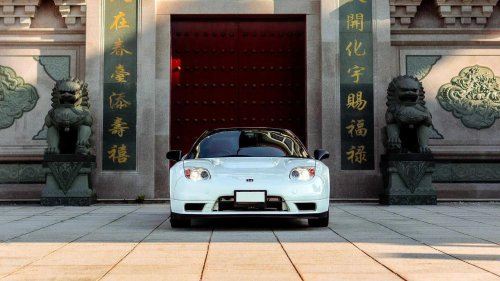
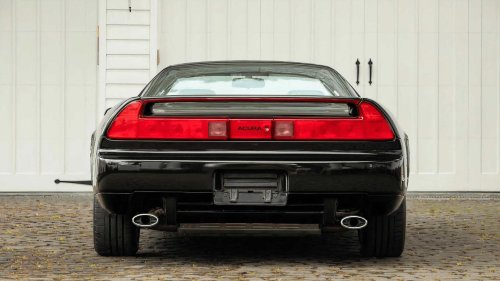



















Supercars have always pushed the boundaries of technology. That's how they manage to deliver those headline-grabbing power and performance figures. But for a long time, owning a supercar meant having to accept that it was not going to offer the kind of usability and reliability of your family sedan.We tend to tolerate the unacceptable when no alternatives exist, even make excuses for it, but Honda saw a gap in the market and parked a revolutionary sporty coupe right into it. The release of the Honda NSX (Badged Acura in the US) was Japan's first attempt at a mid-engined supercar, and its high-tech, high-revving V6 engine was the reason the rest of the motor industry had to scramble to catch up. The Honda C30A AutoTraderHonda knows a thing or two about building engines, and by the 1980s, it had developed a reputation for creating reliable, smooth, and efficient motors for its daily driver offerings. It was also clearly capable of developing cutting-edge sports car engines, too, having largely dominated Formula 1 in the late 80s. So, when it announced its NSX supercar, it was not surprising that its 270-hp 3.0-liter V6 was rather special. An 8,000-rpm Redline Bingo SportWith a stratospheric 8,000 rpm rev limit, it was the highest-revving naturally aspirated V6 production engine ever, and 36 years after its introduction, the engine has yet to be bettered. The V6 engine, codenamed C30A, was developed specifically for the NSX supercar and was only the second Honda engine to use the VTEC variable valve timing system.In this early application, it simply adjusted the cam profile depending on the engine's rpm, but it allowed for strong low-end torque without compromising top-end power. Lightweight Titanium connecting rods were used for the first time in a production engine, allowing for those high revs to be reached without compromising reliability.Honda V6 engines aren't as smooth as an inline-six or flat-six, and they need balancer shafts to cancel out vibrations at high revs, but Honda chose this design because it was the best option for its mid-engined layout. Its many years of experience with the layout in Formula 1 didn't hurt either. The 90-degree angle was chosen as this kept the dimensions compact enough to fit in the middle of the car, and offset crankpins smoothed out the firing intervals. The all-aluminum block contributed to the lowish 3,000-lb curb weight.Honda Individual ignition coils, a four-valve cylinder head, and a variable volume induction system all contributed to an engine that was tractable, responsive, and still powerful enough to challenge the legacy sports car manufacturers in a straight line. The Ferrari 348 made 296-hp from its larger 3.4-liter V8, while the contemporary Porsche 911 Carrera managed just 250 horses from its air-cooled 3.6-liter flat-six. Performance figures were close, but whereas the 911 was based on a 27-year-old design, and the Ferrari wouldn't go into second until it had sufficiently warmed up, the NSX was as easy to drive as a contemporary Japanese family sedan.Broad Arrow Auctions It started first time, every time. There was no coughing and sputtering as the engine got "on cam", and the interior was comfortable with logically laid out switch gear and controls. The engine could idle along in the traffic one moment, then race to its 8,000 rpm redline the next, all without any of the usual supercar drama. Arriving at a time when most of the big names were phoning it in, the Acura NSX shook up the establishment in a way that changed the supercar segment forever. The Honda/Acura NSX AutoTraderThe C30A engine was used solely in the Honda/Acura NSX and was available with either a five-speed manual or four-speed automatic transmission. The automatics were detuned to 252 hp, but had the same 210 lb-ft of torque. This engine – with just a few exceptions – was used all the way until the end of production in 2005 in all automatic transmission NSX models.Bingo Sport However, when the first major facelift was carried out in 1997, the manual transmission cars gained an extra cog as well as an updated version of this engine called the C32B. The displacement was increased to 3.2 liters thanks to larger pistons, bumping power up to 290 hp, and torque to 224 lb-ft. The cylinder liners were made using a new process called Fiber Reinforced Metal (FRM), and the rest of the design was left largely as is. It also had an 8,000 rpm rev limit.Acura/Honda The NSX remained in production until 2005, and while it underwent regular detail updates, the C32B engine remained unchanged throughout. While it was a superb and very usable car, the NSX eventually aged out of competition. By the 2000s, Ferrari was back on form, and Porsche had comprehensively redesigned its 911 range as well, and the NSX was no longer the only reliable supercar on the block.Mercedes-AMG Ironically, its game-changing design had hastened its demise as the rest of the industry caught up and overtook it. Arguably, Honda could have done a bit more to keep it in the running, but the revolutionary second-gen NSX would soon be in development, and ready to take on the establishment once again.Broad Arrow Auctions The Current Crop Of V6 High-Revvers Ferrari Naturally aspirated V6 engines these days are usually fitted to minivans and family sedans. The push for more power and efficiency means that performance-oriented V6 engines are now turbocharged, hybridized, or both. Honda's second-gen NSX was one of the first to combine all of these technologies, but its twin-turbo, triple-electric motor V6 maxed out at 7,500 rpm.Since then, there have been several high-performance V6 engines, and the Ferrari 296 and McLaren Artura are currently the joint highest-revving "regular" production V6s with an 8,500 rpm red line. Interestingly, both are turbocharged, have a capacity of 3.0 liters, and use electric assistance, just like the second-gen NSX did all the way back in 2016.Joel Stocksdale / CarBuzz / Valnet The highest-revving production V6 engine is fitted to the Mercedes-AMG One supercar. It has more in common with a Formula 1 engine than any road-going Mercedes motor, and despite its tiny 1.6-liter capacity, has four electric motors and a turbocharger that combine to give it over 1,000 hp. It revs all the way out to 11,000 rpm, which is a figure that may remain unchallenged as we shift towards EVs in the coming years. Unfortunately, just 275 were built, and it was never sold in the US.Broad Arrow Auctions The original C30A 3.0-liter V6 has already secured its place in automotive history, not just for its 8,000-rpm red line and technological advancements, but for the way it spurred supercar makers to up their game and develop cars that were far more reliable and less temperamental than ever before.Bring A Trailer