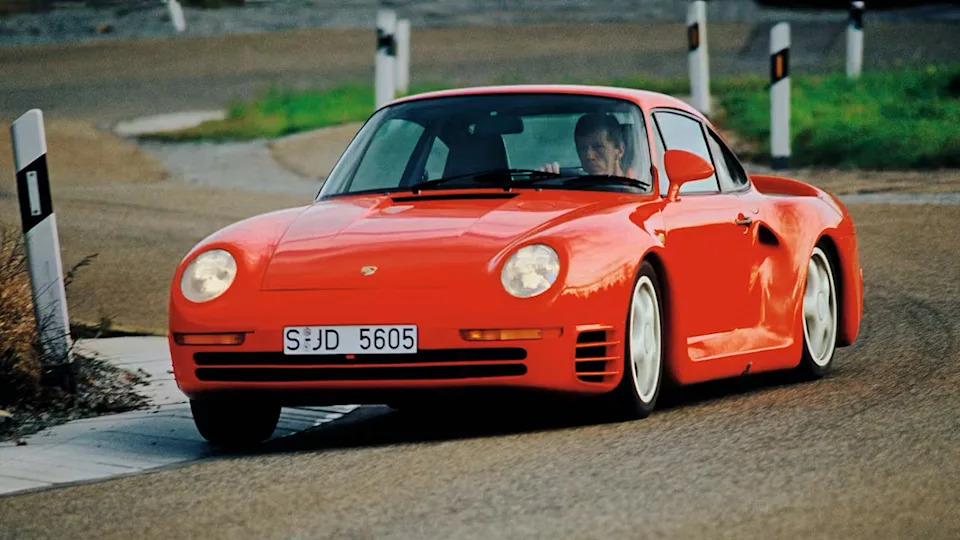
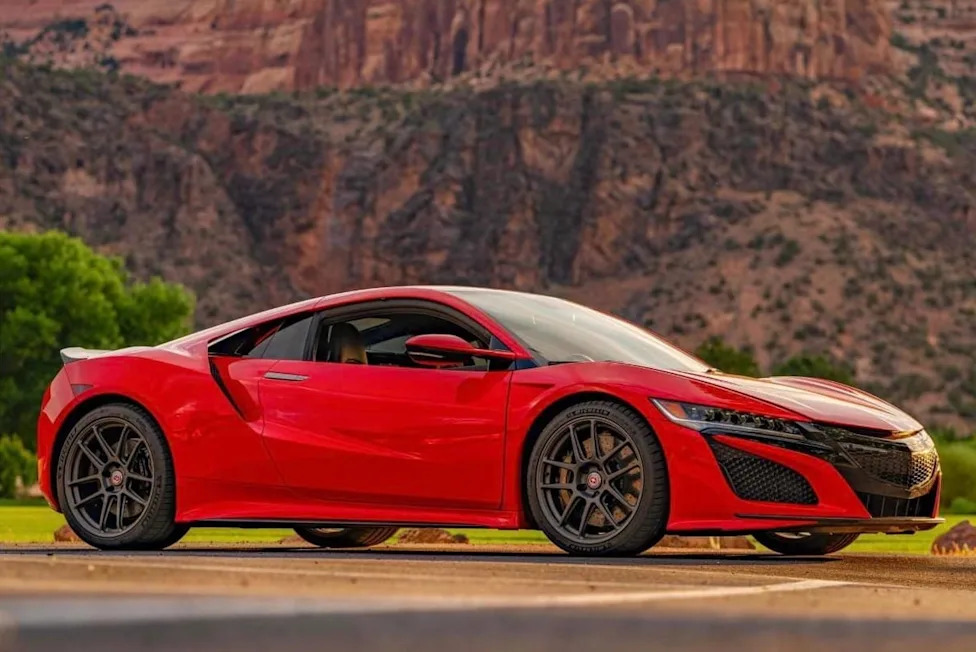
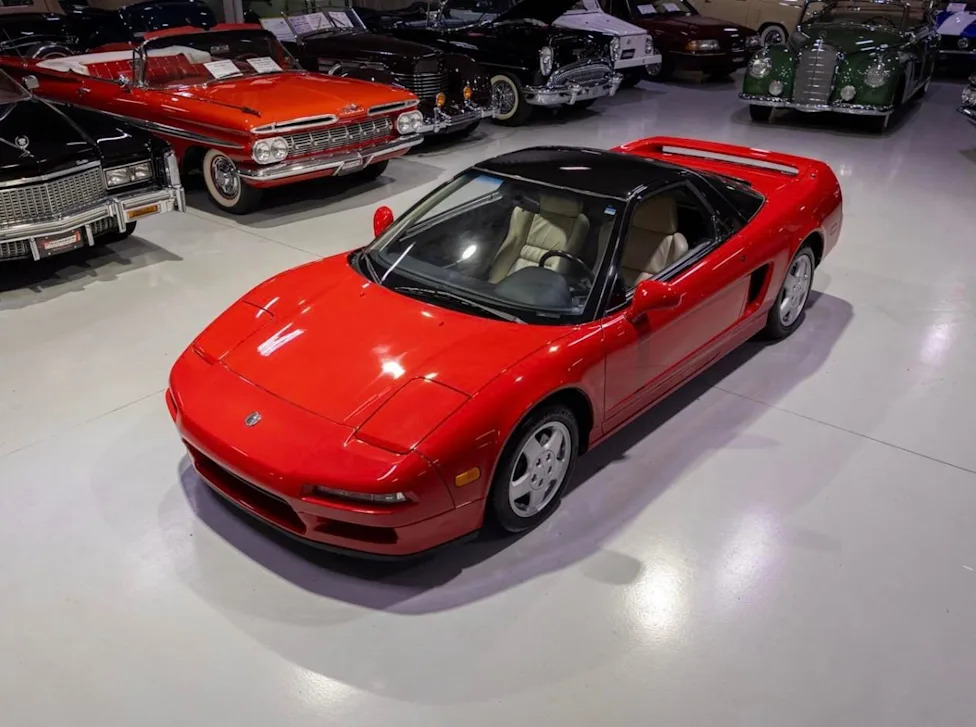
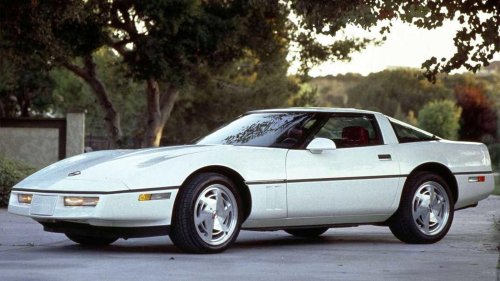
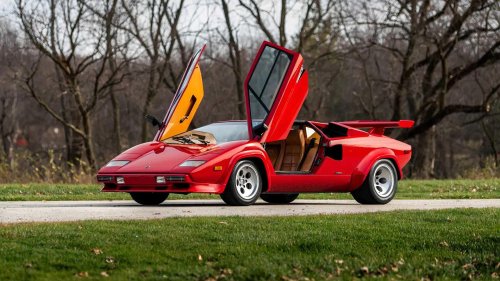
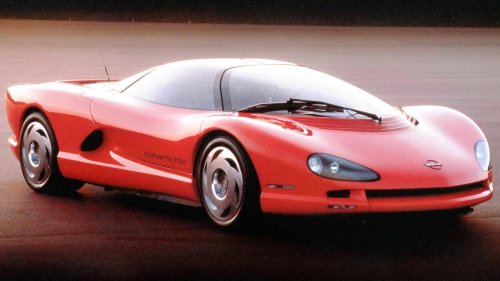
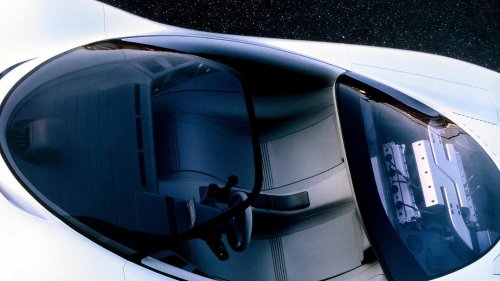
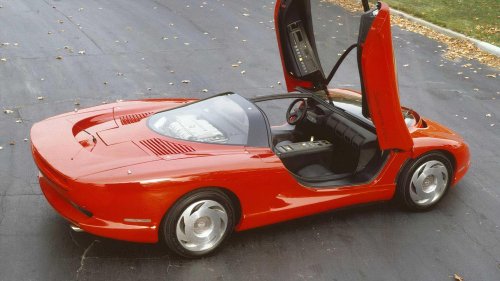
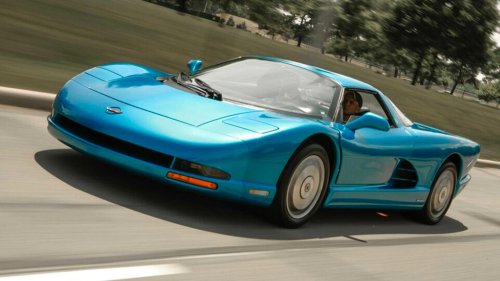
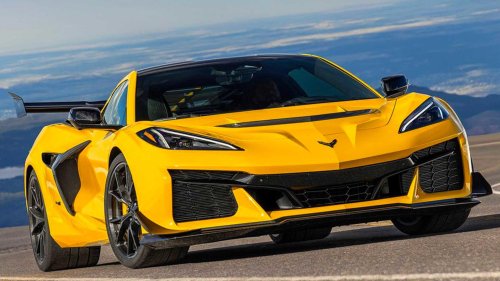
Driving a supercar in the '80s wasn't as easy as Sonny Crockett and Magnum P.I made out. While these TV heroes in pastel and aloha shirts made daily driving a mid-engine exotic look as easy as driving around in a Corolla, the reality was often no power steering, no ABS, no airbags, rear-wheel drive, no traction control, and certainly no GPS navigation. If these TV alphas had actually managed to find the bad guys' hideout, they would likely have got out of their supercars being too exhausted to sprint down the docks after them. But who knew that an American company would foresee the future of supercars as a powerful machine that would be relatively safe and easy to drive, albeit with devastating looks — it's just that the world wasn't ready for it yet. The US Car Scene Was Struggling To Find Its Footing In The '80s Chevrolet The muscle car party had completely ended by the '80s, with the fun police telling everyone to finish their drinks and go home. The end had actually happened a decade before, with an oil crisis and emissions regulations putting paid to a horsepower war that saw everyday models pushing over 600 horsepower. What followed was the so-called Malaise Era, a time defined by sad-looking muscle car nameplates attached to cars that would struggle to outgun a golf cart. The Corvette C4 was relatively new but had lost a lot of its race-bred focus in return for a more cruisey USP. What the US really needed was a forward-thinking supercar. Supercars Were Stuck In A Rut Bring a Trailer The supercar scene of the '80s had long been dominated by the Lamborghini Countach, a car that looked fantastic but, at least according to Jeremy Clarkson, felt awful to drive. "Even Tom Cruise would be uncomfortable," he said. "...if you were small enough to fit inside with a modicum of comfort there's no way that you'd be strong enough to turn the steering wheel or press the clutch pedal...the Countach is like an elephant, nice to look at, but you wouldn't want to own one."Other supercars were much the same, often with terrible reliability issues. The space-age-looking Vector W8 even broke down several times during a road test. But while these razor sharp, virtually unusable supercars were the only ones around, everyone just accepted that this was the only way. But Chevrolet had other ideas. In the mid '80s, the engineers at GM asked themselves what a Corvette would be like if it was not only mid-engine and incredibly fast, but also utilized useful features like traction control, advanced technology, and improved drivability. The Corvette Indy Was A New Supercar Idea GM While 1986 was remembered in the automotive world for the launch of the technology-laden Porsche 959, a supercar that had 911 reliability and even a bit of trunk space, Chevy also launched a very similar (in thinking at least) car to the public. But while the 959 was a production car, Chevy tentatively unveiled the Corvette Indy as a concept at the Detroit Motor Show.Looking like a spaceship, and having proportions similar to the later Jaguar XJ220, the Indy was quite literally the supercar of the future. It was a shame that the present just wasn't quite ready for it yet. The original car was designed to be a showcase for the transversely mounted twin-turbo 2.65-liter engine, and was nothing more than a mock-up. But reaction was so strong that Chevy was compelled to build a running and driving prototype. The Indy Was A Technological Masterpiece GM When the running car arrived shortly after, it was fitted with a bespoke all-aluminum DOHC, 32-valve 5.7-liter V-8 designed by Lotus. This was the same motor that would be destined for the 1990 Corvette ZR-1, pumping out 380 horsepower at 6000 rpm and 370 lb-ft of torque at 3800 rpm, as well as groundbreaking technology like electronic throttle control and selectable all-wheel steering. There was even a sat nav system, CRT-based instrument display, and displays for climate and audio controls on the scissor doors. Even the carbon fiber and Kevlar body panels were way ahead of their time in production cars.The Indy was expected to hit 180 mph and reach 60mph in 5 seconds, all standard supercar stuff for the day, but that performance would be accessible and exploitable thanks to four-wheel drive, traction control and an ABS system. The cherry on the cake was a Lotus active suspension, trickled down from Team Lotus between 1981 and 1982, which did without conventional shocks and springs, utilizing instead microprocessor-controlled hydraulics. The Indy Was Years Ahead Of Its Time GMAll of this technology crammed into a supercar was new, with only the 959 really bucking the trend. The Lamborghini Diablo VT arrived in 1993 with all-wheel drive, but that was still a pretty hardcore model. It wasn't until the 2000s that cars like the Audi R8 would really popularize the idea of power to all corners for the masses.Despite the Indy only being 43 inches tall, it did explore the idea of a vast glasshouse, giving excellent visibility for the driver. This isn't dissimilar to the Acura NSX that launched in 1991, also helping to rearrange the way we looked at supercars. Magnetorheological dampers would be offered on the C5 Corvette and 2002 Cadillac Seville STS much later on. All this begs the question: Why didn't the Indy make it into production? Here's What Happened To The Indy Via: General MotorsSadly, the Indy was never destined for production. The huge costs involved in creating such an advanced vehicle, as well as questions over whether such an expensive, forward-thinking supercar was right for Chevy, meant that it would remain a showcase for forthcoming tech. The Indy did morph into the 1990 CERV III, powered by a 650-horsepower twin-turbo version of the Lotus engine, and rumor has it that this was more likely to get greenlit.This car had similar pioneering tech, including titanium suspension and dual brake discs at each corner. The ground clearance was better, and the roof was more conventional (and production looking), but in the end, the car would still have cost ten times a Corvette in the showrooms, so profit margins would be slim. That doesn't mean that the spiritual successor to the Indy and CERV III wouldn't make production — it would just take more than 30 years. The Indy Was Reborn As The C8 Via: ChevroletThe Indy concept finally made it to production, of sorts, when the eighth-generation Chevrolet Corvette arrived in 2019, with a mid-engine layout for the first time since 1953. The front-engine, rear-drive layout of the previous seven Corvettes had run its course, with GM president Mark Reuss saying the "traditional front-engine vehicle reached its limits of performance".The C8, in E-Ray form at least, features electrified all-wheel-drive technology, another nod to the Indy. The ZR1 also comes with Magnetic Selective Ride Control 4.0 as standard, an advanced damping system reads the road in milliseconds and adapts in as little as 10 to 15 milliseconds. The good news for buyers was that while the C8 isn't throwaway money, a starting price of $70,000 is a fraction of what the Indy would have cost new, even in the late '80s. Who says the C8 wasn't worth the wait?Sources: Hagerty.com, Hemmings.com



















 +37 others