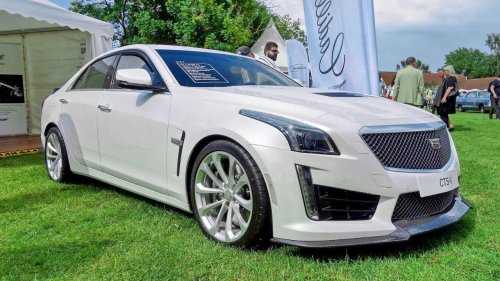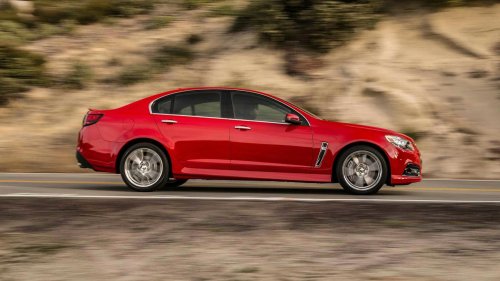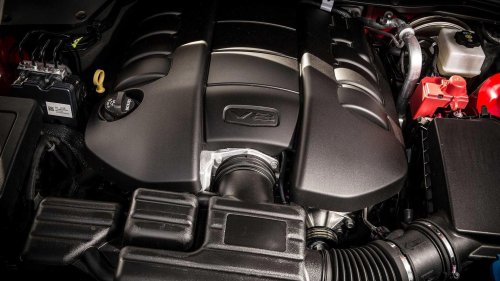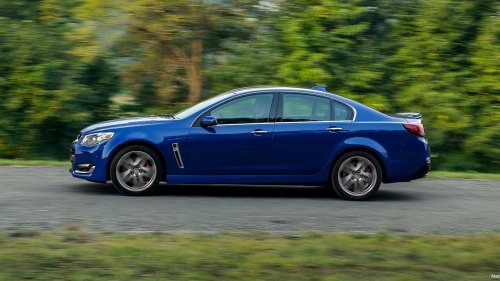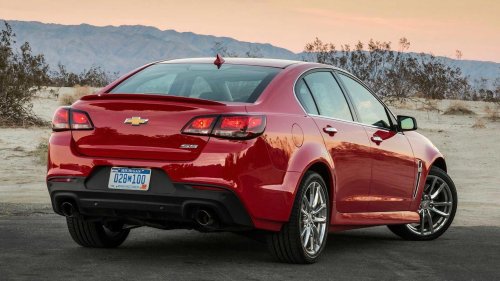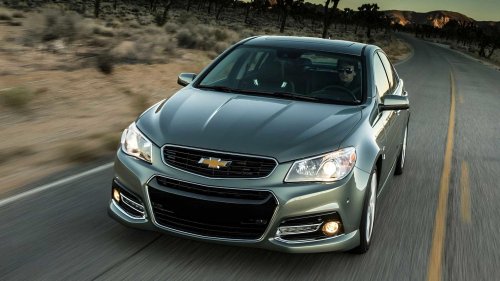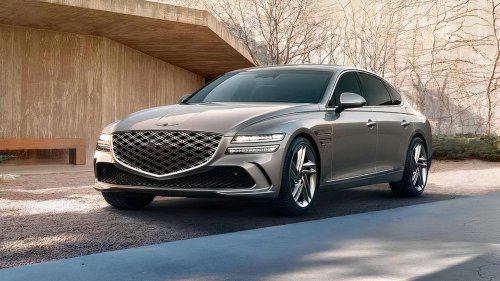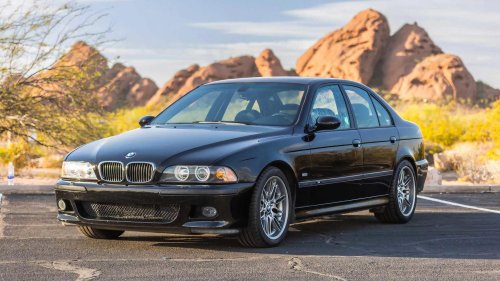
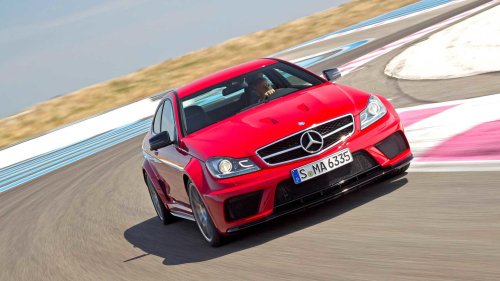
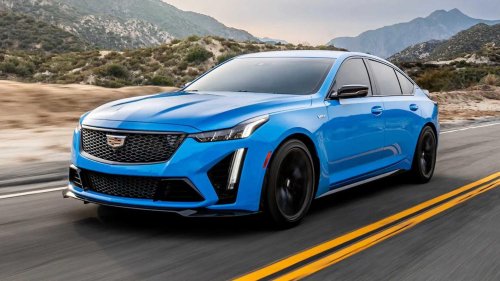
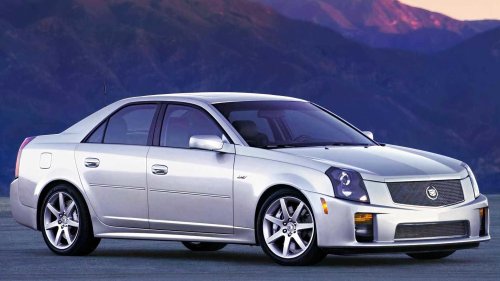
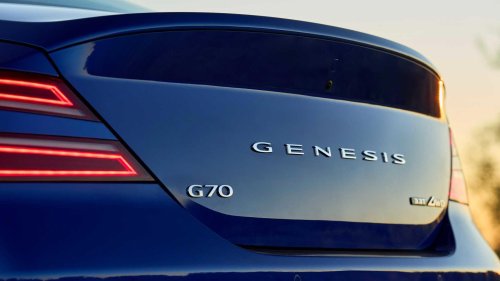
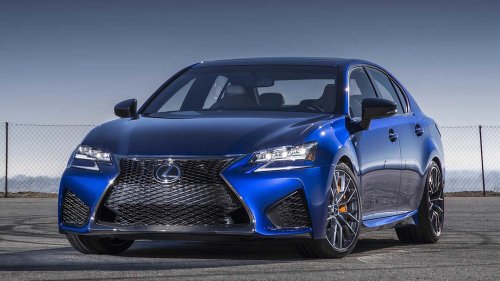
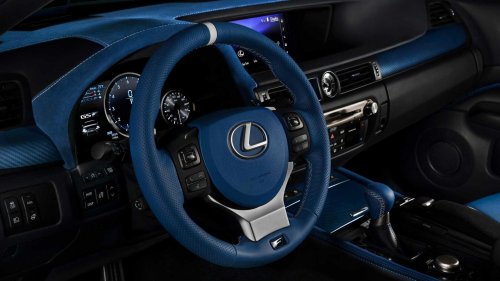
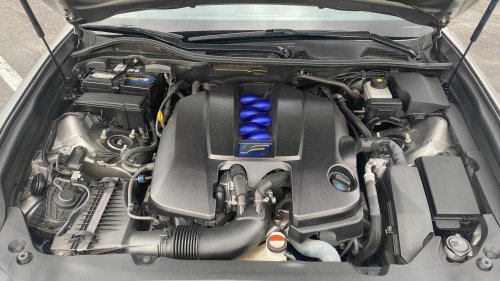
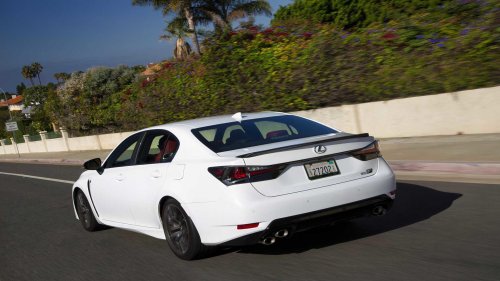



















BMW M-Cars are the template for the performance sedan. Audi has jumped into the fray with some excellent offerings, and Mercedes perfected the “German muscle car” with their V8-powered AMGs, but only a few non-German alternatives have popped up over the last 20 years. Importantly, we must understand that the market has been shifting away from traditional performance vehicles. Sports cars are few and far between, coupes that are not dedicated sports cars are nearly extinct, and SUVs/Crossovers have become the norm. The SUV craze began in the late-1990s and early 2000s, with pioneers like the Toyota RAV4 and Honda CR-V taking their place at the economy end of the spectrum, while the Mercedes-Benz ML and the Lexus RX300 ostensibly invented the modern luxury class of SUVs/crossovers.With that type of vehicle becoming the standard in the automotive industry, performance cars have had to make that shift in tandem. It goes without saying that you can’t make a performance car out of a vehicle you don’t sell. And since they’re selling crossovers like McDonald’s sells burgers and fries, while sedans are sharing the same fate as Circuit City and Radioshack, it only makes sense that the herd of performance sedans and coupes has greatly thinned in recent years. While there is nothing inherently wrong with something like the X5M, there is something about performance sedans that has held greater appeal to the average enthusiast than any SUV ever could. While thankfully there are still many fantastic performance sedans on the market, there is one in particular that I wish could’ve held on just a little bit longer. Beating The Germans At Their Own Game Is Almost Impossible Bring A TrailerThe muscle car is American, the exotic sports car Italian, and the performance saloon German. Obviously, this is a generalization, but such collectively held conceptions of certain market segments often impact consumer perception. A common critique levied at something like the Genesis G90 is that it isn’t quite up to the standard of the S-Class. That isn’t entirely untrue, but consumers often begin their analysis of a Genesis, Acura, Cadillac, or Lexus by assuming they could never be superior to a “proper” German luxury sedan. While American, Japanese, and Korean automakers have all built exceptional luxury sedans and performance sedans, it can be hard to overcome such widely held perceptions.Mercedes-BenzLike General Motors and John DeLorean inventing the Muscle car in 1964, BMW ostensibly invented the modern sports sedan in 1984 with the introduction of the E28 M5. The first-ever M5 was powered by a 3.5L I6 that produced 256 horsepower in the North American market. The iconic E30 M3 came just two years later, and two years after that, the second-generation M5, the E34, came along, upping displacement to 3.6L (3.8L post-facelift in Europe) and increasing the horsepower to over 300. And if the E34 didn’t cement the M5 legacy, the legendary 4.9L V8-powered E39 most certainly did.Mercedes followed suit in 1993, with the first production AMG, the C36. And in the years that followed, some incredible cars have continued the lineage. The C36 was followed by the V8-powered C43, C55, and C63. The E39 was followed by the 5.0L V10-powered E60, and even Audi was busy putting V8s and V10s in its S/RS cars throughout the 2000s. Like the Mustang defining the Pony Car, these German sports sedans defined their segment, making it harder for other competitors to find their place. The Americans Currently Have The Best Performance Sedans On The Market Via: Bring a Trailer Find a car enthusiast and ask them which sports sedan on the current market would be their pick. If you ask me? I’ll take a Cadillac CT5-V Blackwing, thank you very much. And it’s not just because you get a 6.2L 650 horsepower supercharged V8 from the C7 Z06 and the brilliant MagneRide suspension. No, despite my great appreciation and love for many automatics, I simply prefer a manual transmission. I’m certainly not in the minority, and besides the M3, Cadillac is the only other game in town when it comes to shifting all by yourself in the comfort of a four-door sedan. No manual has been offered in the M5 since the F10, no manual in an Audi sports sedan since the B8.5 S4 or B7 RS4 if you’re looking for the full-fat performance model. However, of all brands, Cadillac offers the CT4-V and CT5-V Blackwing models with 6-speed manuals.Cadillac The CT5-V Blackwing is the successor to the original V-car, the CTS-V. When it arrived on scene in 2004, with the 405 horsepower LS6 V8 borrowed from the C5 Corvette Z06, it was the last thing anyone expected from Cadillac. At the time, they were riding high on the second-generation Escalade and still selling the DeVille and Seville. In fact, there was plenty of shock in 2003 over the CTS 3.6L being the first Cadillac offered with a manual transmission since the 1988 Cimarron. Nobody was expecting the original CTS-V, nor was anyone expecting the second-generation that paired a manual transmission with the 556 supercharged horsepower from the LSA V8. We’re quite lucky the CT4-V and CT5-V Blackwing models have lived on, too, because the Pontiac GXP and Chevy SS came and went faster than the Honda Prologue. A Niche Market Segment, Especially Today Genesis The Cadillac offerings have been some of the absolute best for the better part of two decades. The CTS-V and ATS-V (and CT4-V and CT5-V Blackwing) are arguably even better than their respective M5 and M3 counterparts, so it’s clear American brands have a legitimate presence in that market segment. The Japanese and Korean brands have attempted, but struggled to gain a long-term foothold in the performance sedan market. Aside from Lexus, Infiniti and Genesis are the only two of the bunch to offer a V8, but the M56/Q70 5.6L and G80 5.0L are far from true “sports sedan” status. The Kia Stinger GT2, Genesis G70 3.3L, Infiniti Q50 Red Sport, and Acura TLX Type S are all fantastic cars, but don’t directly compete with M-Division, AMG, or Blackwing. They compete more directly with cars like the S4, M340i, C43 AMG, and the CT4-V (non-Blackwing). Lexus is really the only one of the bunch to try to properly compete with BMW. They first tried with the IS-F, but more recently went after the M5 with one of the all-time great performance sedans. The Lexus GS-F Is A V8 Powered M5 Fighter Lexus The GS-F was based on the fourth-generation Lexus GS, introduced in 2011. Unlike the previous generation of GS, which offered V8 trim such as the GS 400, 430, or 460, the final iteration of the Lexus GS was V6-only. It was an excellent V6, the 3.5L 2GR-FE/FKS, but didn’t quite pack the punch of the V8 cars. That’s okay, though, because for the final generation, Lexus saved the V8 for a more special car, the GS-F. While the previous V8 trims were little more than an engine upgrade, the GS-F was a proper sports sedan. It was Lexus's second entry into that market, following the 2008-2014 IS-F. It utilized the same 8-speed automatic and 5.0L V8 from the IS-F, but produced 51 more horsepower than its predecessor.Via: Lexus And as I said, the GS-F isn’t only an engine. Starting in 2017, you got adaptive variable suspension (AVS). This allows the car to adjust the dampers independently across 30 different settings, depending on drive input, mode, and what the sensors pick up as you’re humming along. All GS-F models received a torque-vectoring differential that could be set to standard, slalom, or track. This is not to be confused with brake torque vectoring, like on a Fiesta ST. This is a proper trick diff that automotive journalists say is actually phenomenal at allowing this big-ass sedan to rotate around corners like a much smaller machine. Thankfully, the GS-F was also fitted with Brembo 6-piston front and 4-piston rear brakes, making the process of halting momentum far more confidence-inspiring. The GS-F Deserved A Successor Bring a Trailer The GS-F shares the same wonderful powertrain as the IS-F and RC-F, using the same Aisin AA80E 8-speed automatic (though the GS-F has a shorter final drive than the IS-F and RC-F) and the 2UR-GSE 5.0L V8. Which is to say, “it works”. The AA80E, which debuted in the 2007 LS 460, was the world’s first production 8-speed automatic and has an excellent reputation over the long term. It most recently made its way into the 2022-2025 IS 500 F-Sport, which also shares its guts with the proper F models. The glorious-sounding 2UR-GSE and the Aisin 8-speed are both properly reliable. In fact, the entire car is, which is why these have held 60%-70% of their value since new. According to classic.com and comps from the most popular auction sites, the GS-F is currently valued at nearly double that of the equivalent M5, despite the performance gap.Lexus It’s true that competitors at the time, like the aforementioned M5, CTS-V, E63, and RS7, all make more power and outpace the GS-F's already brisk 4.4-second sprint to 60 MPH. This was a major critique when new, but 467 horsepower and 389 lb-ft of torque are NOT small numbers. We’ve been desensitized to horsepower numbers that include a comma, but a 193-inch, 4,100-pound sedan hitting 60 MPH in the same amount of time it takes a 981 Cayman S is ridiculous, surprising, and pretty awesome. Not only that, but are you really taking this to the track? Are you racing for pinks? The GS-F isn’t the highest performer of its era, but given its reliability and musical engine, we feel it deserved another chance. I mean, come on, it only lasted 5 model years!Sadly, though it's possible Toyota could throw the 4.0L twin-turbo V8 from the GR GT into a new Lexus sports sedan, the sedan market might not stick around long enough for that to happen. Lexus only makes the FWD ES sedan now anyway. Thankfully, these may be reliable enough to last for decades to come, just don’t expect them to get cheaper; it looks like the market already knows how great they are. It’s just too bad there won’t be another.